Fruit Fly Control Around Cat Food: Wet-Food Timing, Drains & Safer Traps
Small flies keep hovering around your cat’s food bowl—even after you wash it. The bowl may attract adults, but the source could be wet-food residue, fermenting trash, or damp organic buildup elsewhere in the kitchen.
Quick answer: To reduce fruit flies around cat food, remove wet-food leftovers promptly, wash feeding bowls after each use, clean nearby food spills and waste containers, and identify any hidden breeding source. Use traps only where your cat cannot reach, tip over, or chew them.
Why Fruit Flies Gather Around Cat Food
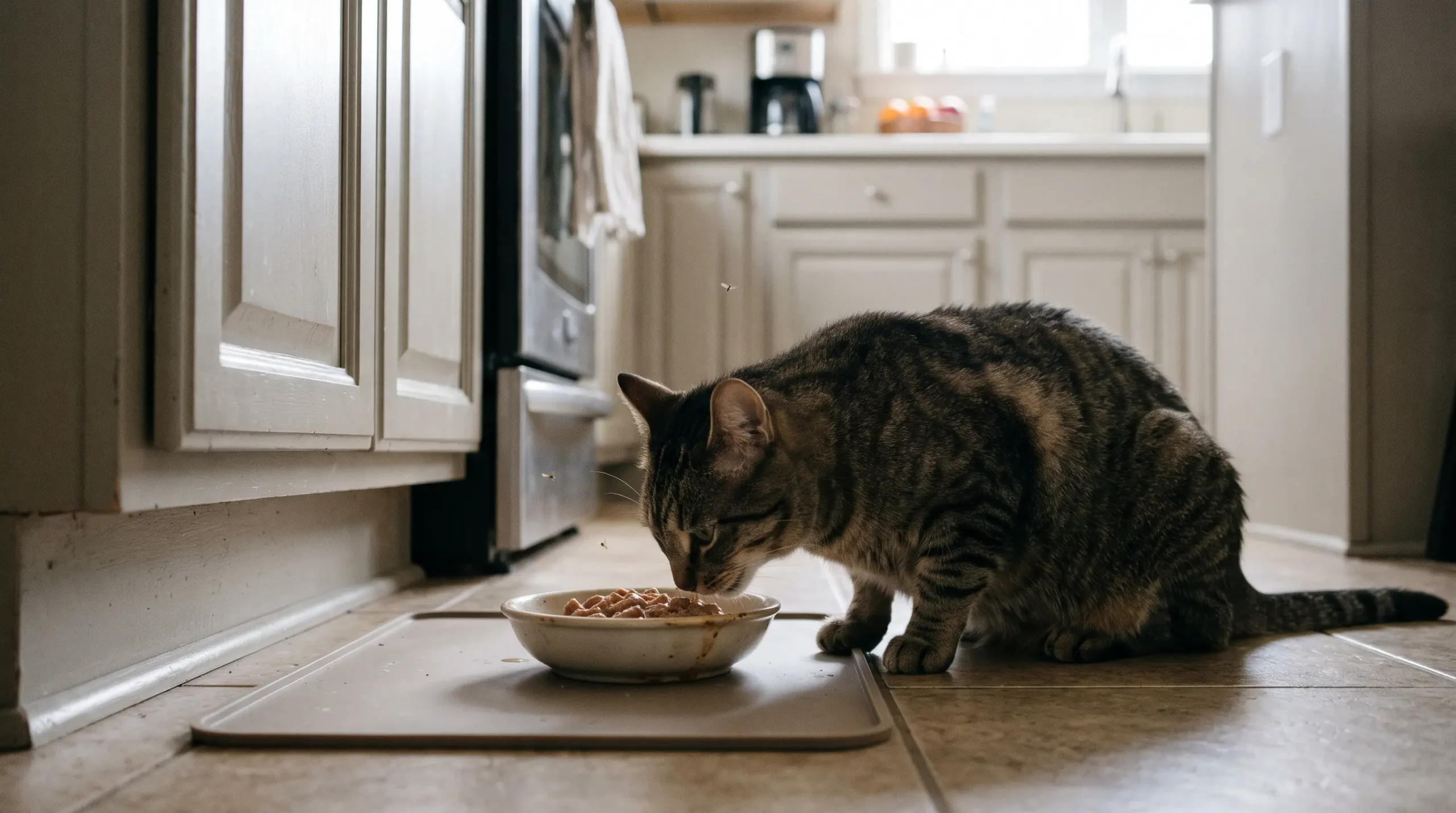
Common household fruit flies, often called vinegar flies, are attracted to fermenting organic material. Some species can also develop in damp, decaying food residue.
Wet cat food may attract adult flies, particularly when leftovers or spills remain available. However, seeing flies at a feeding station does not prove they are breeding in the bowl itself.
Check these possible attraction or breeding sources:
- Wet-food leftovers left at room temperature
- Food splatters beneath or behind bowls
- Dirty feeding mats and damp cleaning cloths
- Trash holding used food cans or pouches
- Recycling containers with food residue
- Overripe produce or hidden food spills elsewhere in the kitchen
- Moist organic buildup around sinks or drains
Fruit flies can also enter homes with produce or from outdoors. Effective control begins by finding the material that allows them to persist, not simply killing the adults hovering near your cat.
Wet-Food Timing Matters More Than Most Owners Realize
One of the simplest ways to make a feeding area less attractive to flies is to avoid leaving partially eaten wet food available for hours.
Practical tip: Serve wet food in manageable portions during your cat’s normal feeding routine. When the meal is over, remove leftovers promptly and wash and dry the bowl before its next use.
The U.S. Food and Drug Administration recommends promptly refrigerating or discarding unused or leftover canned and pouched pet food. Cover food that can safely be saved and refrigerate it at 40°F (4°C) or below, following the manufacturer’s directions. Discard food that has spoiled or become contaminated rather than offering it again.
Wash food bowls with soap and hot water after each use, and wash water bowls daily. Clean feeding mats and nearby floor surfaces when food spills occur.
Do not reduce your cat’s food intake or make abrupt dietary changes solely to control flies. If your cat needs small, frequent meals, maintain an appropriate feeding plan while improving cleanup and storage.
For food-choice questions rather than fly control, see our guide on how to read a cat food label and our wet vs. dry cat food comparison.
Do Not Ignore Nearby Drains
If small flies continue appearing after the feeding area is cleaned, inspect nearby sinks and drains. But first, make sure you are dealing with the right insect.
Fruit Flies and Drain Flies Are Not the Same
Common fruit flies are often small tan or brown flies associated with fermenting food and damp organic residue. Some darker fruit flies also develop in decaying plant or animal material.
Drain flies, also called moth flies, are a different group. They usually look darker and fuzzy, with broad, moth-like wings. Their larvae commonly develop in the slimy organic film lining wet drains.
Fungus gnats are another possibility, especially when small, slender flies gather around houseplants with consistently damp potting soil.
These differences matter because cleaning a drain will not solve a fruit-fly problem caused by fermenting produce, and a fruit-fly bait trap will not eliminate fungus-gnat larvae living in potting soil.
When Should You Inspect the Drain?
A drain deserves closer attention if:
- Flies frequently rest on nearby walls or hover around the drain opening.
- Activity continues after food bowls, trash, and nearby spills have been cleaned.
- There is visible organic buildup, persistent moisture, or a recurring odor.
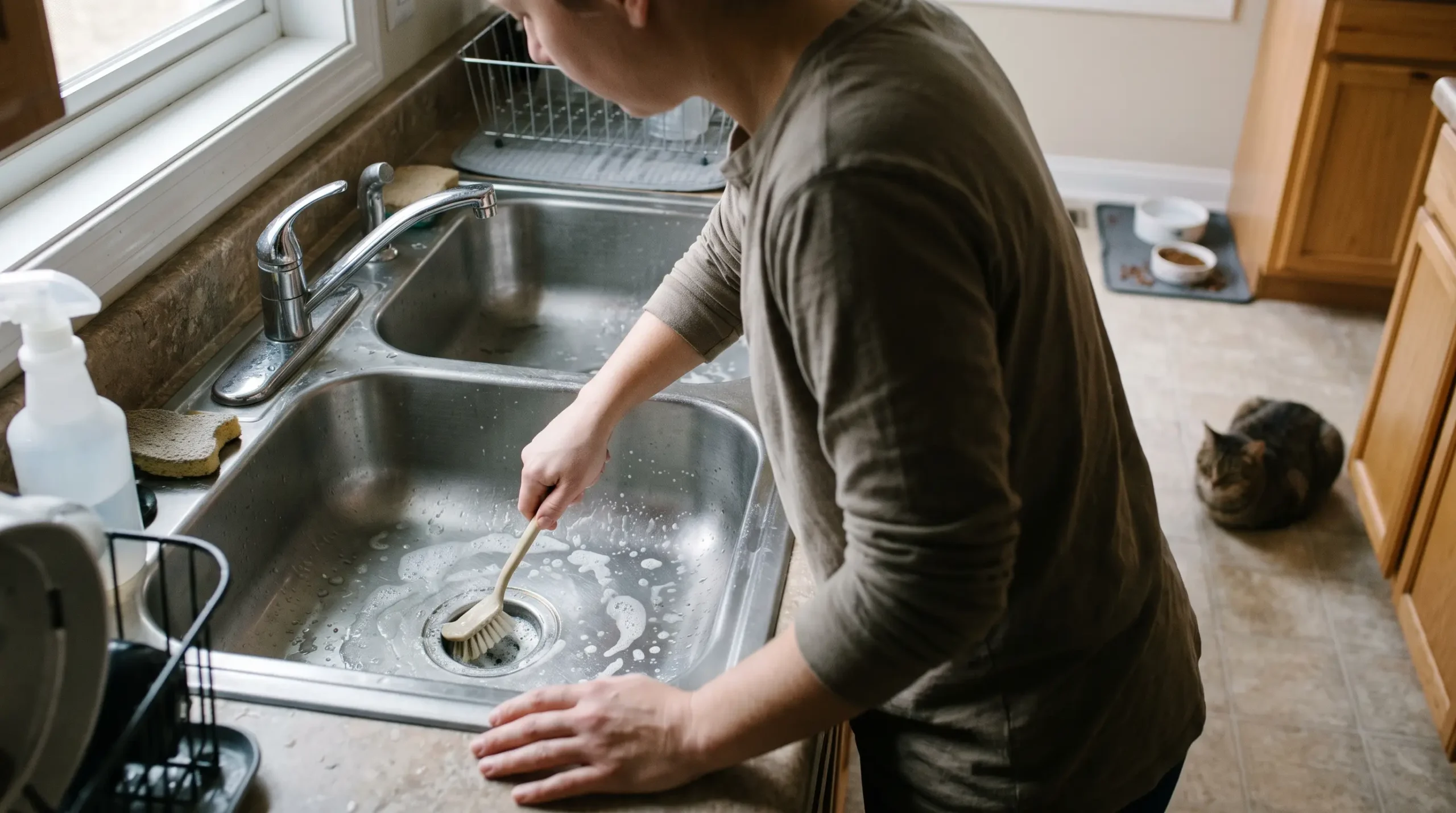
If drain flies are present, removing the organic film where their larvae develop is more useful than repeatedly spraying the adult flies.
Clean accessible drain components using appropriate mechanical cleaning methods and the fixture manufacturer’s instructions. Keep your cat away from the work area and any cleaning products.
Do not assume pouring bleach, insecticide, or another chemical down the drain will remove the underlying buildup. Never mix drain cleaners or other household chemicals.
If a drain is blocked, leaking, or difficult to clean safely, consider professional plumbing assistance.
Safe Cleaning Practices Around Cats
Cleaning the feeding area and eliminating breeding material are usually better starting points than applying insecticides around your cat’s bowls.
When cleaning:
- Move food bowls, water bowls, and pet supplies away from the cleaning area.
- Use products appropriate for the surface and follow their label directions.
- Keep your cat away during cleaning and until any required drying, rinsing, or other access restrictions have been completed.
- Never mix bleach with ammonia, acids, drain cleaners, or other cleaning products.
- Rinse food-contact items appropriately and avoid leaving cleaning residues where your cat may lick or walk.
- Store cleaning products securely in their original containers.
Washing bowls and mats and removing food residue are usually the first steps. Seeing a few fruit flies is not, by itself, a reason to spray insecticide around your cat’s feeding station.
If you are considering a pesticide product, our guide on How to Read a Pesticide Label When You Have Pets explains application restrictions and pet-access warnings. If a professional treatment involves residue or restricted room access, see Cat Re-Entry After Indoor Pest Control before bringing your cat back.
Are Fruit Fly Traps Safe Around Cats?
Fruit-fly traps can help capture adults, but they do not replace the removal of breeding sources. Their safety depends on their design, contents, and whether your cat can access them.
Liquid-attractant traps may contain vinegar-based bait, other food attractants, or commercial formulations. Even when the bait is not an insecticide, a curious cat might knock over the container, lick its contents, or chew the housing.
Sticky traps avoid liquid spills but introduce a different concern: exposed adhesive can stick to paws or fur if a cat touches the trap.
Before using any commercial trap, check its ingredients, directions, and pet precautions.
Where Should You Put a Trap?
Choose a location that is genuinely inaccessible to your cat, such as:
- A separate room with a securely closed door.
- A latched cabinet that the cat cannot open, provided the location is appropriate for the trap.
- Another physically protected area where the trap cannot be reached, pulled down, or tipped over.
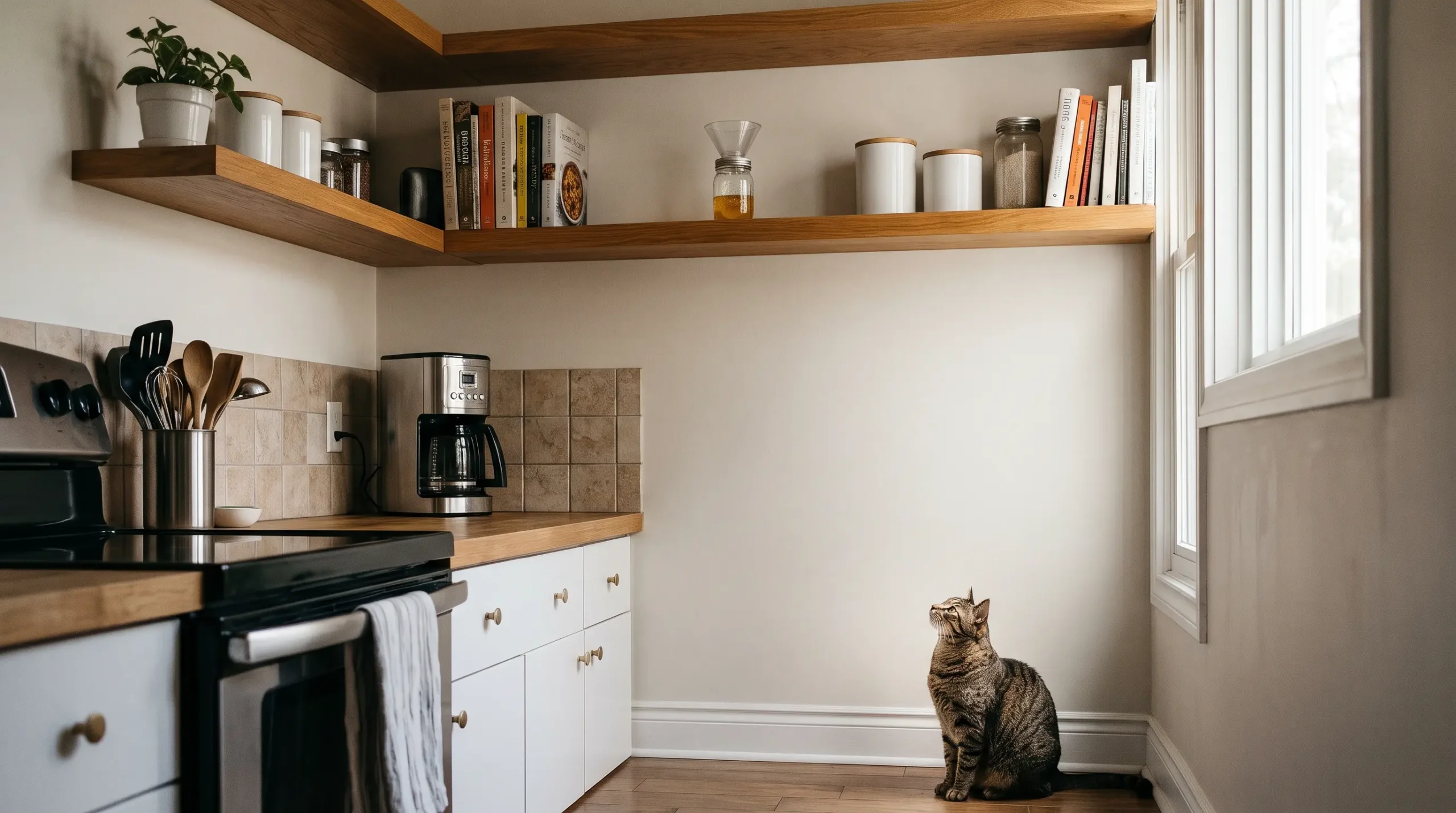
A high shelf is not automatically a safe location. Cats can jump, climb, and knock objects onto the floor.
Never position accessible traps beside feeding bowls, drinking water, litter boxes, or favorite resting places. If a treatment also affects the litter area, our litter box safety guide during pest control addresses that separate issue.
What if Your Cat Touches or Licks a Trap?
If a trap breaks or spills, move your cat away and prevent further contact. Keep the product packaging so you can identify its ingredients.
If adhesive sticks to your cat’s fur or paws, do not pull it off forcefully or use solvents or harsh cleaning products. Prevent licking as safely as possible and ask your veterinarian how to remove it without injuring the skin.
If your cat licks or swallows trap contents, contact your veterinarian or an animal poison control service for product-specific guidance. Do not assume every commercial attractant has the same ingredients, and do not induce vomiting unless a veterinarian specifically instructs you to do so.
A Simple Cat-Friendly Fruit Fly Control Plan
Use this checklist to address the likely food sources first, then investigate other locations if flies persist.
| Action | Purpose |
|---|---|
| Remove wet-food leftovers promptly | Limits exposed food and helps maintain freshness |
| Wash and dry food bowls after each use | Removes food residue that can attract flies |
| Clean feeding mats and nearby spills | Eliminates overlooked organic material |
| Rinse used food containers and empty trash regularly | Reduces fermenting waste |
| Inspect drains if flies gather nearby | Helps identify possible breeding sites |
| Place traps only in secured, inaccessible locations | Captures some adults while limiting cat exposure |
When Fruit Flies Keep Returning
If cleaning the feeding station does not reduce fly activity, focus on finding the source rather than adding more traps.
Check for:
- Overripe fruit, onions, potatoes, or other forgotten produce
- Residue inside trash and recycling containers
- Food spills beneath appliances or kitchen furniture
- Wet cloths, mops, or sponges containing food residue
- Organic buildup around sink drains or garbage disposals
- Overly damp houseplant soil, particularly if the insects look like fungus gnats
Try to identify where the flies are most concentrated and which type of small fly is present. Traps may reduce adult numbers, but a continuing breeding source can produce new flies.
If activity persists despite sanitation and inspection, a qualified pest-management professional can identify the insect and locate hidden breeding material. Explain that a cat lives in the home before any treatment is proposed. For prevention beyond the feeding area, see our pet-safe pest control guide for cat homes.
The Bottom Line
Control fruit flies around cat food by promptly clearing wet-food residue, washing bowls, and removing fermenting waste. If flies persist, identify the insect and investigate overlooked food, drains, or other damp organic material as appropriate.
Traps can support control when kept completely inaccessible to cats. The lasting solution is usually removing the material that attracts or supports the flies, rather than increasing pesticide use around your cat’s feeding area.
Sources & Editorial Standards
- Cornell Integrated Pest Management — Fruit Flies
- University of California IPM — Moth or Drain Flies
- University of Minnesota Extension — Managing Insects on Indoor Plants
- U.S. Food and Drug Administration — Proper Storage of Pet Food & Treats
- U.S. Environmental Protection Agency — Read the Label First: Protect Your Pets
Editorial note: Small flying insects around a feeding station are not necessarily all fruit flies. Correct identification and removal of breeding material are essential. Always follow product-specific directions, prevent cat access to traps and cleaning chemicals, and seek veterinary advice after a suspected exposure.