Silverfish Control in Cat Homes: Moisture, Paper Storage & Safer Trap Placement
A silverfish darts across the bathroom floor, and your cat is already following it. Before reaching for bug spray, look for the damp corner or paper storage that attracted the insect—and consider what your cat could touch after treatment.
For silverfish control in cat homes, start by fixing moisture problems, protecting stored paper and dry food, and keeping any monitoring traps inaccessible. A single silverfish rarely calls for pesticides. Glue traps, dusts, and sprays can create greater risks for your cat than the insect itself.
Are Silverfish Dangerous to Cats?
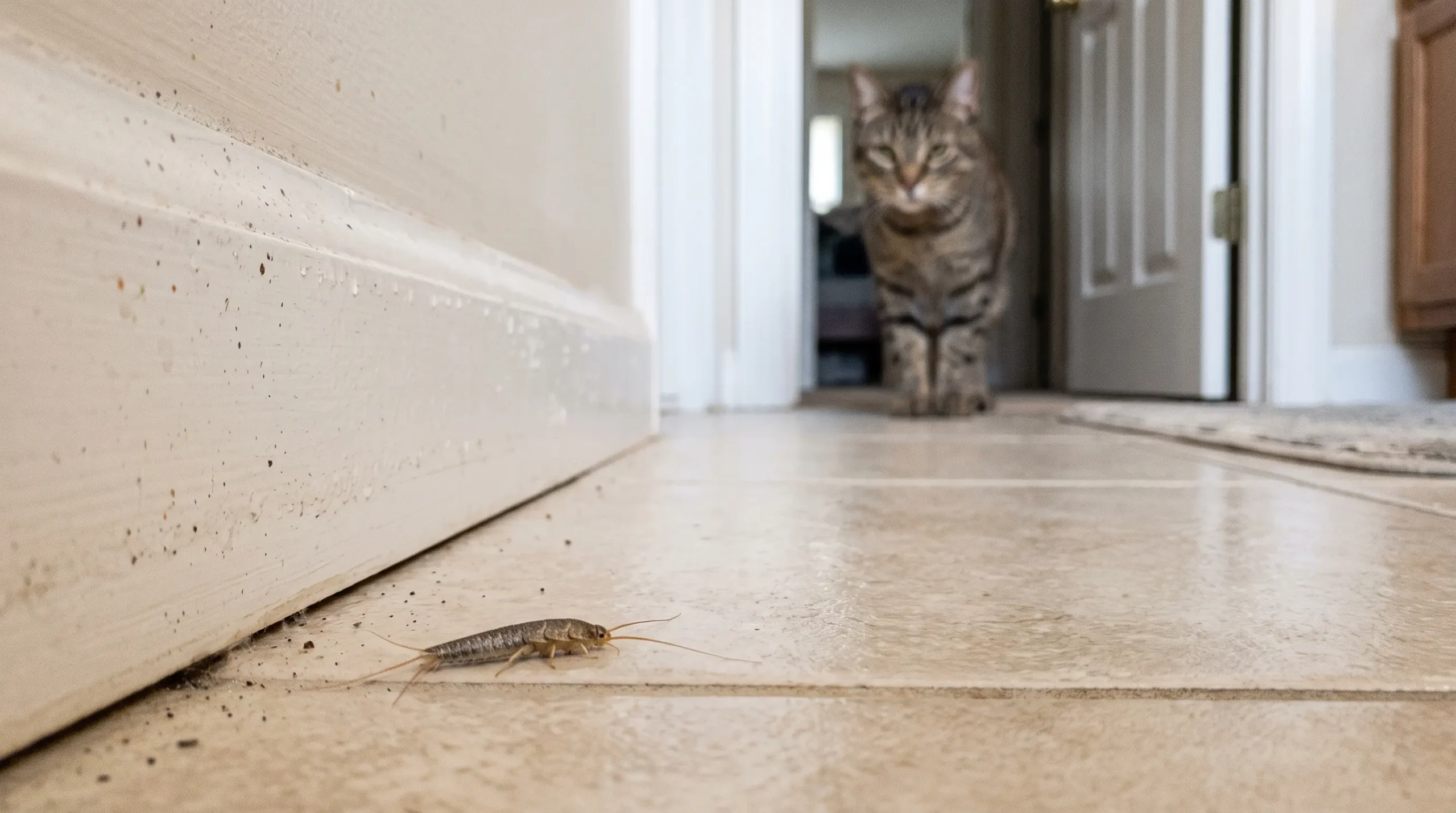
Silverfish are small, fast, wingless insects with silvery bodies, long antennae, and three tail filaments. They hide in cracks and usually emerge at night.
They are generally household nuisance pests rather than a direct threat to cats. Their feeding can damage paper, book bindings, fabrics, cardboard, and some stored dry foods. If your cat simply watches one, there’s usually no reason for alarm.
If your cat swallows an unidentified insect and develops drooling, vomiting, or unusual behavior, contact a veterinarian. The main preventable cat-specific risk in silverfish control is exposure to the traps or pesticides used against them.
Where Do Silverfish Hide in Cat Homes?
According to the University of California Integrated Pest Management Program, silverfish favor sheltered, often damp places with access to starchy materials. Check:
- Bathrooms and laundry rooms: Damp baseboards, plumbing gaps, sink cabinets, and appliance areas.
- Bookshelves and storage: Paper stacks, cardboard boxes, magazines, and closets.
- Dry-food storage: Open bags of cat food, flour, or cereal.
- Cat-accessible hiding places: Behind furniture or stored items near moisture and debris.
One sighting doesn’t prove an infestation. Repeated sightings, damaged paper, shed skins, or activity in safely placed monitoring traps suggest a closer inspection is worthwhile.
1. Reduce Moisture Before Using Insecticides
Silverfish often thrive where moisture persists. Killing individual insects while leaving a plumbing leak or damp closet unchanged may not solve the problem.
Fix Small Leaks and Damp Corners
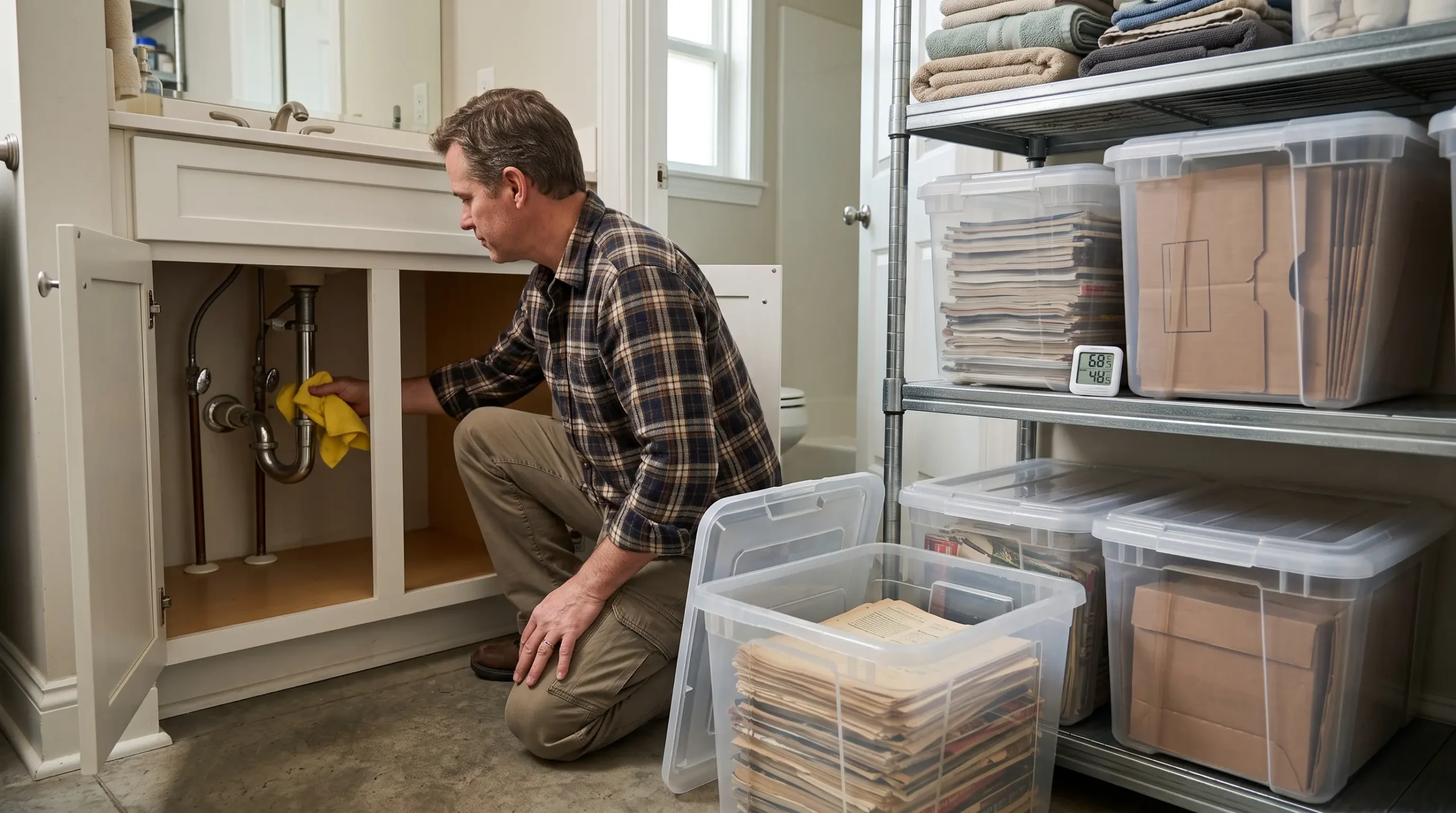
Inspect sinks, toilets, pipes, and laundry appliances. Repair leaks, dry damp cabinets, and address recurring condensation instead of repeatedly wiping the same wet spot.
Clean up spills around your cat’s fountain or water bowl, but never limit access to fresh drinking water to discourage silverfish.
Improve Airflow Without Creating an Escape Route
Use bathroom fans and consider a dehumidifier for persistently damp spaces. A hygrometer can help identify recurring humidity problems; there’s no need to dry the home excessively.
Secure dehumidifier cords and collected water, and ensure any window opened for ventilation has a genuinely cat-safe screen.
2. Protect Paper, Books, and Cardboard Storage
Silverfish can feed on paper products, starches, and some book-binding adhesives. Damp cardboard also offers shelter.
- Move valuable papers and long-term collections into sealed, sturdy storage containers.
- Replace wet or deteriorating cardboard, and move books away from leaks.
- Vacuum dust and debris near shelves, boxes, and storage edges.
- Keep dry cat food and other dry goods properly sealed.
What About Cardboard Cat Scratchers and Play Boxes?
There’s no need to throw away every cardboard toy. Keep scratchers and play boxes dry, inspect them if silverfish repeatedly appear nearby, and replace items that become damp, moldy, or badly damaged.
Never spray pesticide directly onto your cat’s scratchers, toys, bedding, or other frequently touched belongings.
3. Where Can You Place Silverfish Traps in a Cat Home?
Sticky insect-monitoring traps may reveal where silverfish travel, but exposed adhesive can attach to paws, fur, or whiskers. A package marked “non-toxic” does not make a glue trap safe for direct contact.
Choose Physically Inaccessible Locations
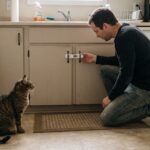
Use a trap only in a genuinely secured utility cabinet or storage area your cat cannot open, enter, or reach into. Before placing one, confirm that the adhesive is inaccessible and the trap cannot fall or be dragged out.
Also check whether the particular trap contains an insecticide or other ingredients requiring label precautions. If a secure placement isn’t possible, skip the glue trap and focus on moisture control, cleaning, and sealing gaps.
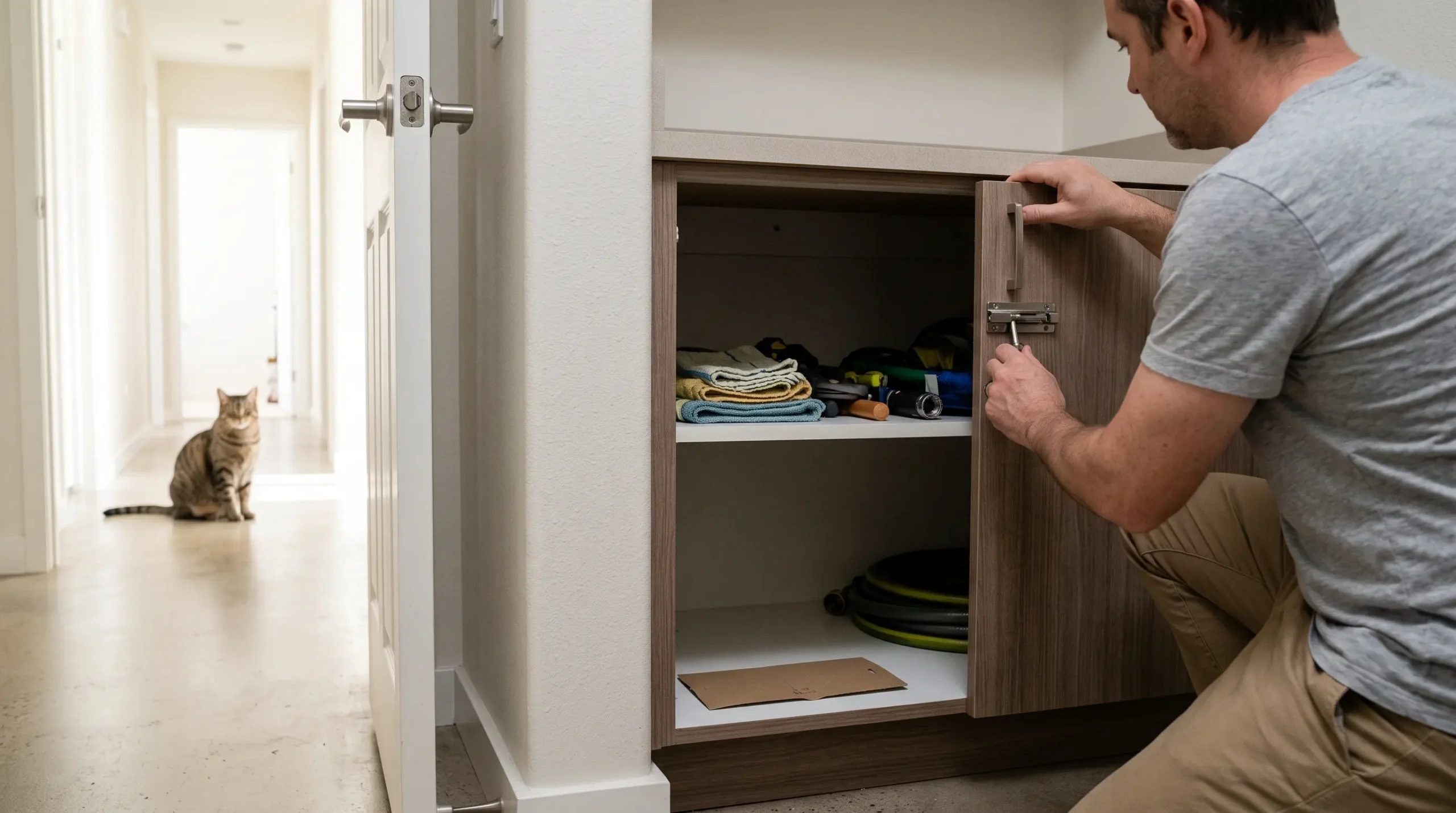
Illustration of protected placement: A covered trap is not automatically cat-proof; the surrounding compartment must prevent all access.
Where Should You Avoid Placing Traps?
Avoid exposed sticky traps beside litter boxes or bowls, along open bathroom baseboards, beneath furniture where your cat hides, and on shelves or counters your cat can climb. A folded cardboard cover is not enough if a paw can reach the adhesive.
Inspect protected traps regularly and dispose of them as directed once monitoring is no longer needed.
4. What About Silverfish Sprays, Powders, and Natural Repellents?
Occasional silverfish usually don’t justify chemical treatment. If activity persists after moisture and storage corrections, assess each product’s actual label and exposure risks rather than assuming that “natural” means safe.
Loose Insecticide Dusts and Diatomaceous Earth
Boric-acid, silica-based, and diatomaceous-earth products differ in formulation and approved uses. Don’t scatter loose insecticidal dust on accessible baseboards, under furniture your cat uses, near litter areas, or on cat belongings. Dust may be inhaled, tracked on paws, or swallowed during grooming.
Essential Oils and Scented Repellents
Peppermint, cedarwood, and similar essential-oil mixtures are often promoted as home repellents, but they do not replace fixing dampness or food and hiding places. Concentrated oils can expose cats through skin contact, licking, or inhalation.
The ASPCA Animal Poison Control Center warns about risks from concentrated essential oils. Don’t apply homemade oil sprays to cat-accessible floors, scratchers, bedding, or furniture.
Commercial Pesticides
For a substantial infestation, choose only a product specifically labeled for the pest, location, and application method, or consult a qualified professional. Never improvise treatment inside pet areas.
The National Pesticide Information Center advises removing pets and their belongings from treatment areas and excluding them for the label-required period or until sprayed surfaces have dried completely, whichever is longer. Follow all additional ventilation and re-entry instructions.
For broader options, see our practical pest-control guide for cat homes. Our guides to reading pesticide labels when you have pets and cat re-entry after indoor pest control cover those separate safety steps.
5. Cleaning and Follow-Up Without Exposing Your Cat
After fixing moisture problems and securing stored materials, keep up a simple routine:
- Vacuum cracks and edges behind storage, shelves, and plumbing fixtures.
- Dispose of collected debris securely so your cat cannot investigate it.
- Seal suitable gaps around pipes and baseboards once leaks are addressed.
- Keep paper and food dry and protected rather than rebuilding damp storage piles.
- Monitor activity through sightings, material damage, or inaccessible traps.
If pesticides were already applied, follow their specific cleanup instructions. Don’t immediately scrub treated surfaces or spread residues through household cleaning.
What if Your Cat Touches a Sticky Trap or Pesticide?
If your cat becomes stuck to a glue trap, do not yank it away or pull forcefully on the fur or skin. Keep your cat calm and contact your veterinarian for safe removal advice, particularly if the adhesive is near the eyes or mouth or the cat is distressed.
Never use paint thinner, gasoline, harsh solvents, or essential oils on your cat. If pesticide is involved, contact your veterinarian or an animal poison-control service promptly with the product name and label.
The ASPCA provides guidance on pets exposed to sticky household substances. The appropriate removal method depends on whether the substance is plain adhesive or contains pesticide and where it has contacted the cat.
Breathing difficulty, tremors, seizures, collapse, or other serious symptoms after possible pesticide exposure require urgent veterinary care. In the U.S., ASPCA Animal Poison Control can be reached at 888-426-4435; fees may apply.
When Should You Call a Pest-Control Professional?
Arrange an inspection if silverfish keep appearing after moisture corrections, stored materials show ongoing damage, several rooms are affected, or a hidden leak or entry point is suspected.
Tell the professional you have a cat. Ask which areas require treatment, whether nonchemical methods may suffice, what products would be used, and how your cat will be kept away during application and re-entry.
A Practical Approach That Works With Your Cat’s Routine
Finding one silverfish beside a bathroom sink doesn’t mean your whole home needs treatment. Start where it appeared: check for dampness, protect nearby paper, clean sheltered edges, and watch for repeat activity.
Bottom line: Control moisture and clutter first. If you need monitoring traps or pesticide treatment, keep them completely out of your cat’s reach and follow the actual product directions. A safer, lasting fix is usually better than repeatedly spraying the same damp corner.
Sources & Editorial Standards
This guide draws on university extension pest-management information, federal pesticide-safety guidance, and animal poison-control recommendations.
- University of California IPM — Silverfish and Firebrats
- National Pesticide Information Center — Silverfish and Firebrats
- NC State Extension — Silverfish and Firebrats
- U.S. Environmental Protection Agency — Read the Label First: Protect Your Pets
- NPIC — Pets and Pesticide Use
- ASPCA — The Essentials of Essential Oils Around Pets
- ASPCA — How to Decontaminate Pets Exposed to Sticky Substances
Editorial note: This article provides general silverfish-control and cat-exposure prevention guidance, not approval for any specific pesticide or trap. Follow current product labels, and contact a veterinarian if poisoning, adhesive injury, or illness is suspected.