Roach Bait Stations in Cat Homes: Access, Casing Risks & Residue Control
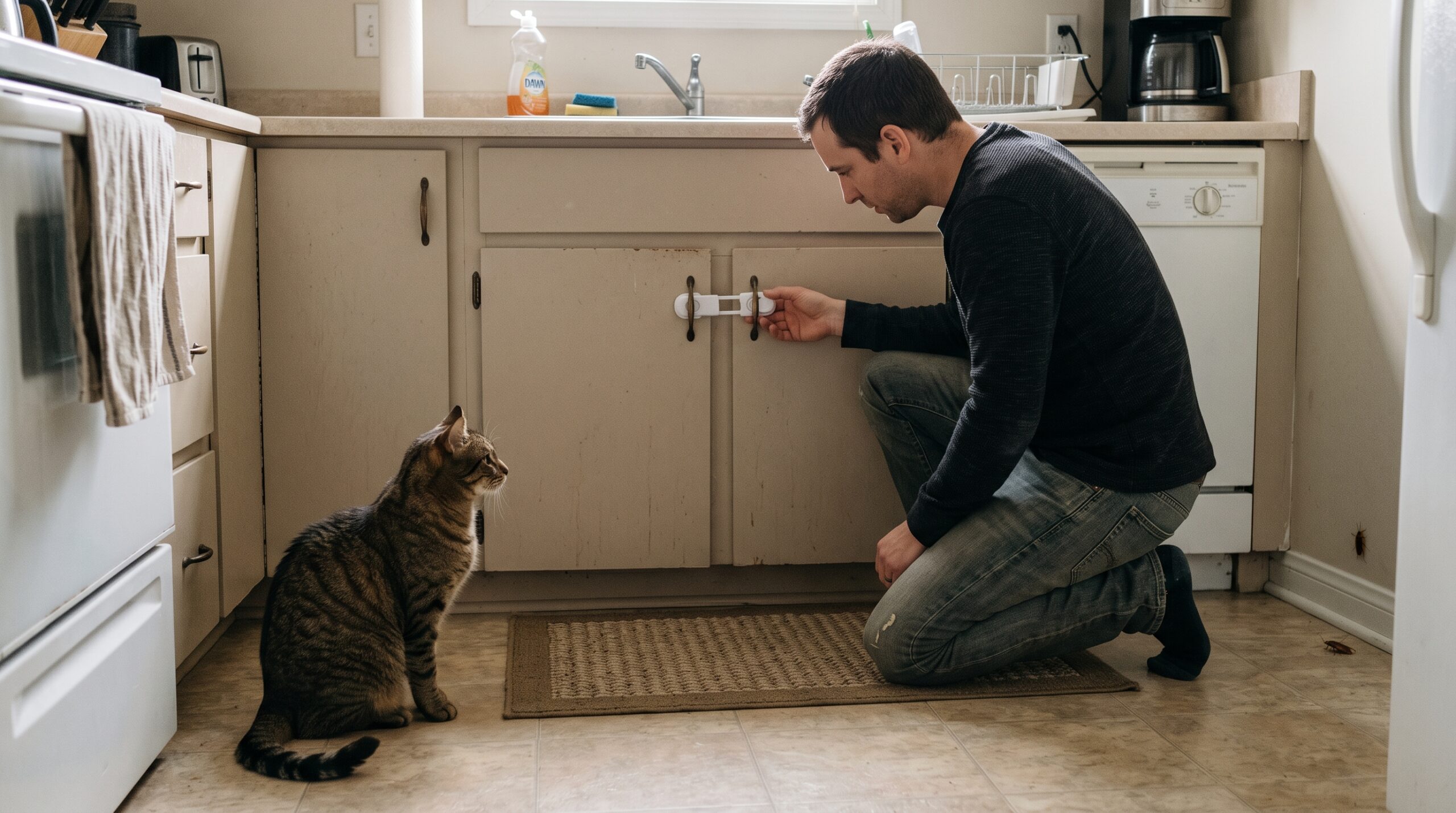
You tuck a roach bait station under the sink, then discover your cat knows how to open that cabinet. Suddenly, the small plastic station is within pawing and chewing distance.
Cockroach bait stations can limit how much pesticide is spread around a home, but enclosed does not mean cat-proof. The station must stay inaccessible, intact, and away from your cat’s belongings throughout treatment.
Quick answer: Choose a roach bait station labeled for your intended use. Place it behind a reliable barrier your cat cannot open, reach around, or climb past. Inspect it regularly for movement, damage, or spilled bait. If your cat chews a station or may swallow bait or plastic, contact your veterinarian or an animal poison-control service promptly.
Are Roach Bait Stations Safe Around Cats?
Most household roach bait stations contain a food-based attractant and an insecticide inside a small housing. Keeping bait contained may reduce exposure compared with broad surface spraying, but a cat can still dislodge or chew an accessible station.
The National Pesticide Information Center (NPIC) advises using insect baits in secure stations or places pets cannot access. Three things determine your cat’s actual risk:
- Formulation: Which active ingredient is present, at what concentration, and in what amount.
- Access: Whether the cat can paw at, move, bite, or break the station.
- Damage: Whether exposed bait, residue, or plastic pieces could be swallowed.
Some common ant and cockroach baits contain small insecticide quantities, and limited exposures may cause mainly stomach upset. That is not a guarantee for every product or cat. Swallowed station plastic can pose a separate foreign-body risk.
How Can a Cat Be Exposed to Roach Bait?
Cats can reach farther than a placement looks from standing height. A station may also move during cleaning or become accessible if a cabinet is left open.
| Exposure Route | What Can Happen | How to Reduce Risk |
|---|---|---|
| Chewing the casing | Plastic breaks; bait or fragments may be swallowed. | Keep the complete station behind a secure barrier. |
| Loose bait | Contents spill from a damaged or displaced station. | Remove damage promptly and restrict access while cleaning. |
| Paws or fur | Residue transfers to the coat and is later swallowed during grooming. | Prevent contact with contaminated surfaces. |
| Station movement | A cat bats or drags bait into an open area. | Use stable, label-permitted placements inaccessible to cats. |
| Contact with pet supplies | Bait reaches bowls, food, bedding, or toys. | Keep treatment areas separate from pet belongings. |
A small lick, a chewed station, and swallowing the entire housing require different risk assessments. Record what your cat could actually have reached.
Read the Product Label Before Placing a Station
Similar-looking roach stations can contain different ingredients and have different placement rules. Check the pest listed, permitted locations, pet precautions, mounting requirements, replacement interval, disposal instructions, and first-aid directions.
Keep the package or a clear label photo, including the active ingredient and EPA registration number for U.S. products. Claims such as low odor or indoor use are not promises of safety if your cat touches or swallows the bait.
For a closer look at these instructions, see our guide to reading pesticide labels when you have pets.
Where Should You Place Roach Bait Stations With Cats?
Roach bait generally works best near cockroach hiding places or travel routes. In a cat home, the placement must also be impossible for the cat to reach during normal exploration.
Choose a Secure, Restricted Compartment
A closed utility cabinet may work if the label permits it, the latch reliably resists your cat, and there are no reachable gaps around pipes or doors. An under-sink cabinet is not safe merely because it has a door.
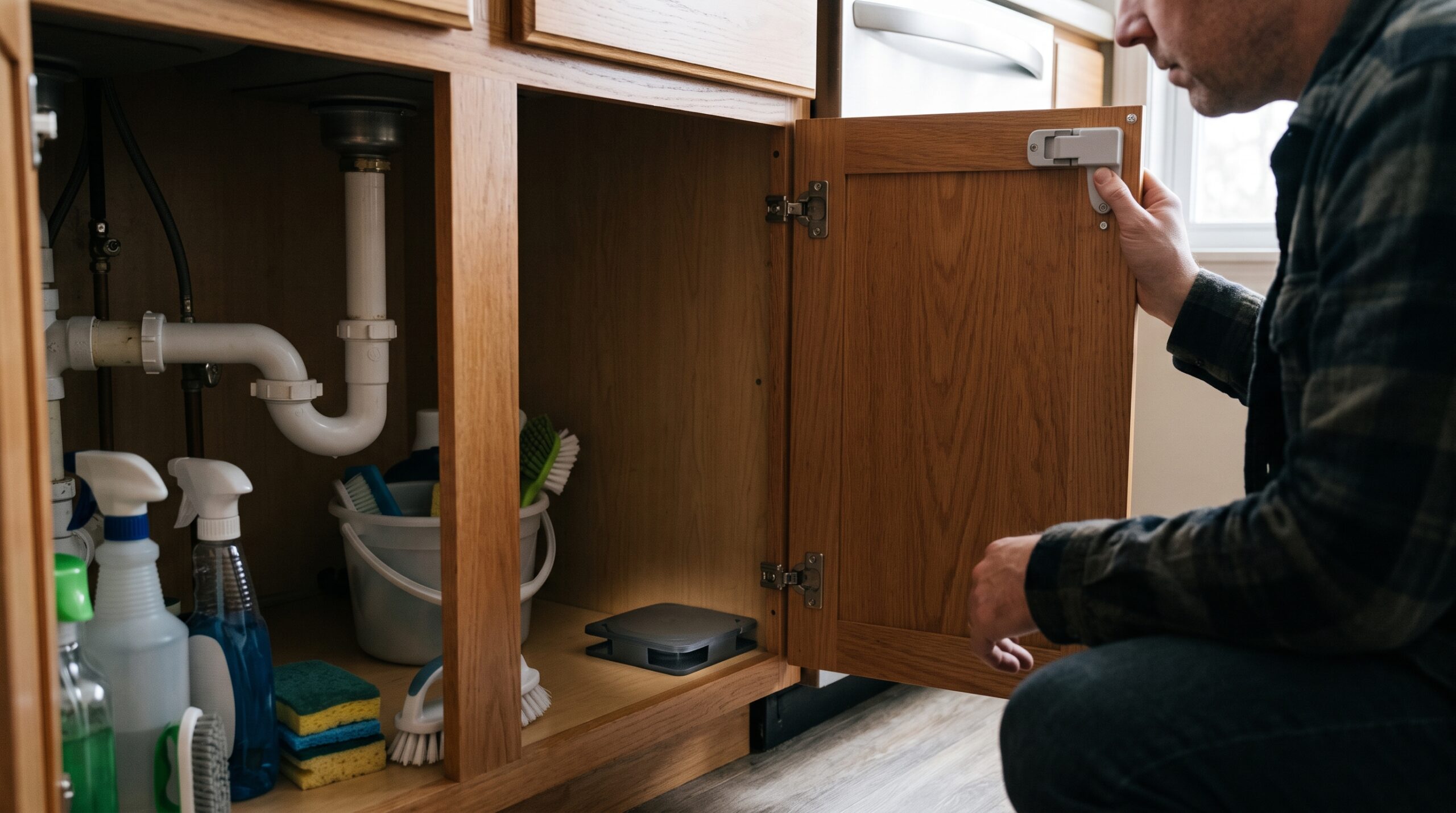
Check whether the station could be knocked loose when the cabinet opens. Keep the compartment closed whenever you are not actively inspecting it.
Don’t Assume These Locations Are Inaccessible
- Exposed baseboards: Cats can bat stations away from walls.
- Under sofas or beds: These may be normal hiding or play areas.
- Behind movable appliances: Paws may reach through gaps, or the station may shift.
- High shelves or counters: Climbing cats can reach them.
- Near litter boxes or feeding stations: Repeated pet traffic increases contact opportunities.
If you cannot create a truly inaccessible, label-approved location near roach activity, ask a qualified pest-control professional about another approach. Our cat litter-box protection guide explains how to separate litter areas and supplies from pest-control treatments.
Why the Plastic Casing Deserves Special Attention
The pesticide is not the only concern. The ASPCA Animal Poison Control Center explains that many common insect-bait exposures cause mainly stomach upset, but plastic packaging can be an important additional hazard.
Chewed pieces may injure the mouth or throat or become lodged in the digestive tract. The risk depends on the amount and shape of the plastic swallowed and the cat’s size. If any part of the station is missing, tell the veterinarian specifically.
What if a Bait Station Breaks or Leaves Residue?
A cracked or leaking station turns contained bait into potentially accessible pesticide. If you find damage:
- Exclude your cat. Close the room or cabinet before touching the spill.
- Identify the formulation. Check the exact label for cleanup, handling, and disposal instructions.
- Contain damaged pieces and spilled bait. Use the specified protective measures and avoid spreading residue.
- Check nearby cat supplies. Keep potentially contaminated food, water, bowls, toys, or bedding out of use until the appropriate cleaning or replacement is determined.
- Inspect again. Confirm no accessible fragments or bait remain before reopening the area to your cat.
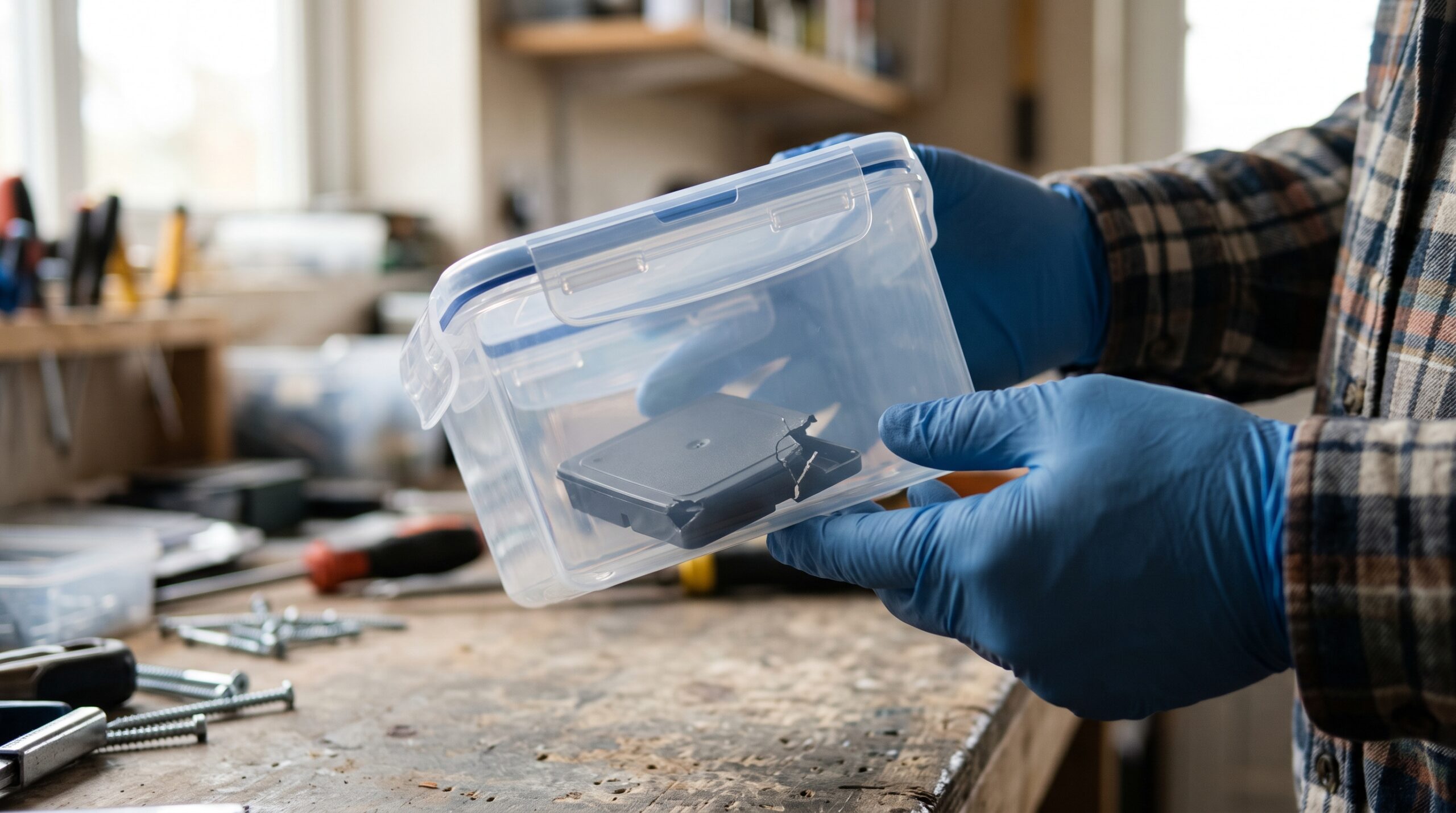
Don’t attempt to neutralize an unknown insecticide with bleach, vinegar, essential oils, or mixed cleaners. Follow product-specific directions. For significant contamination or uncertainty, ask the manufacturer, NPIC, or a qualified professional. An intact station in a permitted location doesn’t require special cleanup simply because it contains bait.
What Should You Do if Your Cat Chews or Swallows a Roach Bait Station?
Contact a veterinarian or animal poison-control service promptly if your cat chewed the housing or may have swallowed bait or plastic. Don’t induce vomiting or give milk, oil, or home treatments unless specifically instructed by a veterinary professional. Choking, breathing difficulty, repeated vomiting, severe weakness, tremors, seizures, or collapse need emergency veterinary care.
Have the product package ready. Tell the veterinary team the active ingredient if known, how much bait or plastic is missing, when exposure happened, your cat’s weight, and any symptoms. A photo of the remaining station can help with identification.
In the U.S., the ASPCA Animal Poison Control Center can be reached at 888-426-4435; consultation fees may apply. Do not assume a normal-looking cat is safe when a substantial piece of casing is unaccounted for.
Can Roach Bait Leave Residue on Your Cat’s Paws?
Intact stations are designed to contain bait. But if one breaks, leaked material may transfer onto paws or fur and later be swallowed during grooming.
Move your cat away from the source, prevent further licking as safely as possible, and ask a veterinarian or poison specialist how to remove the specific formulation. Don’t apply household solvents, disinfectants, or essential oils to your cat. The amount visible on the fur may not reflect the entire exposure.
Should You Use Roach Sprays Alongside Bait Stations?
Adding aerosol or residual sprays around bait can increase pet exposure and sometimes discourage cockroaches from feeding on it. The University of California IPM Program recommends targeted bait placement rather than routine broad spraying or fogging for household cockroach problems.
Don’t spray around stations or mix pest-control products unless the relevant labels expressly permit the intended use. Baits are not instant treatments; reduced activity may take a week or longer. The broader pest-control strategy belongs outside this station-specific guide.
Make Roach Baits Less Necessary by Reducing Food and Water Access
Removing alternative food and moisture sources can improve bait performance while limiting the need for additional pesticide:
- Keep cat food sealed and remove crumbs or dried wet-food residue.
- Dispose of leftover perishable food appropriately.
- Repair leaks and dry damp areas near sinks and appliances.
- Reduce clutter and use covered garbage containers.
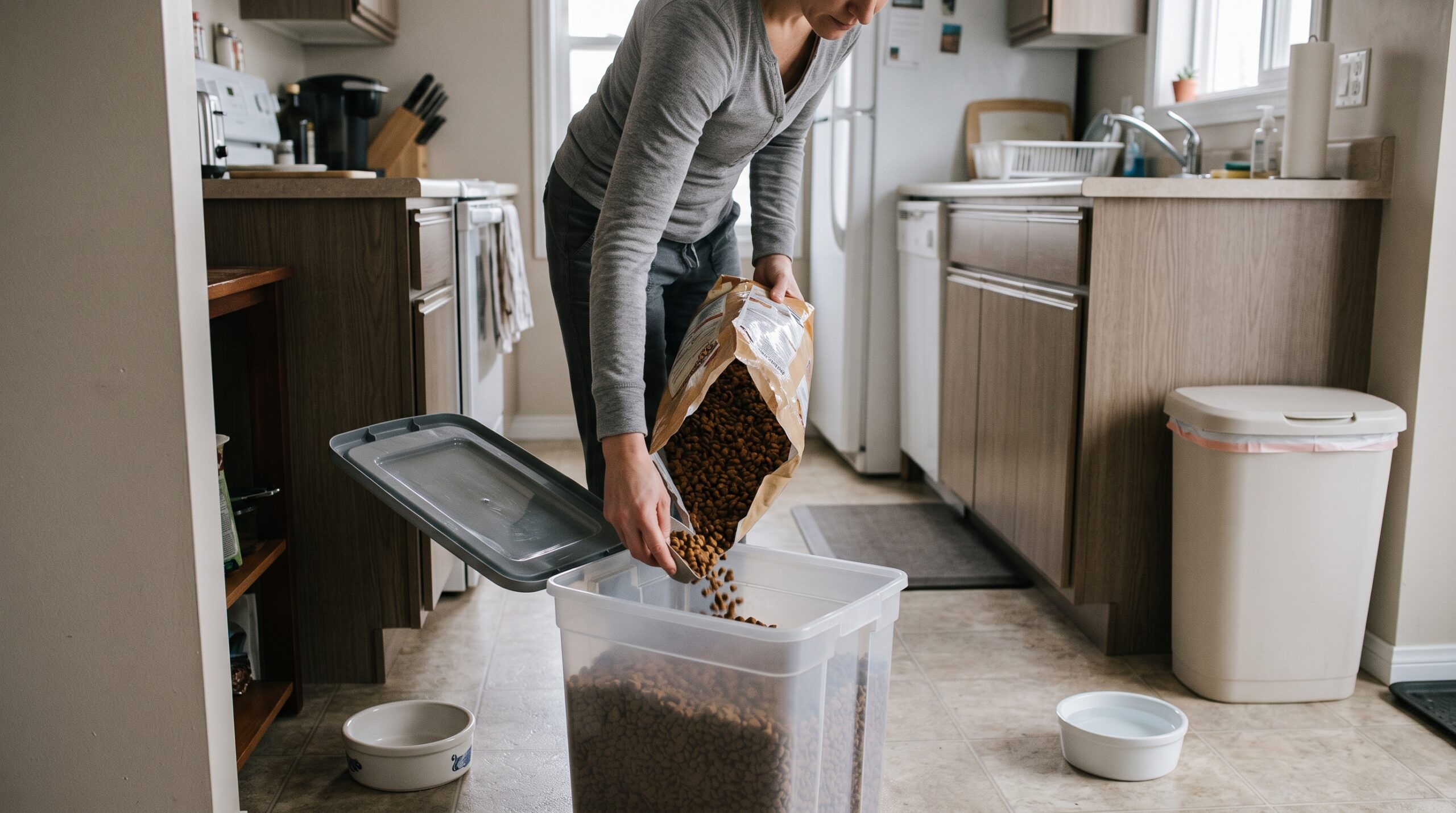
Never restrict your cat’s fresh drinking water to deter roaches. Clean around the bowl instead. For a full prevention plan, see our pest-control guide for cat homes.
How Often Should You Check and Replace Roach Bait Stations?
Follow the product’s labeled service and replacement intervals. Periodically verify that the casing is intact, the station hasn’t moved, no bait has escaped, and the cabinet latch or other protective barrier still works.
Keep your cat excluded during inspections. Dispose of damaged or expired stations as instructed, and never open or refill a disposable station unless the product is specifically designed and labeled for refilling.
When Is Professional Roach Control the Better Choice?
Consider professional help if roaches persist, the infestation is substantial, or every practical bait location is reachable by your cat. Explain your cat’s climbing and cabinet-opening habits.
Ask which products and active ingredients will be used, exactly where they will go, how contact will be prevented, and whether any pet-removal, cleaning, or re-entry restrictions apply. Gel, dust, and sprays have different exposure routes and shouldn’t be treated as identical to enclosed stations.
The Safest Station Is One Your Cat Cannot Reach
Choose a properly labeled product, place it near cockroach activity only if your cat is physically excluded, and keep checking for damage or movement. Protect pet food and supplies, clean damaged stations as the product directs, and seek veterinary advice after any suspected chewing or ingestion.
The most useful safety feature isn’t the plastic shell. It’s a placement that keeps the shell, bait, and any residue completely out of your cat’s reach.
Sources & Editorial Standards
This guide uses pesticide safety, university extension, and veterinary poison-control guidance. No bait station is considered safe for direct cat contact:
- National Pesticide Information Center — Pets and Pesticide Use
- U.S. EPA — Do’s and Don’ts of Pest Control
- ASPCA Animal Poison Control — Common Household Items and Insect Bait Risks
- University of California IPM — Cockroaches
- University of Maryland Extension — Cockroaches
- NPIC — Pesticide Poisoning in Pets
Veterinary disclaimer: This article is for general education, not an individual poisoning assessment. Ingredient, dose, exposure route, cat health, and any swallowed plastic all affect risk. If exposure is suspected, contact your veterinarian or an animal poison-control service promptly and follow the product label.