
How to Handle a Hamster Without Chasing or Grabbing
You reach toward your awake hamster, and they dart into the nearest hide. Should you try again before they disappear?
The gentlest approach is to let your hamster get used to your hands, approach voluntarily, and be lifted in two supporting palms—not chased or grabbed. Some hamsters enjoy brief handling; others prefer to interact without being held. Both can learn to trust a patient owner.

How to Pick Up a Hamster Without Scaring Them
If your hamster is awake, relaxed, and already comfortable approaching you:
- Approach from the side. Move slowly and let your hamster see or hear you first.
- Offer an open palm. Keep it still on the bedding and let the hamster investigate without pursuit.
- Bring both hands alongside the body. Form a loose cup, rather than gripping from above.
- Scoop from underneath. Support the body and feet across both palms without squeezing.
- Stay low. Hold your hamster only a few inches above bedding, your lap, or another secure surface.
- End gently. Lower both hands and let the hamster walk off before handling becomes distressing.
This two-handed technique follows guidance from Blue Cross and the RSPCA. If your hamster runs from an open hand, don’t skip ahead to lifting. Start with the trust-building steps below.
Step 1: Choose the Right Time for Handling
Wait until your hamster is naturally awake and active, usually in the evening or at night. Speak softly before approaching. Never wake them, dig into a burrow, or reach into a sleeping hide just to practice handling.
Before you begin, wash and dry your hands to remove food smells and residue. Avoid strong fragrances, keep other pets out, minimize noise, and secure doors and escape routes.
Give a newly arrived hamster time to settle before attempting physical contact. Some investigate hands within days; others take considerably longer. A secure burrow should remain a place they can retreat to undisturbed. Our deep bedding guide explains why that refuge matters.
Step 2: Let Your Hamster Approach Your Hand
Rest your open palm on the bedding and stay still. Your hamster might sniff it, walk nearby, climb aboard, or ignore you. All are useful information about their comfort level.
You can offer a tiny piece of their usual dry food or another suitable reward on your palm, without forcing an approach.
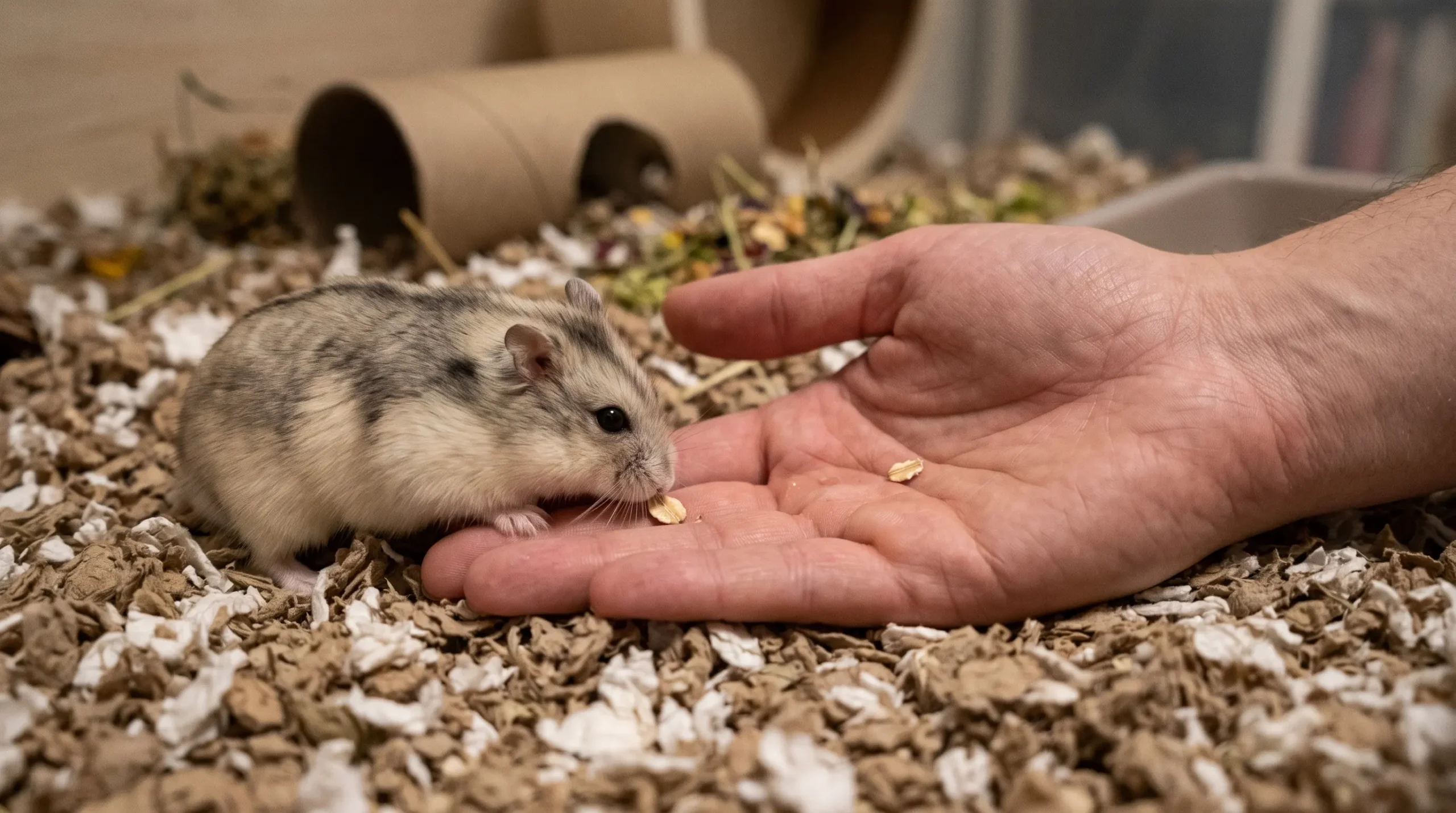
Don’t lift your hand the first time your hamster steps onto it. Let them discover they can come and go. Repeat short, calm sessions during their normal active period. If they repeatedly retreat, reduce the pressure or end the session.
Step 3: Practice the Two-Handed Scoop
Once your hamster willingly approaches and walks onto your hands, gently slide both palms beneath the body and lift just above the bedding. Lower them again almost immediately. Extend handling gradually only while they remain comfortable.
Support the whole body, keep your hands close together, and avoid gaps or squeezing. Sit on the floor or work over a safe, low surface: even a tame hamster can jump without warning. If they struggle, lower them safely and finish the session.
Never lift a hamster by the tail, legs, or loose skin. Veterinary restraint techniques are not ordinary handling methods for owners.
Use a Tunnel if Your Hamster Is Afraid of Hands
What if your hamster explores happily until a hand comes near? A familiar tunnel or suitable hide can make necessary transfers less frightening. Woodgreen Pets Charity recommends encouraging a worried hamster into a tunnel rather than grabbing them.
- Choose a sturdy, wide tunnel with smooth edges and enough room for your hamster, even with full cheek pouches.
- Set it on the bedding and let your hamster enter voluntarily; a small food reward may help.
- Support the tunnel horizontally with both hands, guarding the openings to prevent a fall without squeezing or trapping the hamster against the tube.
- Move only to a prepared, secure location, then lower the tunnel and let your hamster walk out.

Check that the tube cannot collapse or allow an unexpected fall. Use it for necessary transfers, not to force repeated unwanted cuddling. For veterinary travel, use a suitable escape-resistant carrier rather than relying on a chewable cardboard tube.
How to Tell if Your Hamster Is Comfortable or Frightened
Look at the full situation, not one movement. Accepting food doesn’t necessarily mean a hamster is ready to be lifted, and freezing may indicate fear rather than relaxation.
| What You Notice | What It May Mean | What to Do |
|---|---|---|
| Approaches your open hand | Curiosity or familiarity | Stay still and allow exploration |
| Calmly walks across your palms | Growing tolerance of contact | Continue brief, low handling practice |
| Freezes or retreats | Possible fear or uncertainty | Pause and provide space |
| Repeatedly flees into a hide | Contact may feel threatening | End the attempt and return to an easier step later |
| Squeals, lunges, or tries to bite | Possible strong distress or defense | Stop contact and reassess |
| Struggles frantically while held | Wants to escape or is overwhelmed | Lower to a secure surface immediately |
A sudden loud squeal deserves attention. Our guide to hamster screaming and warning signs covers that concern separately.
What if Your Hamster Bites When You Try to Hold Them?
Biting can be a defensive response to being startled, cornered, awakened, or handled before the hamster feels safe. It doesn’t necessarily mean they’re naturally aggressive.
If bitten, don’t shout, flick, shake, or pull the hamster away abruptly. Keep your hand steady, lower it toward a safe surface, allow the hamster to release, and end the session. Reconsider what triggered the reaction.
If your skin breaks, wash the wound thoroughly with soap and running water. Seek medical advice for deep wounds, signs of infection, or other concerns. Repeated biting may involve fear, food odors, or discomfort; see our guide to why hamsters bite for a focused explanation.
A sudden change in tolerance, especially with reduced appetite, unusual movement, or other illness signs, warrants advice from an exotic-animal veterinarian.
How Long Does It Take for a Hamster to Trust You?
There is no fixed deadline. Previous handling, temperament, health, and species all matter. Larger Syrian hamsters may be easier to handle physically, while very small, fast Roborovski hamsters can be especially difficult to pick up safely.
Look for voluntary progress: staying nearby when your hand arrives, sniffing your palm, stepping onto it or entering a transfer tunnel, tolerating a brief supported lift, and returning calmly to exploration afterward.
Trust isn’t measured by how long you can hold your hamster. Willing approach and calm necessary transfers are worthwhile outcomes, even without cuddling.
Five Handling Mistakes Worth Avoiding
- Chasing through the enclosure: It teaches your hamster to associate hands with pursuit.
- Reaching into a sleeping hide: Being startled awake can prompt defensive biting.
- Grabbing from above: A sudden overhead hand can feel threatening.
- Holding too high: A quick jump can cause a serious fall.
- Ignoring distress: Freezing, frantic struggling, or repeated retreat means reduce contact, not push ahead.
Closely supervise children. Observation, offering treats, or allowing a hamster to explore across supported hands may be safer than letting a child carry a quick-moving animal.
What if Your Hamster Never Enjoys Being Held?
That’s not a failure. Some hamsters prefer foraging, exploring, or brief approaches to a familiar person over being carried. Calm interaction and voluntary food rewards can still build a positive relationship.
Use a trusted tunnel or suitable transfer container for necessary cleaning or veterinary visits. For wider care needs, see our Complete Hamster Care Guide.
The aim isn’t to make your hamster tolerate everything. It’s to become someone they can approach without fear. Let them set the pace, support their body securely, and keep any handling low and brief.
Sources & Editorial Standards
This guide draws on animal-welfare and veterinary resources for humane handling, gradual trust-building, and prevention of injury:
- Blue Cross — Hamster Care and How to Handle Hamsters
- RSPCA — Understanding Hamster Behaviour
- Woodgreen Pets Charity — Caring for Hamsters: Handling and Trust
- PDSA — Hamsters as Pets: How to Hold a Hamster
- RSPCA — Hamster Health and Welfare
Editorial note: Hamsters differ in temperament, age, and health. These are general humane-handling guidelines, not a guaranteed taming schedule. Seek an exotic-animal veterinarian if behavior changes suddenly or handling appears painful or persistently distressing.