How Much Food Should a Hamster Get Each Day?
A tablespoon of hamster food can look surprisingly small. If the bowl is empty by morning, you might offer another scoop—but your hamster may have hidden much of the first serving in a food stash.
For a healthy adult Syrian hamster, around 10 grams of complete dry hamster food daily is a useful starting point; Chinese, Campbell’s, winter white, and Roborovski hamsters generally start around 5–8 grams. These are estimates, not fixed prescriptions. The right portion depends on the food’s formulation, your hamster’s size, age, body condition, and health.
How Much Should You Feed a Hamster Daily?
Woodgreen Pets Charity provides the following practical starting amounts for dry hamster food:
| Hamster Type | Approximate Daily Dry Food | Practical Starting Point |
|---|---|---|
| Syrian hamster | About 10 g | Often described as roughly 1 tablespoon |
| Chinese hamster | About 5–8 g | Smaller measured daily portion |
| Campbell’s or winter white dwarf hamster | About 5–8 g | Smaller measured daily portion |
| Roborovski hamster | About 5–8 g | Start with a species- and food-appropriate measured amount |
Important: The gram amounts are approximate daily dry-food allowances, not guarantees of what every individual hamster will eat. Different brands and formulations have different calorie densities and feeding instructions.
Use a gram scale when possible: a tablespoon of large pellets may weigh much less than the same spoon filled with dense seeds and grains.
Check your food’s feeding instructions. If they differ substantially from these estimates, consider the formulation and ask an exotic-animal veterinarian for guidance rather than automatically overriding the label.
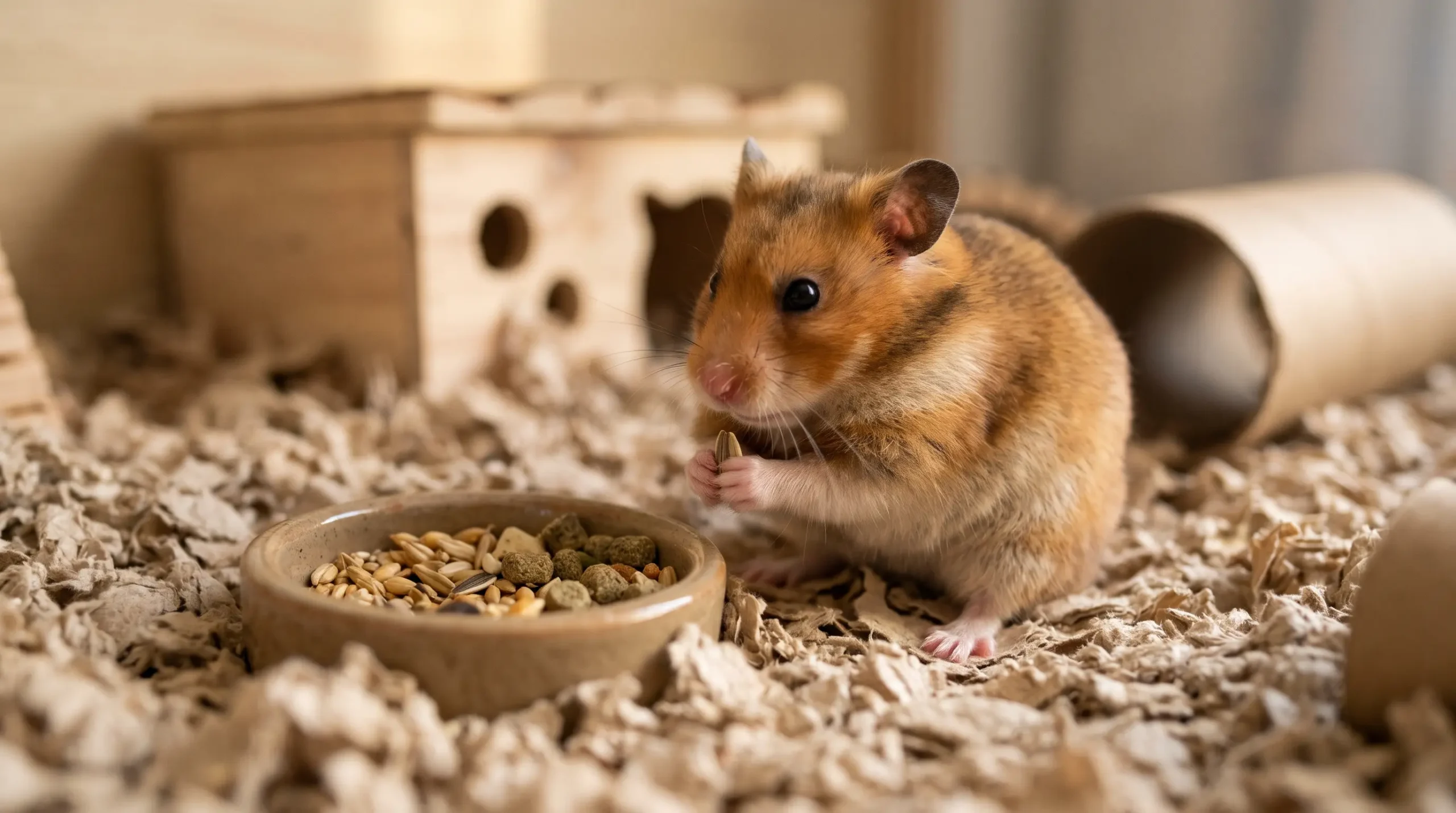
How to Measure Your Hamster’s Daily Portion
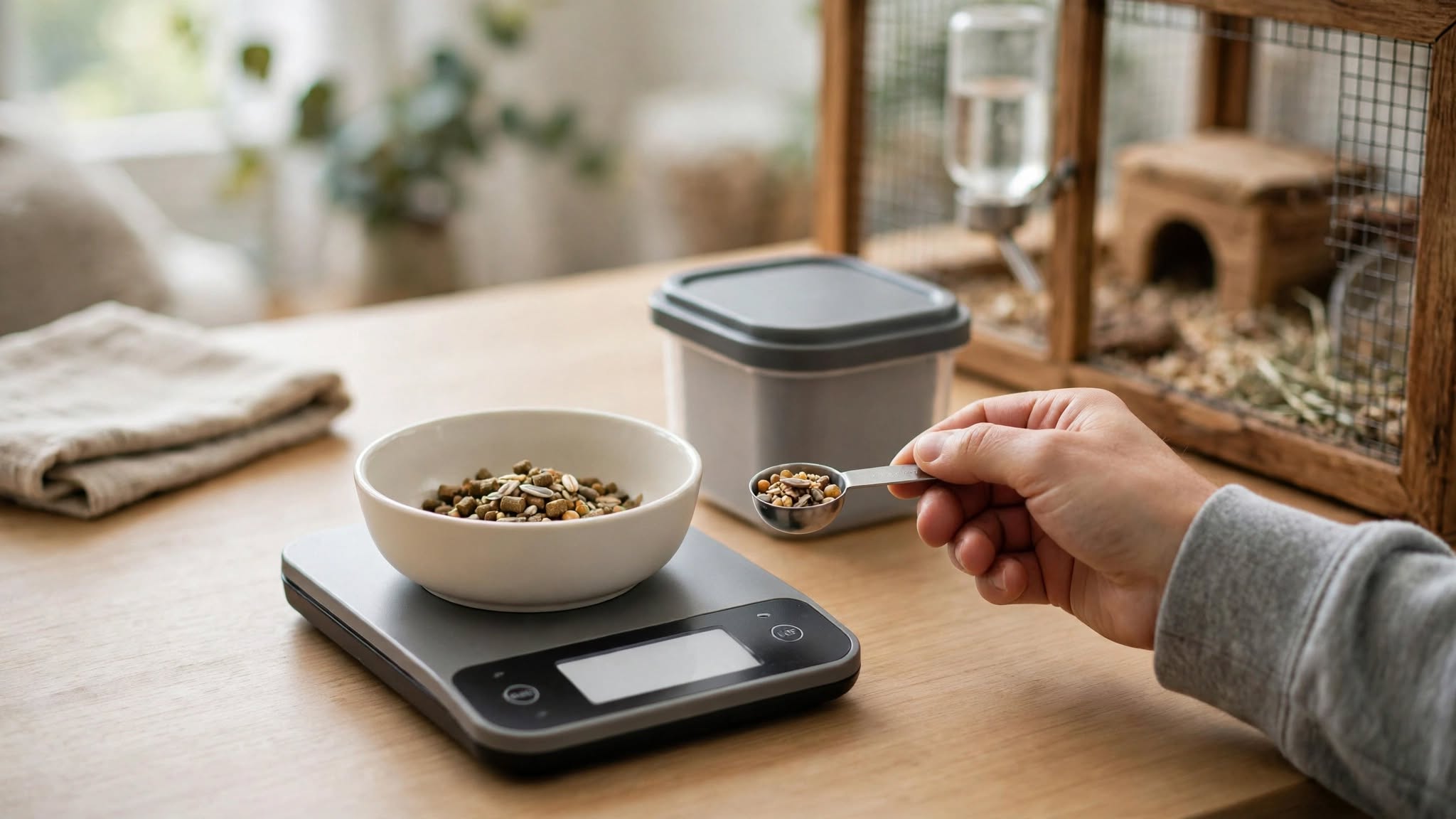
A basic digital kitchen scale that measures in grams is especially helpful for small dwarf-hamster portions.
- Read the feeding directions. Find the daily amount recommended for your hamster’s species or size and the exact food formulation.
- Place a small bowl on the scale. Use the tare function to reset the display to zero.
- Add the planned dry-food amount. Measure the complete daily ration before you scatter it or place it in a dish.
- Account for extras. If you use part of the staple mix as training rewards or foraging enrichment, take that portion from the day’s measured allowance rather than adding it on top.
- Observe the result over time. Watch body condition, weight trends, uneaten food, and stored food before deciding that the serving needs to change.
For example, if the appropriate daily ration is 10 grams, you can split those 10 grams between a bowl and foraging spots—not give 10 grams in each.
Do not use these general amounts to deliberately restrict a growing, pregnant, nursing, underweight, or ill hamster. Their needs may differ, and feeding adjustments should be guided by a veterinarian familiar with small mammals.
Should You Feed a Hamster Once or Twice a Day?
Hamsters are generally most active in the evening and overnight, so evening feeding is practical. You can offer the measured daily ration once or divide it into two smaller servings, following the food’s instructions and any veterinary advice.
Dividing food into two servings does not mean doubling the daily amount.
Whatever schedule you choose, keep it reasonably consistent and make sure your hamster has appropriate food available, including access to the dry food they naturally store.
Fresh, clean drinking water must remain available and be checked daily. If you’re concerned your hamster isn’t drinking, see our guide to hamsters not drinking water; don’t try to compensate by changing food portions.
Does an Empty Food Bowl Mean Your Hamster Is Hungry?
Not necessarily. Hamsters are natural food hoarders. They carry food in their cheek pouches and store it in burrows or protected areas to eat later.
An empty dish may mean your hamster ate the food, carried it into a sleeping or storage area, scattered it in the bedding, or did some combination of these.
Repeatedly refilling the bowl can create a larger food reserve than you realize. But a big stash alone doesn’t prove your hamster is eating well: check body condition, weight trends, and normal eating behavior too.
How Much Stored Food Is Too Much?
No single stash size proves overfeeding. A growing reserve of uneaten dry food may indicate that you’re offering more than your hamster uses, but don’t suddenly withhold food or remove the entire stash.
Instead:
- Keep daily offerings measured.
- Monitor how much dry food accumulates over several days.
- Remove spoiled or damp food during routine checks.
- Avoid repeatedly destroying safe food stores or disturbing the sleeping nest unnecessarily.
- Discuss persistent excess weight or feeding concerns with an exotic-animal veterinarian.
According to Blue Cross hamster-care guidance, removing a hamster’s entire food store can be stressful. If a complete cleanout is unavoidable, replacing the store with a similar quantity of appropriate food can help preserve a sense of security.
Hamsters need opportunities to burrow and create food stores. Our guide to deep bedding for hamsters explains why a suitable burrowing environment matters.
How Much Fresh Food and How Many Treats Should You Give?
The gram estimates refer to the staple dry diet. Fresh foods and treats should remain small additions, not replacements for complete hamster food.
For most healthy adults:
- Fresh vegetables: Introduce suitable foods gradually in very small portions. A piece roughly the size of your hamster’s ear is a useful visual guide for a small offering.
- Fruit: Keep portions tiny and occasional. Avoid making sugary treats a regular part of the routine, especially when diabetes risk is a concern.
- Seeds, nuts, and other treats: Use sparingly rather than offering generous extras on top of the staple diet.
- Protein-rich extras: If appropriate, account for the protein sources already included in your hamster’s complete food before adding more.
The exact amount depends on the type of food and your hamster’s individual needs. A few small pieces of fresh food should not become a second full meal.
Fresh food may be hoarded and spoil. Remove uneaten fresh pieces promptly while disturbing the nest as little as possible. If stored food is attracting insects, our fly prevention guide for hamster rooms covers sanitation and pet-safe trap placement separately.
Avoid sugary honey sticks and heavily sweetened commercial treats as everyday feeding items.
For a detailed explanation of appropriate food types, nutritional balance, and ingredients to avoid, read our What Do Hamsters Eat? Building a Balanced Daily Diet guide. This article focuses specifically on portion sizes and daily feeding decisions.
Bowl or Scatter Feeding: Does It Change the Amount?
Scatter feeding distributes part or all of the same measured daily ration around suitable enclosure areas, encouraging natural foraging. Both Woodgreen and the RSPCA describe it as useful enrichment.
Here’s a simple method:
- Measure the normal daily dry-food ration first.
- Keep any amount you want to offer in a bowl separate.
- Scatter the remaining food across clean, suitable bedding and foraging areas.
- Allow your hamster to search at their own pace without repeatedly uncovering the food.
- Continue checking for spoiled food and normal eating behavior.
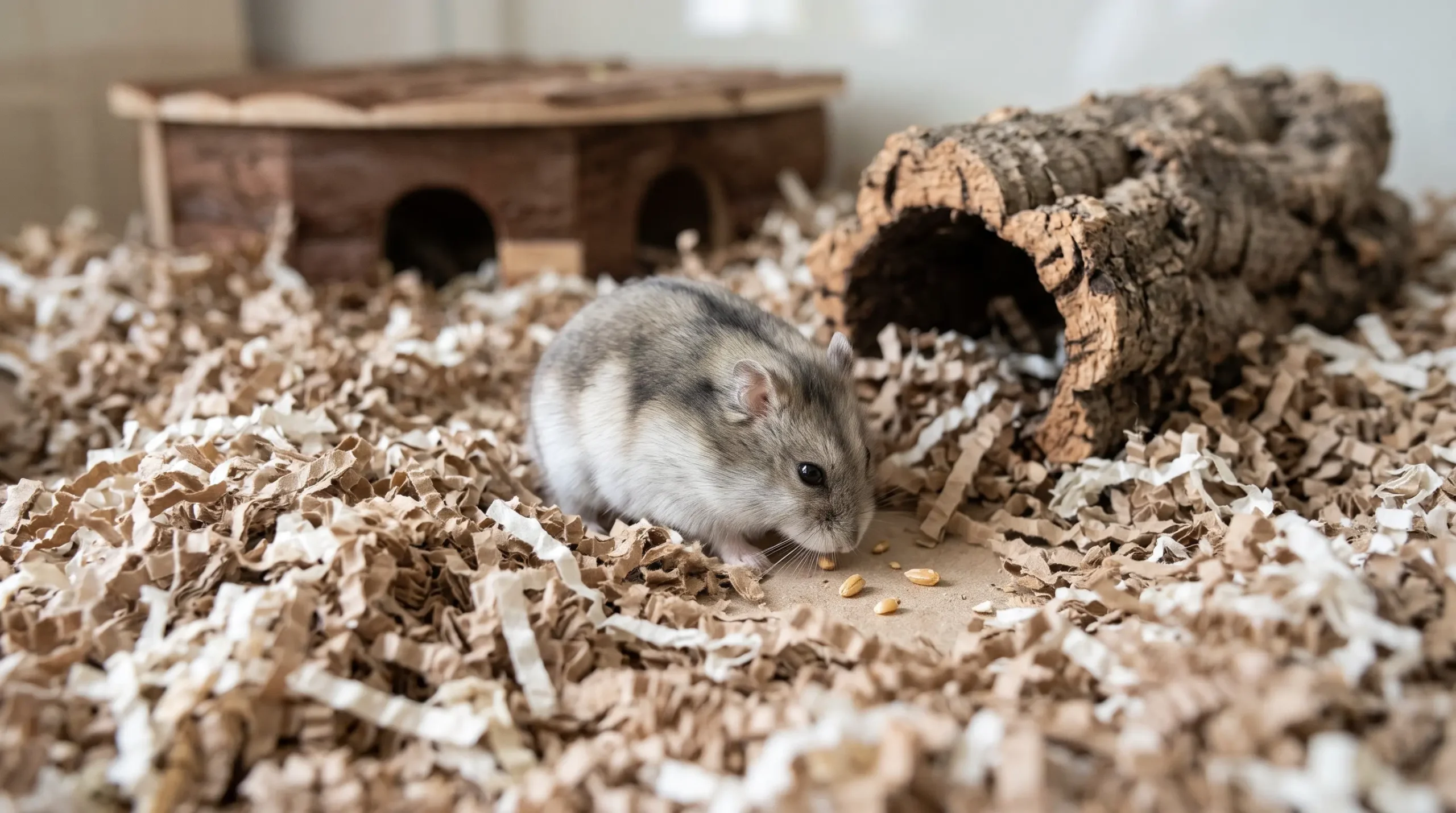
Scatter feeding changes how food is offered, not how much food the hamster needs. Don’t add a second full bowl after scattering an already complete daily ration.
For hamsters that are ill, underweight, or difficult to monitor, a veterinarian may recommend a different feeding approach that makes intake easier to assess.
How Do You Know if You’re Feeding Too Much or Too Little?
Because hamsters store food, use several clues—not the bowl alone—to assess whether a portion suits your hamster.
| What You Notice | What It Could Mean | What to Do |
|---|---|---|
| Large amounts of uneaten dry food accumulating | The offered portion may exceed what the hamster uses | Review the ration, food type, and body condition before changing it |
| Steady, excessive weight gain | Possible overfeeding or another health concern | Review treats and feeding quantities; seek veterinary advice |
| Unexpected weight loss | Insufficient intake, dental problems, or illness | Arrange a prompt veterinary assessment |
| Food disappears rapidly from the bowl | It may have been eaten or hoarded | Check the overall feeding pattern rather than automatically adding more |
| Reduced eating, fewer droppings, or lethargy | Possible illness rather than a simple portion problem | Contact an exotic-animal veterinarian promptly |
Track Weight Without Becoming Obsessed With a Number
Regular weight checks on a gram scale can reveal changes that may be difficult to see.
Use a secure container on a stable scale, tare its weight, and keep the weighing session brief and close to a safe surface. For stress-free transfers, see our guide to handling a hamster without chasing or grabbing. Compare measurements taken under similar conditions.
For a healthy adult, a consistent weekly check can help establish a trend. If your veterinarian has concerns about weight or illness, follow their recommended monitoring frequency instead.
Don’t judge every hamster against one target weight: normal size varies with species, age, sex, and build.
If weight is changing unexpectedly, seek veterinary advice rather than making severe portion reductions or increases yourself.
When Should You Change the Daily Food Amount?
Consider reviewing the ration when:
- Your hamster has moved to a different life stage.
- You’re switching to a food with different ingredients or calorie density.
- There is a consistent change in body condition.
- A veterinarian identifies an underlying medical or nutritional concern.
- Your current feeding pattern produces an unusually large accumulation of uneaten food.
Change the diet itself gradually rather than replacing the entire familiar food overnight. Sudden dietary changes can upset a hamster’s digestive system.
Dental pain can reduce eating even when plenty of food is available; a hamster that seems picky may need a health check, not a larger serving.
Seek prompt veterinary advice if your hamster stops eating normally, becomes unusually inactive, develops diarrhea or a wet rear end, or loses weight unexpectedly. These can be signs of significant illness, not simply evidence that the daily portion needs adjusting.
Common Daily Feeding Questions
Is One Tablespoon of Food Enough for a Syrian Hamster?
It can be a reasonable starting estimate for dry food, because Woodgreen recommends around 10 grams per day for an adult Syrian hamster. But the weight of a tablespoon varies by product. Follow the food’s instructions, measure in grams when possible, and monitor your hamster’s health and body condition.
Should You Feed a Dwarf Hamster the Same Amount as a Syrian?
Usually not. Smaller hamsters generally need smaller quantities. Woodgreen’s approximate starting range for Chinese, Campbell’s, winter white, and Roborovski hamsters is 5–8 grams of dry food daily. Individual and product differences still matter.
Should You Add More Food if Your Hamster Hides Everything?
Not automatically. Hoarding is normal. A hamster may have plenty of suitable dry food stored even when the bowl is empty. Assess stored food, body condition, and normal intake before changing the amount.
Can a Hamster Have Treats Every Day?
Treats aren’t required every day. Excess sugary or fatty extras can displace balanced food and contribute to unwanted weight gain. Keep special foods small and occasional, with appropriate fresh-food portions included in the overall feeding plan.
The Bottom Line
For an adult Syrian hamster, approximately 10 grams of dry food daily is a practical starting point. For many smaller species, including dwarf hamsters, 5–8 grams daily is a commonly recommended starting range.
Measure the food, follow its specific directions, and remember that an empty bowl may mean your hamster has stored the food, not eaten it all. Review the whole feeding pattern before topping up.
Keep fresh-food extras small, check for spoilage, provide drinking water at all times, and monitor your hamster’s weight and behavior.
For broader enclosure and daily-care needs, our Complete Hamster Care Guide covers the essentials beyond food portions.
Sources & Editorial Standards
This guide uses animal-welfare and veterinary resources for approximate feeding quantities, food storage behavior, feeding enrichment, and signs that require professional attention:
- Woodgreen Pets Charity — Caring for Hamsters: Daily Food Portions and Foraging
- Blue Cross — Hamster Care: Food, Portions and Hoarding
- RSPCA — What to Feed a Pet Hamster
- UK Pet Food — Hamster Care and Nutrition
- UC Davis School of Veterinary Medicine — Hamster Care
- Merck Veterinary Manual — Disorders and Diseases of Hamsters
Editorial note: Daily feeding amounts are approximate starting points for healthy adult hamsters, not individualized veterinary prescriptions. Product formulation, species, growth, pregnancy, nursing, illness, and body condition can alter food requirements. Follow the manufacturer’s directions and consult an exotic-animal veterinarian when feeding needs or health status are uncertain.