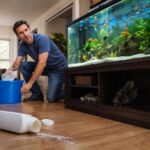
Fish Tank Leak or Crack: How to Move Fish Safely in an Emergency
A cracked aquarium can turn from a slow drip into a major emergency. If water is pooling on the floor or a seam is separating, the priorities are personal electrical safety, moving fish before a possible tank failure, and maintaining oxygen and water quality in temporary containers.
What to do right now: Keep people and pets away from leaking water and electrical equipment. Do not touch wet plugs, cords, outlets, or equipment, or step into water to reach them. If electrical power is at risk, switch off the affected circuit at a breaker only if you can do so from a dry, safe position; get emergency electrical help if you cannot. Once the area is safe to work in, prepare clean fish-holding containers and relocate fish promptly if the glass, seams, or stand may fail.
When Is a Fish Tank Leak an Emergency?
Any active leak needs prompt attention. Treat the situation as urgent if:
- Water is dripping or streaming from the glass or seams.
- A crack is spreading or a silicone seam is separating.
- The stand is tilting, swelling, or becoming unstable.
- The water level is falling quickly.
- Leaking water is near outlets, power strips, or aquarium equipment.
A growing crack, failed seam, or unstable stand can precede sudden tank failure. Keep clear of the damaged glass and start the fish-relocation plan once electrical hazards are controlled. A leak from a loose hose or external filter connection may have a different cause, but do not assume the glass is safe until the source is identified.
What Not to Do
Avoid these mistakes:
- Do not reach into leaking water to unplug equipment or handle a submerged powered device.
- Do not lift or move a filled aquarium, especially one with a damaged seam or crack.
- Do not apply sealant to a stocked, water-filled aquarium or rely on a quick patch for structural glass damage.
- Do not fill temporary containers with untreated tap water or introduce a sudden temperature change.
- Do not discard established filter media or leave it to dry out.
- Do not delay fish relocation while shopping for a permanent replacement tank.
Moving Fish Safely: Step-by-Step
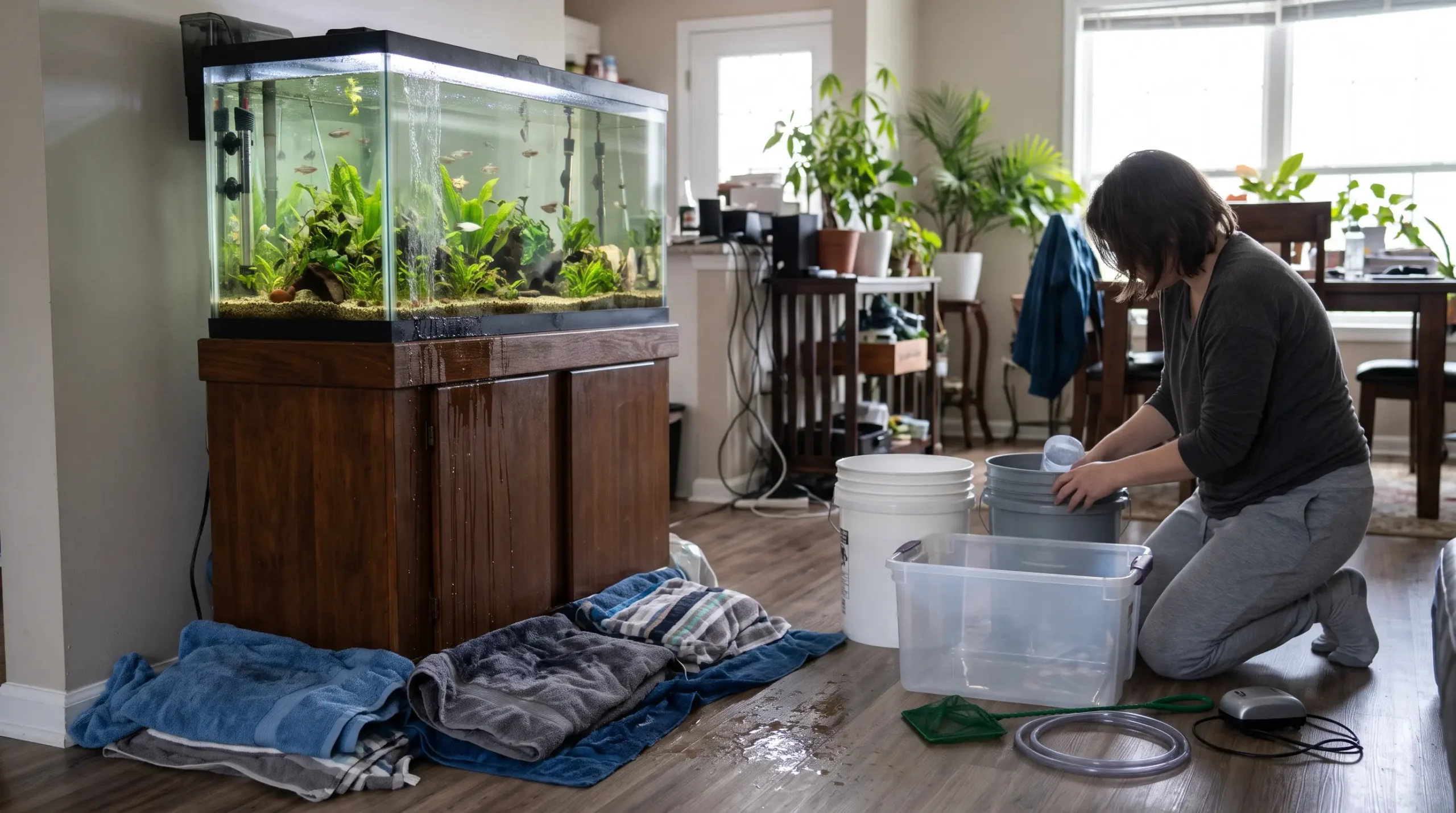
Once the area is electrically safe, stabilize fish in temporary housing rather than trying to repair damaged glass with fish inside.
- Choose safe containers. Use sufficiently large, clean, food-safe buckets, sturdy plastic tubs, or a spare aquarium that has never held soap, cleaners, or other chemicals. Use several containers if one would be crowded.
- Collect suitable water. Use existing aquarium water when it is safe and uncontaminated. If more is needed, prepare dechlorinated water with a closely matched temperature and appropriate chemistry; never add untreated tap water.
- Transfer fish gently. Use a fish net or suitable small container without chasing or squeezing fish. Keep species that may injure one another separated as needed.
- Restore oxygen. Run an air stone or battery-powered air pump if available, particularly in crowded holding containers. Leave a safe air space; do not seal fish in an airtight container.
- Control temperature. Place containers away from direct sun, drafts, and temperature extremes. Use an aquarium heater only if it is appropriate for the container and can be operated safely according to its instructions. Allow any unplugged heater to cool before removing it from the damaged tank.
- Preserve biological filtration. Keep established media wet in aquarium water and, when practical, aerated or running in equipment rated for the temporary setup. Never operate aquarium electrical equipment in an unsafe wet area.
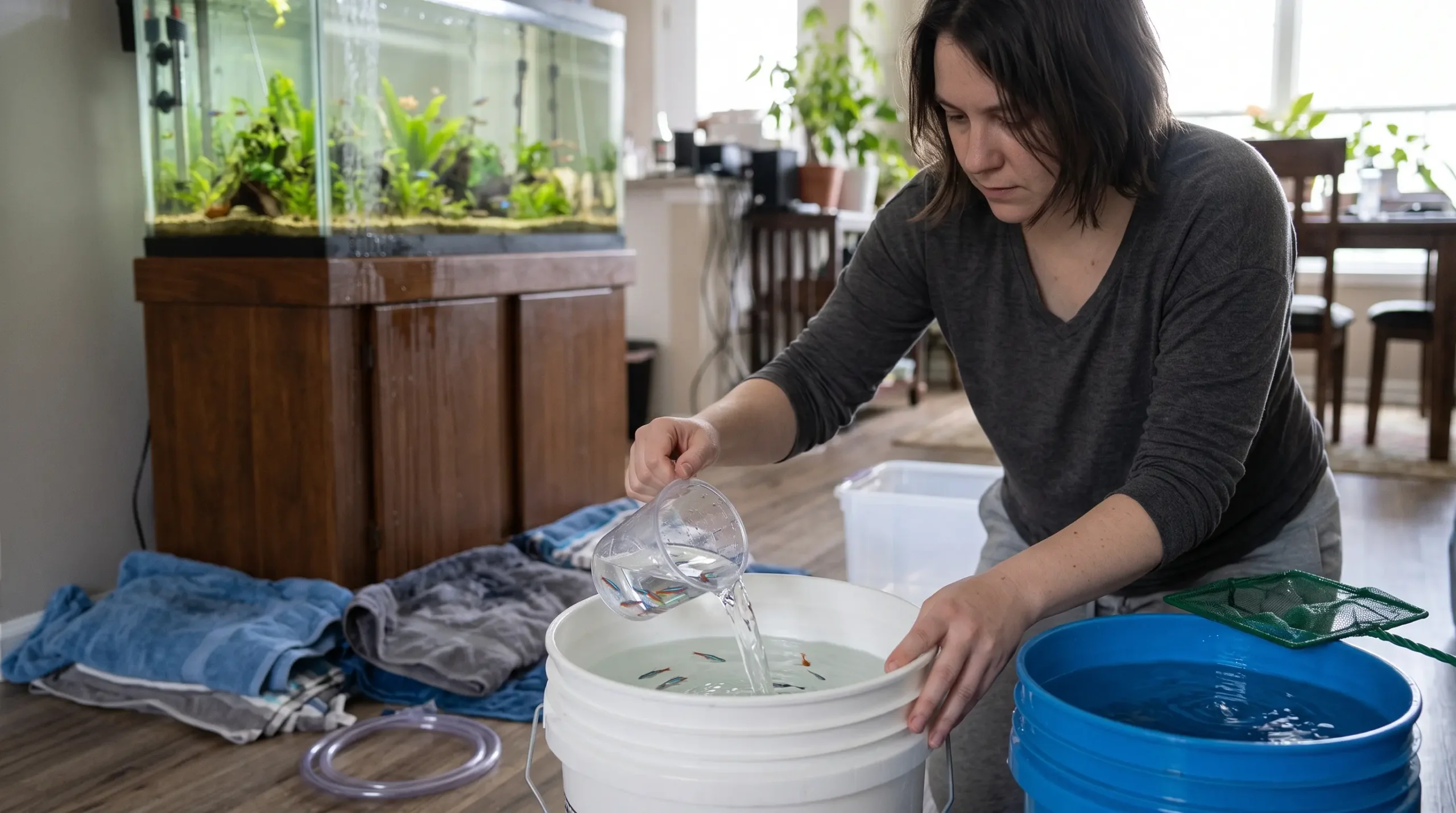
Fish held longer than a brief transfer need close checks of breathing, temperature, and water quality. A battery-backup aquarium air pump can be useful when power to the damaged tank must remain off. Avoid unnecessary feeding in short-term emergency holding containers because extra waste can raise ammonia.
Protect the Beneficial Bacteria
Established filter media carries much of the biological community that processes ammonia and nitrite. Losing it can create a second emergency after the fish are moved.
- Keep filter sponges and biological media wet with safe aquarium water.
- Provide water circulation or aeration around the media when practical, especially during an extended interruption.
- Do not let the media dry out or rinse it under untreated tap water.
- Move a suitable existing filter to the temporary system only if its design allows safe operation there.
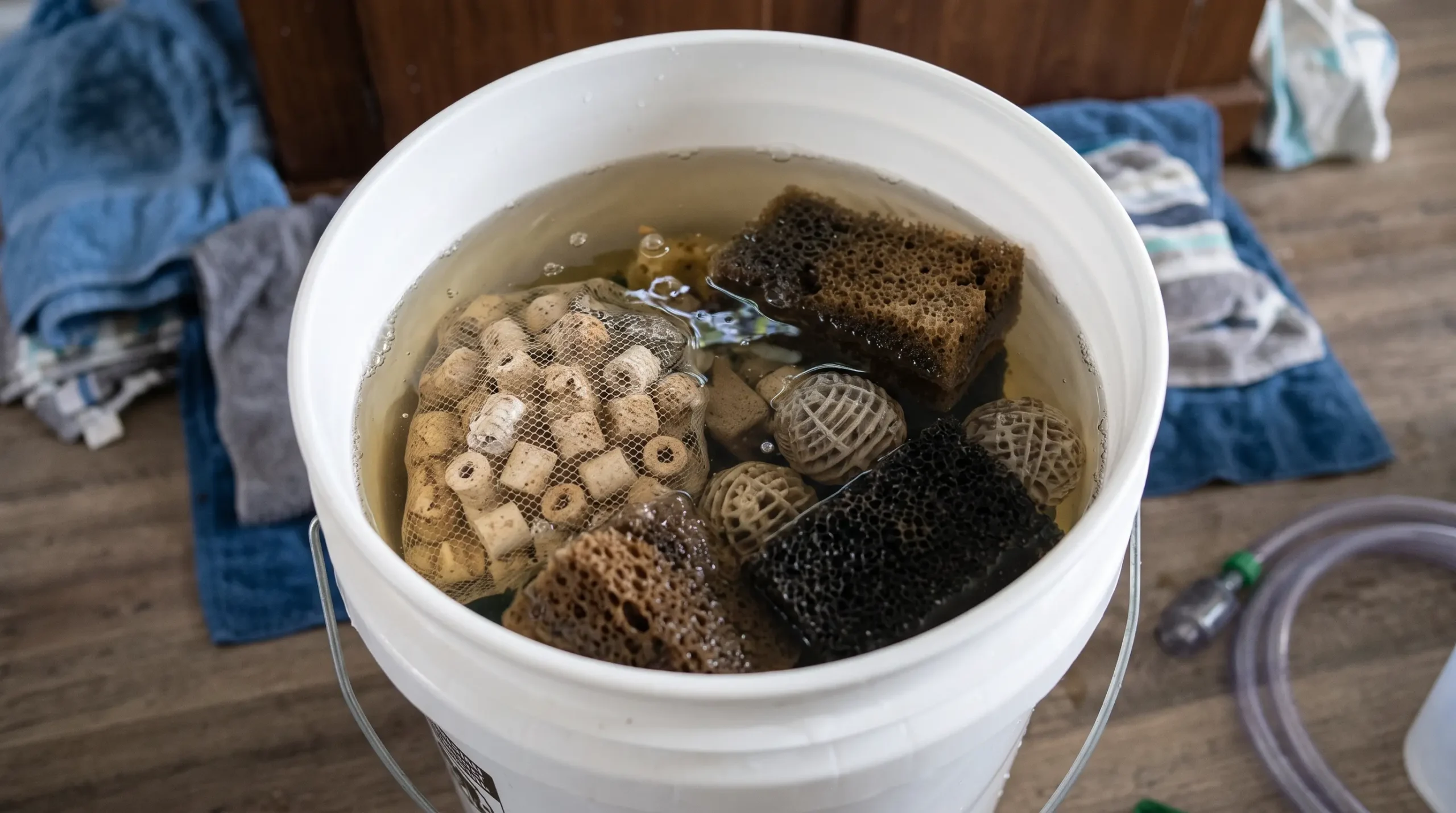
Our guide to the aquarium nitrogen cycle explains the biological process; during this emergency, the key action is to preserve the mature media rather than start a new filter from scratch.
What Temporary Containers Work Best?
| Temporary Option | Emergency Suitability | Important Notes |
|---|---|---|
| Food-safe buckets | Useful short term | Choose adequate volume; add aeration and a secure, ventilated cover where needed |
| Sturdy plastic storage tubs | Useful | Clean and chemical-free; support their weight and prevent fish from jumping out |
| Established spare or quarantine tank | Excellent when available | Provides a more stable setup if filtration and equipment are working safely |
| Small bowls | Poor | Low water volume means faster oxygen, temperature, and waste problems |
Do not overcrowd temporary containers. Use enough water for the fish to remain submerged and move normally, allow for surface gas exchange, and secure a lid without blocking airflow or air tubing.
How Much Original Water Should You Save?
Save as much clean, usable aquarium water as practical without risking injury or delaying fish rescue. Matching the fish’s familiar temperature and water chemistry helps limit additional stress.
Most nitrifying bacteria live on filter media and other surfaces—not freely in the water. Saving old water helps with a stable transfer, but it cannot replace preserving mature filter media.
If the original water may contain chemicals, broken equipment residue, or another contaminant, do not reuse it merely because it came from the tank. Prepare appropriately conditioned replacement water instead. Avoid abrupt changes in temperature or chemistry.
Watch for Secondary Water-Quality Problems
In temporary containers, monitor the major risks: low oxygen, ammonia or nitrite accumulation, unstable temperature, and crowding.
- Check fish breathing and movement frequently; rapid breathing or gasping requires urgent action.
- Test ammonia and nitrite, especially if fish remain in containers for more than a brief period.
- Check temperature and ensure any heaters or air pumps are operating safely.
- Reduce unnecessary feeding and remove obvious waste.
- If water quality deteriorates, use carefully matched, dechlorinated replacement water as appropriate.
If you need supplies to check the holding water, our aquarium water test kit guide compares options. For urgent symptoms or abnormal readings, see the separate emergency guides on fish gasping at the surface, ammonia spikes, and nitrite spikes.
If filtration has stopped during the move, our filter failure and oxygen-loss emergency guide covers that related situation in more detail.
Should You Repair or Replace the Tank?
First distinguish the source of the water. A loose hose, filter fitting, or other external component may be fixable without rebuilding the aquarium. A crack in the glass, separating structural seam, or damaged support is different: replacing the tank is often the safer option.
Do not trust a temporary adhesive patch or apparent pause in the leak to make a structurally damaged tank safe. Any professional repair requires a fully emptied, appropriately prepared aquarium, correct aquarium-safe materials, complete curing, and a separate leak test before fish return.
When the Leak Happens Overnight
If the problem was discovered after an unknown number of hours, fish may already have experienced low water levels, reduced oxygen, temperature changes, or interrupted filtration.
Once fish are safely housed:
- Check their breathing, swimming, and responsiveness.
- Verify stable temperature and adequate aeration.
- Inspect the condition of preserved filter media.
- Test ammonia and nitrite and continue monitoring over the following days.
- Seek prompt advice from an aquatic veterinarian or knowledgeable aquarium professional if fish remain distressed, injured, or severely weakened.
The Bottom Line
A leaking or cracked aquarium can threaten fish and household safety. Deal with electrical danger first from a dry, safe position, then move fish away from a potentially failing tank.
Use clean, adequately sized holding containers with suitable water, restore aeration and temperature control, and protect established filter media. Do not move a full aquarium or rely on a quick patch for structural glass damage.
The immediate goal is a safe temporary home for the fish—not a rushed repair of the damaged tank.
Sources & Editorial Standards
- RSPCA Knowledgebase — Emergency Fish Transport Preparation
- Aqueon — How to Move an Aquarium (Fish, Water, Equipment and Filter Media)
- Merck Veterinary Manual
- University of Florida IFAS Extension
- NOAA Fisheries
This article provides general emergency guidance rather than professional electrical, structural, or aquatic-veterinary advice. Never handle water or aquarium equipment when an electrical hazard is present. Fish species and temporary-housing requirements vary; seek qualified assistance for severe injuries, persistent distress, or unsafe structural damage.