Why Do Dogs Guard Food or Toys? A Safe Guide to Resource Guarding
Your dog is chewing a favorite toy. As you pass, they stiffen, lower their head over it, stare, or growl quietly. Should you move closer?
This is resource guarding: a dog protecting food, a chew, a toy, or something else they value from a perceived threat of losing it.
Resource guarding does not automatically mean your dog is dominant, disobedient, or trying to challenge you. But it can become dangerous if warnings are ignored or someone attempts to take the item by force.
What to do first: If your dog stiffens, growls, or guards food or a toy, stop approaching and give them space. Don’t grab the item, put your hand into their bowl, punish the growl, or test whether they’ll bite. Keep children and other animals away. If guarding is repeated, escalating, or involves threats or bites, seek professional help.
Why Do Dogs Guard Food or Toys?
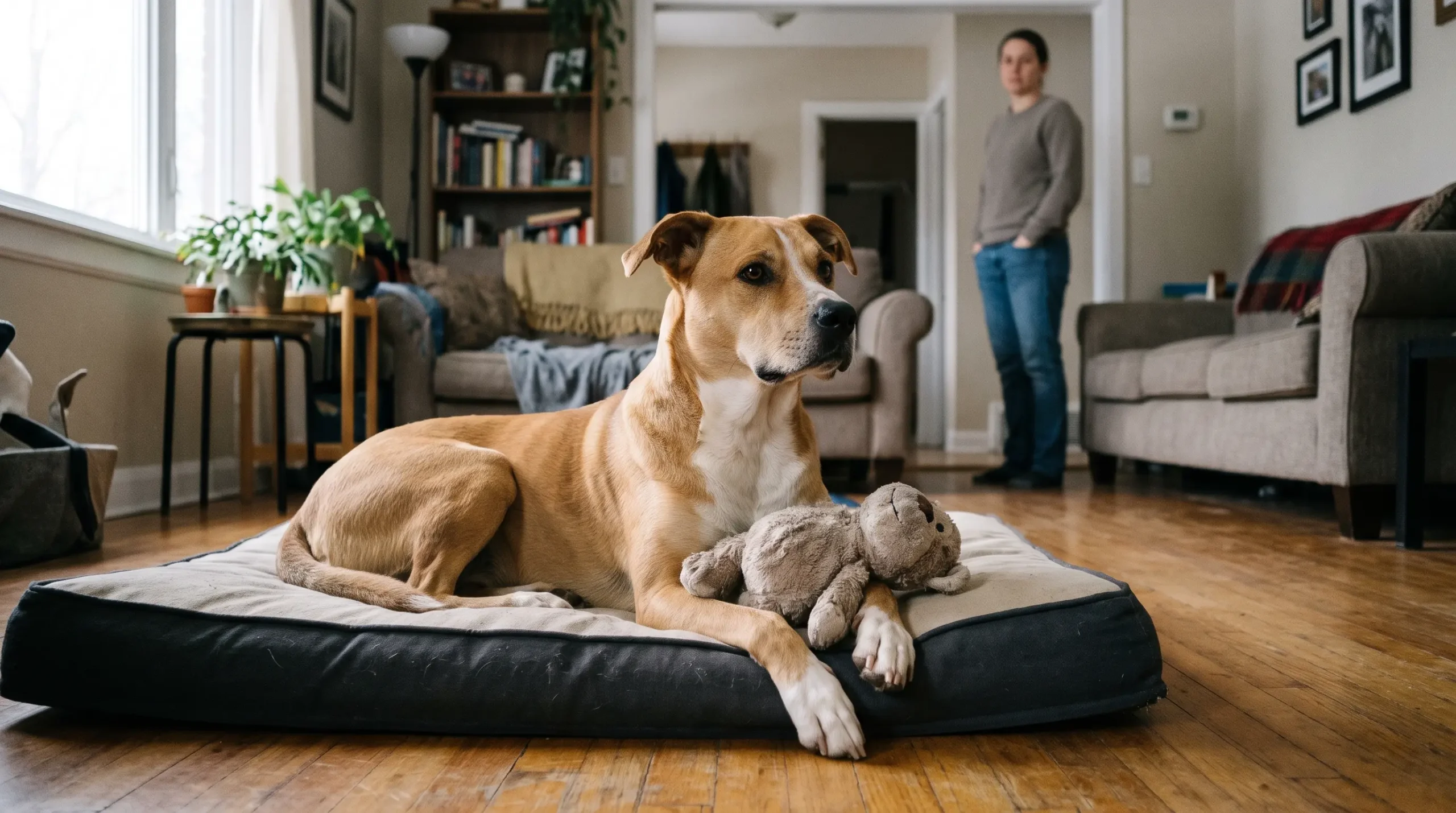
Guarding often begins when a dog expects something valuable to be taken—whether another dog has stolen food before or a person is simply approaching a treasured toy.
Protecting valued resources is a natural behavior, but at home it becomes a safety concern when a dog threatens or bites to keep an item.
Several factors can influence it.
Fear of Losing Something Valuable
A dog may worry that an approaching person intends to remove their dinner, chew, or favorite object.
Some move away; others stand over the item, freeze, growl, or snap if the approach continues.
Importantly, the dog’s reaction reflects the value of the resource to that dog. An old sock may be more worth protecting than an expensive toy.
Past Experiences and Learned Expectations
If people repeatedly grab toys or food, the dog may learn that approaching hands predict losing them.
Guarding may then become an effective strategy from the dog’s perspective: when they growl, the person backs away and the item remains theirs.
That doesn’t mean owners should ignore safety. It means changing the situation is usually more productive than trying to overpower the dog.
Competition or an Unpredictable Environment
Competition can increase concern when other animals approach food or toys.
A household with multiple dogs may unintentionally create pressure by feeding them side by side, distributing high-value chews in a shared room, or leaving prized toys where several dogs can reach them.
Not every guarding dog has experienced scarcity; temperament and learning history also matter.
Pain, Illness, or Increased Stress
A dog who suddenly becomes defensive may be less comfortable with people approaching because of pain, illness, or another change affecting their tolerance.
Medical discomfort does not explain every case, but new or worsening guarding deserves a veterinary assessment, not stricter discipline. For other possible reasons behind an abrupt behavior change, see our guide to sudden aggression in dogs.
As Dogs Trust explains, resource guarding often reflects concern about losing access to something important, and punishment can increase that concern.
What Does Resource Guarding Look Like?
Growling may come after subtler changes in posture, so pay attention before a dog vocalizes.
Watch what happens when a person or another animal moves toward the food, toy, or chew.
| Behavior | Possible Meaning | Safer Response |
|---|---|---|
| Eating faster when someone approaches | The dog may be worried about losing food | Stop approaching and provide undisturbed meals |
| Standing over or covering an item | Possible attempt to protect possession | Give space; don’t reach toward the object |
| Suddenly becoming stiff or freezing | Possible heightened concern or warning | Stop interaction and calmly increase distance |
| Showing the whites of the eyes, hard staring, or turning the head while watching | Possible discomfort or defensive vigilance | Avoid staring back or moving closer |
| Running away with a toy or hiding it | May be avoiding loss of the item | Don’t chase or corner the dog |
| Growling, baring teeth, or snarling | Clearer warning that more space is needed | Back away and keep others clear |
| Snapping, lunging, or biting | High-risk escalation | Prioritize separation and professional help |
No single signal proves guarding. Consider the whole posture, the item, and how behavior changes as someone approaches.
A dog carrying a toy away during a playful game is not necessarily guarding it. But a dog who repeatedly stiffens or threatens when someone approaches a particular item needs a different response.
For additional context, our dog and cat body-language guide explains common signals of tension, uncertainty, and comfort.
What Should You Do When Your Dog Guards Something Right Now?
When guarding is already happening, your priority is to prevent a bite and reduce the dog’s sense of threat—not to win possession of the item.
- Stop moving toward the dog. Avoid reaching, leaning over them, or extending a hand toward the bowl or toy.
- Stay calm and create distance. Don’t shout, stare, punish, or make sudden movements. Move away without cornering the dog.
- Keep others away. Ensure children, visitors, and other pets cannot enter the immediate area. Use doors or barriers when this can be done without approaching or confronting the dog.
- Leave a safe item alone. If the dog has an appropriate toy, food, or chew that poses no immediate danger, allow them to finish or disengage.
- Manage the situation afterward. When the dog has moved away and is securely separated, remove or store the item if necessary to prevent another incident.
Never deliberately repeat the incident to see whether your dog still reacts. Testing a guarding dog can create unnecessary bite risk.
What if Your Dog Has a Dangerous Object?
The situation is more urgent if your dog has swallowed, or may swallow, a toxic substance, medication, battery, sharp object, or another hazardous item.
Don’t force open the dog’s mouth or grab the object from a growling dog. That can trigger a bite or cause the dog to swallow the item quickly.
If you can safely encourage your dog away from the object without approaching, threatening, or cornering them, that may reduce the immediate risk. But don’t attempt an improvised trade if the dog’s behavior makes an approach unsafe.
Contact an emergency veterinarian or animal poison control service immediately when poisoning or dangerous ingestion is possible. Explain what the dog has, whether it has been swallowed, and that resource guarding makes retrieval unsafe.
Do not delay urgent veterinary advice while repeatedly attempting to retrieve the object yourself.
Make Meals and Valuable Items Safer at Home
Reducing perceived threats around food and possessions is a useful first step while you arrange professional behavioral support when needed.
Give Your Dog a Quiet Feeding Space
Choose a predictable location where your dog can eat without people walking past or other animals approaching.
- Feed behind a closed door or suitable secure barrier when necessary.
- Keep children and other pets completely out of the feeding area.
- Allow your dog to finish without touching them or their food.
- Wait until the dog has left the area and is securely separated before collecting the bowl.
- Avoid placing food near narrow passages or busy household entrances.
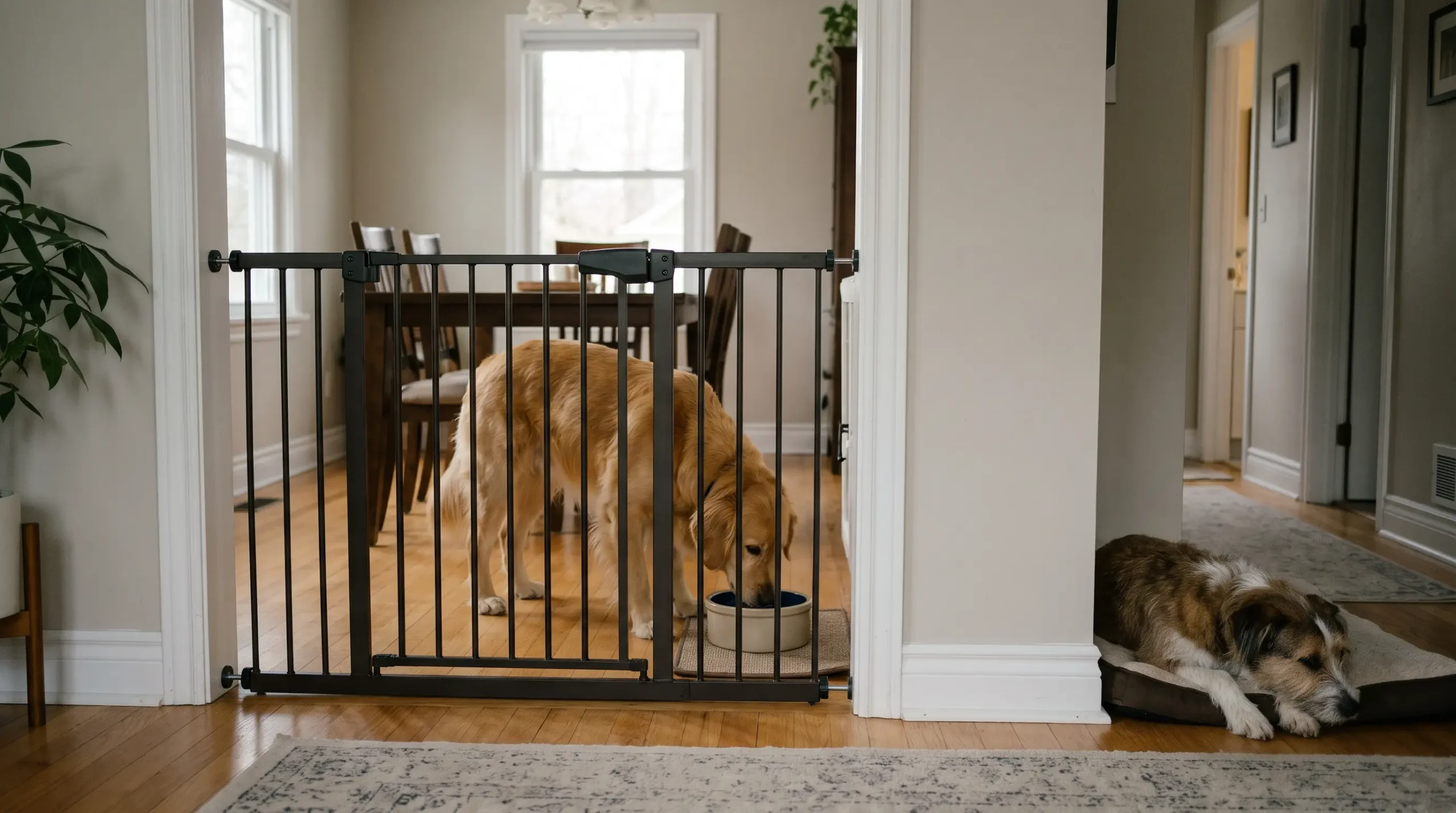
The goal is not to isolate your dog as punishment. It is to provide a feeding arrangement where everyone knows what to expect and nobody needs to compete for access.
Manage Chews, Toys, and Other High-Value Objects
Some dogs guard specific items, such as long-lasting chews, puzzle or food-dispensing toys, or stolen household objects. Choosing a different toy is not a treatment for established guarding.
If a particular item regularly triggers guarding, prevent access to it until you have a safe management plan.
Don’t leave prized items in shared spaces and expect dogs to resolve competition themselves.
If your dog guards a chew, it may be safer to avoid offering that chew while you obtain professional guidance rather than repeatedly creating the same confrontation.
Protect Children and Visitors
Children may not recognize a dog’s early warnings. They may also be more likely to approach food, reach for toys, or enter a dog’s resting area unexpectedly.
A child should never be asked to feed, trade with, or take items from a dog who guards resources.
In households with children and a resource-guarding dog, use reliable physical separation around meals and valued objects, and seek qualified professional guidance. Adult supervision alone is not a substitute for preventing access to a dog actively guarding.
Visitors should also be told not to approach the dog during meals or try to retrieve toys.
What if Two Dogs Guard Food or Toys From Each Other?
Between dogs, guarding may involve food bowls, dropped treats, toys, or chews. Do not feed them side by side hoping they will learn to share.
Instead:
- Feed dogs in separate, secured areas.
- Give high-value treats or enrichment only when each dog can enjoy them without another dog entering.
- Remove shared access to items that repeatedly cause tension.
- Provide separate resting spaces and sufficient everyday resources.
- Watch for subtle blocking, staring, or stiffness before conflict escalates.
- Seek professional help if competition leads to threats or fighting.
Never place your hands between dogs fighting over a resource. Protect yourself and get expert guidance on safe incident prevention and management.
If you are bringing a new dog into the household, our guide to introducing two dogs safely covers first meetings and home entry. Resource guarding requires additional attention to food, toys, and other shared spaces.
Can You Teach a Dog to Trade or Drop a Toy Safely?
Reward-based trading can teach voluntary release, often with the original toy returned. But preventive practice with a relaxed, non-guarding dog is not a treatment for established guarding.
For a dog who has not shown guarding behavior and is comfortable exchanging objects, a simple preventative exercise can look like this:
- Begin during a calm play session with an ordinary, low-value toy—not a prized chew or a stolen object.
- Offer a reward or a different item the dog likes, at a comfortable distance.
- Wait for the dog to release the original toy voluntarily.
- Reward the release without grabbing or pulling the toy from their mouth.
- When safe, pick up the released toy and offer it again, helping the dog learn that surrendering an object doesn’t always mean losing it permanently.
- Keep the session brief and stop if the dog becomes tense, reluctant, or worried.
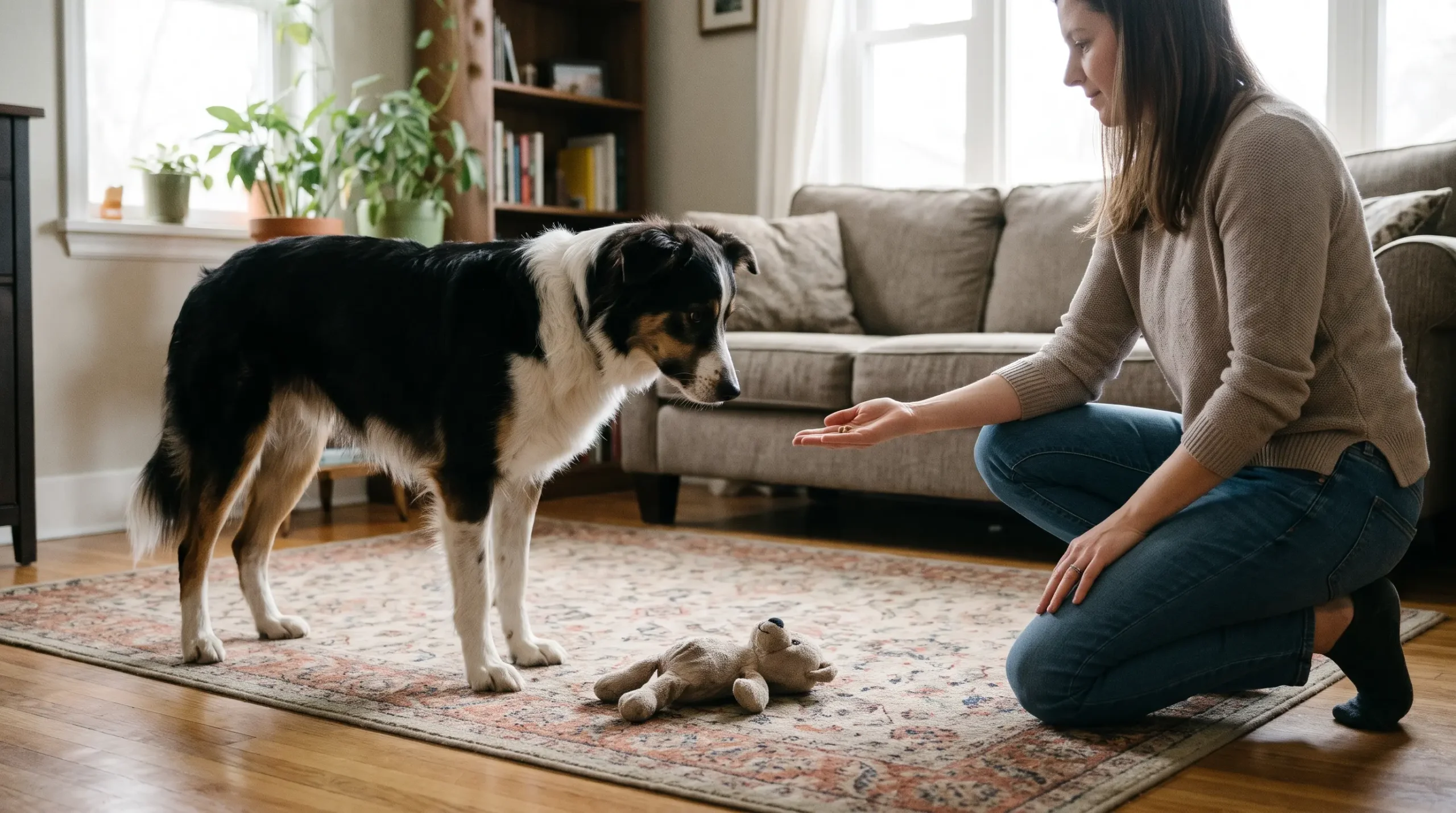
This is a preventative training example, not a treatment protocol for a dog already showing threatening resource guarding.
If your dog freezes, guards the toy, growls, snaps, or has bitten over possessions, don’t practice approaching and trading on your own. Ask a qualified reward-based behavior professional to design an appropriate plan.
Professional behavior modification may include carefully controlled desensitization and counterconditioning, but those techniques require attention to distance, timing, and signs of stress. Poorly timed exercises can increase rather than reduce risk.
What Should You Never Do With a Resource-Guarding Dog?
Some commonly suggested methods can make dogs more worried about losing their possessions.
- Don’t take food away to prove you’re in charge. Repeated removal can teach your dog that people approaching their bowl predict loss.
- Don’t put your hands into the food bowl while the dog is eating. This is unnecessary and can be dangerous, particularly when guarding is already present.
- Don’t punish growling. A growl communicates discomfort. Suppressing that warning does not necessarily remove the underlying fear.
- Don’t chase a dog carrying a stolen object. Chasing can increase excitement, anxiety, or defensive behavior.
- Don’t force a dog to share with another pet. Use separation and prevention instead of creating repeated competition.
- Don’t use dominance-based confrontation. Pinning, intimidation, hitting, leash corrections, or physically overpowering a dog are inappropriate responses to resource guarding.
- Don’t encourage children to test the dog. Food and toy possession should not become an exercise in proving tolerance.
The American Veterinary Society of Animal Behavior (AVSAB) recommends reward-based methods for canine training and behavior modification rather than aversive methods.
Is It Resource Guarding or Normal Play?
Not every growl involving a toy is defensive.
Dogs can growl during friendly tug, too; context and body language help distinguish play from tension.
A dog enjoying play may have loose, fluid movements and willingly re-engage after a pause. A guarding dog is more likely to become rigid, protect the item with their body, or direct a warning at someone approaching.
Neither a wagging tail nor the absence of growling guarantees safety. A silent, frozen dog may still be highly uncomfortable.
Our Dog Play Bow guide helps distinguish relaxed play from tension. If the issue is mouthing rather than guarding, see our separate puppy nipping guide.
If you are uncertain whether the dog is guarding, stop the interaction and give space. You don’t need to test the distinction by taking the toy.
When Should You Contact a Veterinarian or Behavior Professional?
Predictable routines and environmental changes can lower risk, but threats or bites warrant expert help.
Seek professional guidance when:
- Your dog has growled, snapped, lunged, or bitten over food or objects.
- Children live in or frequently visit the home.
- Guarding occurs around several different resources or in difficult-to-control areas.
- Another pet has been threatened or injured during a resource-related conflict.
- The behavior is increasing in frequency, intensity, or unpredictability.
- Your dog begins guarding suddenly or shows signs of pain or illness.
- Your dog repeatedly swallows potentially dangerous objects to prevent them from being taken.
Start with your veterinarian to consider possible medical contributors, especially if the behavior is new or has changed noticeably.
For behavioral support, ask about a board-certified veterinary behaviorist or a qualified reward-based behavior consultant with specific experience in resource guarding and aggression.
Ask potential professionals how they manage bite risk, what methods they use, and whether they coordinate with veterinarians when necessary.
Until you have a safe plan, continue using separation, supervised routines, and avoidance of situations likely to trigger guarding.
If someone has been bitten, first make sure the dog and people are safely separated. A bite that breaks skin should be cleaned promptly and assessed by a medical professional because of infection and other risks.
Can Resource Guarding Get Better?
Some dogs become more comfortable with good management and behavior support. Progress varies by severity, past learning, household circumstances, and the consistency of the plan; there is no guaranteed timetable.
Sometimes success means a dog can enjoy a meal quietly behind a gate without people approaching. In other cases, professional behavior modification may help the dog become less worried about everyday movement near their belongings.
You don’t need to teach your dog that everyone has the right to take everything from them. You need a safe household routine in which the dog feels less threatened and people can avoid predictable conflicts.
Frequently Asked Questions About Resource Guarding
Is Resource Guarding a Sign of Dominance?
No. Guarding is more usefully understood as a response to the perceived threat of losing a valued resource, rather than evidence that a dog is trying to control their owner. Dominance-based confrontation is not an appropriate treatment.
Should You Let a Dog Growl Over Food?
Don’t punish the growl or continue approaching. Treat it as information that the dog is uncomfortable. Give space, prevent further conflict, and arrange professional guidance if guarding is recurring or poses a safety risk.
Will Feeding a Dog by Hand Stop Food Guarding?
Hand feeding is not a guaranteed cure. With a dog already guarding, bringing your hand near food may increase bite risk. Any hands-on feeding or behavior-modification exercise should be selected according to the dog’s history and safety needs, ideally with qualified guidance.
Should You Take Toys Away From a Dog That Guards Them?
Don’t forcibly remove a toy during a guarding episode. If a particular toy creates repeated conflict, prevent access when the dog is safely elsewhere, and discuss an appropriate management or behavior plan with a qualified professional.
The Bottom Line
Dogs often guard food or toys because they fear losing them. Notice early warnings, avoid grabbing or punishing, and make meals and valued items predictable. Use physical separation to keep children and other animals out of guarding situations.
For established or escalating guarding, seek veterinary and qualified behavioral support rather than attempting confrontational training.
The goal isn’t to win a contest over the bowl or toy. It’s to reduce the dog’s need to defend it while keeping everyone safe.
Sources & Editorial Standards
This guide draws on veterinary behavior and animal-welfare resources addressing resource guarding, warning signals, bite prevention, and humane training:
- Dogs Trust — Resource Guarding in Dogs: How to Keep Everyone Safe
- ASPCA — Food Guarding
- Best Friends Animal Society — Food Aggression and Resource Guarding in Dogs
- Cornell University College of Veterinary Medicine — Anxious Behavior in Dogs
- American Veterinary Society of Animal Behavior — Humane Dog Training Position Statement
Editorial note: Resource guarding can involve a genuine risk of injury. This article offers general education and immediate safety-management guidance, not an individualized aggression-treatment plan. If a dog has bitten, threatened to bite, repeatedly guarded objects, or lives with children who may approach guarded resources, seek veterinary and qualified behavior-professional guidance. Do not attempt potentially provocative training without an appropriate safety assessment.