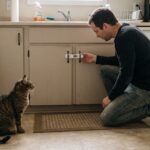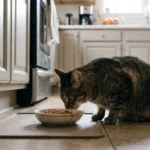
Cat Re-Entry After Indoor Pest Control: Paw Grooming, Residue & Ventilation
The pest-control technician has finished, the windows are open, and your cat is waiting to explore the house again. But is a room safe just because the spray has dried?
Your cat should return only after the pesticide label’s re-entry requirements have been met, treated surfaces are fully dry where required, and the space has been ventilated as directed. There’s no universal waiting time that applies to every indoor treatment.
Cats need particular consideration because they walk close to treated floors and baseboards, rub against furniture, and routinely lick their paws and fur. That grooming behavior creates another possible route of pesticide exposure.
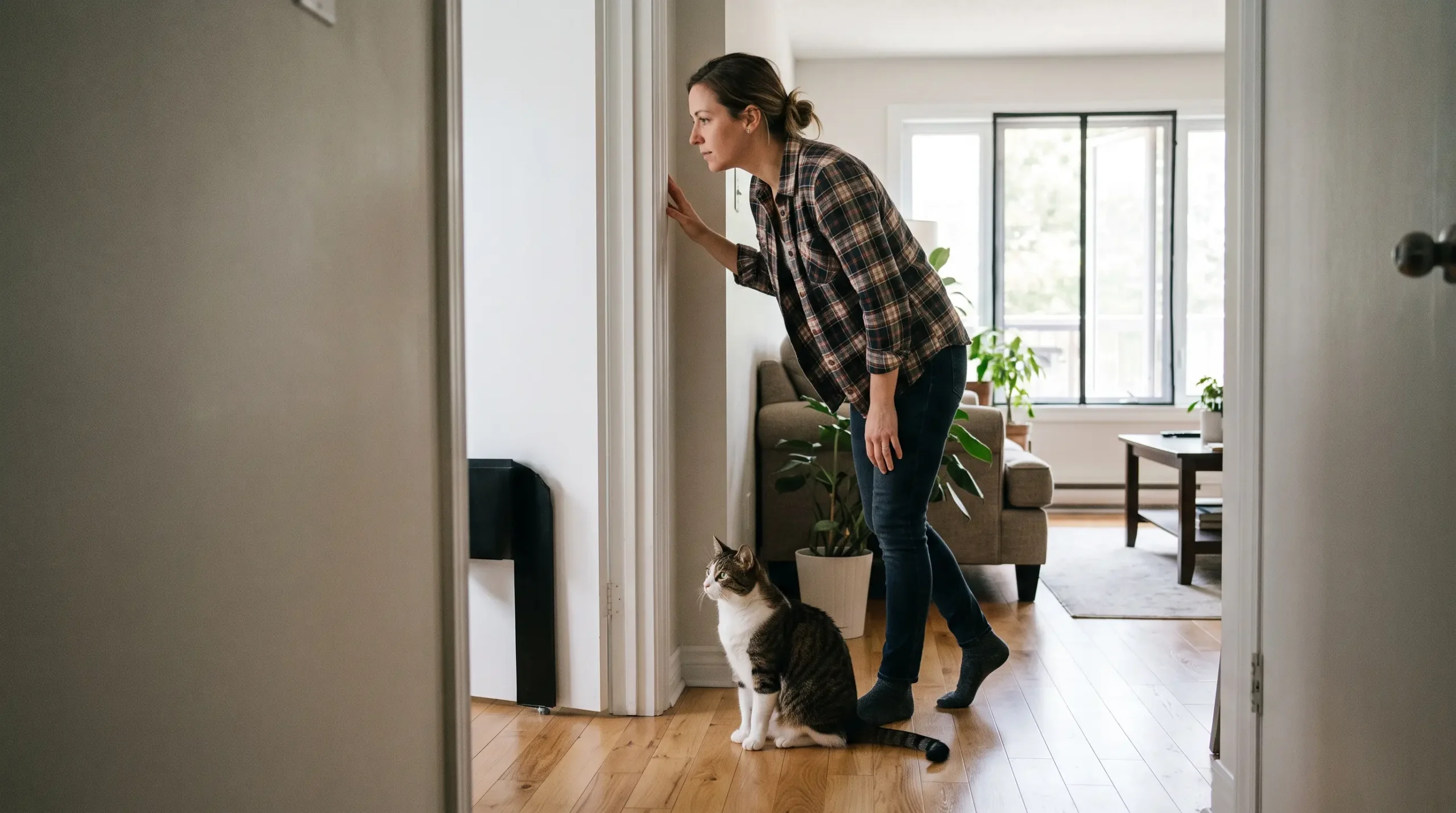
When Can Your Cat Re-Enter After Pest Control?
The answer depends on the specific product, where it was applied, and the instructions on its label. An indoor crack-and-crevice treatment may have different precautions from a broad surface spray or space treatment.
According to the National Pesticide Information Center (NPIC), pets should remain out of treated areas for the time specified on the product label or until sprayed surfaces are completely dry, whichever is longer. Appropriate ventilation is also important.
Before bringing your cat back, confirm:
- Label timing: Any required waiting or restricted-entry period has passed.
- Surface condition: Sprayed areas have dried completely, and any product-specific restrictions have been satisfied.
- Ventilation: Required airing-out procedures are complete.
- Cat-accessible areas: Your cat cannot directly contact exposed bait, loose pesticide dust, wet residue, or other restricted materials.
For example, a label that requires the spray to dry before re-entry doesn’t automatically mean every surface becomes appropriate for licking or chewing. Follow any separate restrictions concerning contact with treated objects.
If a professional performed the treatment, ask for the product name, EPA registration number when applicable, and exact re-entry instructions. Don’t rely on a vague estimate such as “a few hours should be fine.”
Our guide to reading pesticide labels when you have pets explains where to find the precautions that matter.
Why Paw and Coat Residue Matters for Cats
Imagine your cat walking along a recently treated baseboard, then settling on the couch for a grooming session. Even without directly licking the floor, the cat may transfer material from its paws or coat to its mouth.
There are three practical exposure pathways to consider:
- Paw contact: Walking across treated flooring, edges, or other reachable surfaces.
- Coat contact: Brushing against treated furniture, low walls, or objects.
- Oral exposure during grooming: Licking potentially contaminated paws or fur.
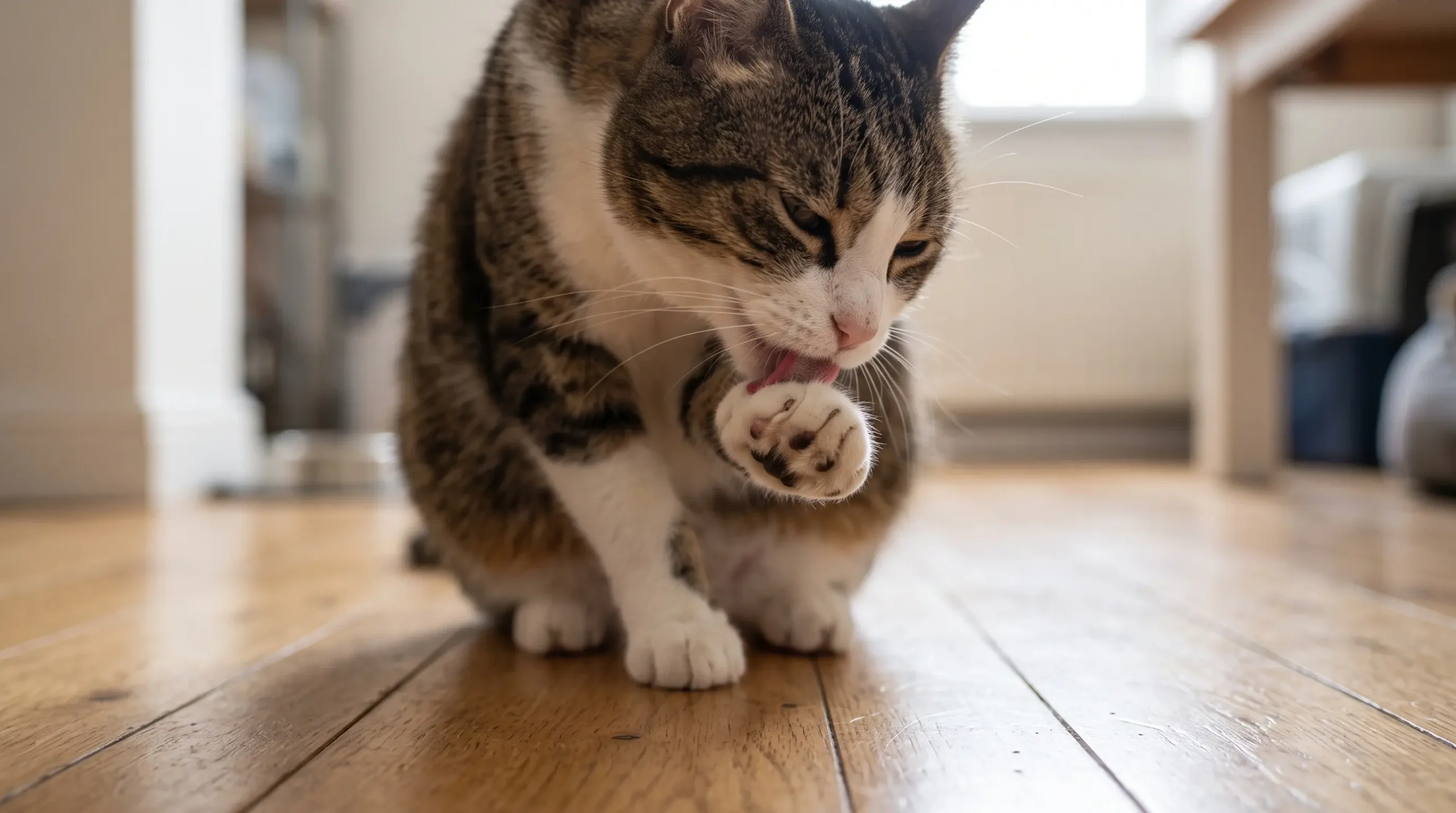
Dry does not necessarily mean residue-free. Some pesticides are designed to remain active on treated surfaces after drying. That doesn’t mean every properly treated, dry surface poses an unacceptable risk, but it does mean that drying alone isn’t a substitute for following the label.
Risk depends on the pesticide’s ingredients and formulation, the amount present, how your cat contacts it, and whether the product was applied correctly.
This is particularly important with certain insecticides containing pyrethroids. Cats can be especially sensitive to some of these compounds, including permethrin at sufficiently high exposures. However, the hazards of concentrated dog flea products should not be assumed to be identical to those of every appropriately used household formulation.
The safest practical approach is to prevent your cat from accessing surfaces or materials that the label restricts, rather than attempting to judge residue safety by appearance.
Ventilation: What Actually Matters?
Ventilation helps disperse airborne pesticide material and supports drying after some indoor applications. Both the U.S. Environmental Protection Agency (EPA) and NPIC recommend following label directions and taking appropriate precautions before allowing pets back into treated spaces.
Depending on the product, this may involve opening windows or using fans after application. However, some treatments require an initial closed-room period before ventilation begins.
To manage ventilation appropriately:
- Follow the label or professional applicator’s instructions about when ventilation should begin and how long it should continue.
- Use outdoor airflow where practical without allowing your cat to escape through an unsecured window or door.
- Keep your cat outside the treated area while the required ventilation is taking place.
- If ventilation instructions are unclear, ask the applicator or product manufacturer before re-entry.
Don’t use odor alone as your safety test. A room that no longer smells like pesticide may still contain residues, while an odor does not establish how much exposure is occurring. The product instructions and actual treatment conditions are more reliable guides.
Check These Five Things Before Letting Your Cat Back In
A short inspection can help you avoid the most obvious re-entry mistakes.
1. Confirm Exactly Where the Treatment Was Applied
Ask whether the technician treated baseboards, carpet edges, furniture, cracks, or other low surfaces.
Pay particular attention to places your cat regularly explores: under furniture, near doorways, beside scratching posts, and along walls.
Knowing the application locations helps you identify where contact restrictions matter instead of assuming that every room was treated identically.
2. Look for Unexpected Wet Spots or Loose Material
Do not allow your cat into an area with unexplained wet pesticide deposits, spilled material, or accessible piles of insecticide dust.
Visible pools or piles should not be treated as normal simply because the scheduled waiting period has passed.
If you notice an unusual amount of residue, keep the area closed and contact the applicator or product manufacturer for guidance.
3. Check Your Cat’s Favorite Contact Surfaces
Think beyond the middle of the floor. Cats may brush their fur against low furniture, walk across window ledges, or lie beside treated wall edges.
If these locations received pesticide applications, confirm the label permits the type of contact your cat is likely to have after re-entry.
For furniture or other objects treated directly, ask about specific drying, use, and cleaning instructions before restoring your cat’s access.
4. Restore Food, Water, and Bedding Carefully
Food bowls, drinking water, toys, and bedding should ideally have been removed before the treatment.
Return clean bowls and fresh water only after the area is suitable for re-entry. If an item may have been sprayed or contaminated, keep it away from your cat until its appropriate cleaning or replacement has been determined.
Don’t assume that simply wiping a contaminated fabric bed makes it safe.
Litter boxes also need special planning because cats repeatedly contact litter and box surfaces. See our dedicated guide to cat litter boxes during pest control for removal, protection, and re-entry considerations.
5. Make Sure the Required Ventilation Is Complete
Before opening the room to your cat, confirm that the label’s airing-out requirements have been satisfied.
If you cannot identify the pesticide, don’t know which areas were treated, or were not given clear re-entry instructions, keep your cat in a separate untreated location while you obtain reliable information.
Should You Mop or Wipe Treated Surfaces Before Re-Entry?
Not automatically.
For an appropriately applied residual pesticide, routine cleaning can sometimes remove material intended to remain in specific treatment locations. But leaving unintended contamination on a surface your cat regularly licks or touches may also be inappropriate.
The right response depends on the product, application method, and location.
Ask the applicator which surfaces should remain undisturbed and which, if any, require cleaning before pets return. Keep your cat away from any suspect area until that question is resolved.
If a product was spilled, overapplied, or used incorrectly, do not improvise with bleach, vinegar, household cleaners, or chemical neutralizers. The NPIC guidance on cleaning up indoor pesticide misuse explains why some residues require product-specific or professional remediation.
What If Your Cat Walked Through a Treated Area Too Early?
First, calmly remove your cat from the treated space and prevent further contact.
If you suspect pesticide reached the paws or fur, contact your veterinarian or an animal poison control service promptly. Have the product name, active ingredients, and application details available.
Because cats groom themselves, an unknown residue on their coat or paws may become an oral exposure. Seek veterinary instructions about safe decontamination rather than applying household solvents, essential oils, or home mixtures.
Watch for unusual signs such as:
- Excessive drooling or repeated vomiting.
- Muscle twitching or tremors.
- Unsteady walking or unusual weakness.
- Seizures, collapse, or breathing difficulty.
Tremors, seizures, collapse, or breathing difficulty require immediate emergency veterinary care. Do not wait for additional symptoms if a significant exposure is suspected.
For suspected permethrin exposure, our cat permethrin exposure emergency guide covers the urgent warning signs and next steps in more detail.
In the United States, the ASPCA Animal Poison Control Center can also be reached at 888-426-4435. Consultation fees may apply.
The Safest Re-Entry Decision Is Product-Specific
It’s reasonable to want your cat back in its familiar space as soon as possible. But the right decision isn’t based on a generic number of hours or whether the floor looks clean.
Confirm the product’s requirements, complete the necessary drying and ventilation, inspect areas your cat can touch, and resolve any uncertainty about exposed belongings or unusual residues.
For broader planning before future treatments, our practical pest-control guide for cat homes covers prevention and exposure reduction without relying solely on pesticides.
Bottom line: Re-entry is appropriate when the label’s requirements have been met and your cat can return without access to restricted pesticide materials or improperly treated surfaces. If those conditions aren’t clear, ask the applicator before opening the door.
Sources & Editorial Standards
This guide draws on pesticide-safety and veterinary toxicology references:
- National Pesticide Information Center — Pets and Pesticide Use
- NPIC — Minimizing Exposure Around Pesticides
- U.S. Environmental Protection Agency — Pesticide Safety Tips
- Merck Veterinary Manual — Ectoparasiticides Used in Small Animals
Editorial note: This article provides general cat-specific re-entry guidance, not clearance for a particular pesticide application. Product labels and applicable professional instructions take precedence. If exposure is suspected or your cat develops symptoms, contact a veterinarian or animal poison control service promptly.