
How to Help a Rescue Dog Decompress During the First Two Weeks
Your newly adopted dog is finally home. You have a cozy bed and a few toys ready, but instead of exploring, your dog lingers by the door or curls up in a quiet corner. Should you encourage them to join in—or give them space?
For the first two weeks, focus on safety, quiet routines, and letting your rescue dog choose when to interact. Keep outings manageable, avoid overwhelming introductions, and watch how they respond before adding anything new.
Fourteen days is a starting plan, not a deadline. Some dogs settle quickly; others need much longer. Progress means feeling safer—not reaching a fixed milestone by day 14.
Your two-week starting plan:
- Days 1–3: Rest, basic care, escape prevention, and a quiet retreat.
- Days 4–7: Consistent routines and interaction on your dog’s terms.
- Days 8–14: Small, positive experiences if your dog appears ready.
- Throughout: Monitor appetite, toileting, comfort, and health; ask your veterinarian or rescue organization for help when needed.

What Does It Mean for a Rescue Dog to Decompress?
Decompression is the adjustment period after leaving a shelter, foster home, or previous household. New smells, sounds, people, sleeping places, and routines can be tiring even when your home feels peaceful to you.
One dog may sleep or hide; another may pace, bark, follow you everywhere, or struggle to settle. These early responses do not necessarily reflect the dog’s lasting personality.
Dogs Trust’s rescue-dog settling guidance recommends quiet rest, predictable routines, and allowing dogs to approach at their own pace.
Decompression isn’t isolation. Your dog still needs food, water, toileting, gentle companionship, veterinary care, and opportunities to make safe choices—just without constant demands.
Before the First Night: Make Home Safe and Predictable
Begin with a manageable, dog-proofed area rather than opening every room immediately. Keep rescue paperwork and medication information handy, and arrange a routine veterinary check with your new vet based on the rescue organization’s advice. Don’t delay care if your dog appears ill.
Create a Quiet Retreat
Set up a comfortable bed and water in a low-traffic spot, such as a quiet room or gated section. An open crate can work if your dog already finds it reassuring, but never force a frightened dog into confinement.
Choose another arrangement if the dog panics, pants heavily, or struggles to escape. Ask the household to respect one rule: when the dog retreats to rest, nobody follows them in or insists on touching them.
Prevent Escapes From the Beginning
A new dog may bolt when startled or when a door opens. Before outings, check:
- A properly fitted collar or secure harness and a reliable leash; use extra secure connections for known escape risks.
- A current ID tag and updated microchip registration.
- Doors, gates, fences, and windows, with an interior baby gate if needed near an exterior door.
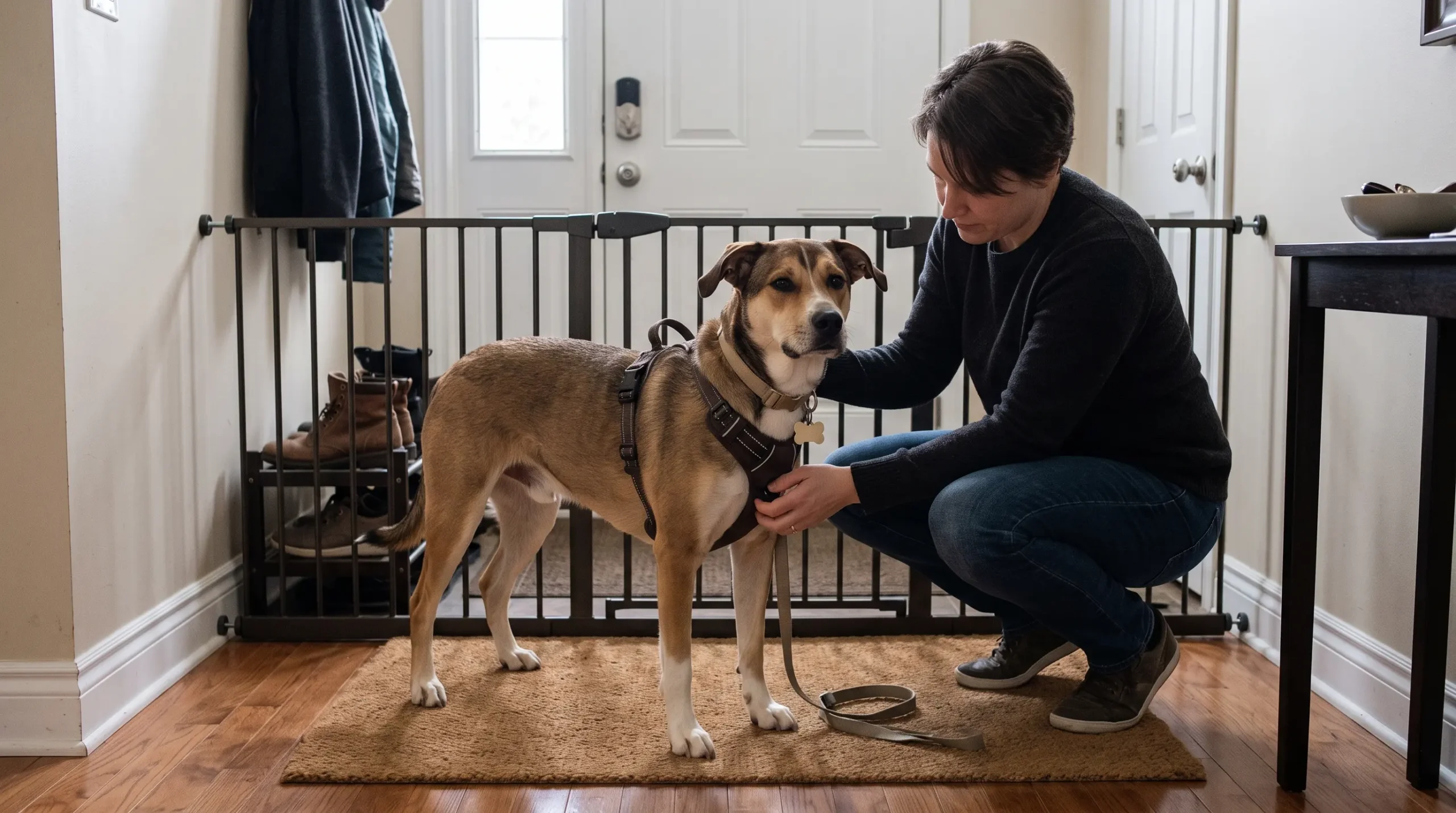
Skip off-leash walks in unsecured places, even if your dog seems responsive indoors. Put away medicines, cleaning products, cords, and other accessible hazards before exploration begins.
Days 1–3: Make the World Smaller and Quieter
Meet your dog’s basic needs without filling the day with activities.
Let Your Dog Explore at Their Own Pace
Offer a toilet break, show where the water and bed are, and let the dog investigate a small safe area. Don’t lead them through every room. If they stay in one corner, allow it; if they approach, respond calmly.
Avoid looming over, hugging, or repeatedly reaching toward a dog who turns away. They can learn about you without being touched.
Keep Meals, Walks, and Rest Predictable
Ask the rescue organization about previous food, feeding times, health needs, and routines. Keep familiar meals where practical rather than making an abrupt diet change. Offer regular toilet opportunities, including after waking, eating, and activity.
Choose short, quiet walking routes and allow plenty of undisturbed rest. Sleeping more during an adjustment can be normal, but marked lethargy with other signs of illness needs veterinary attention rather than being dismissed as stress.
Skip the Welcome Party
Ask friends to postpone visits. For now, avoid crowded dog parks or pet stores, forced greetings, unnecessary handling or grooming, and long outings intended to tire the dog out.
Let your dog’s response guide the pace—not a welcome schedule.
Make the First Nights Easier
Introduce the sleeping area in daylight and keep it comfortable and safe. Some dogs settle better when their owner sleeps nearby at first.
If your dog becomes distressed in a separate room, consider a less isolating arrangement and ask the rescue organization for guidance. Don’t use prolonged crying or panic as a lesson in independence. If barking continues at night, our guide to why dogs bark at night explains other possible causes; don’t assume a newly adopted dog is being defiant.
Days 4–7: Build Trust Without Pushing Contact
By midweek, your dog might choose a resting place, follow you into a room, or investigate a toy. Welcome these signs without rushing contact.
Let Your Dog Initiate Affection
Sit nearby without repeatedly calling the dog over. If they approach and appear comfortable, offer a brief gentle stroke on the chest or shoulder, then pause. Do they lean closer for more—or stiffen, turn away, or leave?
Respect the answer. Being able to approach and retreat freely helps build trust.
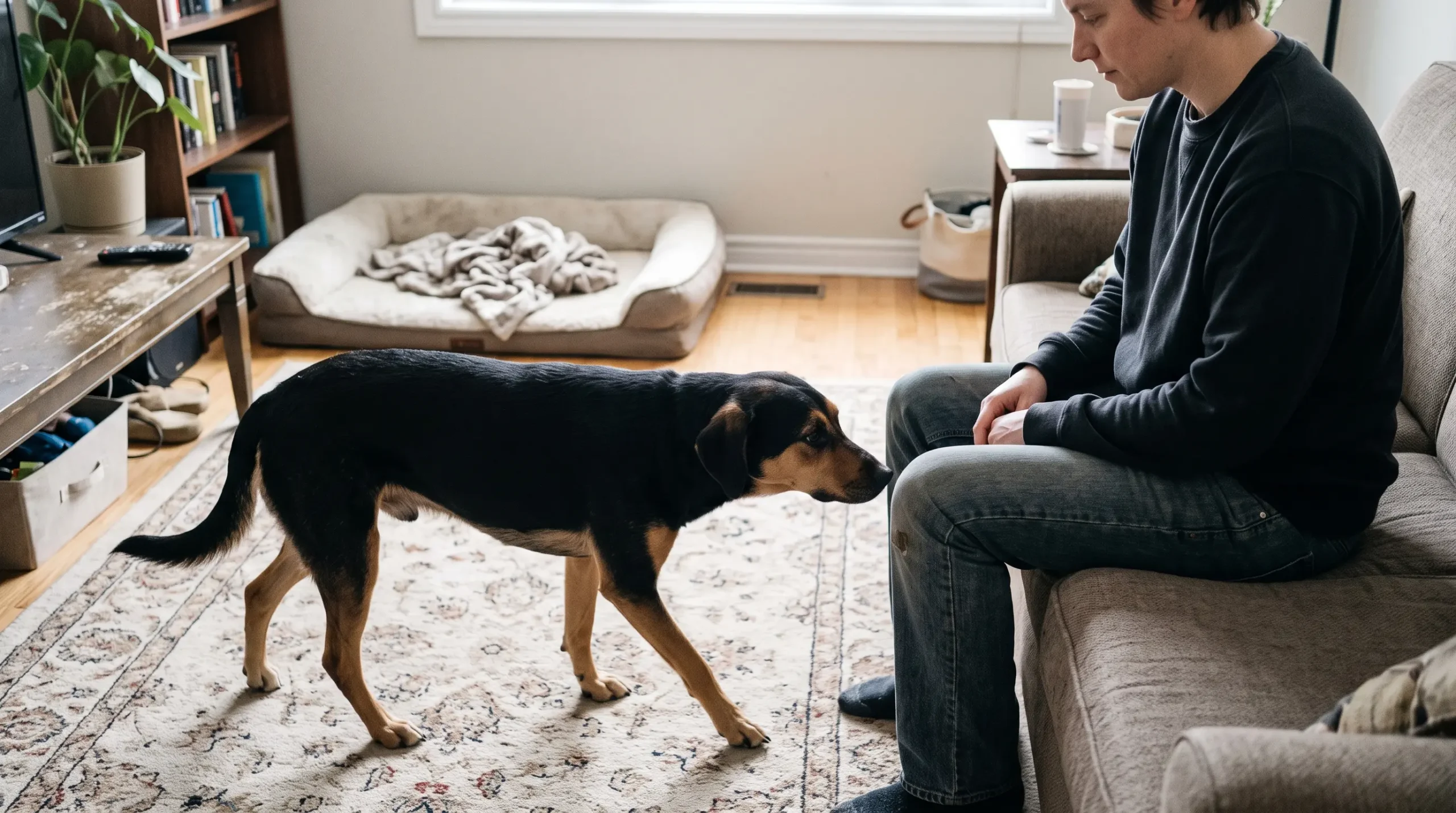
Learn Their Early Stress Signals
Look at posture and context together. Turning away, repeated lip licking or yawning, freezing, a lowered or tucked body, retreating, growling, or showing teeth can indicate discomfort.
One signal alone isn’t a diagnosis, and a wagging tail doesn’t guarantee a dog wants contact. Our guide to dog and cat body language explains more. A shake-off when a dog isn’t wet can also be context-dependent. If your dog becomes tense, give them more space.
Keep Resident Pets Separate When Necessary
Resident dogs don’t have to become friends immediately. Provide separate resting areas, manage food and other valued resources, and supervise any appropriate contact. Increase distance when either dog is uncomfortable.
Our guide to introducing two dogs safely covers first meetings in detail. With cats or other pets, maintain appropriate separation and follow species-specific introduction advice.
Days 8–14: Expand Their World Only if They Are Ready
Some dogs grow curious during week two; others need the quiet first-week routine longer. Readiness matters more than the date.
Introduce One Small Change at a Time
If your dog is resting comfortably, eating normally, and recovering well after ordinary activity, try just one manageable new experience: another quiet room, a slightly different walking route, gentle food enrichment, or a short reward-based interaction.
There is no need to complete a checklist. One pleasant activity followed by relaxed rest is more helpful than several stressful introductions.
Keep Walks Short, Familiar, and Low-Pressure
Let your dog sniff on quiet routes rather than demanding constant forward movement; our guide to why dogs sniff on walks explains this normal behavior. Watch their reaction to traffic, bicycles, people, and animals. If they freeze, try to flee, or grow increasingly worried, increase distance and return somewhere calmer.
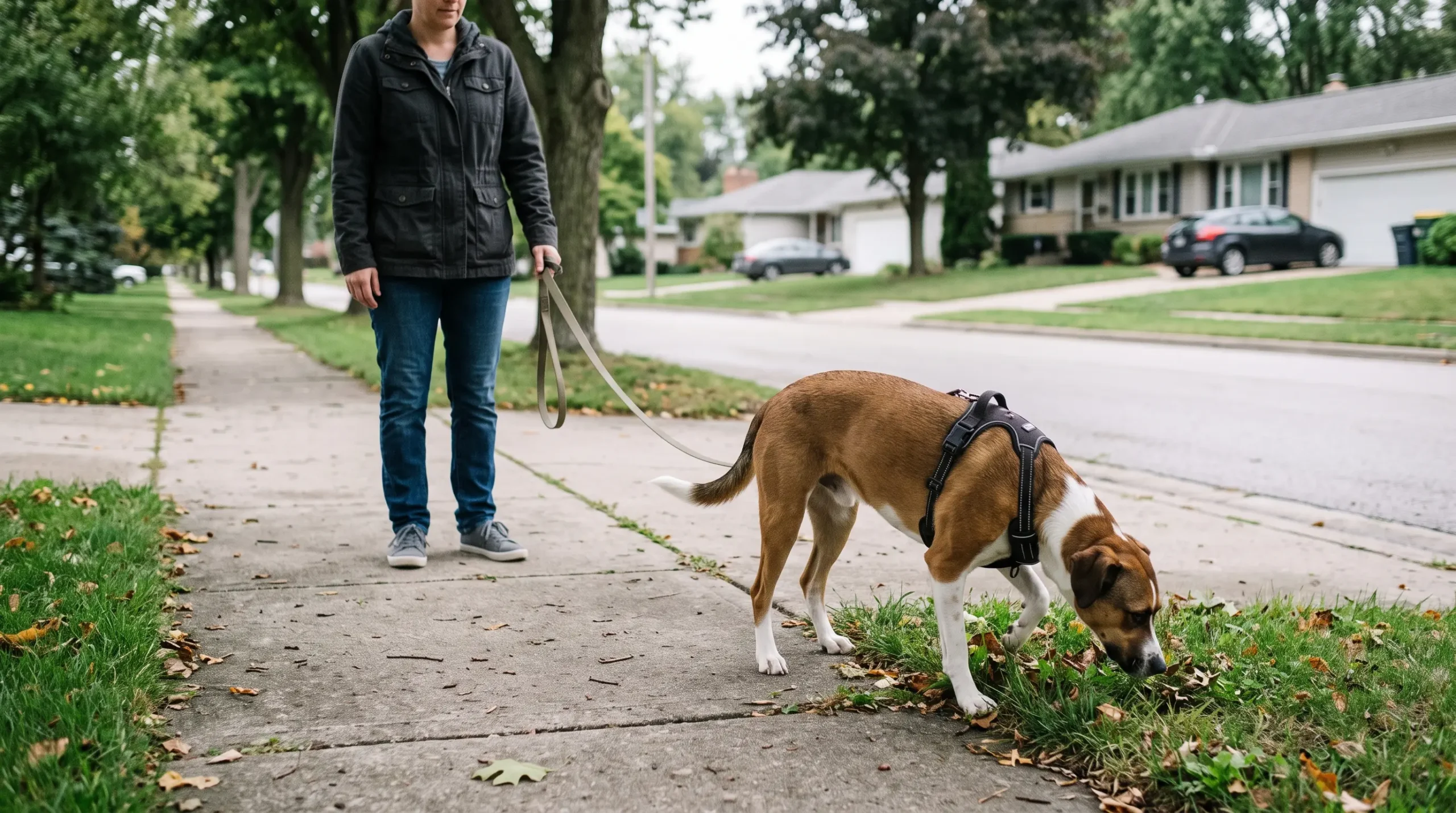
Dog parks and unsecured off-leash areas are not shortcuts to socialization during early adjustment.
Start Gentle Training, Not a Boot Camp
If your dog seems comfortable, try a few easy, reward-based moments: responding to their name, following a treat, or settling voluntarily on a mat. Stop before they become frustrated or anxious.
Our calm mat-training guide has a separate step-by-step approach. Formal training can wait if your dog still needs rest and predictability.
A Simple Daily Routine for the First Two Weeks
A flexible daily pattern helps your dog know what to expect. Keep the timing reasonably consistent while adjusting for age, health, and the routine they already know.
| Part of the Day | What to Offer | Why It Helps |
|---|---|---|
| Morning | Calm toilet break, familiar breakfast, water, and quiet time | Predictable start |
| Midday | Rest, toilet opportunity, and optional gentle enrichment | Avoids constant stimulation |
| Late afternoon | Short familiar walk or relaxed exploration | Manageable activity |
| Evening | Regular meal, quiet household time, and rest | Reassuring routine |
| Before bed | Final toilet break and consistent sleeping arrangement | Less overnight uncertainty |
Puppies, older dogs, or dogs with medical conditions may need more frequent care. Consistency means being understandable, not inflexible.
What if Your Rescue Dog Is Hiding, Not Eating, or Clinging to You?
Stress can affect behavior, but it shouldn’t automatically be blamed for a health problem.
If Your Dog Hides or Avoids You
Don’t pull the dog out to encourage bonding. Keep food, water, and toileting accessible; allow approach without trapping them. If fear prevents basic care or shows no improvement, ask for help.
If Your Dog Eats Less Than Expected
Offer the familiar food and monitor intake. Anxiety can affect appetite, but so can pain, illness, and digestive problems. Contact a veterinarian promptly if an adult dog eats nothing for about 24 hours. Puppies, very small dogs, those with medical conditions, or dogs with other symptoms may need assessment sooner.
Vomiting, diarrhea, weakness, abdominal pain, inability to drink, or marked lethargy warrant earlier attention. See our guide to dogs refusing food for more detail.
If Your Dog Follows You Everywhere
Seeking closeness doesn’t automatically create a bad habit. Notice how your dog reacts when you’re briefly out of sight. If comfortable, you can slowly introduce very short separations within their tolerance.
If separation causes panic, howling, excessive drooling, or escape attempts, don’t force longer absences. Our guide to separation anxiety in dogs and cats covers this separately. Arrange support if you must be away while your dog is struggling.
How Can You Tell Whether Decompression Is Working?
Progress often looks ordinary: your dog rests more comfortably, approaches voluntarily, eats and toilets consistently, explores without frequent fear, or recovers more easily after a household noise. Play and relaxed curiosity may follow.
Progress won’t be linear. Brief notes about sleep, meals, toileting, walks, and stress triggers can reveal trends across days.
Five Common Mistakes That Can Slow Adjustment
- Inviting everyone over immediately: Repeated introductions may overwhelm a dog still learning their new environment.
- Forcing affection: Allow the dog to decline touch and move away.
- Trying to exhaust stress away: Crowded places and long outings can increase distress.
- Punishing fearful responses: Scolding growling, hiding, or stress-related accidents doesn’t solve the cause. Use humane management and seek advice.
- Demanding progress on schedule: An individual dog may need considerably longer than two weeks.
Calm routines should never delay necessary veterinary care or other essential needs.
Does the 3-3-3 Rule Mean Your Dog Should Settle in 14 Days?
The popular 3-3-3 rule describes three days to decompress, three weeks to adjust, and three months to feel more at home. It can help set expectations, but it is not a scientifically validated timetable for any individual dog.
The American Animal Hospital Association’s 2026 adoption guidance uses it as a practical framework. Your dog’s background, health, and temperament may mean a faster or slower adjustment. Two weeks is a foundation, not a finish line.
When Should You Ask for Professional Help?
Seek urgent veterinary care for breathing difficulty, collapse, repeated vomiting, severe diarrhea, suspected poisoning, serious injury, or other major illness signs. Don’t wait until day 14.
Contact your veterinarian or rescue organization promptly if your dog can’t meet basic eating or drinking needs, fear prevents normal toileting or rest, escape attempts become dangerous, separation triggers severe panic, or growling, snapping, or biting raises safety concerns. A sudden change in aggression may also warrant medical evaluation; see our guide to sudden aggression in dogs for that separate issue.
A veterinarian can rule out pain or illness. For persistent fear or aggression, consult a qualified reward-based behavior professional or veterinary behaviorist. Rescue organizations may also know the dog’s previous routines and triggers.
At the End of Two Weeks, Follow Your Dog’s Pace
By day 14, your dog might be ready to play and explore—or still need their quiet corner. Neither outcome means you’ve passed or failed.
Keep meals, walks, rest, and interactions predictable. Add experiences only as comfort grows.
The goal isn’t a perfectly trained dog after 14 days. It’s a dog who is beginning to learn that this home is safe.
Sources & Editorial Standards
This article draws on animal-welfare, veterinary, and canine-behavior guidance about adjustment, low-pressure handling, safety, and early support:
- Dogs Trust — How to Help a Rescue Dog Settle Into Your Home
- AAHA — Adopting a Rescue Dog: What to Expect (2026)
- ASPCApro — Canine Body Language Tips
- Best Friends Animal Society — Dog Foster Care Manual
- Dogs Trust — Why Dogs Escape and How to Prevent It
- ASPCA — Separation Anxiety
- National Animal Welfare Trust — Settling in Your New Rescue Dog
Editorial note: This article provides general advice, not a fixed behavioral timetable or a substitute for veterinary care. Ask a veterinarian about health concerns and seek qualified behavioral support for persistent fear, panic, aggression, or significant separation distress.