Wet vs. Dry Cat Food: Benefits, Limits & Mixed Feeding
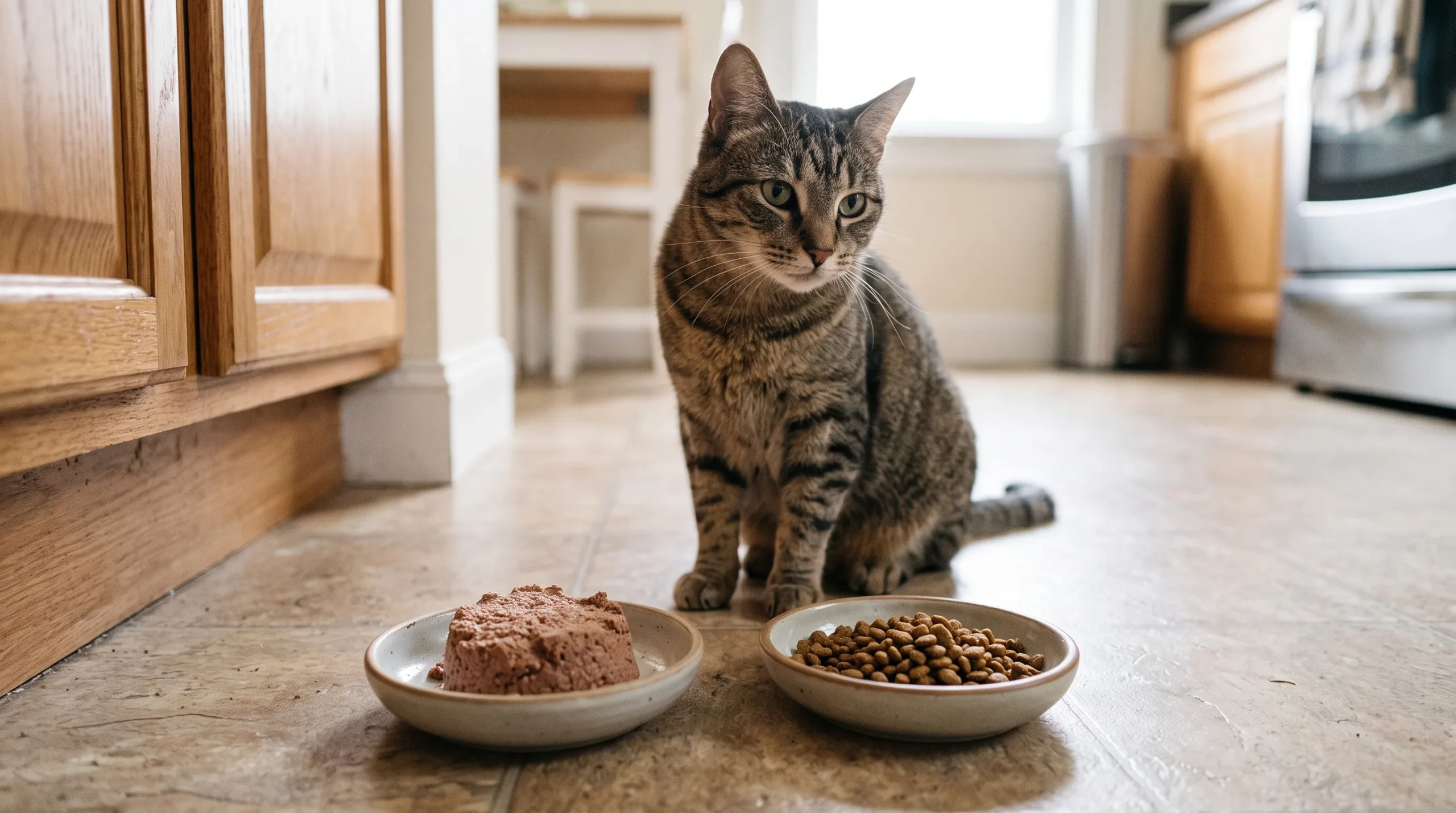
Wet cat food delivers more moisture, while dry cat food is generally easier to store, portion, and serve. Neither is automatically the healthier choice for every cat. A nutritionally complete wet diet, dry diet, or carefully measured combination can all work for a healthy cat.
The decision comes down to your cat’s hydration, food preferences, calorie needs, health, and your household routine. Here’s how the differences affect everyday feeding.
Wet vs. Dry Cat Food: The Main Differences
| Factor | Wet Food | Dry Food |
|---|---|---|
| Moisture | Typically 75% or more | About 6–10% |
| Hydration | Provides substantial water through meals | Provides little dietary water |
| Calories | Usually fewer calories per gram due to moisture | Generally more calorie-dense by weight |
| Convenience | Opened food needs prompt refrigeration or disposal | Easier to measure and use in automatic feeders |
| Cost | Usually more expensive per day | Usually more economical per day |
| Texture | Pâté, chunks, shreds, or gravy | Crunchy kibble |
These are general differences, not guarantees about individual products. Compare the actual calorie information and nutritional adequacy statements before choosing a food.
What Wet Cat Food Does Well—and Where It Falls Short
The strongest practical advantage of wet food is its moisture content. Cats eating canned food receive meaningful amounts of water with every meal, which can help increase their overall water intake.
Wet food may be especially useful for cats that drink relatively little water. However, a wet diet does not replace access to fresh drinking water.
Other advantages include:
- Appealing textures and aromas: Some cats prefer moist pâté, shreds, or gravy to kibble.
- Lower calorie density by weight: Water adds volume without adding calories, although individual formulas differ.
- Soft texture: Some cats with difficulty chewing may find moist food easier to eat.
The main drawbacks are price, storage, and serving convenience. Opened cans or pouches require refrigeration, and food left in the bowl can spoil.
Wet food also varies widely in calories and nutrients. A rich canned formula is not automatically a low-calorie food.
What Dry Cat Food Does Well—and Its Limitations
Dry food is practical for households that need predictable portions, convenient storage, or a compatible automatic feeder.
Its advantages include:
- Convenience: Kibble is easy to measure and serve.
- Affordability: Many dry diets cost less per day than comparable wet diets.
- Storage: Unserved dry food generally keeps longer after opening when stored properly.
The biggest nutritional trade-off is moisture. Cats eating only kibble must obtain most of their water by drinking.
Dry food is also calorie-dense. A scoop that looks small may contain a substantial part of a cat’s daily calorie allowance. Leaving unlimited kibble available can lead some cats to overeat.
Does dry food clean a cat’s teeth?
Don’t assume ordinary kibble replaces dental care. Some specially formulated dental diets have evidence supporting plaque or tartar control, but that does not mean every crunchy food provides the same benefit.
The Veterinary Oral Health Council lists products that have earned its Seal of Acceptance for specific dental claims.
Is Wet Food More Nutritious Than Dry Food?
Not necessarily. Water content changes the percentages printed on food labels, making direct comparisons misleading.
For example, a wet food may list a lower protein percentage than kibble simply because most of the canned food’s weight is water. That does not prove it provides less protein relative to its calories.
What matters more is whether the food provides complete and balanced nutrition for your cat’s life stage, along with an appropriate calorie intake.
Look for a nutritional adequacy statement identifying the intended life stage, such as adult maintenance or growth. Be careful with products labeled for supplemental feeding only; these are not suitable as the sole long-term diet.
For a fuller explanation of nutritional adequacy statements, protein percentages, and calorie labels, see our cat food label guide.
How to Mix Wet and Dry Cat Food Without Overfeeding
Mixed feeding can offer the moisture and texture of wet food alongside the convenience of kibble. The important part is treating both foods as components of one daily calorie allowance.
- Choose appropriate foods. Check that each food used as a substantial part of the diet is complete and balanced for your cat’s life stage.
- Establish a daily calorie target. Ask your veterinarian for an appropriate amount based on your cat’s body condition and individual needs.
- Read both calorie labels. Find kcal per can, pouch, or tray for wet food and kcal per cup or gram for dry food.
- Subtract, don’t stack. Calories from wet food must replace some of the dry food allowance—not simply get added on top.
- Measure each portion. Weighing kibble can be more consistent than estimating an uneven scoop.
Mixed-feeding example: Suppose a veterinarian has recommended 200 calories per day for a particular cat. If one portion of wet food provides 100 calories, the remaining allowance is 100 calories. With kibble containing 400 calories per cup, that would be one-quarter cup of kibble for the day.
This is a calculation example, not a recommended calorie target for your cat. Actual food calories and individual needs vary.
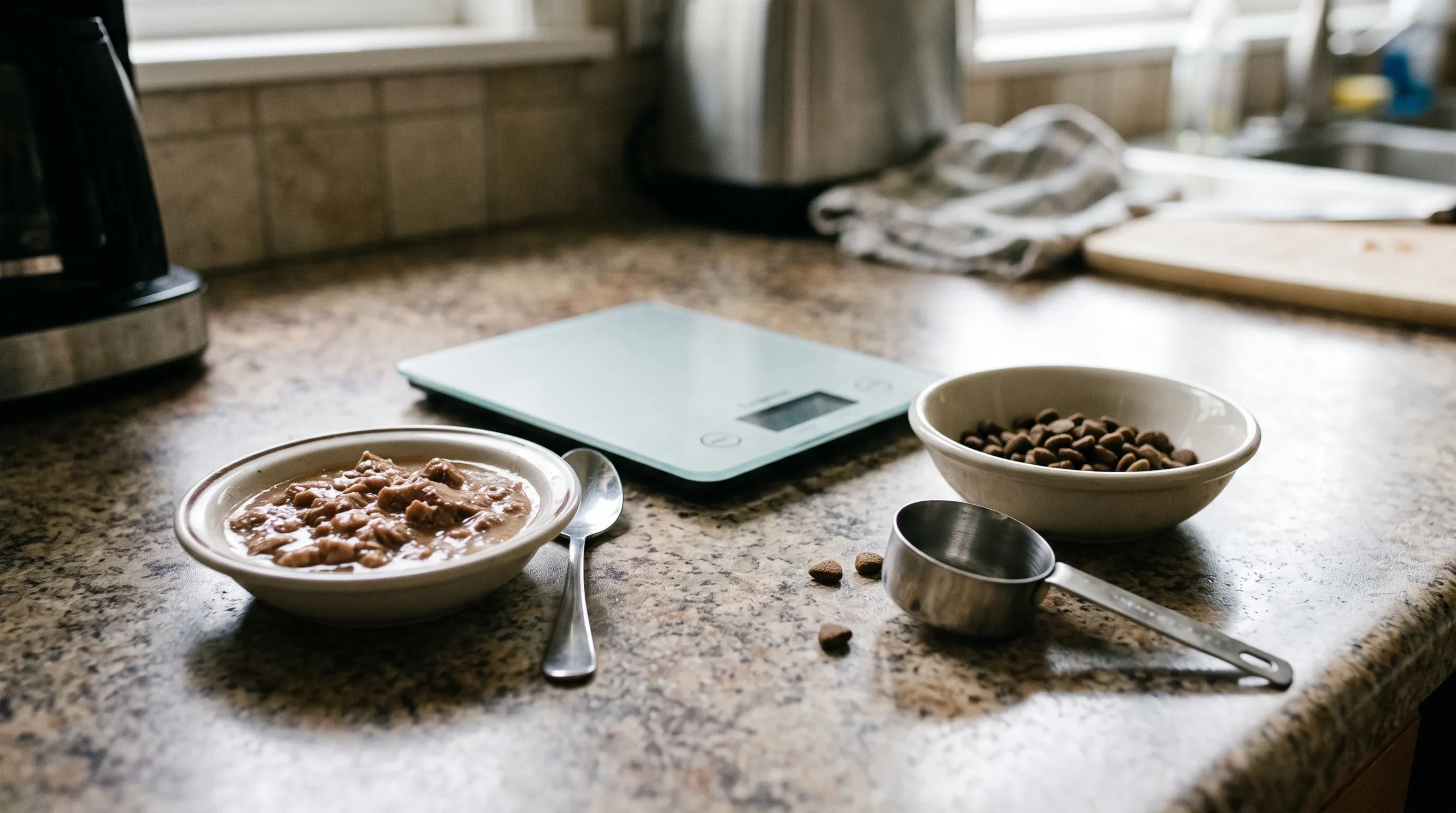
You can serve the two foods at separate mealtimes or offer them in separate bowls. There is no nutritional requirement to physically mix kibble into the wet food.
For additional portion-planning help, see the Pet Food Portion Calculator. Use it as a planning aid rather than a substitute for a veterinarian’s individualized feeding recommendation.
Introducing a New Feeding Routine
If your cat currently eats only one type of food, make changes gradually. A transition over approximately 7–10 days may help reduce digestive upset, although some cats need longer.
Start with a small amount of the new food, then increase it while reducing the old food so the total daily calories remain appropriate.
For a reluctant cat, try a different texture or serve the new food separately. Some cats accept pâté but reject chunks in gravy, or vice versa.
Do not withhold familiar food to force a cat to accept a new diet. If your cat stops eating, seems unwell, or has persistent vomiting or diarrhea, contact your veterinarian promptly.
Food Storage Matters With Either Choice
Wet and dry diets require different handling.
- Wet food: Promptly refrigerate or discard unused canned or pouched food. Keep refrigerated portions covered and follow product instructions.
- Dry food: Store the original bag in a cool, dry place, securely closed. Keeping the bag inside a clean storage container can help protect the food while preserving its label and lot information.
- Both: Wash food bowls and feeding utensils regularly, and discard food that smells spoiled or appears contaminated.
The FDA’s pet food storage guidance provides additional safe-handling recommendations.
Which Feeding Approach Fits Your Cat?
Choose wet food as a larger part of the diet when dietary moisture is a priority, your cat strongly prefers moist textures, or a veterinarian recommends it for an individual health need.
Choose dry food as a practical primary diet when your healthy cat eats it comfortably, drinks adequately, and you can consistently control portions.
Choose mixed feeding when you want some of the advantages of both and can measure their combined calories reliably.
A cat with kidney disease, urinary problems, diabetes, or another condition requiring a therapeutic diet needs an individualized recommendation. Do not replace a prescribed food with an ordinary wet or dry formula without veterinary guidance.
Whatever you choose, monitor appetite, body condition, and drinking habits. If you want to understand your cat’s general fluid needs, our Pet Hydration Calculator provides additional context, although it cannot determine an individual cat’s medical hydration requirements.
The Practical Bottom Line
Wet food offers more dietary water. Dry food offers convenience and often lower daily cost. A combination can work well when both foods are nutritionally appropriate and their calories are counted together.
For a healthy cat, there’s no need to replace a well-tolerated, complete and balanced diet solely because another food comes in a different format. Make the choice that supports your cat’s needs and that you can feed consistently.
Sources and editorial references
- Cornell Feline Health Center — Feeding Your Cat
- VCA Animal Hospitals — Dry, Canned, or Semi-Moist Food Choices for Cats
- AAFCO — Reading Pet Food Labels
- FDA — Proper Storage of Pet Food and Treats
This article provides general nutrition information and does not replace individualized veterinary advice, particularly for cats with diagnosed medical conditions.