Diatomaceous Earth and Cats: Inhalation, Grooming, and Safer Use
Diatomaceous earth (DE) is marketed as a natural insect-control powder. But a cat can walk through it, lie on a treated surface, or lick residue from their paws. “Natural” does not mean exposure-free or safe to breathe.
The main risks for cats are inhaling airborne dust, eye or skin irritation, and swallowing particles while grooming. Ordinary DE has relatively low acute oral toxicity, but loose pesticide dust is not automatically safe to use around pets.
Quick answer: Don’t spread diatomaceous earth on your cat, their bedding, litter area, or accessible floors. If using it for pest control, choose a product labeled for the intended use, follow its directions, keep your cat out during application, and prevent access to treated dust afterward. If your cat develops coughing, breathing difficulty, or other symptoms after exposure, contact a veterinarian promptly.
Is Diatomaceous Earth Safe Around Cats?
DE is made from fossilized diatoms and consists largely of silica. In insect-control products, its particles damage insects’ protective outer layer, causing water loss. It acts through physical contact rather than like many conventional chemical insecticides.
Low toxicity from swallowing small amounts does not mean inhaling fine dust is safe.
The National Pesticide Information Center’s diatomaceous earth fact sheet explains that the powder can irritate the respiratory tract, eyes, and skin. Exposure depends on the formulation, amount, and how the material is used.
Cats are particularly likely to encounter floor-level dust and groom particles from their paws and fur.
Food-Grade, Pest-Control and Pool-Grade DE: What’s the Difference?
Not every product sold as diatomaceous earth is intended for the same purpose.
| Product Type | What It Means | Practical Advice for Cat Homes |
|---|---|---|
| Food-grade DE | Processed for certain food or feed-related uses, not necessarily evaluated or labeled as a household pesticide | Don’t assume it is safe to scatter around your cat or use as an unapproved insect treatment |
| Pesticide-labeled DE | A formulation with directions for specific pest-control uses and application sites | Check the exact label, ingredients, pet precautions, and permitted placement |
| Pool-filter DE | Filtration material that may be heat-processed and contain higher levels of crystalline silica | Do not substitute it for household pest-control dust |
Why “Food Grade” Doesn’t Mean Safe to Breathe
Food grade refers to certain food or feed uses, not unrestricted pest control. NPIC explains that food-grade products may not have been evaluated for household insect control or carry directions on application sites, amounts, and dust precautions. Permitted use of small amounts in food does not establish safety when larger quantities are spread across floors, carpets, or furniture.
Choose a pesticide-labeled product for pesticide use, rather than treating food-grade status as permission for unrestricted application.
Why Pool-Grade DE Is Different
Pool-filter DE may be heat-processed and contain more crystalline silica. Inhaling respirable crystalline silica can pose serious health risks, particularly after substantial or repeated exposure. Never substitute pool-filter DE for an insect-control product. Even pesticide-labeled DE requires dust precautions and adherence to its exact label.
How Cats Can Be Exposed to Diatomaceous Earth
A cat need not eat a visible pile to be exposed: particles can drift, settle on reachable surfaces, and later be disturbed again.
1. Inhaling Airborne Dust
Applying powder, walking through it, sweeping, or using fans can suspend fine particles. Cats may inhale them while sniffing baseboards or resting near a treated area.
Sneezing, coughing, nasal irritation, or breathing discomfort may follow exposure, especially if substantial dust is inhaled or a cat has existing respiratory disease. Not every sneeze is caused by DE, but symptoms after known exposure warrant attention.
2. Getting Powder on Paws and Fur
DE on paws or fur may be swallowed during grooming or irritate skin and eyes through direct contact.
A trace of ordinary DE is not necessarily a severe poisoning emergency, but product additives and the swallowed amount matter. Prevent contamination rather than letting your cat groom dust away.
3. Walking or Sleeping on Treated Surfaces
Exposed baseboards, carpets, rugs, sofa cushions, and bedding allow repeated contact. Settled dust can become airborne again when disturbed, even if a surface looks clean or dry to a person.
| Exposure | Main Concern | Safer Response |
|---|---|---|
| Airborne dust | Respiratory irritation | Keep the cat away, prevent dust disturbance, and follow product-specific instructions |
| Powder on paws or fur | Skin irritation and ingestion during grooming | Prevent further licking and seek veterinary guidance on cleaning the coat |
| Powder in the eyes | Irritation from fine particles | Prevent rubbing and contact a veterinarian for appropriate flushing advice |
| Accessible treated floors or bedding | Repeated contact and re-suspended dust | Avoid these locations and use a safer pest-control arrangement |
Where Should You Never Spread DE in a Cat Home?
Avoid putting loose diatomaceous earth in places your cat can contact or disturb:
- Directly on your cat: Don’t dust the coat, face, neck, or paws as a home flea treatment.
- On cat beds or blankets: These are surfaces the cat contacts closely and may later groom after using.
- In or around the litter box: Digging and scratching can disturb dust close to the cat’s breathing zone.
- On exposed floors and baseboards: Cats can walk through the powder or rub against treated edges.
- On carpets and upholstered furniture: These materials can hold particles that become disturbed during normal use or cleaning.
- Near food or water bowls: Dust could contaminate bowls or nearby feeding surfaces.
- Near air vents or fans: Moving air may spread powder beyond the intended application area.
Check unexpected access routes too: beneath furniture, behind appliances, and through partly open cabinets.
For additional precautions around litter boxes and pest-control activities, see our Cat Litter Boxes During Pest Control guide.
How to Choose and Place Diatomaceous Earth More Safely
Before using DE for household insects, ask whether it is necessary and whether the label permits an application that will stay genuinely inaccessible to your cat.
The NPIC’s guidance on food-grade diatomaceous earth recommends selecting a product with a pesticide label and taking precautions to minimize exposure.
Before Application
- Identify the pest. Don’t scatter dust throughout the home without knowing which insect you’re trying to control.
- Read the exact product label. Confirm the target pest, permitted location, method, amount, protective equipment, and pet restrictions.
- Assess cat access. Consider paws, climbing, cabinet openings, ventilation pathways, and the possibility of powder being disturbed later.
- Remove pet belongings. Keep bowls, toys, litter supplies, and bedding away from the application area.
- Arrange secure separation. Cats should not be present during application. Choose a space from which they can be reliably excluded.
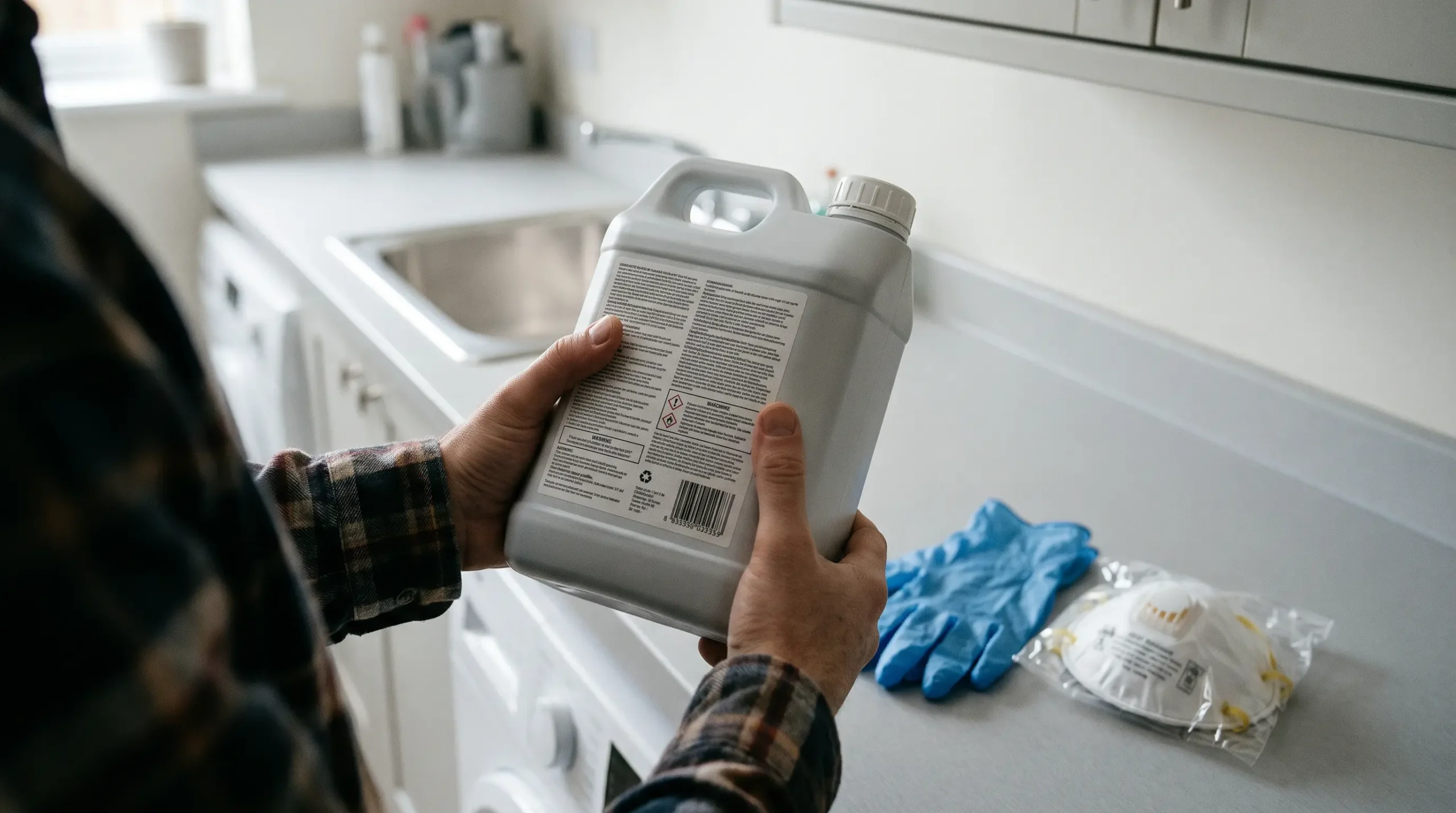
Our guide to reading pesticide labels when you have pets explains how to check approved application sites, warnings, and pet precautions.
During Application
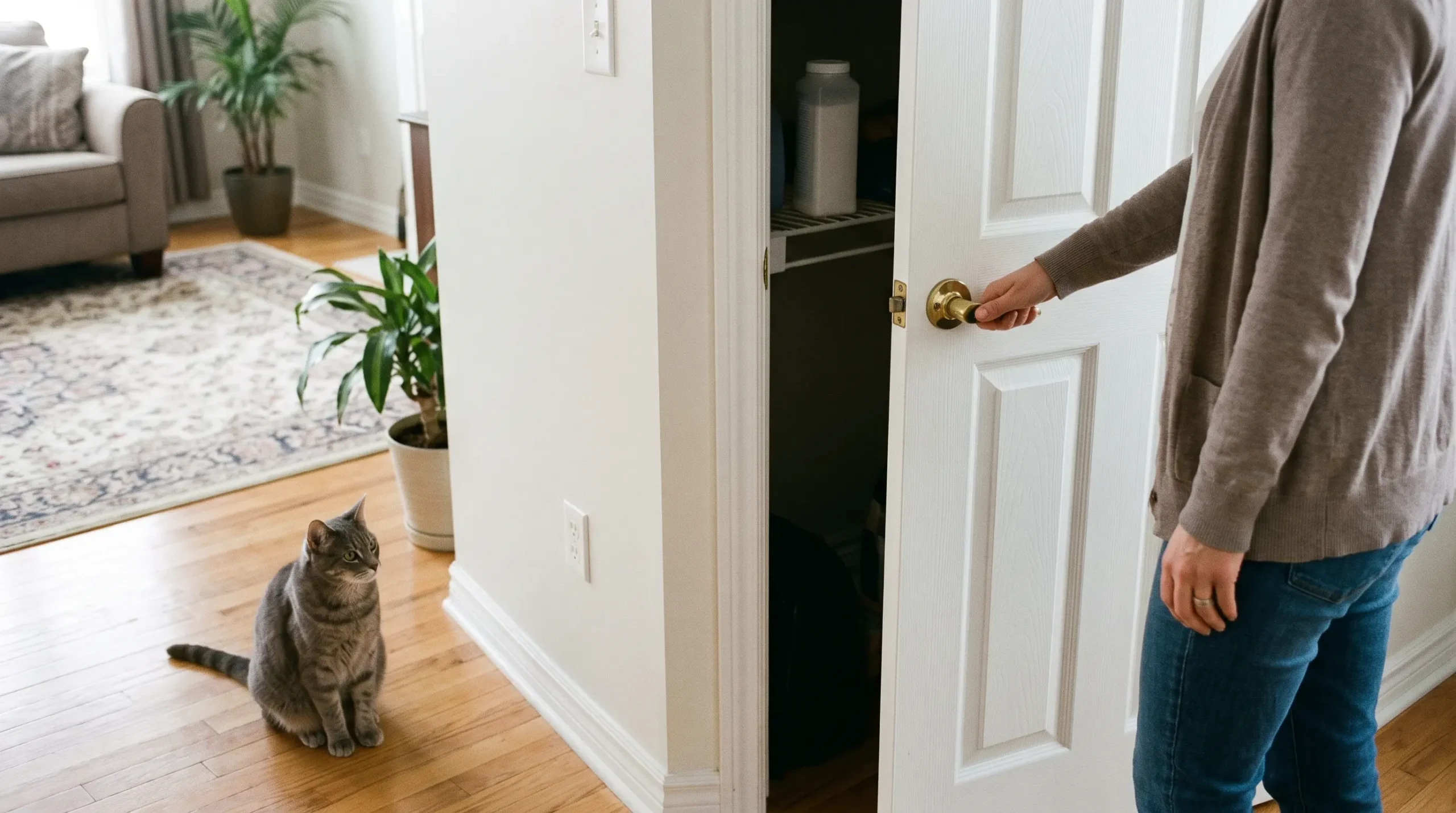
Apply only where the specific pesticide label allows, such as a permitted crack, crevice, or inaccessible void. Consider whether your cat can reach residue through gaps or whether airflow could carry dust into occupied rooms.
Use only the product amount and application equipment allowed by the label. Follow any requirements for respiratory and eye protection.
Avoid unnecessary dust clouds and keep pets, children, and other nonessential occupants out of the treatment area.
If you cannot keep the application location and resulting residue inaccessible to your cat, choose another method or consult a licensed pest-management professional.
After Application: When Can Your Cat Return?
There is no universal safe re-entry time. Follow the product label and assess whether residue remains accessible. Settled dust can be re-suspended by walking, digging, rubbing, or play.
Before restoring access:
- Confirm the label’s requirements have been met.
- Make sure any treated area remains inaccessible where the label requires restricted access.
- Inspect for spills, misplaced powder, or unintended contamination.
- Check that pet belongings and feeding areas were not affected.
- Follow the manufacturer’s directions for any required removal or cleanup.
For broader planning around indoor treatments, see Cat Re-Entry After Indoor Pest Control. Keep in mind that a dry pesticide dust may require different precautions from a liquid treatment.
What if Diatomaceous Earth Has Spilled or Spread?
A spill or heavy overapplication may be riskier than correctly placed dust. If loose powder is accessible, exclude your cat before addressing it.
- Identify the exact material. Locate the container and confirm whether it is pesticide-grade DE, food-grade material, pool-filter powder, or a mixture containing additional ingredients.
- Keep people and pets from disturbing it. Avoid walking through the powder or spreading it onto other surfaces.
- Check cleanup instructions. Follow the label and contact the manufacturer if the appropriate method is unclear.
- Avoid ordinary dry sweeping. Brushing loose dust into the air can increase inhalation exposure. An ordinary vacuum may also spread fine particles if it is not designed to contain them.
- Use a product-appropriate removal method. For an identified material, a manufacturer may recommend careful damp wiping on suitable nonporous surfaces or specialized dust-collection equipment. Don’t assume one method works for every pesticide formulation.
- Check surrounding surfaces and pet supplies. Keep potentially contaminated items from your cat until they have been addressed appropriately.
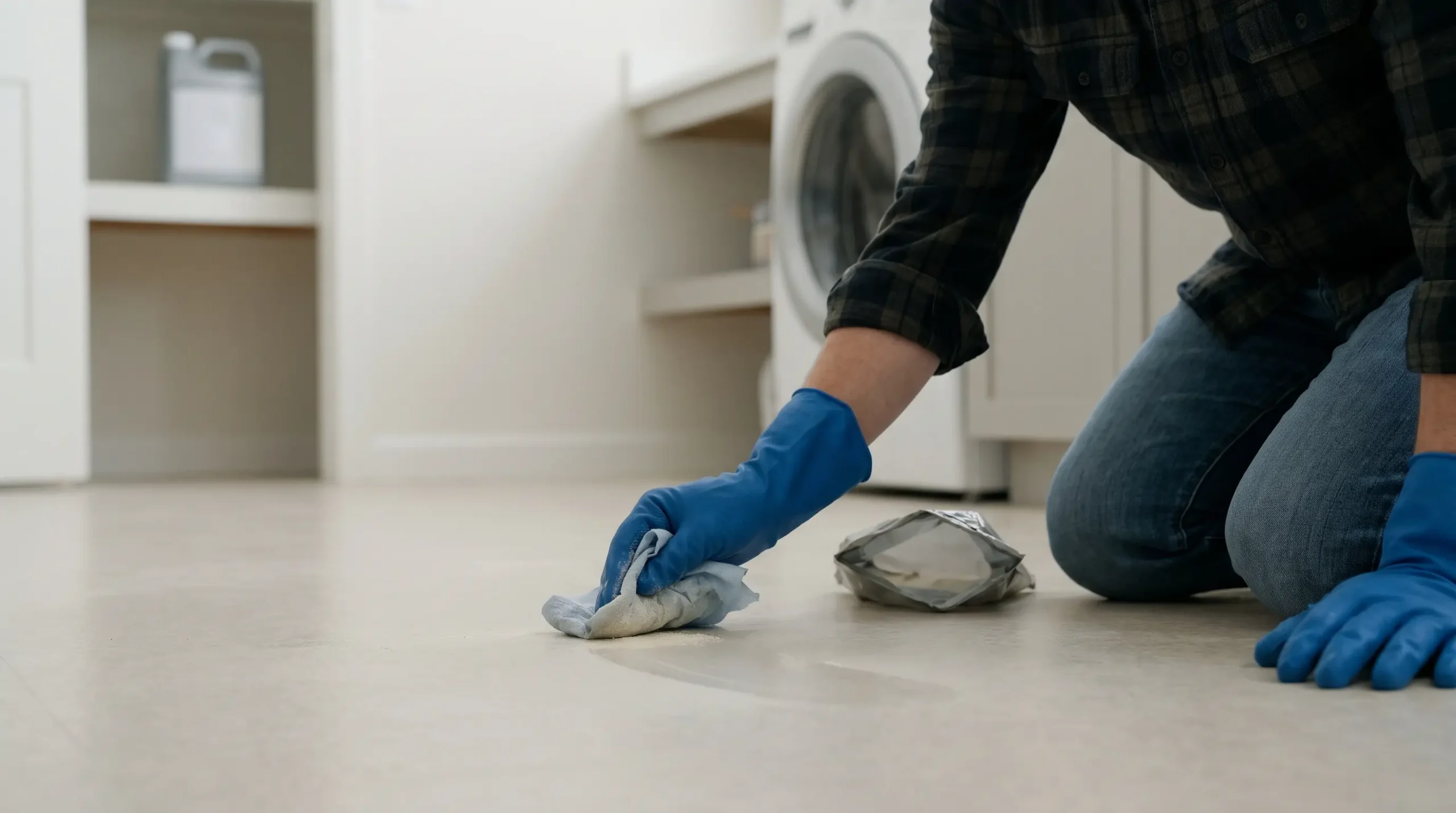
The pictured cleanup method is illustrative only. Confirm that damp wiping is appropriate for the exact product and surface before using it.
The National Pesticide Information Center’s cleanup guidance cautions that pesticide residues do not have one universal cleaning method. Some materials may react badly with household cleaners or water.
Do not mix bleach, vinegar, solvents, or other cleaning chemicals to try to neutralize pesticide dust.
For large spills, repeated misuse, contaminated upholstery or carpet, or an unidentified product, seek advice from the manufacturer, NPIC, or a qualified remediation professional before extensive cleanup.
What Should You Do if Your Cat Is Exposed to DE?
If your cat has trouble breathing, is breathing with an open mouth, collapses, or shows severe distress after dust exposure, seek emergency veterinary care immediately.
For other suspected exposures, remove your cat from the affected area, identify the product, and contact your veterinarian or an animal poison-control service for specific advice.
If Your Cat Inhaled Dust
Move your cat into clean air without stirring more dust. Watch for coughing, repeated sneezing, noisy or labored breathing, and reduced activity. Seek prompt veterinary advice for persistent, recurrent, or significant symptoms, particularly if your cat has an existing respiratory condition. Avoid steam, essential-oil inhalation, or home medications.
If DE Is on Your Cat’s Fur or Paws
Prevent further exposure and discourage grooming until you obtain veterinary or animal poison-control advice on removing the specific product. Avoid dry-brushing powder into the air or using solvents and harsh cleaners on the coat. The recommended cleaning method depends on the formulation and amount present.
If Your Cat Licked or Swallowed Some Powder
A small amount of ordinary DE does not necessarily cause severe poisoning, but additives, dose, and symptoms matter. Do not judge risk by the ingredient name alone.
Keep the product packaging and tell the veterinarian:
- The exact product name and ingredients.
- Whether the exposure involved inhalation, licking, skin contact, or more than one route.
- Approximately when it happened and how much material may be involved.
- Your cat’s weight and relevant health conditions.
- Any coughing, vomiting, eye irritation, or changes in breathing or behavior.
Do not induce vomiting or give home remedies unless a veterinary professional specifically instructs you to do so.
In the United States, the ASPCA Animal Poison Control Center is available at 888-426-4435, 24 hours a day. A consultation fee may apply.
Should You Put Diatomaceous Earth on a Cat to Kill Fleas?
Do not dust your cat with general-purpose DE to treat fleas. Some specific pesticide products may have animal-use labels, but that does not make food-grade or household dust interchangeable. Direct application can irritate the airways, skin, and eyes and lead to ingestion during grooming.
A veterinarian-reviewed PetMD guide on DE for flea control advises against applying ordinary DE directly to pets or their bedding because of irritation and drying concerns.
If your cat has fleas, ask a veterinarian about an effective, cat-appropriate flea treatment. Never substitute a dog-only flea medication or an unlabeled household pesticide for a product approved for your cat.
This article focuses on household dust exposure and placement, not a full flea-treatment protocol.
What Are Safer Alternatives for Pest Control in Cat Homes?
For insect infestations, identify the pest before deciding whether any pesticide dust is needed. Basic prevention measures may include:
- Sealing entry gaps around windows, pipes, or doors.
- Removing food residue and securing stored food; see our fruit fly prevention around cat food guide when that is the problem.
- Repairing leaks and reducing moisture; our silverfish control in cat homes guide covers a relevant example.
- Vacuuming ordinary pest debris and cleaning household surfaces before any pesticide treatment, using appropriate equipment and methods.
- Choosing targeted treatment rather than loose dust where possible. For a cockroach problem, compare access risks in our roach bait stations in cat homes guide; even enclosed baits must be inaccessible to cats.
These steps will not resolve every infestation, but can reduce reliance on loose pesticide dust where cats live.
For the broader approach, see our Pet-Safe Pest Control for Cats: A Practical IPM Guide. It covers overall pest-management planning without repeating this article’s focus on DE dust and exposure.
Frequently Asked Questions
Is Food-Grade Diatomaceous Earth Safe for Cats to Breathe?
No. Food-grade status does not make fine DE dust harmless to inhale or establish that concentrated indoor pesticide use is safe.
Can I Sprinkle DE Around the Cat’s Litter Box?
No. Digging can stir dust into the air and coat paws or fur that your cat later grooms.
Is Diatomaceous Earth Safe After It Settles?
Not necessarily. Dust can be stirred up again; the label, placement, and continued access matter.
Can I Vacuum Up Excess Diatomaceous Earth?
Not automatically. Ordinary vacuums may re-release fine dust. Follow the product-specific cleanup instructions and use appropriately rated equipment if recommended.
Is Diatomaceous Earth Better Than Chemical Sprays Around Cats?
Neither is always safer. Dust and liquid sprays create different exposure risks; use an effective, labeled method that minimizes cat contact.
The Bottom Line
DE may have low acute oral toxicity, but its fine dust can irritate the airways, eyes, and skin, while paw or coat residue may be swallowed during grooming. Food grade is not a household pesticide safety label, and pool-filter DE should never replace insect-control dust.
Keep loose powder away from the cat, bedding, litter, accessible surfaces, and air circulation. If using a labeled pesticide formulation, obey application and re-entry rules and seek product-specific cleanup advice when needed.
The safest approach is to prevent your cat from breathing, walking through, or grooming pesticide dust—not simply assume that a natural powder cannot cause harm.
Sources & Editorial Standards
This article draws on pesticide-safety information and veterinary guidance concerning diatomaceous earth, inhalation, pet exposure, product labeling, and household cleanup:
- National Pesticide Information Center — Diatomaceous Earth Fact Sheet
- National Pesticide Information Center — Is Food-Grade Diatomaceous Earth Okay for Pest Control?
- National Pesticide Information Center — Minimizing Exposure Around Pesticides
- National Pesticide Information Center — Cleaning Up After Indoor Pesticide Misuse
- PetMD — Can You Use Diatomaceous Earth for Fleas? (Veterinarian-Reviewed)
- VCA Animal Hospitals — Flea Control in Cats
- ASPCA — Animal Poison Control Center
Editorial note: This guide provides general risk-prevention information rather than instructions for an individual pesticide treatment. Different DE products may contain different ingredients or have different permitted uses. Follow the exact label and seek a veterinarian’s guidance after suspected exposure, particularly if a cat develops respiratory or other symptoms. Do not use household pesticide dust directly on a cat unless the specific product is explicitly labeled for that use and a veterinarian confirms it is appropriate.