Why Does My Cat Wake Me Up Early? A Routine-Based Solution
It’s 4:47 a.m. Your alarm won’t ring for another hour, but your cat has other plans: a quiet meow, a paw on the blanket, then another demand until you get up and serve breakfast.
The next morning, it happens again.
Cats often wake their owners early because they’re naturally active around dawn, expect food or attention, or have learned that waking someone gets a response. A consistent routine—appropriate evening play, predictable meals, daytime enrichment, and a calmer morning response—can help without expecting your cat to sleep on command.
Why Does Your Cat Wake You Up Before Your Alarm?
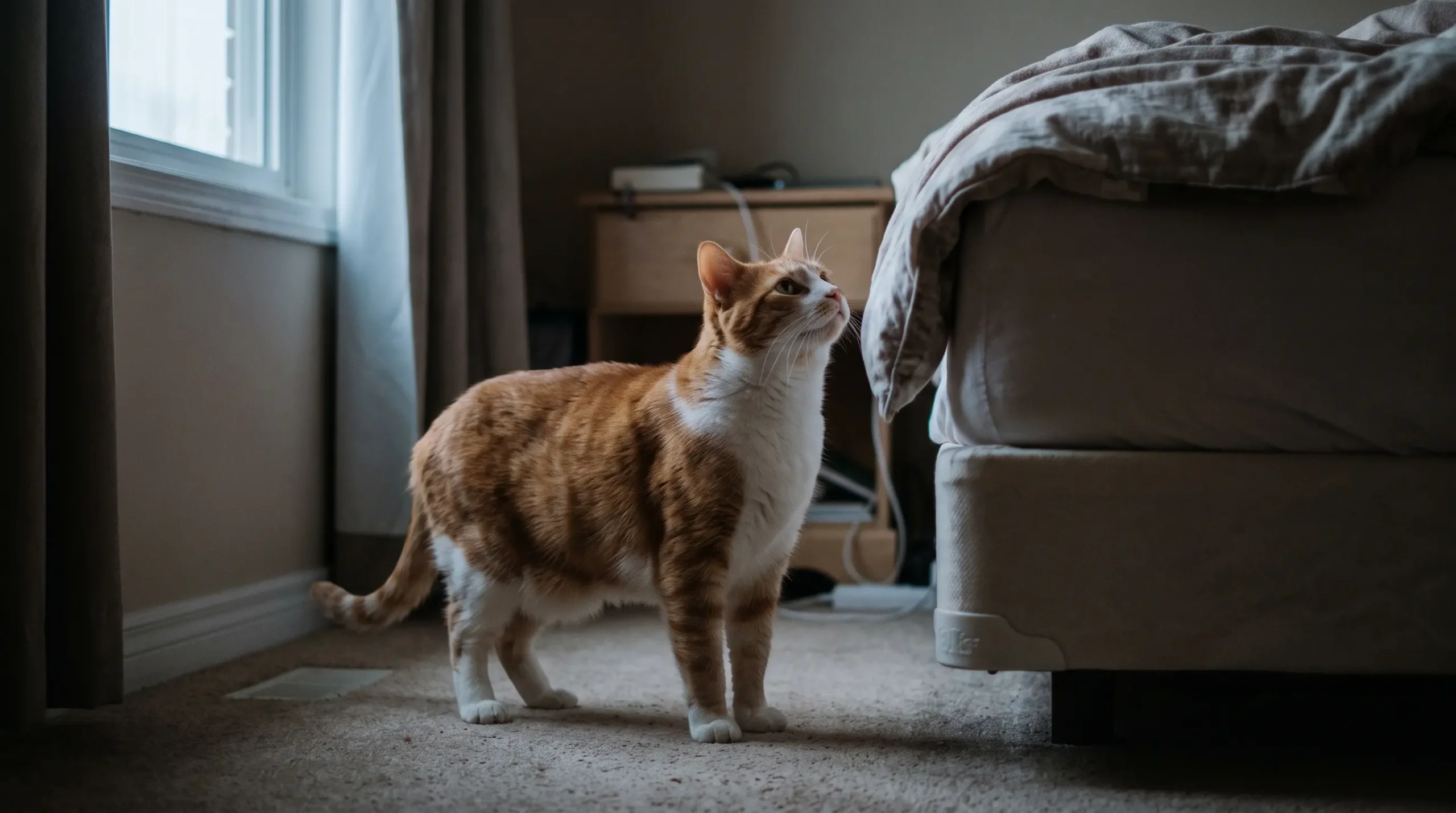
Cats are generally crepuscular, meaning they’re often more active around dawn and dusk. Individual cats vary, but being alert before sunrise isn’t unusual.
Household routines can reinforce that timing. If meowing at 5 a.m. leads to you getting up and preparing breakfast, your cat may learn a simple sequence: meow early → owner gets up → food arrives. They’re not necessarily trying to annoy you; they’ve learned what works.
VCA Animal Hospitals explains that food, affection, and attention can unintentionally reward nighttime activity. Still, early waking can also reflect hunger, boredom, a schedule change, or a genuine unmet need—not just habit.
First, Figure Out What Your Cat Is Asking For
For two or three mornings, note when your cat wakes you, what they do, and what happens next. Look for clues:
- Runs to the food bowl: Hunger or breakfast timing may be involved.
- Brings a toy or races around: Your cat may be seeking play or activity.
- Meows and waits for a response: Attention may have become part of the routine.
- Scratches at a closed door: Access or an environmental need may be contributing.
- Seems confused, distressed, or unusually restless: Consider a veterinary assessment rather than assuming a behavior problem.
These aren’t exact translations of cat behavior. They’re starting points for choosing a response that fits the likely cause.
Build an Evening Routine That Works With Your Cat
An evening routine can give your cat opportunities for play and feeding before the household settles for the night.
Start with interactive play
Try a wand toy or another suitable toy that lets your cat stalk, chase, pause, and occasionally catch it. Short, engaging sessions are often more useful than forcing prolonged activity. Older cats or those with mobility problems may prefer gentler play.
Follow with a planned meal
If it fits your cat’s feeding plan, offer a scheduled meal after play. Redistribute the appropriate daily food amount rather than adding an extra bedtime meal. The aim is a predictable evening pattern, not extra calories.
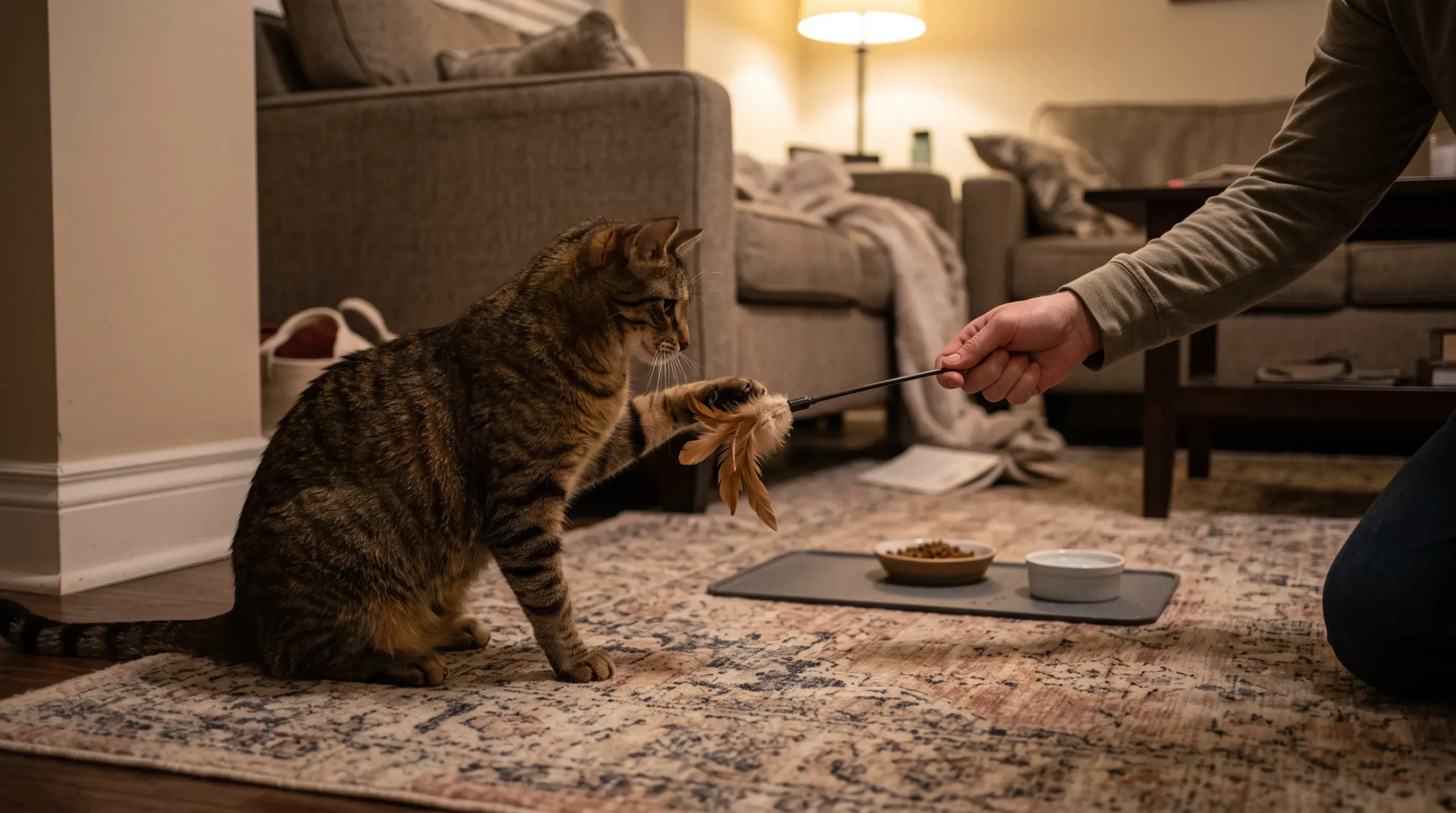
Put away wand toys and loose strings after supervised play, and leave safe resting and enrichment options available overnight. Cats Protection also recommends play and suitable enrichment for cats whose activity patterns interrupt household sleep.
Change the Morning Feeding Pattern
If breakfast is the main motivation, feeding times are a logical place to make changes.
Keep breakfast predictable
Choose a feeding schedule that meets your cat’s needs and that you can maintain. Avoid serving breakfast earlier every time your cat meows. When possible, separate your first movement out of bed from the moment food appears, so waking you doesn’t always produce an immediate meal.
Consider an automatic feeder
For an otherwise healthy cat that primarily wakes you for food, an automatic feeder may help shift the breakfast expectation away from you. It won’t necessarily solve waking that is driven by attention or company.
If you use one:
- Set feeding times appropriate for your cat’s needs.
- Count the dispensed food toward the daily allowance.
- Check that it dispenses reliably, and introduce it gradually.
- For wet food, follow the feeder’s food-storage and safety instructions.
Our Pet Food Portion Calculator can help with general portion estimates. A veterinary feeding plan takes priority, especially for kittens or cats with medical or weight-management needs.
Stop Making Early Wake-Ups the Most Rewarding Part of the Day
It’s easy to reward the habit without meaning to. Sitting up, talking to your cat, or getting up after repeated meows can make early waking worth trying again—even when your response sounds annoyed.
Once you’ve checked that your cat is healthy, comfortable, and has access to essential resources:
- Avoid making learned early-morning meowing trigger food, play, or conversation.
- Offer meals and attention at planned times instead.
- Reward calm waiting when your cat is receptive.
- Keep everyone’s response in the household consistent.
Don’t ignore a cat with a genuine need. Pain, illness, unusual hunger, or an inaccessible litter box calls for a different response. Never yell, spray water, or punish your cat; that can cause stress without teaching a useful alternative.
If vocalizing is frequent throughout the day, rather than mainly before breakfast, our guide to excessive cat meowing explores that broader issue.
Make the Day More Interesting, Too
A cat that rests much of the afternoon may be ready to play when the home becomes quiet. There’s no need to keep your cat awake all day—rest is important—but you can offer activity at times they naturally want it.
Depending on your cat’s preferences, try:
- Brief interactive play sessions at different times.
- Safe climbing and scratching spaces.
- Food puzzles using part of their normal meal allowance.
- Comfortable window perches with secure access.
- Safe independent toys without choking or entanglement hazards.
Fresh water and a clean, accessible litter box should remain available overnight. If your cat has bursts of nighttime racing rather than a learned breakfast routine, see our separate nighttime cat zoomies guide.
A Simple Routine to Try
Start with a few repeatable steps instead of changing everything at once:
- During the day: Offer play, exploration, and enrichment while keeping meals and essential resources consistent.
- During the evening: Try suitable interactive play followed by a planned meal, when appropriate.
- Before bed: Check water, litter, resting spaces, and safe overnight toys.
- In the morning: If your cat is well and the behavior is clearly learned, follow your chosen feeding and attention schedule rather than rewarding earlier demands.
Habits can take time to change, and your cat may briefly become more persistent when the usual response stops. Consistency matters more than an exact bedtime.
What If Your Cat Still Wakes You Up?
Return to the pattern you observed. A cat heading straight to the bowl may need a review of feeding times and appropriate intake. One seeking company may benefit from more daytime and evening interaction. Door scratching may signal an access issue, stress, or an uncomfortable environment.
Don’t automatically add calories, shut your cat into an unsuitable room, or remove access to essential resources. If distress continues or household changes make the behavior difficult to manage, a veterinarian can help you decide whether a qualified feline behavior professional is needed.
When Early Waking Deserves a Vet Visit
A cat that’s always been active at sunrise is different from one that suddenly starts crying, wandering, or demanding food at unusual hours.
Arrange a veterinary assessment if the behavior is new, noticeably worse, or accompanied by:
- Increased hunger, thirst, or urination.
- Unexplained weight loss or other appetite changes.
- Persistent nighttime yowling or disorientation.
- Stiffness, difficulty jumping, or suspected pain.
- New litter-box problems.
- Unusual anxiety, restlessness, or changes in activity.
This is particularly important for senior cats. Pain, hyperthyroidism, high blood pressure, sensory changes, and cognitive dysfunction may affect nighttime behavior. The AAHA/AAFP Feline Life Stage Guidelines recommend evaluating new or unusual behavior in older cats for medical causes.
Straining to urinate with little or no urine—especially in a male cat—is an emergency requiring immediate veterinary care.
A More Peaceful Morning Starts With a Predictable Routine
Your cat may still be awake at 4:47 a.m. That’s normal for many cats. But a predictable feeding schedule, appropriate play, and a consistent response to learned early-morning demands may gradually make those wake-ups less disruptive.
The goal isn’t to make your cat sleep on command. It’s to meet their needs without teaching them that waking you earlier is the best way to get what they want.
Veterinary and behavior disclaimer: This article offers general guidance for routine-related early waking. Sudden nighttime behavior changes, persistent distress or vocalization, and changes in appetite, weight, thirst, movement, or litter-box habits deserve veterinary assessment. Feeding plans should be individualized, especially for kittens and cats with medical conditions.