Brown Algae in a New Aquarium: Diatom Causes & Gentle Control
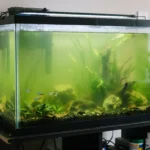
You set up a new aquarium, admire the clear glass and fresh plants, and then notice something unexpected: a dusty brown coating spreading across the sand, decorations, and leaves. Is something wrong with the tank?
In a newly established freshwater aquarium, that soft brown film is often diatoms, commonly called brown algae. It’s a frequent part of a young tank’s development, and it usually doesn’t require chemical treatment. Gentle cleaning, steady maintenance, and patience are often enough to bring it under control.
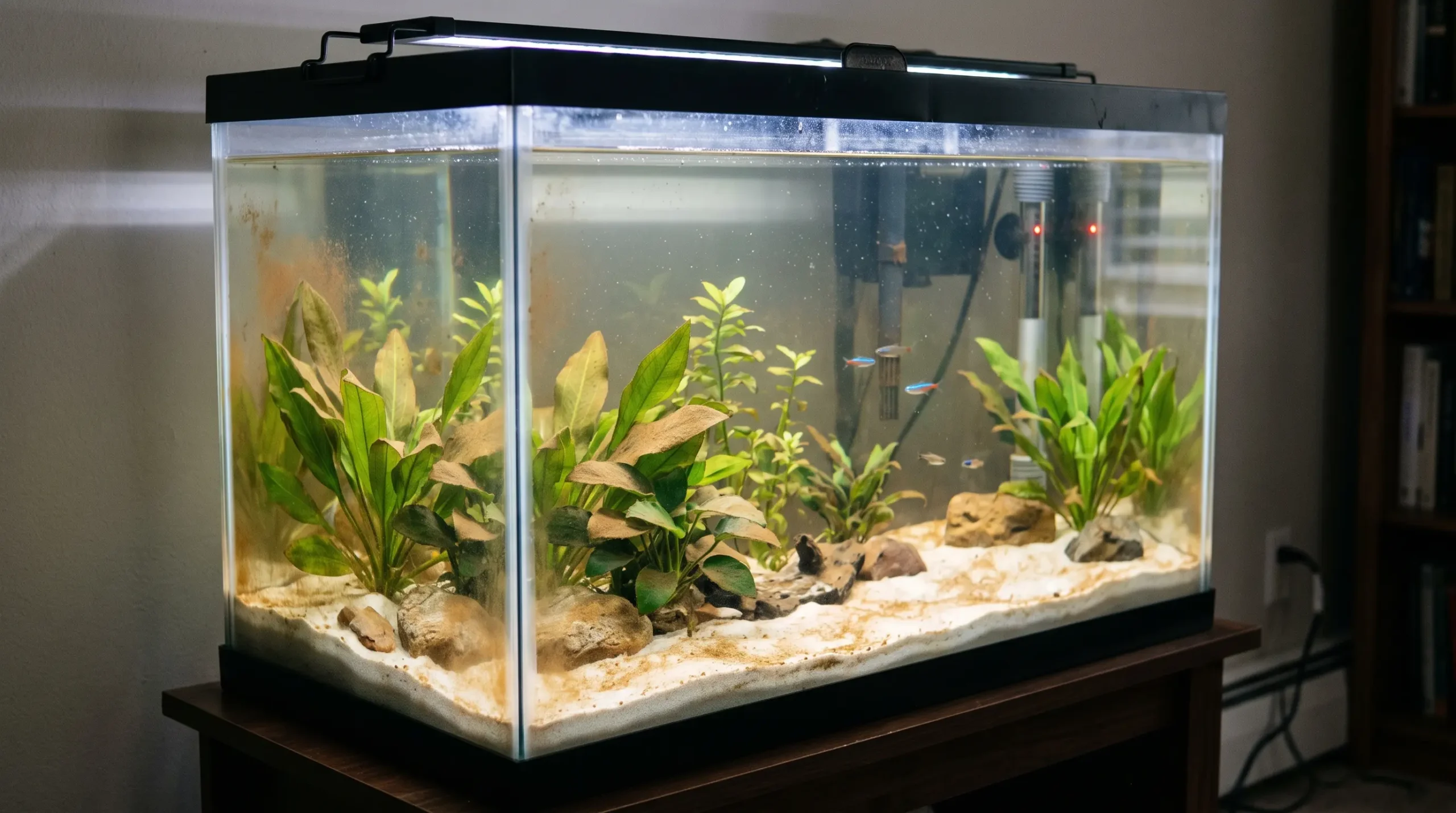
Is That Brown Coating Really Diatom Algae?
Diatoms are microscopic algae that form a fine, brownish coating on aquarium surfaces. Unlike the long strands of some green algae, they usually look more like a layer of dust.
Common clues include:
- Color: Light tan, golden-brown, or rusty brown.
- Texture: A soft, dusty film that wipes away fairly easily.
- Location: Glass, sand, gravel, rocks, decorations, and plant leaves.
- Timing: Growth that becomes noticeable during the first several weeks after setting up a tank.
For a quick check, gently wipe a small patch of aquarium glass using a clean, aquarium-safe pad. Diatom film usually comes away without much effort.
Not every brown growth is a diatom bloom, though. Long threads, thick slimy sheets, or stubborn spots that resist wiping may point to something different. Appearance is a useful clue, not a definitive identification.
Why Do Diatoms Appear in New Aquariums?
A new aquarium offers diatoms an opportunity to grow before the tank’s biological community has fully developed. Three factors help explain why that brown dust appears so often.
1. Diatoms Need Dissolved Silica
Diatoms use silica to build their microscopic, glass-like cell walls. Dissolved silica can enter an aquarium through its water supply and, depending on the material, certain substrates or rocks.
However, silica alone doesn’t explain every diatom bloom. A tank can contain silica without developing a serious brown coating. Its presence is one factor among several, not proof that your tap water is unsuitable.
2. The Tank’s Biological Community Is Still Developing
In a newly established aquarium, microbial communities are still developing on surfaces. Live plants may also be adapting to their new environment.
During this period, diatoms can colonize exposed surfaces before a more established community of plants, microbes, and other organisms helps limit their growth.
This doesn’t mean brown algae proves the aquarium is cycling correctly—or that cycling is finished. Those are separate questions. If you’re preparing a tank for fish, use our guide on how to confirm whether your aquarium is cycled rather than judging by algae growth.
3. Light and Available Nutrients Affect Growth
Like other photosynthetic algae, diatoms need light and nutrients. Available nitrogen and phosphorus compounds can contribute to growth, especially while a young planted aquarium is settling in.
Diatoms can also grow under relatively modest lighting. That doesn’t mean low light is automatically the cause, or that dramatically increasing the light will solve the problem.
The better approach is to maintain a consistent lighting schedule appropriate for your plants instead of changing several conditions at once.
How to Remove Brown Diatoms Without Disrupting the Tank
You don’t need to make the aquarium spotless in one afternoon. Removing the visible film gradually is usually more sensible than carrying out a major cleanup that disturbs fish, plants, or established filter media.
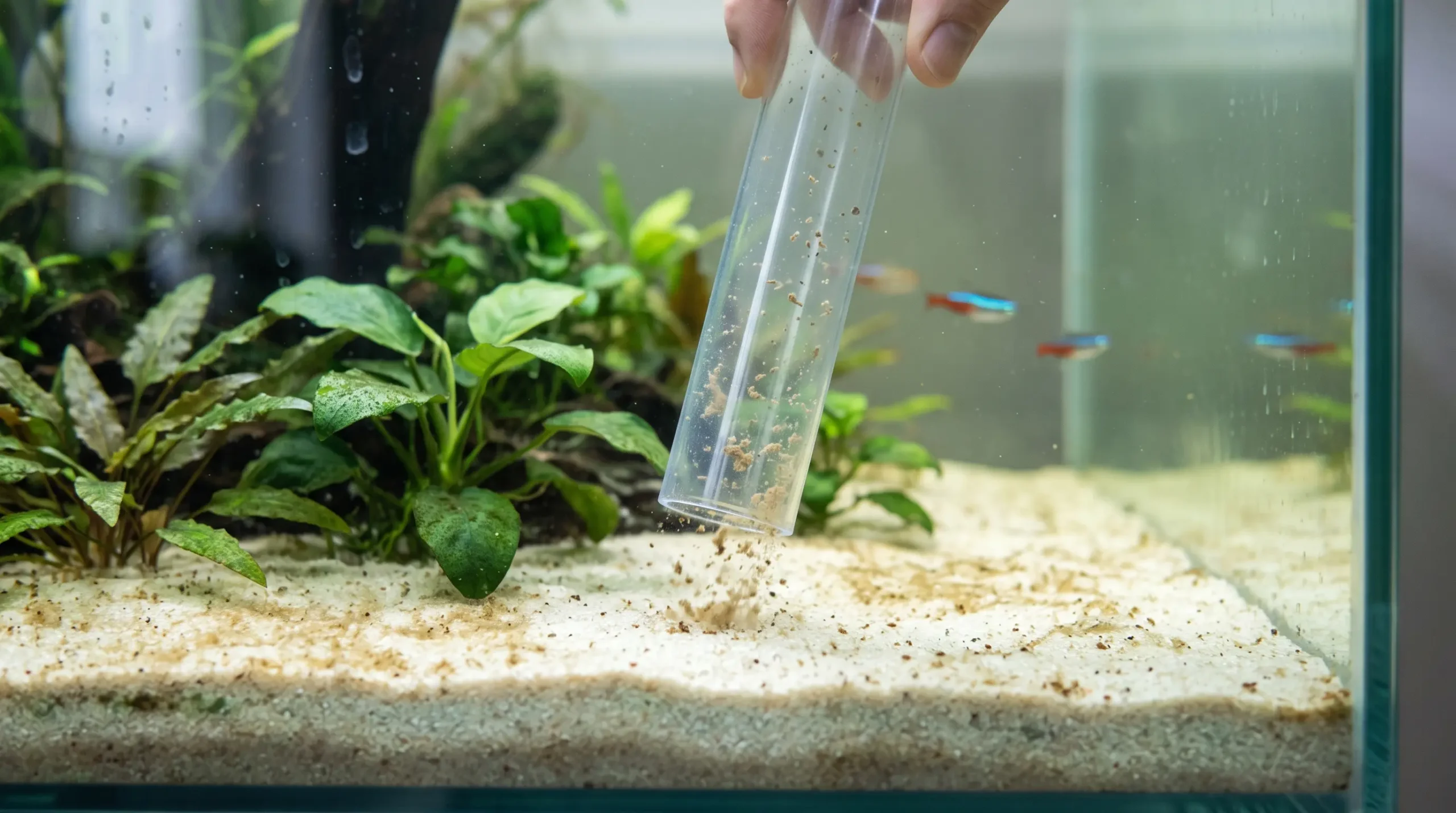
Step 1: Wipe the Glass Gently
Use a clean algae pad or scraper designed for your aquarium’s glass or acrylic material. Work gently, especially near the substrate, where trapped grains of sand can scratch the surface.
Avoid household sponges that may contain cleaning chemicals, and never use soap or household detergents inside the aquarium.
Step 2: Remove Loose Film During a Water Change
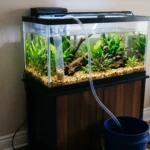
When performing a routine partial water change, use an aquarium siphon to lift brown debris from the substrate’s surface.
Keep the siphon just above delicate sand when possible. You don’t need to dig deeply through the entire substrate to remove a light coating.
For more detailed technique, see how to vacuum aquarium gravel without disrupting the tank.
Keep replacement water appropriately conditioned and temperature-matched for the aquarium’s inhabitants. If you’re unsure about the maintenance routine, our aquarium water-change guide explains how water conditions and stocking affect the schedule.
Step 3: Clean Plant Leaves Carefully
For sturdy, broad leaves, gently brushing away loose diatom film with clean fingers or a soft aquarium-safe tool may help. Avoid pulling or aggressively scrubbing delicate plants.
If an older leaf is already deteriorating, removing it may be more useful than repeatedly cleaning it. Healthy new plant growth is generally a better long-term goal than perfectly clean leaves every day.
Step 4: Keep the Aquarium Routine Stable
Continue normal filtration and sensible maintenance. Remove uneaten food and decaying plant material, avoid unnecessary overfeeding, and don’t replace all biological filter media just because brown algae has appeared.
For planted tanks, maintain lighting suited to the plants’ needs. Our aquarium lighting guide covers photoperiod, intensity, and other lighting considerations in more detail.
Will Brown Algae Disappear on Its Own?
Often, yes. A typical new-tank diatom bloom may begin fading over the following weeks as the aquarium develops and conditions become more consistent.
There’s no guaranteed deadline. Some tanks clear up relatively quickly; others continue producing a light brown coating for longer.
If a little film returns a few days after cleaning, that alone doesn’t mean your maintenance failed. Watch whether the overall buildup is becoming less noticeable over time.
One important distinction: diatoms fading away does not prove the water is safe for fish. In a new aquarium, ammonia and nitrite still need to be monitored independently.
What Should You Avoid When Treating Brown Diatoms?
Most new-tank diatom problems don’t justify drastic changes. In particular:
- Don’t rush to use algaecides. Chemical algae treatments may create unnecessary risks for aquarium inhabitants and won’t necessarily correct the conditions encouraging growth.
- Don’t deep-clean everything at once. Replacing filter media, thoroughly disturbing all substrate, and scrubbing every surface can interfere with the tank’s developing biological stability.
- Don’t add fish or invertebrates solely as cleaning tools. Nerite snails, some shrimp, and Otocinclus catfish may graze on diatom films, but they have their own water-quality, compatibility, and feeding requirements. Otocinclus in particular are poorly suited to unstable new aquariums.
- Don’t assume silicate-removing products are necessary. A normal early diatom bloom is not, by itself, a reason to switch water sources or add chemical filtration media.
When Does Brown Algae Need a Closer Look?
If brown growth keeps returning heavily in an established aquarium, investigate rather than repeatedly scrubbing the same surfaces.
Start by checking whether the material is genuinely diatoms. Then review changes in feeding, plant health, lighting, maintenance, and water supply.
In a persistent case where diatoms are reasonably identified, checking the source water for dissolved silica may be useful. But there’s no need to chase a particular silicate reading simply because a young tank has developed brown dust.
Pay attention to the fish as well. A diatom film is usually more of a maintenance concern than a direct threat, but fish that are gasping, unusually lethargic, or showing other distress need prompt attention to water quality and their environment. Don’t attribute those symptoms to an ordinary algae bloom. See our guide to fish gasping at the surface if breathing trouble is present.
A Little Brown Dust Doesn’t Mean You Failed
A new aquarium can look messy while its biological community is still developing. That dusty brown coating may be frustrating, particularly when it covers the plants you just arranged, but diatoms are often temporary.
Clean what you can gently, maintain stable conditions, and let the tank develop. The goal isn’t to eliminate every trace of brown film overnight. It’s to keep the aquarium healthy while the visible growth gradually becomes easier to manage.
Sources & Editorial Standards
This educational guide draws on aquarium-care references covering diatom biology, new-tank growth, cleaning practices, and water-quality safety:
- Aquarium Co-Op — How to Get Rid of Brown Diatom Algae
- The 2Hr Aquarist — Brown Algae in a New Tank: Causes and How to Fix It
- Petco — Brown Algae in Fish Tanks: Causes, Removal & Prevention
- PetMD — New Tank Syndrome: Causes, Signs, and Treatment
Editorial note: This article addresses common freshwater aquarium diatom growth. It does not replace appropriate water testing or advice from an aquatic veterinarian when fish show signs of illness or distress.