Dog Has a Seizure: What to Do During and After the Episode
If your dog is having a seizure right now: Start a timer, clear nearby hazards, keep children and other pets away, and stay clear of your dog’s mouth. Do not restrain them or try to stop the movements.
Call a veterinarian immediately if the seizure lasts longer than two minutes. A continuous seizure reaching five minutes is a life-threatening emergency. Do not wait for five minutes before seeking help.
A second seizure within 24 hours, another seizure before full recovery, suspected poisoning, serious injury, or breathing difficulty also calls for urgent veterinary help. Follow the emergency team’s transport instructions.
Watching your dog collapse, stiffen, or jerk uncontrollably is frightening. Your job is to prevent injury, time the episode, and get veterinary guidance—not to physically stop the seizure.
Even if a brief episode ends and your dog seems normal, contact your veterinarian for advice about what happened.
What to Do During a Dog Seizure: First-Aid Steps
- Start timing. Use a clock or phone and record when the episode starts and stops.
- Move nearby hazards. Clear sharp or breakable objects and protect access to stairs, pools, and dangerous edges without putting yourself at risk.
- Do not restrain your dog. Holding down the body or legs can cause injuries and will not stop the seizure.
- Stay away from the mouth. Never put fingers or objects between the teeth. Dogs do not swallow their tongues, and involuntary jaw movements can cause serious bites.
- Keep the area calm. Reduce noise and bright light where practical. Maintain ventilation; do not cover the dog with thick blankets.
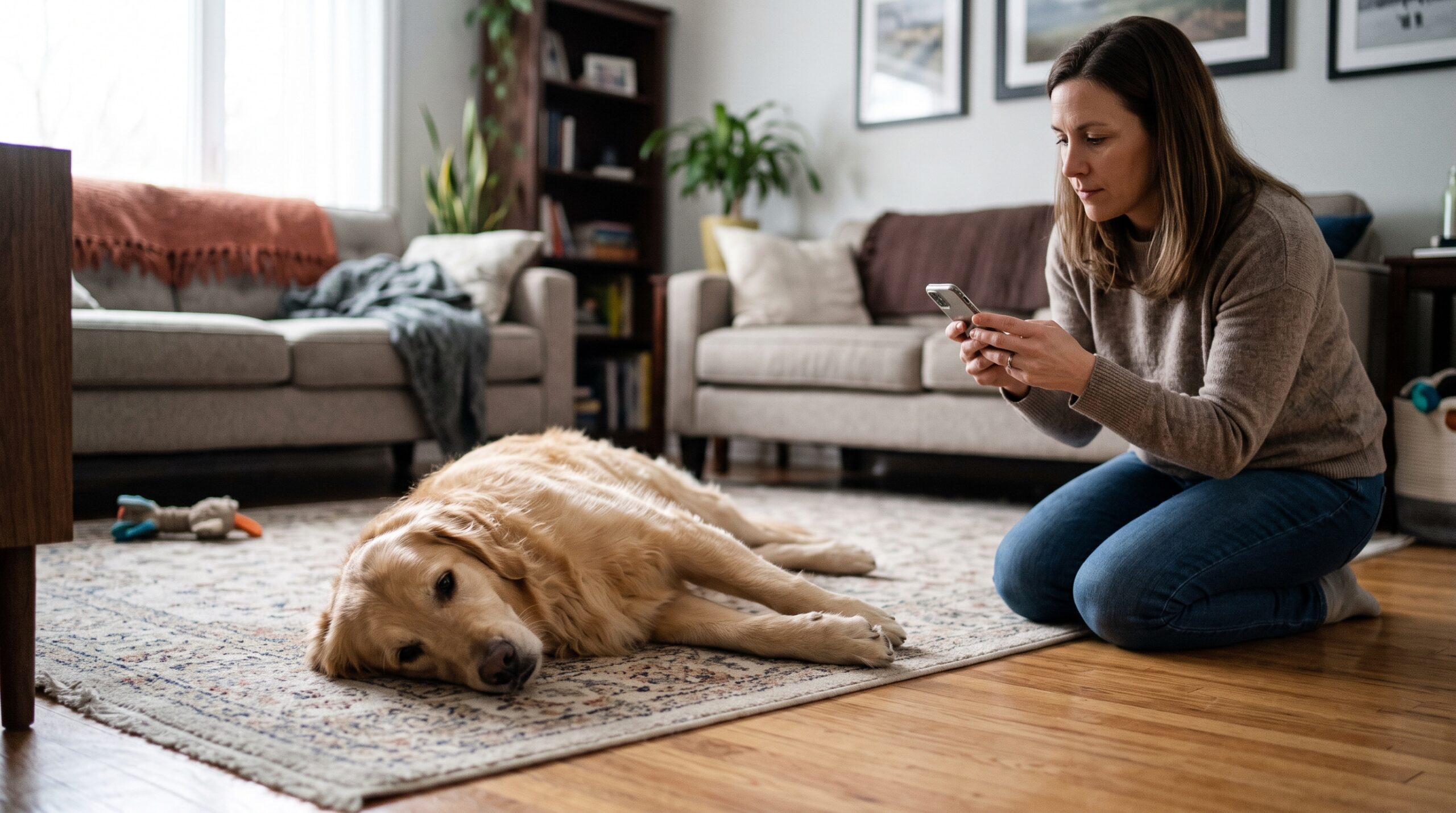
- Take a brief video if safe. Only after the surroundings are secure, and never instead of contacting emergency care.
- Call for veterinary guidance. If the seizure passes two minutes, repeats, or involves other emergency signs, call immediately and follow transport advice.
These priorities follow PDSA seizure first-aid guidance.
What Does a Seizure Look Like in Dogs?
Not every seizure causes full-body shaking. Appearance depends on which parts of the brain are affected.
Generalized Seizures
A generalized seizure may involve collapse, reduced awareness, body stiffening, rhythmic jerking or paddling, drooling or jaw movements, and sometimes loss of bladder or bowel control. These movements are involuntary.
Focal Seizures
Focal seizures may cause repeated facial twitching, unusual chewing or jaw movements, or rhythmic movements of one body part. Awareness can be preserved or altered; some dogs repeatedly snap at apparently nonexistent objects.
Shaking or collapse is not automatically a seizure. Fainting, pain, balance disorders, and other medical problems can look similar. A video and veterinary examination may help identify the cause.
How to Keep Your Dog Safe During a Seizure
If your dog is on the floor, leave them there if possible and make the surrounding space safer. Near stairs or another dangerous edge, protect against a fall only if you can do so without unsafe contact. Avoid moving large objects over an actively convulsing dog.
Do not carry or transport a dog during active convulsions unless a veterinarian specifically instructs you or an immediate environmental danger makes moving unavoidable. Call the clinic for safe transport guidance.
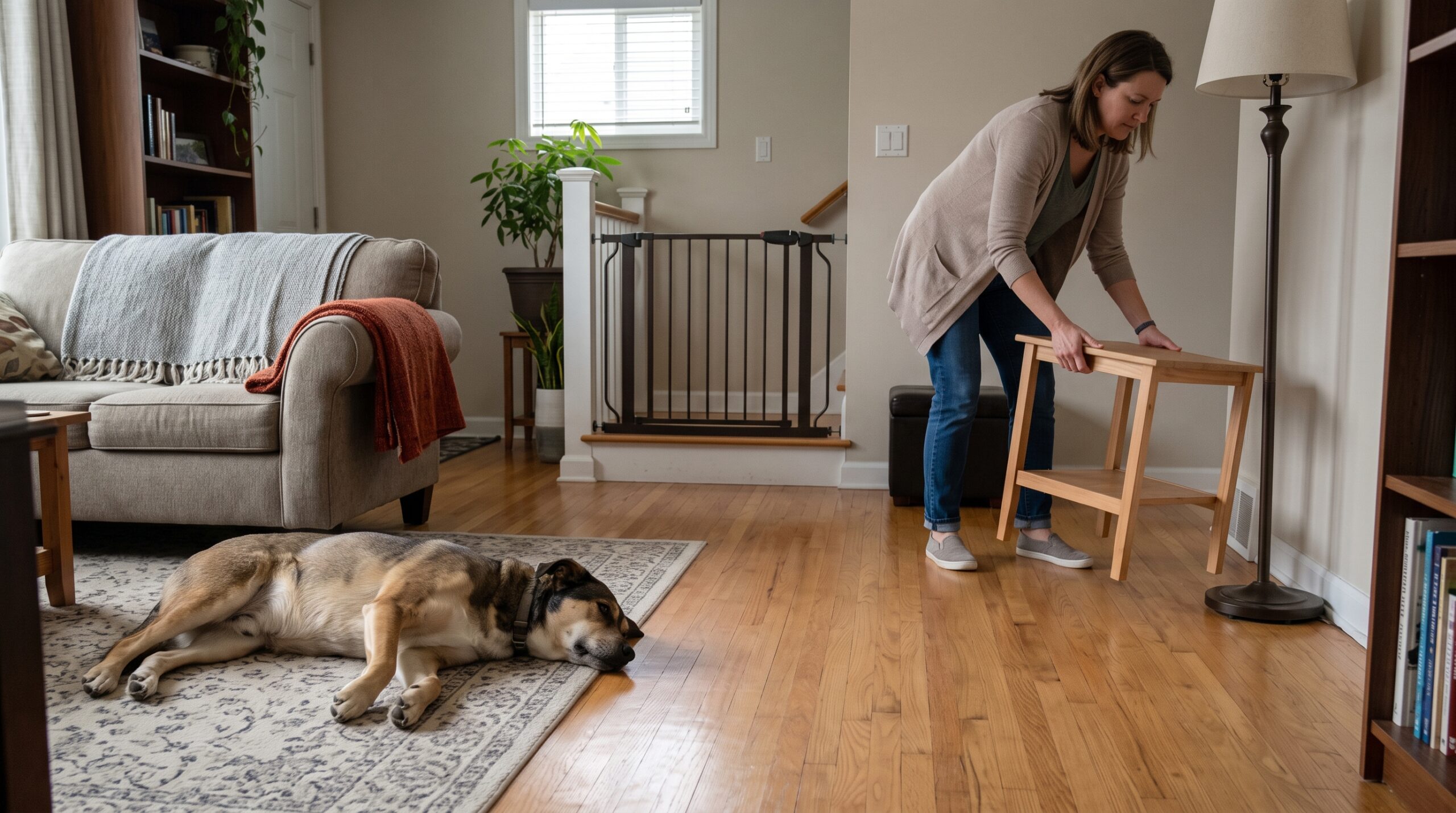
This photograph illustrates preparing a safer space. Do not move furniture over or around a convulsing dog if doing so creates additional danger.
When Is a Dog Seizure an Emergency?
Duration, recurrence, breathing, recovery, and possible toxin exposure determine urgency.
| What Happens | What to Do |
|---|---|
| One brief seizure ends and recovery begins | Keep your dog safe and contact your veterinarian promptly, even if they seem normal afterward. |
| The seizure continues beyond two minutes | Call an emergency veterinary clinic immediately; prepare for transport as directed. |
| Continuous convulsions reach five minutes | Life-threatening emergency requiring immediate veterinary treatment. |
| A second seizure occurs within 24 hours | Seek urgent veterinary assessment; do not wait for another episode. |
| Another seizure begins before normal awareness returns | Emergency veterinary treatment is required immediately. |
| Poisoning, serious injury, abnormal breathing, or failure to recover is suspected | Seek emergency veterinary care immediately. |
Continuous seizure activity lasting five minutes or more is generally considered status epilepticus, as described in the American College of Veterinary Internal Medicine consensus statement. Prolonged or repeated seizures may become difficult to control, which is why you should seek help earlier.
What Should You Do After the Seizure Stops?
The postictal phase is the recovery period after a seizure. Your dog may be confused, unsteady, restless, tired, temporarily visually impaired, or unusually hungry or thirsty. Recovery varies.
1. Give Your Dog a Quiet, Safe Space
Limit noise and activity. Keep children and other animals away until your dog is fully aware. A disoriented dog may react defensively, so avoid crowding, hugging, or forcing contact.
2. Check Breathing and Responsiveness
Watch whether breathing is comfortable and awareness gradually returns. Labored breathing, blue or gray gums, collapse, persistent unresponsiveness, worsening confusion, or inability to stand need emergency assessment. Panting can occur after a seizure, but don’t dismiss serious breathing changes.
3. Wait Before Offering Food or Water
Do not give anything by mouth during convulsions or while your dog is disoriented. Once fully alert and able to swallow and stand safely, you can offer water and follow your veterinarian’s feeding advice. Seek guidance if vomiting or swallowing difficulty develops.
4. Watch for Another Episode
Supervise your dog away from stairs, pools, and other hazards. Note when their usual behavior begins returning. Another seizure or failure to recover as expected warrants urgent veterinary care.
What Should You Never Do During or After a Seizure?
- Never put anything in the mouth. Tongue swallowing is a myth; bites are a real danger.
- Don’t restrain, shake, shout at, or slap your dog. These actions cannot stop the seizure.
- Don’t wrap the dog in heavy blankets. Prolonged convulsions can cause overheating.
- Don’t give human medication or change prescribed antiseizure doses. Use rescue medicine only if it has been prescribed for your dog with specific instructions.
- Don’t induce vomiting. If poisoning is suspected, call a veterinarian or poison-control service. For possible rodenticide exposure, see our dog rat-poison emergency guide.
- Don’t assume the danger has passed when the shaking stops. Recovery and the possibility of further episodes still matter.
What Will the Veterinarian Need to Know?
When it is safe, note:
- Timing: Start, end, and number of episodes, especially within 24 hours.
- Appearance: Collapse, stiffening, paddling, facial movements, drooling, and changes in awareness.
- Recovery: Confusion, restlessness, weakness, or difficulty walking, and how long these last.
- History: Previous seizures, illnesses, medications, and any missed prescribed doses.
- Possible triggers or exposures: Head injury or access to chocolate, medications, pesticides, or other toxins.
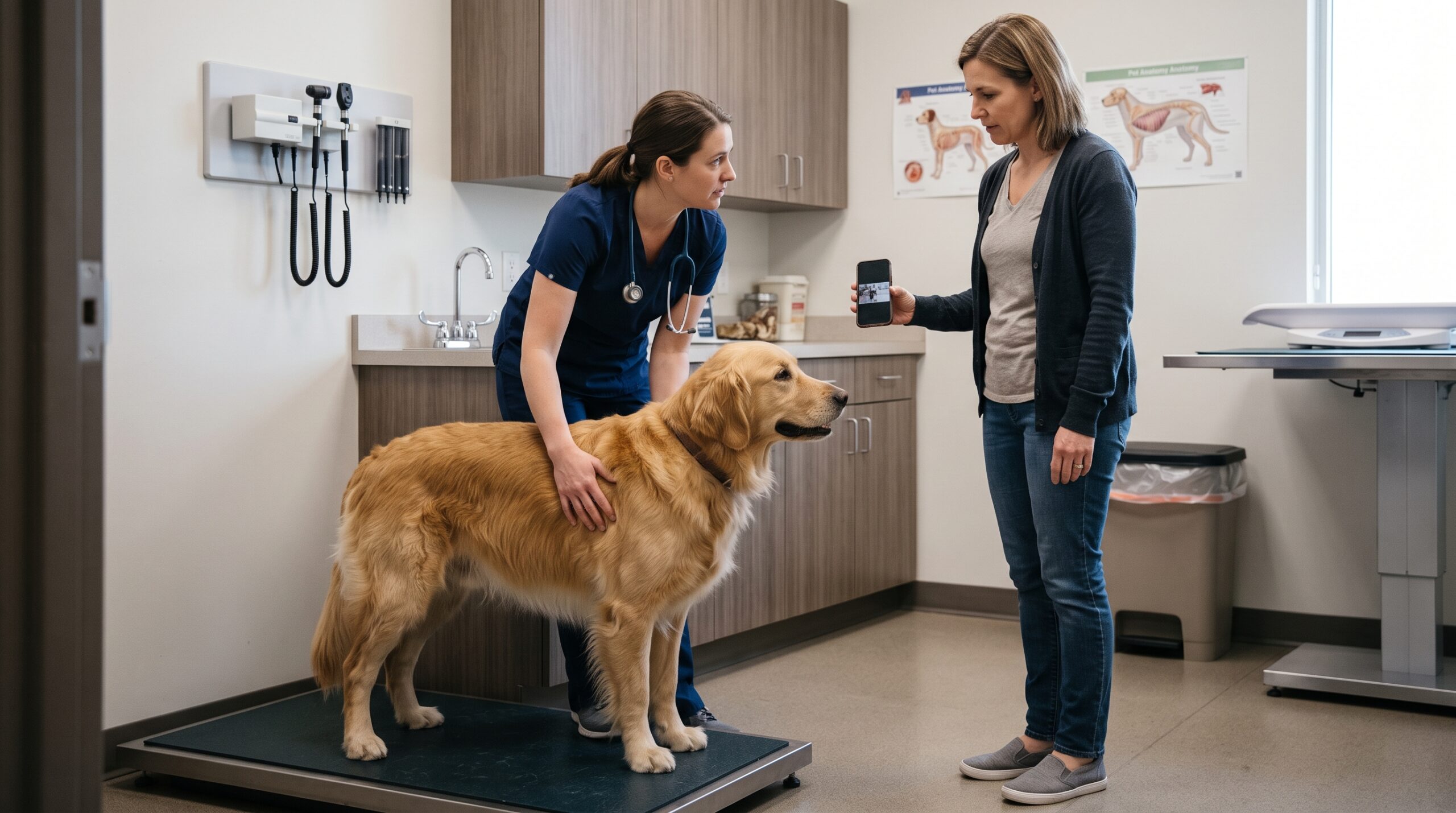
Share a safely recorded video if you have one. Your veterinarian may recommend blood tests, toxin assessment, or neurological investigation. One seizure does not automatically mean your dog has epilepsy.
How to Transport Your Dog Safely After a Seizure
Call the clinic before leaving when possible and explain whether the dog is still convulsing, recovering, breathing normally, or responsive.
- Keep handling gentle and the surroundings quiet.
- For small dogs, use a secure, ventilated carrier if appropriate.
- For a large dog unable to walk, ask the veterinary team about safe assistance with a blanket or other support.
- Keep pressure off the head and neck, and have another adult monitor the dog if possible so the driver can focus.
If another seizure starts during travel, follow emergency veterinary instructions. Never try to hold down an actively convulsing dog in a moving car.
What if Your Dog Already Has Epilepsy?
Follow the individualized seizure-action plan from your veterinarian. Some dogs have prescribed emergency rescue medication for prolonged or repeated seizures; use it only in the prescribed dose and manner.
Don’t stop or adjust regular antiseizure medicine on your own. Contact your veterinarian if episodes become more frequent, last longer, cluster together, or differ from the usual pattern.
Our Pet First-Aid Kit Checklist for Dogs and Cats can help organize general emergency supplies and contact details, but it does not replace prescribed rescue treatment or veterinary care.
When Your Dog Seems Normal Again
A dog can appear completely normal after a brief seizure. That’s encouraging, but it doesn’t explain the cause. Contact your veterinarian after any suspected seizure, particularly a first episode. They can advise whether examination is needed immediately or can be arranged promptly.
For a prolonged or repeated episode, abnormal recovery, or suspected poisoning, seek emergency help without delay. The essentials are simple: time it, protect your dog, avoid restraint and mouth contact, and seek veterinary guidance.
Sources & Editorial Standards
This emergency guide draws on veterinary seizure first-aid recommendations and specialist consensus guidance:
- Cornell University College of Veterinary Medicine — Managing Seizures
- VCA Animal Hospitals — Seizures in Dogs
- PDSA — What to Do if Your Pet Has a Seizure
- ACVIM — Consensus Statement on Status Epilepticus and Cluster Seizures in Dogs and Cats
- Merck Veterinary Manual — Epilepsy in Small Animals
- ASPCA Animal Poison Control — What to Do if Your Pet Is Poisoned
Veterinary safety disclaimer: This article provides general emergency first-aid information and cannot replace a veterinary examination or an individualized seizure plan. Seizures can have neurological, metabolic, toxic, or other causes. Call an emergency veterinarian if a seizure continues beyond two minutes, seizures repeat, or your dog shows serious distress. Never administer unprescribed medication or use home remedies.