Borax Ant Baits Around Dogs & Cats: Risks & Safer Placement
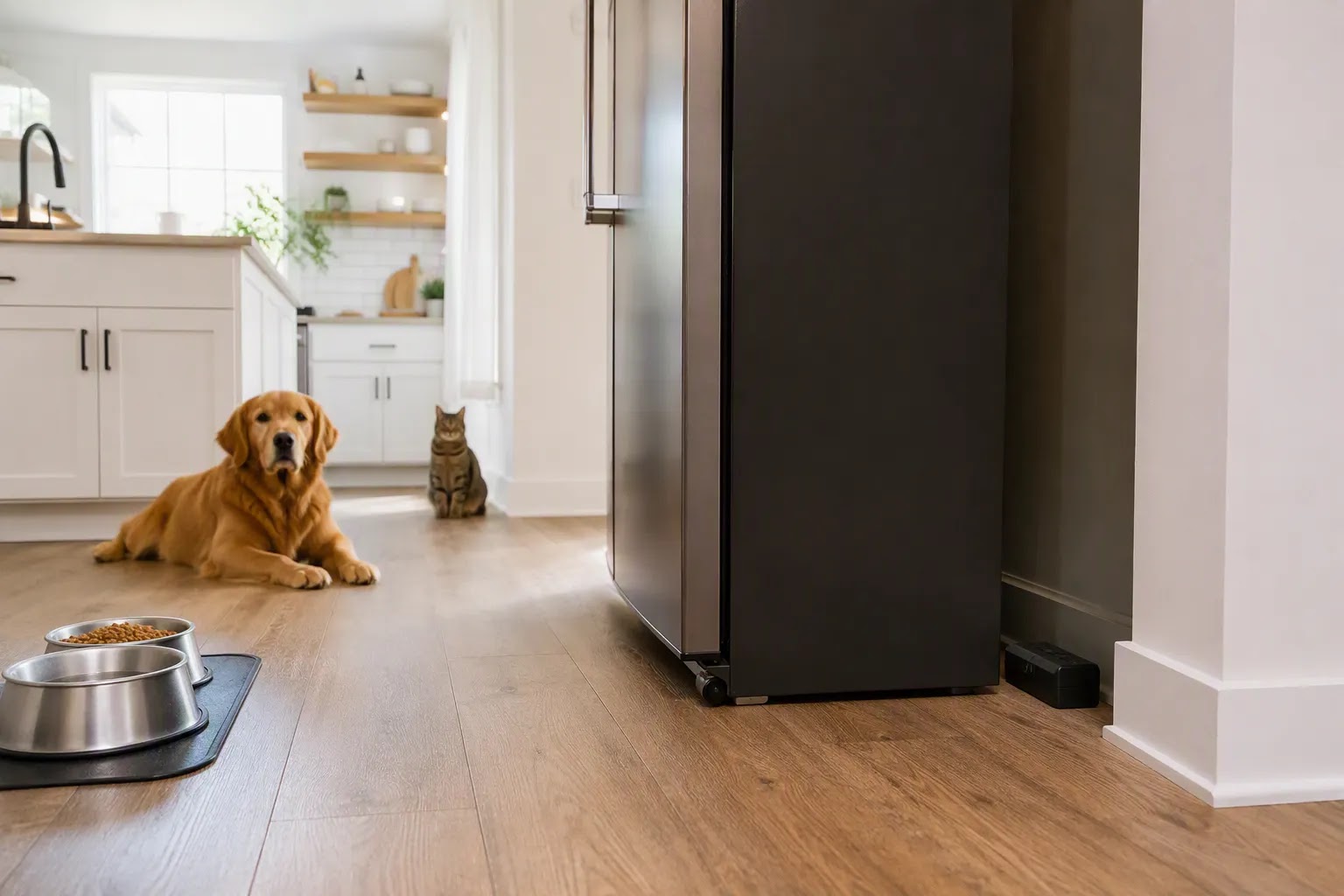
You place an ant bait station along the baseboard, then notice your dog sniffing the corner or your cat reaching beneath the cabinet. The question isn’t just whether borax kills ants—it’s whether your pet can reach the bait and what could happen if they do.
Borax and related borate ant baits aren’t automatically “pet-safe.” Many commercial baits contain low pesticide concentrations, but the risk depends on the exact ingredient, formulation, amount contacted or swallowed, and your pet’s size. Chewed station plastic adds a separate hazard.
Quick answer: Read the exact ingredient and concentration on the label. Keep bait completely inaccessible to dogs and cats and away from their food and water. An enclosed station isn’t chew-proof or cat-proof. If your pet chews or swallows bait, the amount is uncertain, concentrated material is involved, or station pieces are missing, keep the packaging and call your veterinarian or an animal poison-control service for advice.
Borax and Boric Acid Are Related—but Not Identical
Borax is a sodium borate salt; boric acid is a related boron-containing compound. Both may appear in pesticide products, but they’re not identical, and concentrations vary. The National Pesticide Information Center’s boric acid fact sheet explains that toxicity depends partly on the amount of boron involved.
Check the package for the active ingredient and concentration, whether it’s a liquid, gel, granule, powder, or enclosed station, plus directions, pet precautions, first aid, and contact details. Our guide to reading a pesticide label when you have pets explains these sections.
How Dogs and Cats Get Exposed to Ant Bait
Pets can reach a bait even when it’s nowhere near their food bowls. Consider how each animal explores the home.
Dogs May Chew the Entire Station
Food-based bait can attract a curious dog. If they chew the station, there are two concerns: the formulation inside and any swallowed plastic. Many household insect baits contain relatively low pesticide concentrations and may cause mainly stomach upset after limited exposure, but swallowed housing can irritate the digestive tract or cause an obstruction.
Cats Can Reach Places That Look Safe From Floor Level
Moving bait onto a shelf may stop a dog without stopping a cat. Cats can climb, jump, hook objects with their paws, or step into leaked gel and later swallow residue while grooming. High up doesn’t necessarily mean inaccessible.
Leaks and Spills Create Indirect Exposure
Liquid or gel bait can spread onto paws, fur, surfaces, or cleaning tools. Pets may then ingest residue while grooming. Keep pesticide baits away from pet food and water, as recommended by the U.S. EPA.
How Dangerous Is a Small Amount of Borax Ant Bait?
There’s no reliable answer based on the word “borax” alone. A small taste of a low-concentration commercial bait differs from ingesting concentrated powder, a large amount of bait, or an open homemade mixture. Borates generally have comparatively low acute toxicity, but enough exposure can cause illness.
Possible signs include drooling, vomiting, diarrhea, poor appetite, and abdominal discomfort. With substantial exposure, more serious effects may occur. Merck Veterinary Manual guidance reports weakness, diarrhea, muscle fasciculations, and seizures in significant borax poisoning.
The product, concentration, amount missing, pet’s size, symptoms, and possible ingestion of packaging are all important when a veterinarian assesses risk. Don’t assume that every damaged station causes severe poisoning—or that an unknown exposure is harmless.
Where Can Borax Ant Bait Be Placed More Safely?
The basic rule is simple: ants must be able to reach the bait, but your pets must not. Follow the exact product label. Depending on its directions and the ant route, a protected location may be a permitted crack or crevice, an inaccessible structural gap, or behind a fixed appliance your dog and cat genuinely cannot reach.
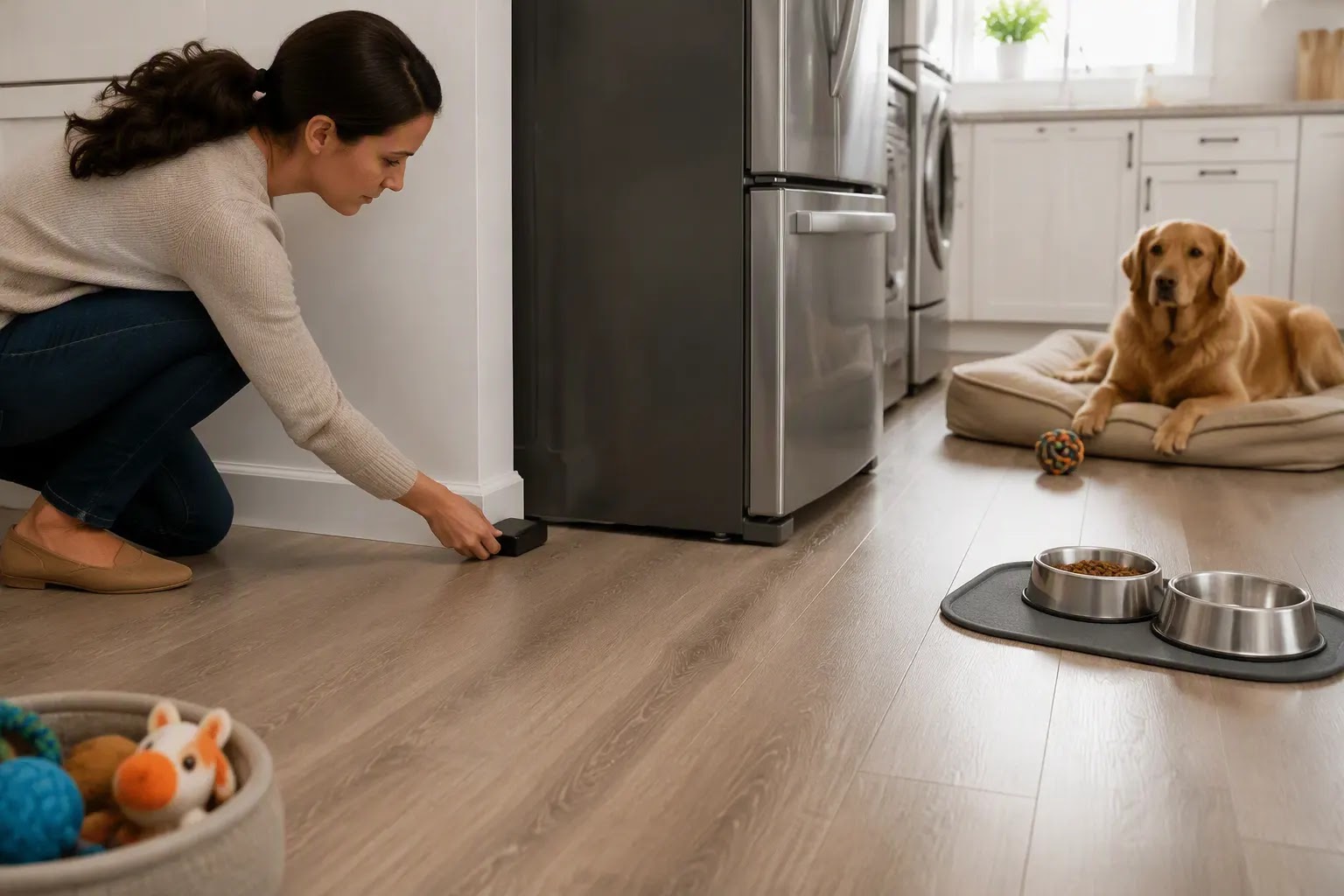
Avoid bait beside food or water bowls, feeding mats, litter boxes, toy storage, accessible furniture gaps, or shelves your cat explores. Also avoid places where cleaning or opening a cabinet might knock the bait into reach.
Test placement from both pets’ perspectives: Could a dog nose, paw, or chew its way to the bait? Could a cat jump above it or hook it out with one paw? If either answer is yes—or uncertain—choose another label-approved location.
An Enclosed Bait Station Is Not Pet-Proof
An enclosed station can reduce access to the formulation compared with exposed liquid or gel, but its casing isn’t indestructible. A dog may chew it; a cat may knock it loose; household cleaning may move it.
Keep the entire station inaccessible and check regularly that it remains secured in the intended location.
What About Liquid or Gel Borate Baits?
With liquids and gels, pets may contact the pesticide without breaking anything open. If the label permits a crack-and-crevice application, use only the stated quantity and place it where paws and tongues cannot reach.
Don’t add borax, transfer bait into an unlabeled dish, increase the concentration, or mix pesticides to speed up results. A gel spot a cat can touch or a liquid station a dog can pull out is not safely placed.
Homemade Borax Ant Bait Adds Avoidable Uncertainty
A homemade sugar-and-borax recipe may seem simple, but it lacks a registered product’s standardized formulation and tested instructions for placement, spills, disposal, and first aid. Sweet bait may also attract your dog or cat.
Health Canada advises against making homemade pesticides with boric acid and recommends using registered products according to their labels, only where pets cannot reach them.
An open dish of homemade borax mixture creates an avoidable exposure route in a pet household.
If Borax Ant Bait Spills or Leaks
Treat escaped bait as a pesticide spill, not an ordinary sticky mark:
- Move pets away and block access so paws can’t spread the material.
- Check the original label for product-specific cleanup and disposal instructions.
- Contain and clean the spill as directed, including residue that could transfer to fur or paws.
- Dispose of contaminated materials properly and wash your hands before handling pet supplies.
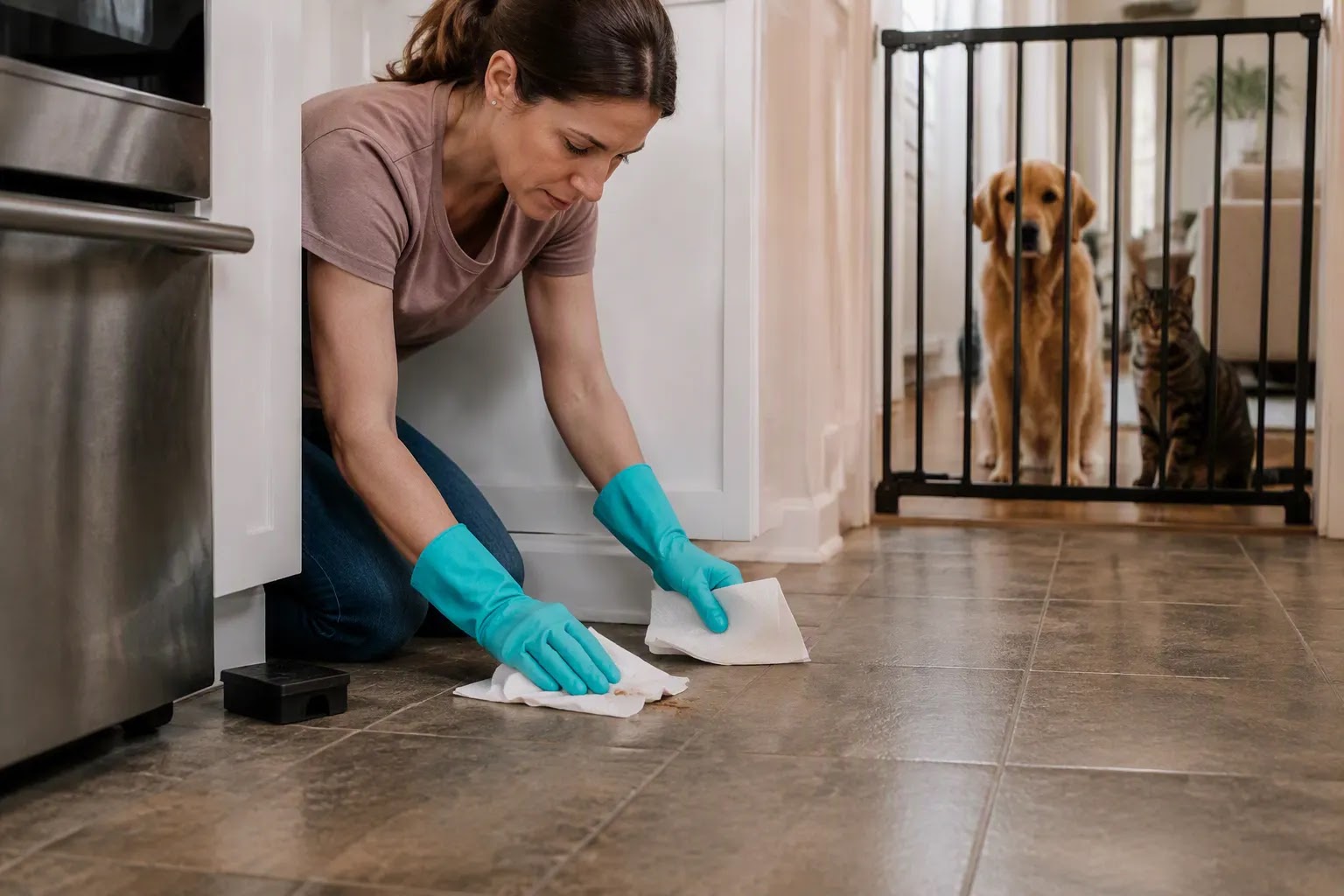
If bait has reached a pet’s skin, eyes, mouth, or coat, prevent further contact and ask a veterinarian or poison-control professional about appropriate decontamination for that formulation.
If Your Dog or Cat Licks or Chews the Bait
Remove access to the remaining product and gather the name, active ingredient, concentration, approximate amount missing, time of exposure, your pet’s weight, and any symptoms. Check whether the station is damaged and whether any plastic is unaccounted for.
Contact a veterinarian or animal poison-control service when the amount is unknown, more than a trivial taste may have been swallowed, concentrated material is involved, packaging may be missing, or symptoms appear.
Don’t induce vomiting or give milk, oil, salt, activated charcoal, or other home remedies unless a veterinary professional specifically directs them for the exposure involved.
In the U.S., the ASPCA Animal Poison Control Center offers 24-hour guidance; Pet Poison Helpline also provides veterinary toxicology support.
If a cat reached the bait, our separate guide on what to do when a cat eats ant bait covers that immediate exposure decision.
Get prompt veterinary help for repeated vomiting or diarrhea, significant drooling, weakness, tremors, seizures, collapse, difficulty breathing, or other sudden severe changes. Missing plastic plus vomiting, abdominal pain, or increasing lethargy may also indicate a foreign-body problem.
Do Not Forget About the Plastic Station
Even when the bait contains a small amount of low-concentration insecticide, chewed plastic can cause gastrointestinal irritation or obstruction. If you cannot account for pieces of the station, tell the veterinarian rather than assuming your pet left them on the floor.
A Quick Placement Check Before You Walk Away
- Dog: Can a nose, paw, tongue, or tooth reach the bait?
- Cat: Could a jump or extended paw bring it into reach?
- Movement: Could cleaning or opening a cabinet dislodge it?
- Food: Is it separate from bowls, treats, and feeding surfaces?
- Leaks: Could spilled liquid reach a pet-accessible surface?
If you’re unsure about any point, choose another label-approved location.
Safer Placement Matters as Much as the Ingredient
Living with dogs or cats doesn’t automatically rule out every ant bait. It means checking the actual product, following its label, and preventing contact with the bait and its housing.
For the broader ant-prevention strategy—food sources, entry points, and when pesticide treatment is necessary—see our separate pet-safe pest-control guide for dog homes or pet-safe pest-control guide for cat homes.
Keep the bait accessible to ants, genuinely inaccessible to pets, and identifiable by its original packaging if an exposure occurs.