Why Does My Cat Sit on My Laptop? Warmth, Attention & Learned Routine
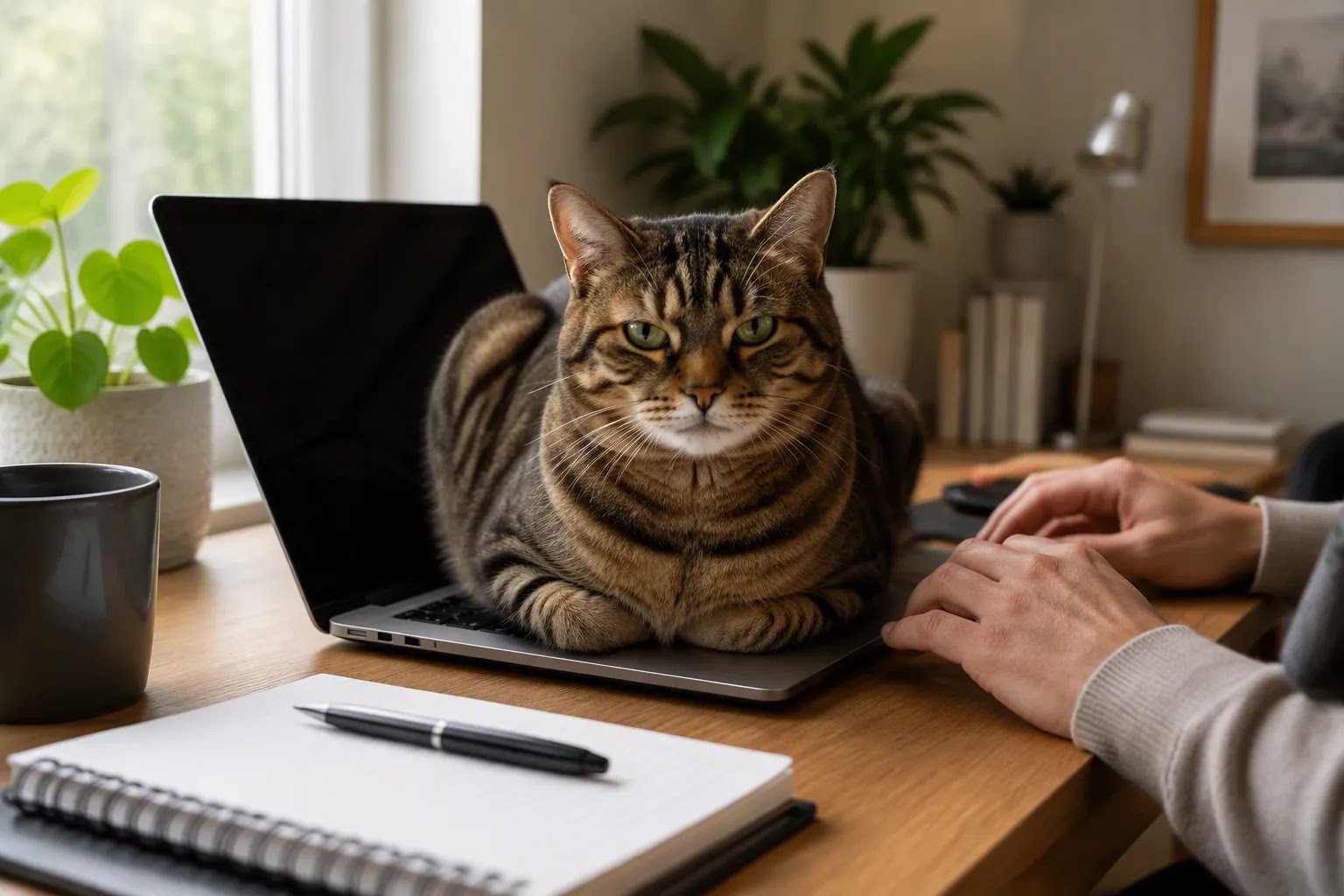
You open your laptop to answer an email. A paw lands on the keyboard, then another. Moments later, your cat is sitting on the one thing you need to finish your work.
It may feel personal, but your cat probably isn’t trying to ruin your deadline. Warmth, familiar smells, closeness to you, attention, and learned routines can all make a laptop attractive. The explanation depends on the cat and the situation—not on one universal feline motive.
The short answer: Laptop sitting is usually ordinary cat behavior. Some cats enjoy a warm surface, others like being near you, and some have learned that stepping on the keys gets a reaction. Watch when it happens and offer an appealing place beside you if you need your keyboard back.
Why Does Your Cat Sit on Your Laptop?
From your cat’s perspective, the laptop is a familiar object you touch frequently, stare at, and spend long stretches sitting beside. Several rewards may overlap.
1. The Laptop May Feel Warm
Cats often seek comfortable, warm resting spots. A laptop that’s been running may offer some warmth, but that doesn’t explain every cat. If yours climbs onto a cool keyboard while ignoring a cozy bed, proximity or attention may matter more.
2. The Keyboard Can Produce Attention
Your cat sits beside the desk and nothing much happens. Then they step onto the keys, and you look up, speak, pet them, or offer a treat to get them to move.
Cats learn from consequences. If keyboard sitting repeatedly leads to something rewarding, it may become a reliable habit—even if you never intended to encourage it.
3. The Laptop Is Familiar Territory
You touch your keyboard and desk daily, leaving familiar scents around your work area. Cats use smell to navigate their surroundings, and a familiar location may feel comfortable. That doesn’t prove scent is the reason your cat chooses the laptop, but it could contribute.
Our guide to how cats use scent to understand their environment explores their sensory world in more detail.
4. Your Work Routine Has Become a Signal
Think about what happens before your cat appears: coffee on the desk, your chair sliding back, the screen opening, and then a long stretch when you’re sitting in one place.
Your cat doesn’t need to understand computers to learn that opening the laptop predicts you’re staying nearby. If climbing onto it also brings petting, conversation, or a treat, the routine can become even stronger.
Does Sitting on Your Laptop Mean Your Cat Loves You?
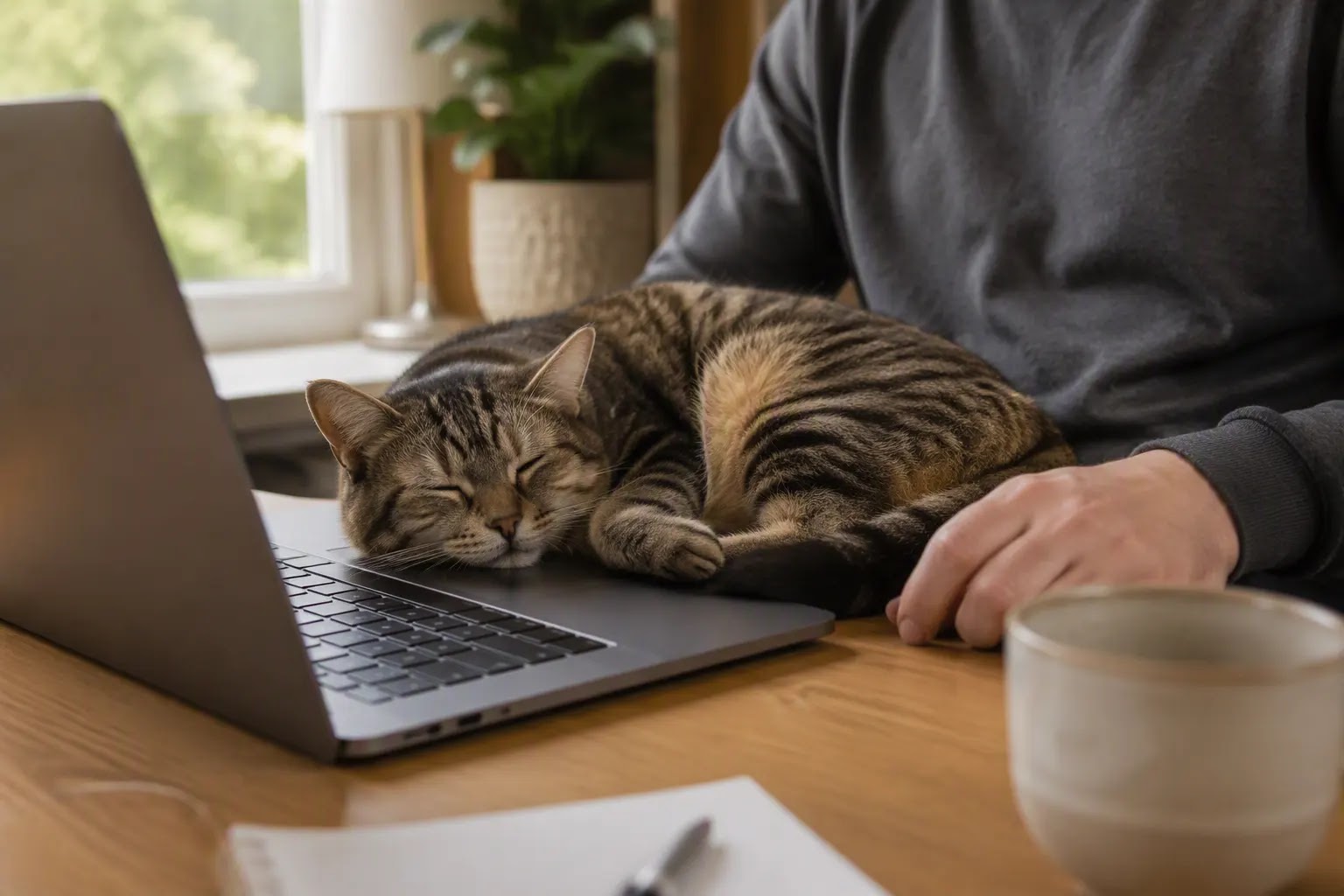
It may be part of seeking closeness, but it’s not a reliable test of affection. A cat that joins you at the desk, settles beside you, and remains nearby after you close the laptop may simply enjoy your company. Another may care more about the warm surface or the reaction it produces.
If your cat prefers settling directly on you instead, see our article on why cats sleep on their owner’s chest.
Is It Safe for a Cat to Sit on a Laptop?
An occasional visit is usually a practical inconvenience, but it helps to check a few things:
- Heat: If the laptop becomes unusually hot, move your cat to a cooler, comfortable surface.
- Ventilation: Don’t allow fur or your cat’s body to block cooling vents for extended periods.
- Cords: Keep charging cables protected, especially if your cat chews them. Live electrical cords can cause burns and serious injury.
- Moving parts: Keep paws and tails clear of the screen hinge before closing or repositioning it.
And, of course, there’s the possibility of an unfinished email being sent by four paws.
How to Keep Your Cat Off the Laptop Without Punishment
Instead of turning desk time into a battle, offer your cat a more rewarding option that meets the same need.
Give Your Cat a Better Seat Beside You
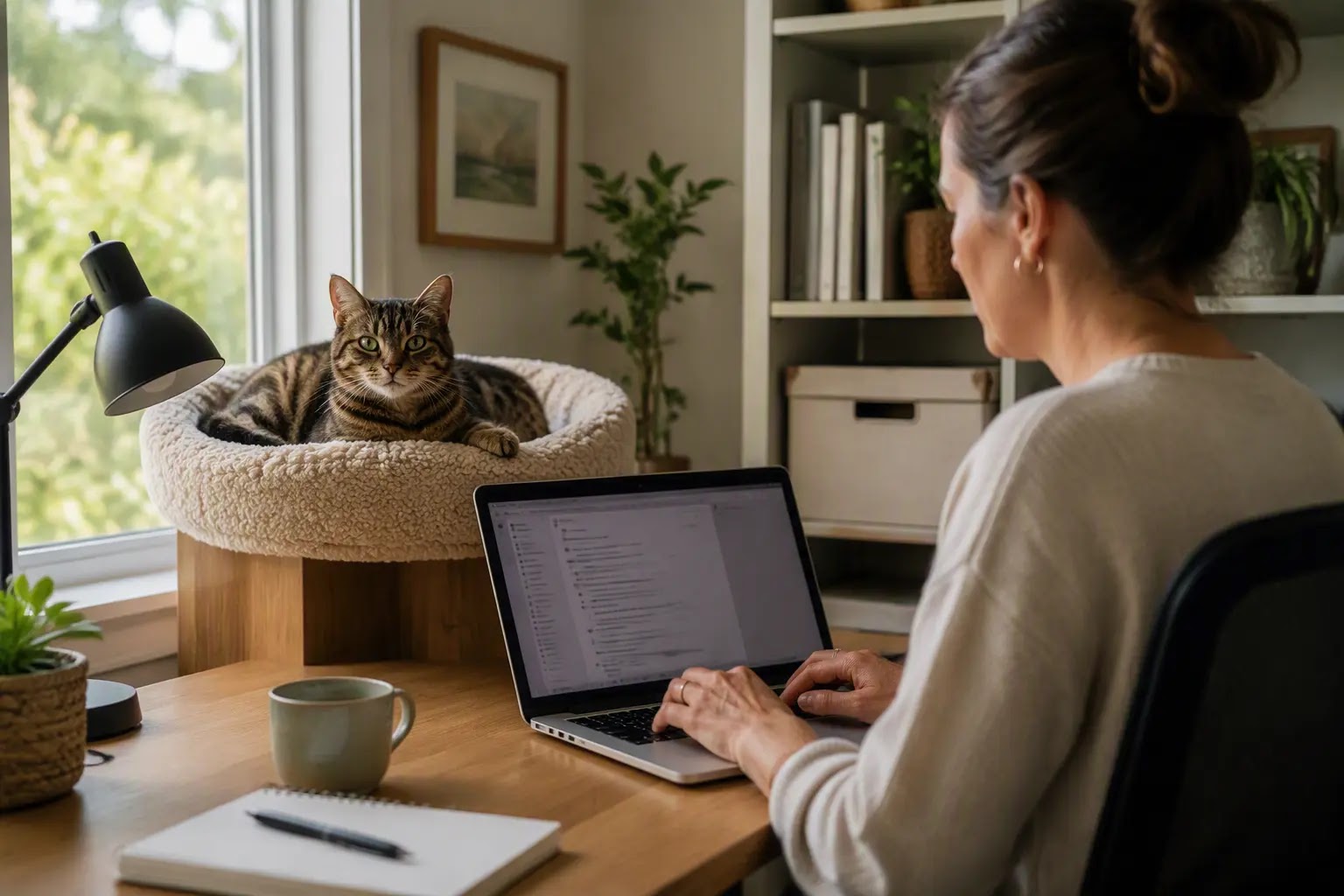
Place a soft bed, folded blanket, stable perch, or chair near your desk. If your cat wants to be close, an alternative across the room may not compete with the keyboard beside your hands. If warmth seems appealing, consider a safe, comfortable resting surface that lets your cat move away whenever they choose.
The desk-side compromise: Make the approved resting spot close enough that your cat can still keep you company without sitting on the keys.
Reward the Right Spot Before the Cat Takes Over
When your cat chooses the nearby bed or perch, promptly reward that choice with something they enjoy: gentle petting, attention, play, or a suitable treat.
Timing matters. If every keyboard takeover ends with a treat to lure your cat away, you could accidentally reward getting onto the laptop. Try encouraging the alternative spot before your cat reaches the keys instead.
Make Attention More Predictable
If your cat appears as soon as work begins, a little play or interaction beforehand may help. You don’t need to wear them out; you’re making attention available at a predictable time rather than only after an interruption.
Redirect Calmly
Don’t shout, spray water, chase, or frighten your cat away. Punishment can create fear without teaching a better option.
Instead, gently encourage your cat toward the nearby resting place and reward them for settling there. The lesson is “You can stay near me—just not on the keyboard.” Consistency makes that alternative easier to learn.
What If Your Cat Suddenly Starts Sitting on Your Laptop?
A new laptop habit isn’t automatically a health concern. Look first for ordinary changes such as cooler weather, more work-from-home hours, a rearranged desk, or the loss of a favorite resting spot.
But if the new behavior appears alongside changes in appetite, litter-box use, activity, vocalization, mobility, sleep, or apparent comfort, contact your veterinarian rather than assuming it’s only a quirky habit.
If unusual vocal attention-seeking is part of the change, our article on why cats may suddenly meow more than usual covers that broader issue.
The Bottom Line
When the laptop opens, you settle into your chair and your cat appears, several things may be at work: warmth, familiar scents, your company, or the predictable reaction they get from stepping onto the keys.
To keep your keyboard free, place a comfortable alternative nearby, reward your cat for choosing it, and respond calmly and consistently.
Your cat may be less interested in the laptop itself than in everything that happens around it.
Sources & Editorial Standards
Possible reasons for keyboard sitting were reviewed against VCA Animal Hospitals guidance on cats and computer keyboards. These explanations are possibilities, not proven motives for every cat.
Learning, reinforcement, and environmental-resource placement were cross-checked against the Feline Veterinary Medical Association’s How Cats Learn and Setting Up the Environment for Success resources.
Reward-based redirection and avoiding punishment were checked against the FelineVMA’s 2026 Positive Reinforcement Training Educational Toolkit.
Electrical-cord precautions were cross-checked against ASPCA cat-safety guidance.