Why Do Dogs Sigh? What the Timing and Body Language Can Tell You
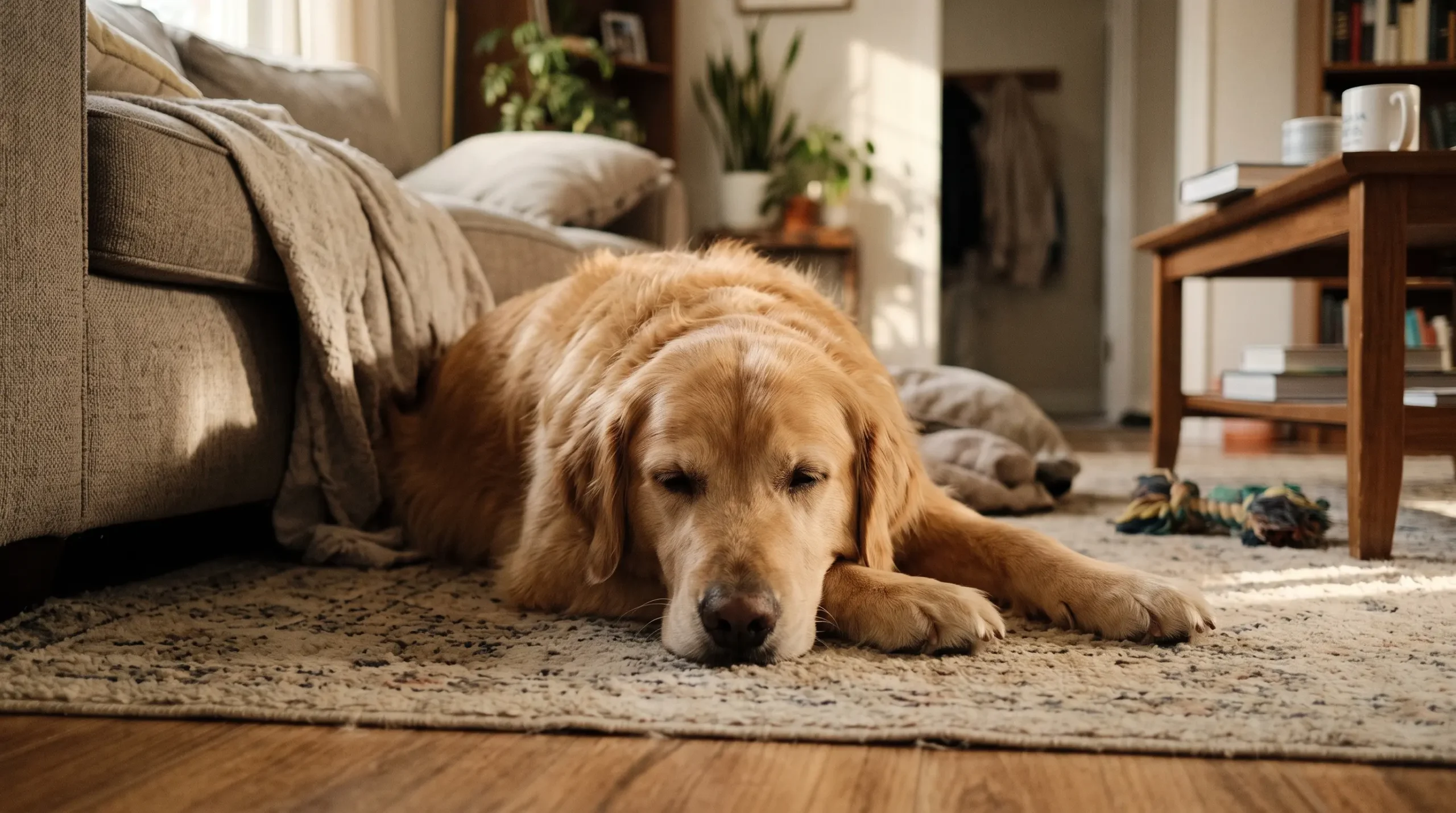
Your dog circles the living room, settles beside the couch, and rests their head on their paws. Then comes a long, unmistakable sigh. It almost sounds as though they’ve had a very long day.
Dogs may sigh while relaxing, waiting for attention, feeling mildly frustrated, or experiencing stress. The sound alone can’t tell you which. Look at what happened beforehand, your dog’s body language, and whether they settle comfortably afterward.
Why Do Dogs Sigh in the First Place?
A sigh is a deeper-than-usual breath followed by a noticeable, often prolonged exhale. You might hear it or simply see your dog’s chest rise and slowly relax.
Sighing is also a normal breathing reflex that helps maintain lung function, so it isn’t always a deliberate signal. When a sigh occurs during an interaction, the surrounding behavior can offer clues—but no single emotion can be reliably assigned to the sound.
When a Sigh Usually Fits Relaxation
Picture your dog turning around on their bed, stretching out, and releasing a slow breath as their eyes grow sleepy. Relaxation is a reasonable interpretation when several signs appear together:
- Loose posture: Their muscles look comfortable rather than tense.
- Soft expression: Their eyes and muzzle appear relaxed.
- Easy movement: They can stretch or change position without obvious discomfort.
- Normal breathing: Quiet, effortless breaths follow the sigh.
Contentment may fit that moment, but you don’t need to label the precise emotion to recognize that your dog looks comfortable.
Why Does My Dog Sigh When I Pet or Cuddle Them?
If your dog sighs while leaning into your hand and settling comfortably, they may be enjoying the attention. But a sigh alongside stiffness, head-turning, repeated repositioning, or attempts to move away suggests they may want space.
Pay attention to whether your dog chooses to stay. Pause petting briefly. Do they lean closer or invite more contact, or take the opportunity to leave? Respect that response rather than treating the sigh as permission to continue.
For a related behavior, see our guide to why dogs lean against people.
When Your Dog Sighs While Waiting for Something
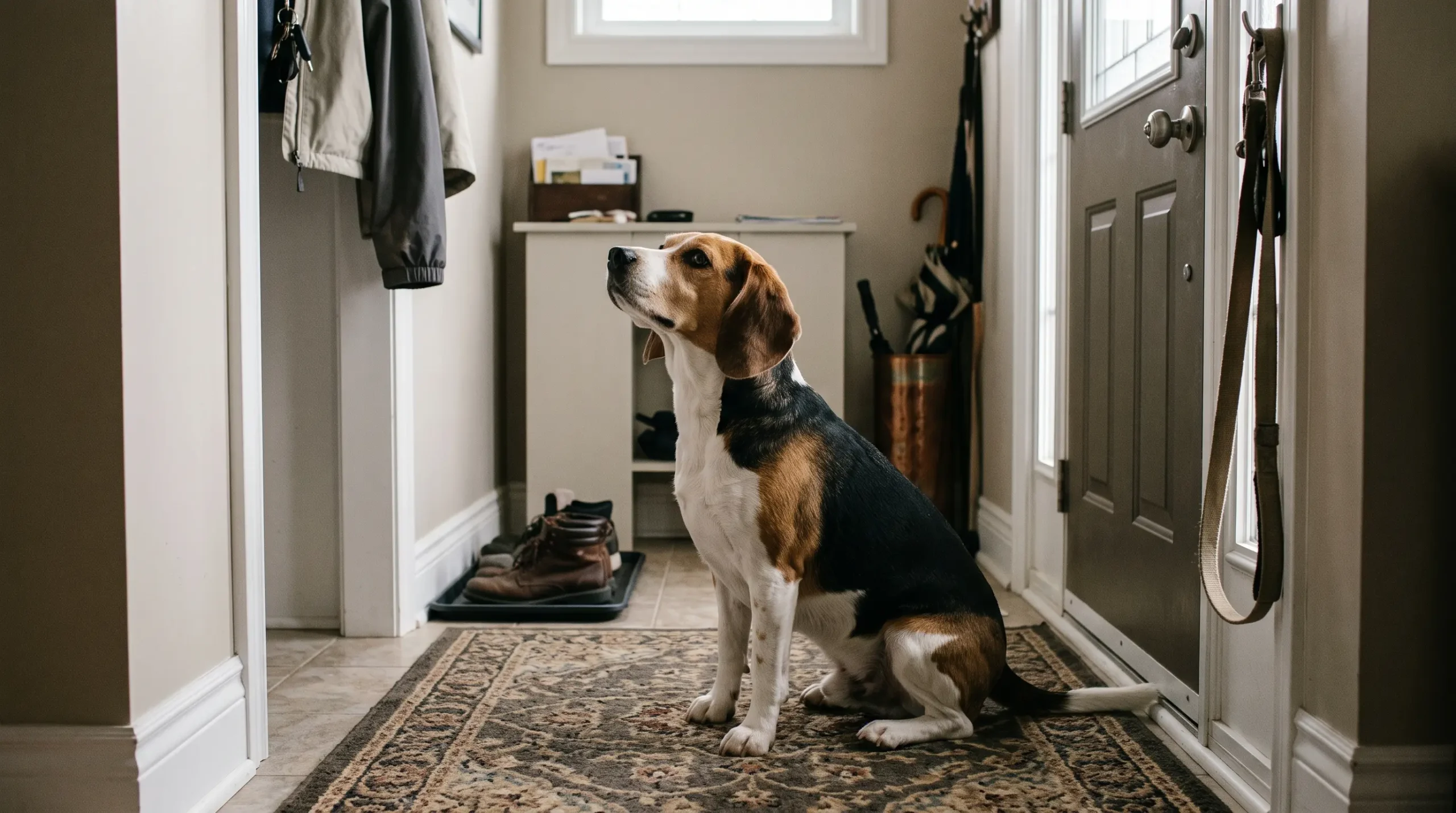
Your dog watches you reach for the leash, then you stop to answer a message. They lie down and sigh. It might reflect anticipation, mild frustration, or simply the shift from waiting to resting—not necessarily annoyance with you.
Dogs learn from routines. If sighing is sometimes followed by attention or play, that response may reinforce the behavior in similar situations. Still, a sigh isn’t proof of boredom or a demand for something.
Consider whether your dog has had adequate activity, rest, and interaction. Respond to those needs and their overall behavior, not the sigh alone.
Can a Dog Sigh Because They’re Stressed?
Yes, a sigh can occur during stress, but it isn’t a reliable stress signal by itself. A dog sighing in a veterinary waiting room while standing stiffly and watching the exit looks different from one drifting off to sleep at home.
Look for accompanying signs such as:
- Tense, lowered, or unusually rigid posture.
- Repeated lip licking or yawning outside an obvious food or sleep context.
- Ears held back more than is typical for your dog.
- Pacing, trembling, or difficulty settling.
- Repeated attempts to move away from a person or situation.
None of these signals has a single meaning in isolation. If your dog appears overwhelmed, offer space and a quieter environment when possible rather than forcing contact.
Our dog and cat body language guide covers those broader signals in more detail.
Three Questions That Help You Read a Dog’s Sigh
For a noticeable or unusual sigh, check three things:
1. What happened immediately before it?
Was your dog settling to sleep, finishing play, waiting for a walk, or facing an unfamiliar situation? Timing helps narrow down possible explanations.
2. What does the rest of the body look like?
Consider posture, muscle tension, eyes, ears, and movement together. One feature—such as closed eyes—doesn’t settle the question.
3. What happens after the sigh?
Does your dog relax and breathe normally, or keep pacing, shifting position, coughing, or looking uncomfortable? What happens next is often more informative than the sound itself.
Is It Normal for Dogs to Sigh a Lot?
Some dogs sigh more noticeably than others, especially when settling down. There isn’t a universal sigh-count limit that separates normal from abnormal behavior.
Focus instead on changes from your dog’s usual pattern. If sighing becomes much more frequent, appears in unfamiliar situations, or comes with changes in appetite, energy, movement, or comfort, arrange a veterinary check rather than assuming it’s behavioral.
When a Sigh Might Actually Be a Breathing Problem
A normal sigh is generally followed by comfortable breathing. Groaning, wheezing, coughing, or labored breaths may sound similar but deserve different attention.
Contact your veterinarian if you notice:
- Repeated coughing, wheezing, or new breathing sounds.
- Restlessness, signs of pain, or difficulty getting comfortable.
- Reduced appetite, energy, or willingness to move.
- Breathing that stays unusually fast while your dog is fully resting.
Seek emergency veterinary care immediately if your dog is struggling to breathe, collapses, or has blue or gray gums or tongue. Breathing that requires obvious effort is not an ordinary sigh. Don’t wait for more symptoms or try to diagnose the sound at home.
Should You Do Anything When Your Dog Sighs?
Often, no action is needed. If your dog sighs and settles comfortably, let them rest. If they seem ready for interaction, consider whether play, a walk, or attention fits their routine—without automatically rewarding every sigh.
If they appear uneasy, pause what you’re doing and give them space. If the sigh accompanies concerning changes in breathing or health, seek veterinary advice rather than interpreting it as an emotion.
The Next Time You Hear That Long Exhale
When your dog sighs beside the couch and drifts off with a loose body and easy breathing, relaxation is a reasonable explanation. The same sound during tense waiting, unwanted contact, or physical discomfort calls for a closer look.
A sigh is one small clue. Its timing, your dog’s body language, and what happens afterward give it context.
Veterinary disclaimer: This article provides general information about canine behavior and breathing. It cannot identify the cause of an individual dog’s sounds or symptoms. Contact your veterinarian about new or concerning changes, and seek emergency care for breathing difficulty.