How to Tell Play Fighting From Real Fighting Between Cats
One minute, your cats are sharing the living room peacefully. The next, they’re rolling across the rug, grabbing each other, and racing down the hallway. One ends up pinned beneath the other. Should you step in?
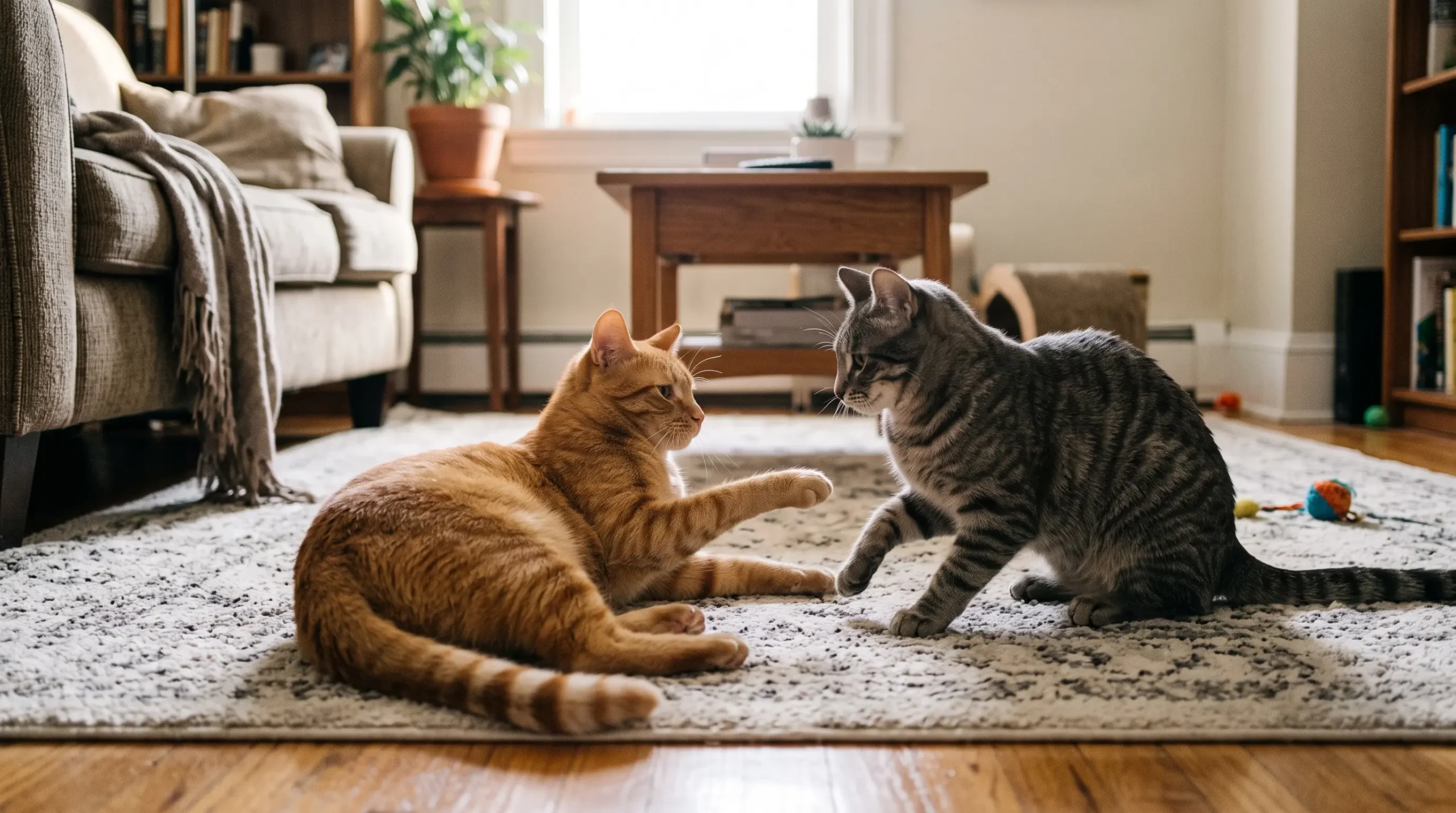
Cats are more likely to be playing when both willingly participate, take turns, pause, and return to normal afterward. Conflict is more likely when one cat repeatedly tries to escape, gets cornered, shows sustained fear, or is injured. A single bite, hiss, or dramatic tackle won’t tell you enough—watch the full interaction.
Start With One Question: Do Both Cats Want to Participate?
Imagine your orange cat chasing your gray cat behind a chair. If the gray cat comes back out and starts another chase, that’s an encouraging sign: it appears willing to continue.
But if it stays hidden while the orange cat follows, corners it, and keeps lunging, the interaction is no longer clearly mutual. Similar movements can mean very different things depending on whether the other cat can choose to leave.
Cats Protection guidance on feline fighting highlights reciprocal play, gentler contact, and natural pauses as useful clues.
Signs Your Cats Are Probably Play Fighting
They take turns chasing and wrestling
Playing cats often switch roles: the chaser becomes the one being chased. The turns needn’t be perfectly equal, especially if one cat is more energetic. Look for both cats initiating contact rather than one always fleeing.
They pause and respect each other’s space
Friendly wrestling often stops and starts. The cats separate, reposition, or watch each other before continuing. If one walks away and the other lets it, that’s reassuring. A voluntary return to play is even more telling.
Their bodies look relatively loose
Play can include crouching, pouncing, rolling, grabbing, and hind-leg kicking. Movements tend to look more relaxed than the prolonged stiffness or defensive postures seen in conflict.
They settle normally afterward
After play, both cats can return to resting, grooming, eating, or exploring without obvious fear. They don’t have to cuddle afterward; being comfortable in their normal spaces is what matters.
When Rough Play Starts Looking Like Conflict
Not every tense encounter is an outright fight. Sometimes one cat becomes overstimulated or keeps trying to play after the other has had enough. Watch for:
- One-sided chasing: The same cat repeatedly pursues while the other tries to escape.
- Cornering or blocking: A cat prevents its housemate from leaving a doorway, hallway, or hiding place.
- Tense body language: Stiff postures, flattened ears, defensive crouching, or raised fur continue through the encounter.
- Distress sounds: Persistent growling, hissing, yowling, or screaming occur alongside threatening behavior.
- Escalating contact: Forceful swats, injurious bites, or uncontrolled struggling replace the earlier back-and-forth movement.
- Fear afterward: One cat hides, avoids the other, or remains unusually watchful.
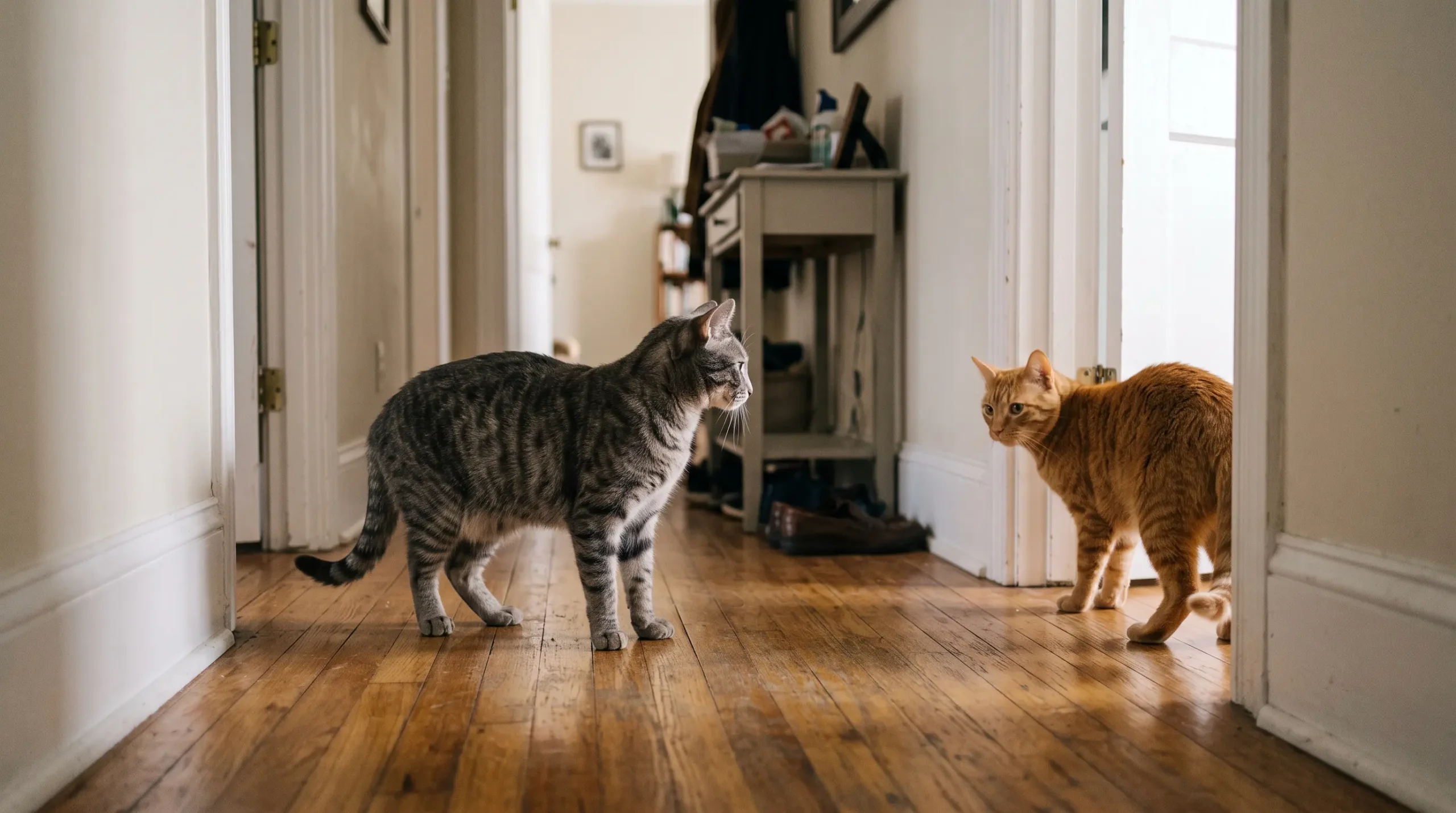
A brief hiss can simply mean “give me space,” especially if the other cat backs off. And a quiet interaction isn’t necessarily friendly: staring, blocking access, and avoidance may signal tension without a noisy fight.
The 2024 AAFP Intercat Tension Guidelines emphasize looking for these subtler signs alongside obvious aggression.
But What About Biting, Bunny Kicks, and Hissing?
These behaviors occur in both play and conflict, so context matters:
- Biting: Gentle mouthing can be part of wrestling. Injuries, uncontrolled biting, or a distressed partner are warning signs.
- Bunny kicking: Holding another cat with the front paws and kicking with the hind feet can happen during play. Sustained, forceful kicking against a cat trying to escape calls for intervention.
- Hissing: One brief hiss may set a boundary. Repeated hissing with pursuit or defensive postures is more concerning.
- Chasing: Fast chasing can be friendly when roles change. Repeated pursuit of a cat that cannot disengage is different.
For more on interpreting ears, tails, posture, and other signals, see our dog and cat body language guide.
How to Tell When Play Has Gone Too Far
Suppose wrestling starts normally, but one cat becomes increasingly intense while the other stops initiating and begins retreating. You can interrupt before anyone gets hurt.
Try this quick check:
- Watch the less enthusiastic cat. Is it still choosing to participate, or trying repeatedly to leave?
- Notice the pause. Does the other cat allow it to disengage?
- Watch what follows. Does the first cat return voluntarily, or stay away looking wary?
If the interaction becomes one-sided, create space. Don’t wait for screaming, flying fur, or an injury.
How to Interrupt Cats Safely
When tension is building but a fight hasn’t started, redirect the more energetic cat with a toy from a safe distance. Give the other cat a clear escape route and let them settle in separate spaces if needed. Reward calm behavior when both are relaxed.
If a real fight begins, don’t put your hands between the cats, grab their collars, or pick them up while they’re attacking. Frightened cats can redirect bites and scratches toward you.
If you can do so safely, block their view of each other with a large, solid barrier such as a cushion or piece of cardboard, keeping your hands out of reach. Once they disengage, separate them behind closed doors and allow time to calm down.
Don’t strike, chase, spray water at, or punish either cat. After a serious fight, don’t force an immediate reunion. The ASPCA’s household cat aggression guidance also advises separating cats rather than expecting them to fight out their differences.
Check What Happens After the Encounter
When the wrestling ends, look beyond whether both cats have gone quiet. Over the following hours, notice whether one:
- Avoids rooms where the other cat spends time.
- Is blocked from food, water, a litter box, or a resting place.
- Hides or freezes when its housemate approaches.
- Shows changes in appetite, activity, or usual routines.
Check for injuries after a genuine fight. Cat teeth can leave tiny punctures hidden beneath fur that later become infected. Contact your veterinarian promptly if you know or suspect a bite, or notice pain, swelling, limping, or unusual behavior.
For more on why bite wounds need attention, see VCA’s veterinary guidance on cat fight wounds.
What If One Cat Always Wants to Play and the Other Doesn’t?
A young cat may want to wrestle when an older housemate would rather rest. The playful cat’s intentions don’t cancel out the other cat’s discomfort.
Help both cats by:
- Offering individual play: Give the energetic cat wand-toy sessions with you instead of relying on its housemate for entertainment.
- Keeping escape routes open: Avoid narrow spaces where one cat can trap the other.
- Providing separate resting areas: Let each cat relax without unwanted approaches.
- Spreading out resources: Provide accessible feeding, water, and litter areas to reduce competition.
- Respecting preferences: Don’t force cats to wrestle or play together.
If one cat is being blocked from a litter box, our guide to litter boxes in multi-cat homes explains placement and number in more detail.
The goal isn’t to make every pair of cats play together. It’s to let each cat rest, move around, and reach essential resources without pressure.
When Should You Ask for Professional Help?
Arrange a veterinary assessment when aggression starts suddenly, especially between cats that previously got along. Pain or illness can change social behavior.
Repeated fights, injuries, persistent stalking or blocking, and ongoing fear also deserve professional guidance. Your veterinarian can look for medical causes and, when appropriate, refer you to a qualified feline behavior professional.
If conflict began after bringing home a new cat, follow our separate step-by-step resident-cat introduction guide. Reintroduction needs its own plan; simply putting the cats back together may restart the conflict.
The Next Time Your Cats Start Wrestling
Look past the dramatic tackles. Do they trade roles? Can either walk away? Does the other respect a break? And can both return to their ordinary routines afterward?
Healthy play gives both cats a choice. When one cat loses that choice, it’s time to give them space.
Behavior and veterinary disclaimer: This guide provides general information about feline social behavior. Individual interactions can be difficult to interpret from appearance alone. Seek veterinary advice for injuries, sudden aggression, persistent fear, or ongoing conflict between household cats.
Sources & Editorial References