How to Help an Overweight Cat Lose Weight Safely
Maybe your cat’s waist has become harder to see, or the veterinarian mentioned extra weight at a recent appointment. You want to help, but simply serving half as much food doesn’t feel right. And with cats, that instinct to be cautious is important.
The safest way to help an overweight cat lose weight is through a veterinarian-guided calorie plan, carefully measured meals, gradual activity, and regular weigh-ins. Weight loss should be slow enough to protect your cat’s health and muscle mass. Sudden food restriction or prolonged refusal to eat can be dangerous, particularly for overweight cats.
First, Is Your Cat Actually Overweight?
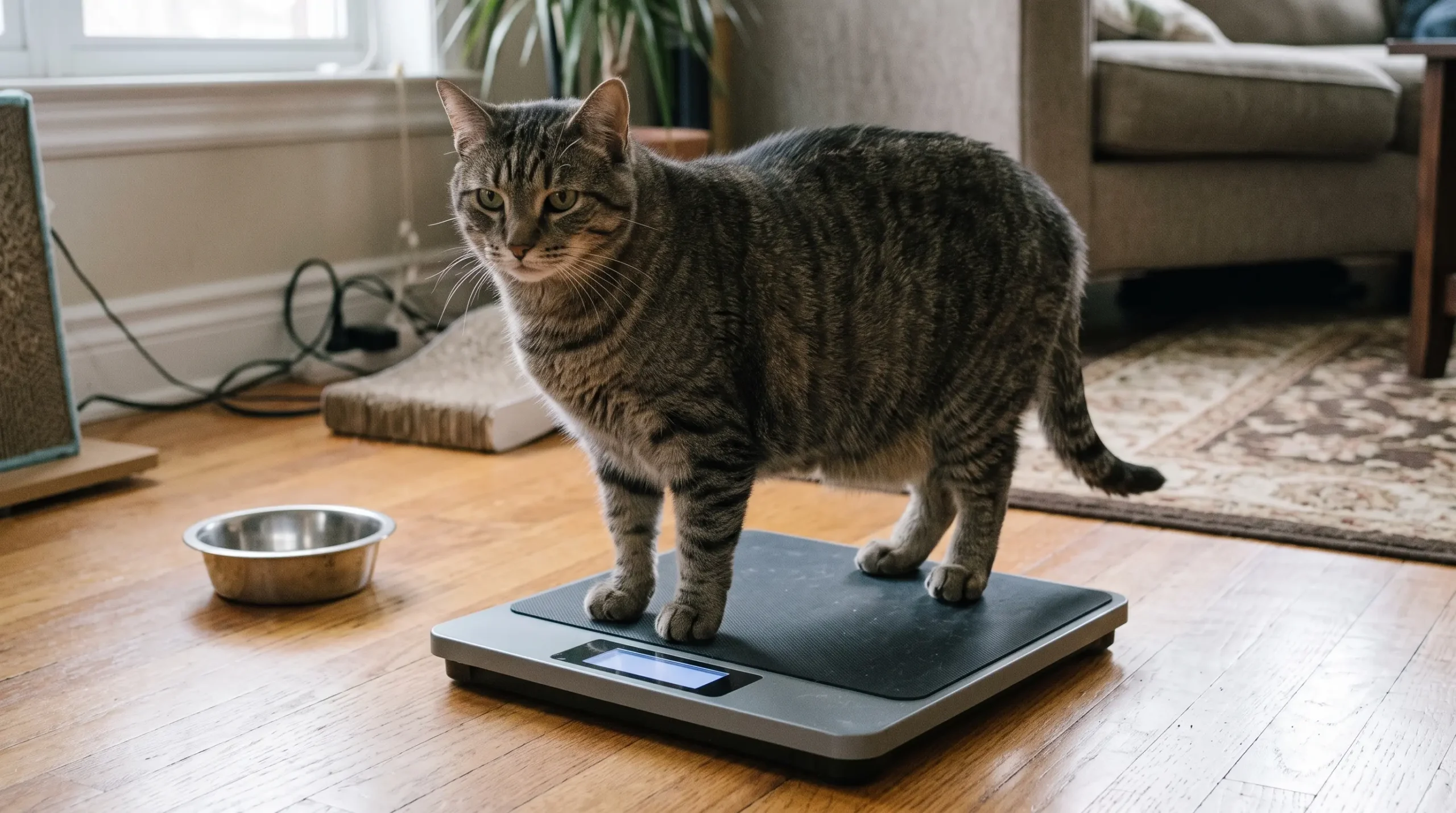
A cat’s weight in pounds isn’t enough to tell you whether they need to lose weight. A healthy weight varies with body size, frame, age, and muscle condition.
Veterinarians often use a nine-point Body Condition Score (BCS) to assess body fat:
- 4–5/9: Generally an ideal body condition. Ribs can be felt with a slight fat covering, and a waist is visible from above.
- 6–7/9: Overweight, with increasing fat coverage and less waist definition.
- 8–9/9: Obese, with substantial fat deposits and little or no visible waist.
You can gently feel along your cat’s ribs and look at their body from above, but don’t rely on appearance alone. A fluffy coat, a naturally loose abdominal skin flap, or a large frame can make visual judgments misleading.
Muscle condition matters too. A cat can carry excess body fat while also losing muscle, especially with age or illness. Your veterinarian should assess both rather than prescribing a target weight based only on the number on the scale.
The WSAVA body and muscle condition resources can help you understand what the veterinary team is assessing.
Step 1: Ask Your Veterinarian for a Weight-Loss Target
Before changing your cat’s diet significantly, arrange a veterinary assessment. This is particularly important for severely overweight cats, seniors, cats with diabetes or other chronic illnesses, and cats taking medications.
A useful appointment should establish:
- Your cat’s current weight and body condition score.
- An estimated healthy target weight or an initial weight-loss milestone.
- A daily calorie allowance appropriate for that cat.
- Whether a therapeutic weight-management food is needed.
- A schedule for follow-up weights and feeding adjustments.
Bring the names of all foods and treats your cat eats, the calories listed on their packages, and an honest description of the daily feeding routine. Include anything offered by other people in the household.
Don’t choose a generic calorie target from the internet. Two cats with identical body weights may require different amounts of food depending on health, activity, muscle mass, and their individual response to a feeding plan.
Step 2: Choose a Nutritionally Appropriate Diet
Weight loss requires controlling energy intake, but cats still need adequate protein, vitamins, minerals, and other essential nutrients.
For cats requiring substantial calorie restriction, veterinarians may recommend a therapeutic weight-loss diet. These foods are formulated to provide important nutrients in a controlled number of calories and may help preserve lean body mass.
Simply reducing a regular maintenance diet to a very small portion can create nutritional deficiencies. That’s why the type of food matters alongside the amount.
You don’t automatically need to replace every dry meal with wet food. Moisture content and calorie density can influence feeding choices, but the best option depends on your cat’s needs and willingness to eat.
Our wet versus dry cat food guide explains those formats without treating either as a guaranteed weight-loss solution.
Step 3: Measure Every Meal and Count Treats
Once your veterinarian has set the daily calorie allowance, the next job is turning that target into consistent portions.
A kitchen scale can help you measure dry food in grams more consistently than estimating with a scoop. For wet food, use the calorie information per can, pouch, or serving to calculate how much fits the plan.
For example, if your veterinarian has prescribed a daily calorie budget, every serving of wet food, dry food, treat, or edible supplement needs to fit within it. The total matters more than whether your cat eats twice or several times a day.
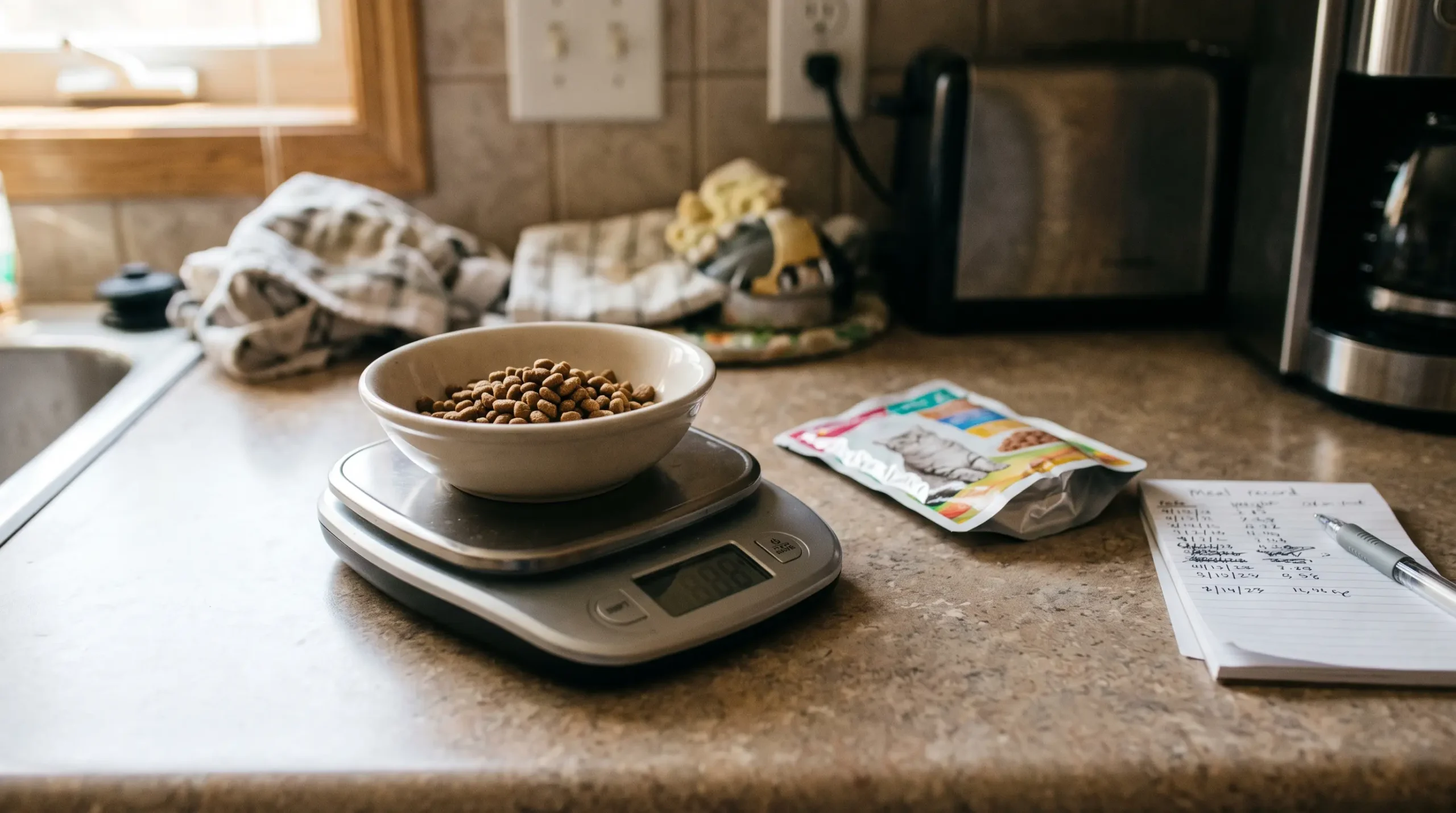
Make measuring easier by following a consistent routine:
- Read the calorie information on each food package.
- Weigh or measure the prescribed daily amount.
- Divide that amount into the meals your cat will receive.
- Set aside any treats from the same daily calorie allowance.
- Ask everyone in the home to use the same feeding plan.
As a general nutritional guideline, treats and other extras should contribute no more than about 10% of daily calories. Your veterinarian may recommend less during active weight loss.
You can also use our Pet Food Portion Calculator to organize general portion estimates. However, for an overweight cat, the veterinarian-prescribed calorie target takes priority over any calculator estimate.
If you’re unsure how to interpret kcal per cup, kcal per kilogram, or kcal per can, see our guide to reading cat food calories and labels.
Step 4: Change Foods Gradually, Not Abruptly
If your veterinarian recommends a different food, introduce it gradually. A transition over approximately 7–10 days is commonly recommended, although some cats need a different schedule.
Start with a small proportion of the new diet and increase it as your cat accepts the change. Monitor appetite, stool, and general behavior.
Do not try to force weight loss by withholding food until your cat accepts the new diet. If your cat refuses the replacement food, contact the veterinary team for an alternative approach.
A diet only works safely when your cat actually eats an appropriate amount of it.
Step 5: Make the Feeding Routine Work in Your Home
Many weight-loss plans fail because food comes from more than one source. The measured breakfast may be perfect, but there are also handfuls of kibble in the afternoon, treats after play, and extra bites from another cat’s bowl.
If your cat free-feeds
Instead of keeping an unlimited supply of food available, divide the prescribed daily allowance into measured meals or use a portion-controlled feeder.
You can still offer several small meals if your cat prefers that routine. The important point is controlling the total daily amount, not making your cat wait through an unnecessarily long fast.
If you have more than one cat
Feed cats separately when necessary so you can confirm who eats which portion. A microchip-operated feeder may help if one cat repeatedly steals another’s food.
Don’t automatically place every cat on the same reduced-calorie diet. A healthy-weight cat may need a completely different feeding plan.
If your cat begs for food
Try offering attention, grooming, interactive play, or a scheduled activity instead of automatically responding with another treat.
Puzzle feeders may also help make a measured portion last longer, provided your cat can use them comfortably and still eats the prescribed amount.
Persistent begging doesn’t automatically mean the plan is too restrictive. But pronounced hunger, distress, or a sudden behavior change should be discussed with your veterinarian rather than ignored.
Step 6: Add Gentle Activity Without Overdoing It
Activity supports mobility, muscle health, and enrichment, but it usually cannot compensate for consistently excessive calorie intake. Food management remains central to the weight-loss plan.
Start with movement your cat can manage comfortably.
- Offer brief, gentle wand-toy sessions on a nonslip surface.
- Encourage short walks between familiar resting spots, toys, and feeding areas.
- Use a treat-free toy or a portion of the regular food allowance for suitable food-search activities.
- Increase activity gradually as your cat becomes more comfortable.
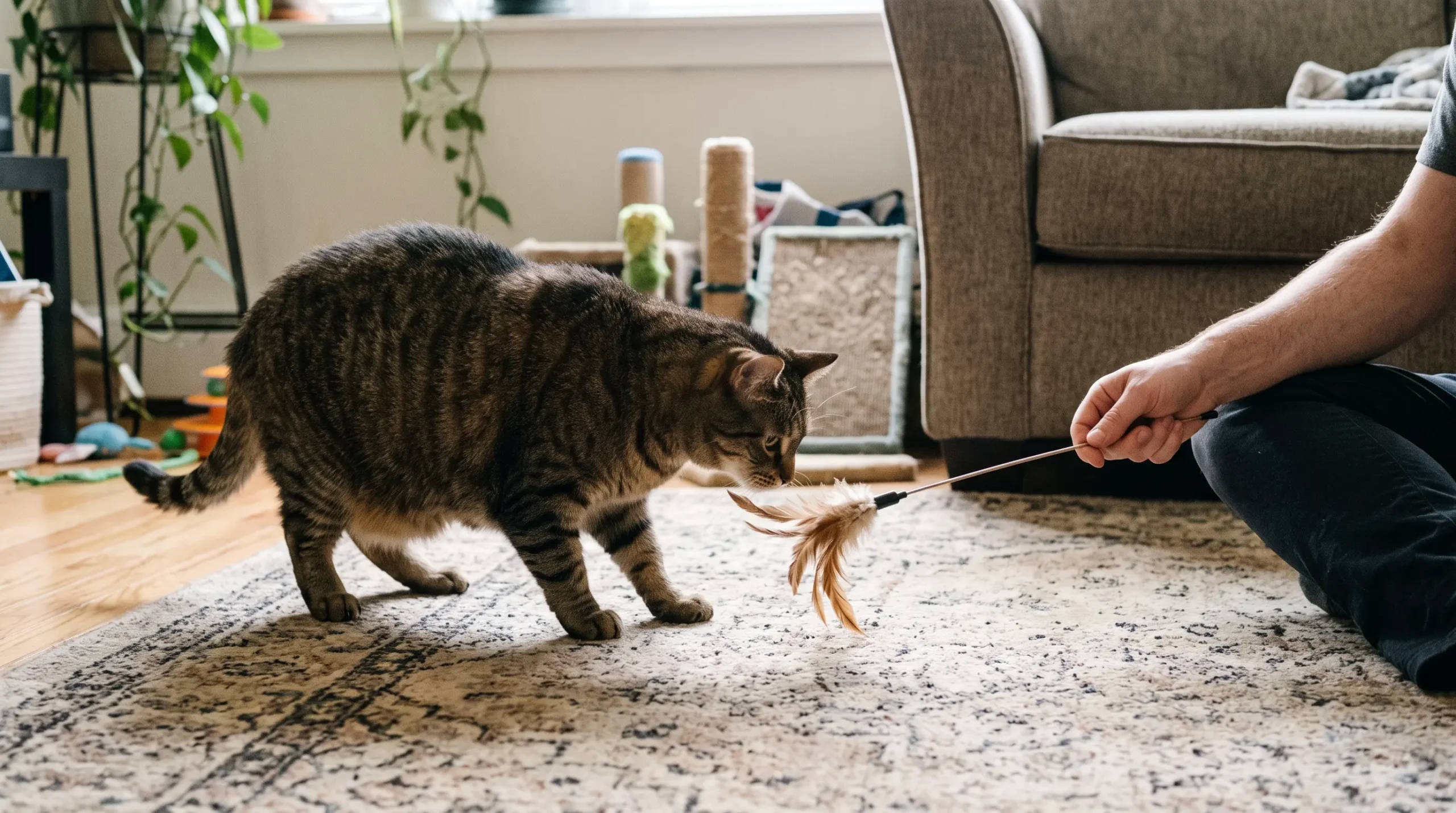
There’s no need to push an overweight cat into high jumps or strenuous exercise. If your cat seems painful, stiff, breathless, or reluctant to move, ask your veterinarian what level of activity is appropriate.
For cats that enjoy reward-based learning, our beginner cat clicker-training guide offers another enrichment option. Any food rewards should come from the cat’s planned daily allowance.
How Fast Should an Overweight Cat Lose Weight?
Veterinary guidance commonly describes a safe feline weight-loss rate of approximately 0.5% to 2% of body weight per week. The appropriate target within that range depends on the individual cat, and severely obese cats may need a particularly cautious approach.
This is a monitoring range, not an instruction to aim for the fastest possible loss.
Your veterinary team may recommend reassessment soon after the diet begins, followed by weigh-ins approximately every one to two weeks. Use the same reliable scale and weigh under similar conditions when possible.
Track more than weight alone:
- Body weight: Is it changing at the planned rate?
- Appetite: Is your cat consistently eating the prescribed food?
- Muscle condition: Is your cat maintaining strength and mobility?
- General health: Are energy, grooming, stool, and behavior reasonably normal?
One weigh-in may fluctuate because of timing, food intake, or scale differences. Look at the trend with your veterinarian rather than repeatedly changing portions based on a single number.
Important: Never Crash-Diet or Starve an Overweight Cat
Rapid food restriction and prolonged poor intake can place cats at risk of hepatic lipidosis, a serious condition in which excessive fat accumulates in the liver. Overweight cats are especially vulnerable when they stop eating.
Do not halve your cat’s food, use fasting days, or attempt a dramatic calorie reduction without veterinary direction.
If your cat stops eating or eats substantially less than normal, contact your veterinarian promptly. Do not wait several days to see whether hunger makes them accept a different food. A cat that has eaten nothing for approximately 24 hours needs prompt veterinary assessment, and a cat with vomiting, weakness, marked lethargy, or other concerning signs may need attention sooner.
Weight loss caused by illness or food refusal is not successful weight management.
What If Your Cat Isn’t Losing Weight?
A weight-loss plateau does not automatically mean the food has stopped working or that you should sharply reduce portions.
First, review the feeding record:
- Are portions being weighed consistently?
- Are treats, food toppers, and small snacks included?
- Can your cat access another pet’s food?
- Did the food formula or calorie content change?
- Are weigh-ins being made on a consistent scale?
If the record is accurate and the trend remains flat, your veterinarian can reassess the calorie allowance, body and muscle condition, activity plan, and any health factors that may affect progress.
Do not respond to a plateau with an unplanned drastic cut. Adjustments should be based on the cat’s condition and documented progress.
Once Your Cat Reaches a Healthy Weight
Weight management doesn’t end the day the scale reaches the target. Your cat will need a maintenance feeding plan, which may differ from the weight-loss allowance.
Continue measured feeding, appropriate activity, and periodic weight checks. Work with your veterinarian to identify when and how to move from the reduction plan to maintenance without immediately regaining the lost weight.
A useful sign of success is not just a lower number. It’s a cat maintaining an appropriate body condition, good muscle mass, comfortable movement, and a dependable appetite.
A Safer Starting Point
If your cat needs to lose weight, begin with a veterinary assessment and a realistic calorie target. Measure the food you actually serve, include every treat, encourage gentle movement, and monitor progress gradually.
The goal is not to make your cat lose weight quickly. It’s to help them reach and maintain a healthier body condition while remaining well nourished throughout the process.
Veterinary disclaimer: This article provides general educational information and does not replace an individualized veterinary weight-loss plan. Cats with existing medical conditions, changing appetites, significant muscle loss, or unexpected weight changes require veterinary assessment. Never impose fasting or major food restriction without professional guidance.
Sources & Veterinary References
- AAHA — 2021 Nutrition and Weight Management Guidelines
- AAHA — Therapeutic Diets for Weight Loss
- AAHA/AAFP — Feline Nutrition and Weight Management
- Cornell Feline Health Center — Obesity
- VCA Animal Hospitals — Creating a Weight Reduction Plan for Cats
- WSAVA — Global Nutrition Guidelines and Body Condition Resources