What Do Hamsters Eat? Building a Balanced Daily Diet
Your hamster carries a few pieces of food into a hiding place, then comes back looking for more. Does that mean the food bowl is empty because they’re hungry—or because they’ve stored dinner for later?
A balanced hamster diet starts with a complete commercial food formulated for hamsters, supported by small amounts of suitable vegetables and occasional protein-rich treats. Hamsters are omnivores, so they eat both plant and animal foods. But seeds, fruit, and treats shouldn’t replace their nutritionally balanced staple food.
The goal is simple: provide the right nutrients, offer modest variety, and avoid feeding more than your hamster needs.
What Should Be the Main Part of a Hamster’s Diet?
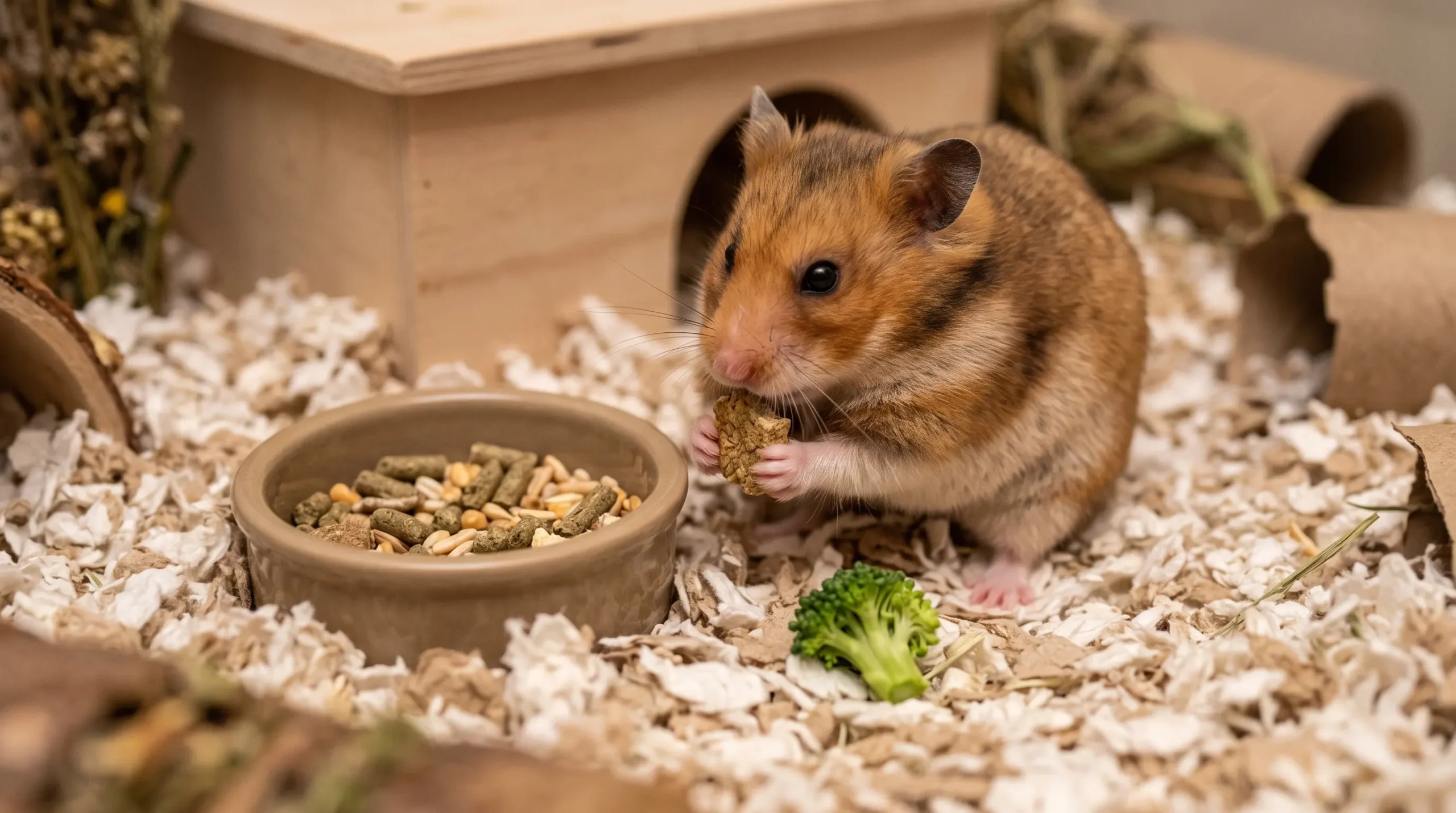
For most healthy pet hamsters, the easiest nutritional foundation is a complete, balanced hamster pellet or laboratory-style block designed for their species.
These foods are formulated to provide essential nutrients in appropriate proportions, making them more reliable than an improvised diet of household foods.
When choosing the main food, look for:
- Species-appropriate formulation: The package should identify the food as suitable for hamsters.
- Complete nutrition: Choose a staple diet rather than a treat, supplement, or forage topping.
- Consistent pieces: Uniform pellets help prevent selective eating.
- Clear feeding directions: Follow the manufacturer’s starting guidance and adjust according to your hamster’s condition and eating habits.
Are Seed Mixes Bad for Hamsters?
Not every seed mix is automatically unsuitable. Some commercially formulated hamster mixes are designed as complete diets and can offer variety.
However, a loose assortment of sunflower seeds, grains, and colorful treats is not necessarily balanced. Hamsters may pick out their favorite fatty or sugary pieces and leave other ingredients behind.
This is why veterinary references such as the Merck Veterinary Manual favor complete pelleted diets over generic seed mixtures.
If you prefer a formulated mix, make sure it’s intended as a complete hamster food, and watch whether your hamster consistently ignores certain components. Don’t assume that a colorful ingredient list proves nutritional balance.
Which Fresh Foods Can Hamsters Eat?
Fresh foods provide variety, but they should remain a small addition to the main diet.
Introduce one new food at a time, starting with a tiny piece. Wash produce thoroughly, serve it plain, and watch for changes in droppings or appetite.
| Food Type | Suitable Examples | How to Offer |
|---|---|---|
| Vegetables | Broccoli, cucumber, bell pepper, squash | Small, washed, plain pieces |
| Leafy greens | Romaine lettuce, endive, dandelion greens | Tiny portions, introduced gradually |
| Fruit | Apple without seeds, pear, small berries | Occasional tiny treats, not daily staples |
| Animal protein | Plain mealworms, crickets, hard-boiled egg | Occasional small portions |
| Seeds and nuts | Plain pumpkin seeds, sunflower seeds, small nut pieces | Limited treats because of their fat content |
For a typical healthy adult, a little fresh vegetable can be offered regularly. The amount should be appropriate to the hamster’s size, and a dwarf hamster may need much smaller pieces than a Syrian.
Fresh produce isn’t a replacement for balanced dry food. Large servings can upset digestion, while hidden leftovers may spoil.
Do Hamsters Need Extra Protein?
Hamsters naturally consume some animal foods, including insects. But a complete formulated diet should already provide their basic protein requirements.
Small portions of plain mealworms, commercially raised feeder insects, or fully cooked, unseasoned egg can provide occasional variety.
Extra protein isn’t automatically better. Growing, pregnant, nursing, or medically unwell hamsters may have different nutritional needs, which should be discussed with an exotic-animal veterinarian.
How Much and How Often Should You Feed a Hamster?
Offer the main food daily, usually in the evening when your hamster becomes active. Use the feeding directions on your chosen product as a starting point.
There’s no reliable universal spoonful or gram amount for every hamster. The right portion depends on:
- Species and body size.
- The nutritional density of the specific food.
- Age and reproductive status.
- Body condition and weight trends.
- How much edible food is already stored in the enclosure.
A Syrian hamster generally needs a larger ration than a much smaller dwarf hamster, but copying a fixed amount from an unrelated feeding chart can still be misleading.
If you’re comparing feeding amounts, our Pet Food Portion Calculator explains why hamsters require species- and product-specific feeding guidance instead of a generic body-weight calorie formula.
Scatter Feeding and Food Hoarding
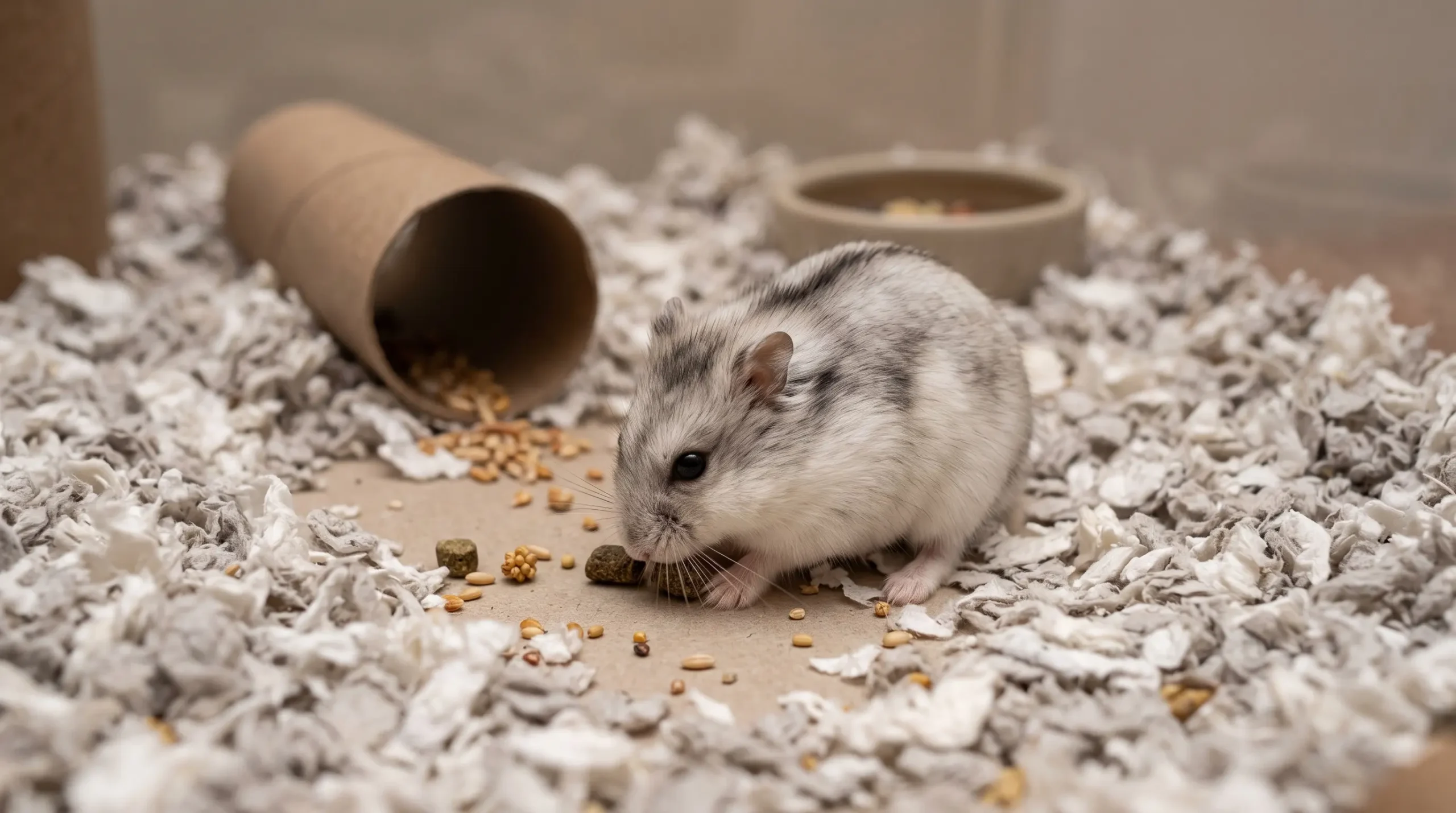
Hamsters naturally carry food in their cheek pouches and store it in hidden areas. This is normal behavior, not necessarily a sign that you’re underfeeding them.
You can scatter some or all of the dry ration through clean bedding or place small portions in safe foraging areas. This encourages your hamster to search for food rather than finding everything in one bowl.
Before increasing the daily amount because food seems to disappear quickly, check whether your hamster has been storing a substantial supply.
During routine checks:
- Remove hidden fresh vegetables or fruit before they spoil.
- Discard wet, moldy, or contaminated food.
- Leave clean, dry food stores undisturbed when possible.
- Monitor your hamster’s weight and body condition rather than relying on the appearance of the bowl alone.
For more on natural hamster behaviors beyond feeding, see our complete hamster care guide.
Do Syrian and Dwarf Hamsters Need Different Diets?
Both Syrian and dwarf hamsters need a balanced staple food, access to fresh water, and limited extras. However, their smaller body sizes and different health tendencies can affect how you portion treats.
Syrian Hamsters
Syrian hamsters are generally larger and may require more food than dwarf species. A complete hamster diet remains the foundation, with modest portions of suitable vegetables and occasional treats.
Even though Syrians are larger, frequent nuts, sunflower seeds, or sugary snacks can still contribute to unwanted weight gain.
Dwarf Hamsters
For dwarf hamsters, particularly Campbell’s Russian dwarfs and some related hybrids, be especially cautious with sugary treats. These hamsters have a recognized predisposition to diabetes.
That doesn’t mean every dwarf hamster has diabetes or that all fresh produce must be avoided. It means low-sugar vegetables are generally a more sensible routine choice than frequent fruit or sweet treats.
Keep the portions genuinely small and use a complete hamster food appropriate for the animal’s needs.
What Foods Should Hamsters Avoid?
Many human snacks are inappropriate for hamsters, even when they seem harmless in small amounts.
Foods to keep off the menu include:
- Chocolate and caffeinated foods or drinks: These contain substances that can cause serious illness.
- Alcohol: Never offer alcoholic drinks or foods containing alcohol.
- Fruit seeds and pits: Remove apple seeds and stone-fruit pits before offering any suitable fruit flesh.
- Rhubarb and grapes: Avoid these; the RSPCA specifically advises against them for hamsters.
- Onion, garlic, raw beans, and unripe tomato: Avoid these foods, as recommended in veterinary hamster feeding guidance.
- Salty or seasoned human snacks: Avoid chips, heavily salted nuts, spicy foods, and seasoned leftovers.
- Sugary treat sticks and sweetened snacks: Products containing honey, molasses, or substantial added sugar are poor everyday choices.
This isn’t a complete list of every possible food hazard. Before offering something unfamiliar, check its ingredients and preparation method.
Our free Food Safety Checker includes hamster-specific guidance for selected foods. It’s a starting reference, not a substitute for veterinary advice when poisoning is possible.
If your hamster has eaten a potentially harmful food, contact an exotic-animal veterinarian promptly. Don’t attempt to induce vomiting or use home remedies.
A Simple Daily Hamster Feeding Routine
A dependable feeding routine doesn’t need a complicated meal plan. For a healthy adult hamster, start with these steps:
- Provide the balanced staple food. Measure an appropriate daily amount according to the food label, species, and your hamster’s condition.
- Add a little fresh variety. Offer a tiny piece of a suitable washed vegetable, particularly when introducing something new.
- Keep treats occasional. Protein extras, seeds, nuts, and fruit shouldn’t crowd out the complete diet. As a general guide, non-staple extras should remain a small minority of the total diet.
- Check stored food. Remove spoiled perishables without routinely destroying clean dry caches.
- Refresh drinking water. Provide clean water at all times and check the bottle or bowl daily.
If your hamster seems to drink very little, remember that some drinking may happen at night. Still, make sure the water supply works correctly. Our guide to why a hamster may not be drinking water explains when this deserves closer attention.
How Can You Tell Whether the Diet Is Working?
Look at your hamster’s condition over time, not just how eagerly they accept treats.
Useful things to monitor include:
- Stable weight and appropriate body condition.
- Consistent interest in the regular staple food.
- Normal, formed droppings.
- Comfortable chewing without drooling or repeatedly dropping food.
- No obvious pattern of eating only favorite treats while leaving the staple food behind.
Weighing your hamster regularly using a suitable small digital scale can help identify changes that aren’t obvious from appearance alone.
Contact an exotic-animal veterinarian promptly if your hamster suddenly stops eating, loses weight unexpectedly, has diarrhea or a wet rear end, becomes unusually weak, or struggles to chew. These signs can reflect illness rather than a simple feeding preference.
Build the Diet Around the Basics
You don’t need a shelf full of hamster treats to provide good nutrition. Start with a reliable complete food, add modest fresh variety, keep sugary and fatty extras limited, and watch what your hamster actually eats and stores.
That way, when your hamster carries another mouthful into its favorite hiding spot, you can enjoy the familiar routine while knowing the daily diet has a sound nutritional foundation.
Sources & Editorial Standards
This guide draws on veterinary and animal-welfare references covering hamster nutrition, formulated diets, safe food choices, and feeding behavior:
- Merck Veterinary Manual — Hamsters
- RSPCA — What to Feed a Pet Hamster
- PDSA — Hamsters as Pets: Diet and Nutrition
- PetMD — Syrian Hamster Care Sheet
- Blue Cross — Hamster Care
Editorial note: Feeding needs vary by hamster species, size, life stage, health, and diet formulation. This article provides general guidance for healthy pet hamsters and is not an individualized veterinary nutrition plan. Seek advice from an exotic-animal veterinarian for pregnancy, illness, unexplained weight changes, or persistent digestive problems.