Mosquito Control in a Hamster Home: Screens, Fans, and Safe Barriers
You spot a mosquito flying around the room where your hamster sleeps. Your first thought might be to grab a mosquito spray, light a repellent coil, or drape some netting over the enclosure.
But with a small animal nearby, how you keep mosquitoes out matters just as much as getting rid of them.
The safest starting point is to keep mosquitoes out with fitted window and door screens, remove nearby standing water, and use physical barriers that preserve your hamster’s ventilation. A fan may help if positioned away from the enclosure, but it should never blow directly onto your hamster. Never apply mosquito repellents or insecticides to your hamster unless an exotic-animal veterinarian specifically directs an appropriate treatment.
How Mosquitoes Can Reach Your Hamster
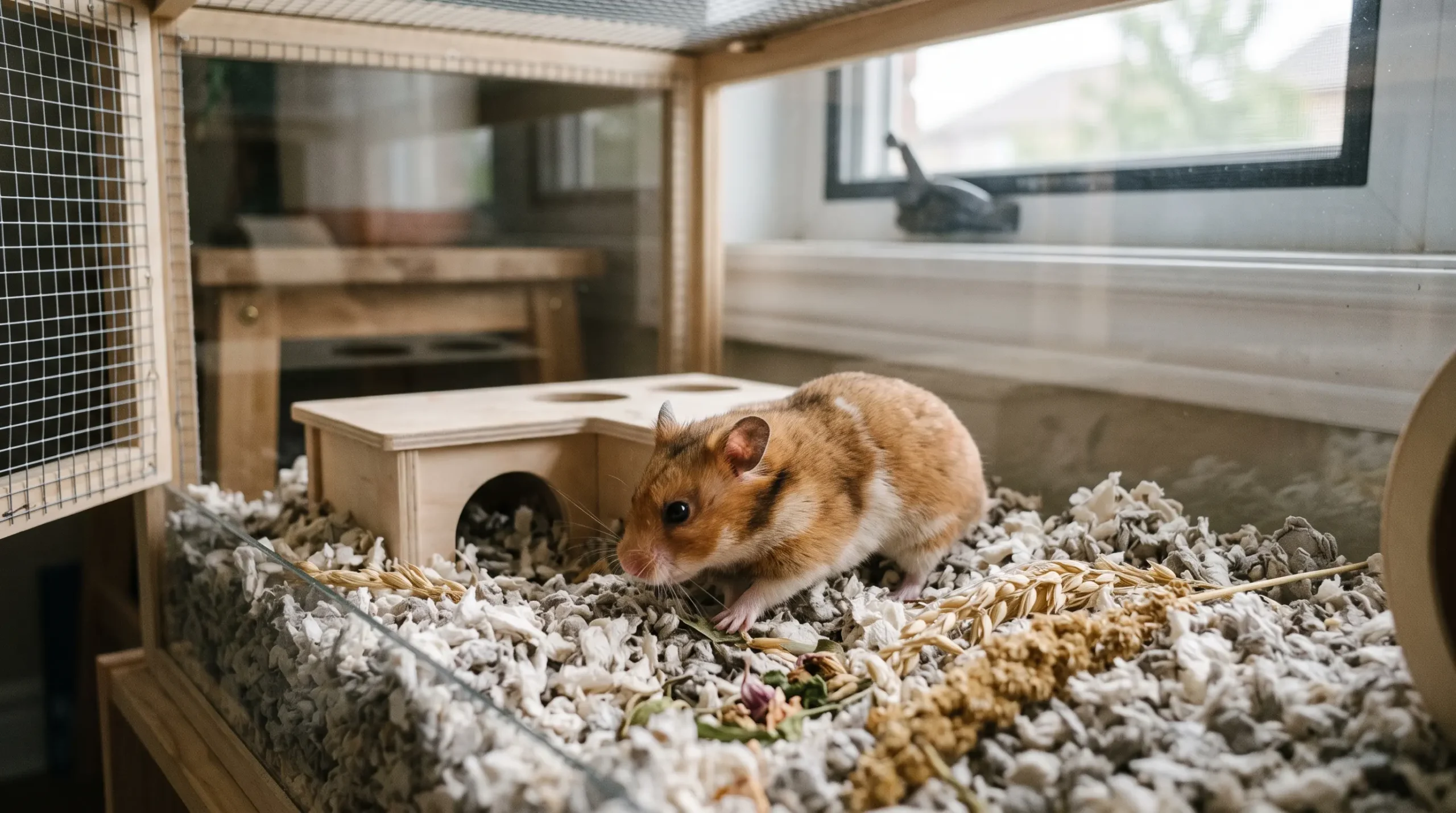
Mosquitoes can enter through open windows, damaged screens, doors left open, or gaps around exterior openings. Once indoors, some may reach a hamster enclosure through ventilation openings or other gaps, depending on its construction.
There are two risks to consider:
- Mosquito contact: A mosquito may reach and bite an exposed area of your hamster’s skin.
- Pest-control exposure: Aerosol droplets, fumes, treated surfaces, or contaminated items may expose your hamster to mosquito-control chemicals.
That second risk deserves particular attention when choosing products for a small animal that cannot leave its enclosure.
The solution isn’t to seal the enclosure. Hamsters need a dry, well-ventilated environment, and poorly designed covers can create additional hazards.
Start With Window and Door Screens
The CDC recommends maintaining window and door screens to help prevent mosquitoes from entering living spaces.
In your hamster’s room, check for:
- Tears, holes, or loose edges in window screens.
- Gaps between screen frames and windows.
- Screen doors that don’t close completely.
- Other unscreened openings where mosquitoes could enter.
Choose screening designed to exclude mosquitoes while allowing normal household ventilation. Repair damaged screens rather than relying on insect spray whenever a mosquito gets inside.
Whenever possible, stop mosquitoes at the building’s openings instead of making the hamster enclosure your primary barrier.
Should You Put Mosquito Netting Over a Hamster Cage?
It’s understandable to want extra protection, but draping ordinary mosquito netting directly over a hamster enclosure isn’t automatically safe.
Potential problems include:
- Restricted ventilation: Dense mesh, overlapping layers, or fabric covering ventilation openings may reduce airflow.
- Chewing and entanglement: A hamster may reach, pull, or chew loose netting and threads.
- Unsafe attachments: Pins, sharp edges, unsecured ties, and clips can create injury or escape hazards.
- False security: Mosquitoes may still enter through gaps while the cover makes the enclosure less comfortable.
Don’t wrap a glass tank or bin enclosure in netting or replace its ventilated lid with dense fabric.
If an additional insect barrier is genuinely necessary, it must be securely mounted, inaccessible to your hamster, and designed to maintain adequate ventilation. Its suitability depends on the enclosure’s construction, not just the mesh size.
Avoid insecticide-treated mosquito nets near the enclosure unless the product’s labeling expressly supports that use and the arrangement has been assessed as appropriate. Netting designed for human beds isn’t automatically suitable for small-pet housing.
For more on enclosure design and ventilation, see our hamster enclosure comparison guide.
Can a Fan Help Keep Mosquitoes Away From a Hamster?
Fans may discourage mosquitoes from flying and landing nearby because moving air makes their flight more difficult.
The University of Florida’s mosquito management guidance includes fans as a practical way to reduce mosquito activity around people. However, this doesn’t mean a fan should blow directly at your hamster.
Position the fan away from your hamster
The RSPCA’s hamster housing guidance recommends a comfortable, dry, draft-free living environment.
If you use a fan:
- Place it on a stable surface away from the enclosure.
- Direct airflow through another part of the room, not at your hamster or its bedding.
- Avoid strong drafts that disturb bedding or the enclosure’s environment.
- Use a fan with a protective grille and keep electrical cables inaccessible.
- Maintain a comfortable, stable room temperature.
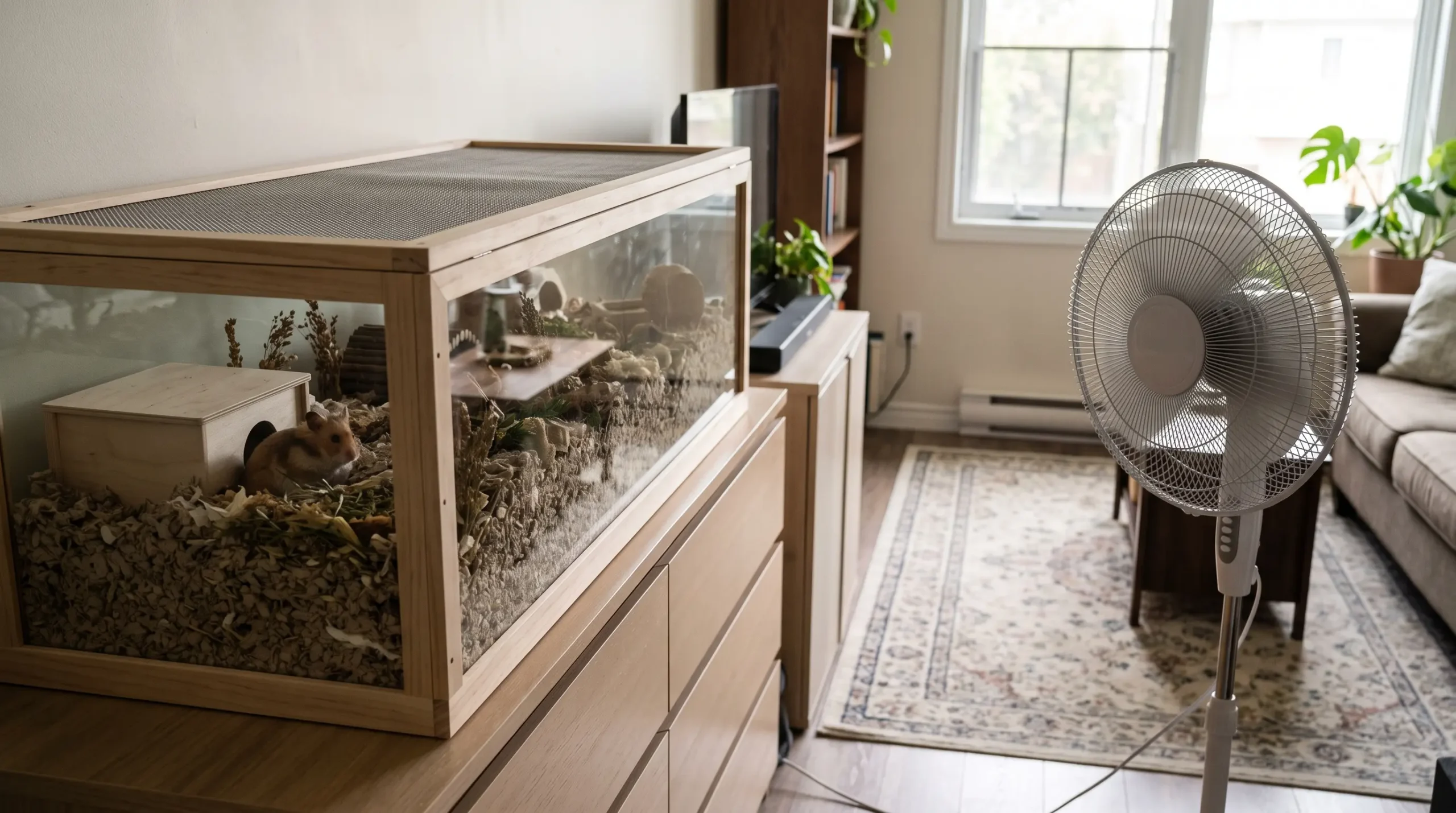
A fan is only a supplementary measure, not a mosquito-proof barrier or a substitute for safe pesticide practices.
It also cannot replace proper temperature control if the room becomes too hot. Our hamster overheating guide explains temperature-related emergencies separately.
Remove Mosquito Breeding Sites Around the Home
Mosquitoes lay eggs in or around standing water, and some species can develop in surprisingly small containers.
The CDC recommends checking water-holding objects weekly and emptying, scrubbing, covering, or disposing of them as appropriate.
Look for:
- Plant saucers near windows or balconies.
- Outdoor buckets and unused containers.
- Water collecting beneath garden equipment.
- Blocked gutters or poorly draining outdoor areas.
- Uncovered rainwater storage containers.
Never remove your hamster’s drinking water to prevent mosquitoes. Keep fresh water available, clean the bottle or bowl regularly, and repair leaks that leave standing water around the enclosure.
Removing breeding sites helps reduce mosquitoes, although it can’t guarantee a mosquito-free home, especially when neighboring properties have standing water.
What About Mosquito Coils, Plug-Ins, and Room Sprays?
These products require particular caution around hamsters. Some release insecticides, smoke, fragrances, or other airborne substances, and your hamster cannot move away if the surrounding air becomes irritating.
Don’t assume a product is appropriate near small animals because its packaging says “natural,” “plant-based,” or “family-friendly.”
Mosquito coils and scented devices
Avoid burning mosquito coils, scented smoke products, and essential-oil diffusers in your hamster’s room as routine mosquito-control methods.
Likewise, don’t place plug-in insecticide vaporizers near the enclosure or assume they’re suitable around hamsters without clear, product-specific safety instructions.
Human repellents containing DEET, picaridin, or essential oils should not be applied to your hamster. The EPA advises against applying repellent products to animals unless the label authorizes animal use.
If you use personal repellent elsewhere, follow its label and wash your hands before handling your hamster’s food, bedding, or accessories.
Our mosquito coil safety guide for dogs and cats discusses those species separately; its guidance shouldn’t be assumed to establish safety for hamsters.
Indoor sprays and foggers
Never spray insecticides directly onto your hamster or into an occupied enclosure.
If chemical treatment becomes necessary after physical prevention measures have been tried, identify the exact product and follow its registered label, including instructions for animal removal, application, ventilation, cleanup, and reentry.
The National Pesticide Information Center recommends removing pets and their belongings from areas being treated and restricting access according to product directions.
Household foggers require particular care: animals must be removed from the home as directed. Covering a hamster cage does not make it safe to leave the animal inside during treatment.
For detailed relocation and reentry planning, see our guide to protecting hamsters during indoor pest control.
Safer Placement and Cleanup in the Hamster Room
Even a suitable mosquito-control method can become hazardous if your hamster can reach it or if equipment is placed carelessly.
Keep these precautions in mind:
- Physical barriers: Keep sharp screen offcuts, loose fasteners, and adhesive away from your hamster.
- Fans: Secure them properly and keep cords and direct airflow away from the enclosure.
- Traps: Avoid exposed sticky surfaces, accessible electrical traps, and dangling materials near the hamster.
- Chemical products: Store containers securely and follow label-specific separation, ventilation, cleanup, and reentry instructions.
After pesticide treatment, don’t return your hamster or potentially contaminated food bowls, toys, and bedding until the required precautions and product-specific cleaning instructions have been followed.
If you hire a pest-control professional, mention your hamster before treatment. Ask exactly which areas will be treated, which products will be used, and when the animal and its equipment can safely return.
A clear, product-specific explanation is more useful than a general promise that a treatment is “pet-safe.”
What If You Already Have Mosquitoes in the Room?
Start by checking how they’re getting inside. Close open entry points and repair damaged screens.
For one or two visible mosquitoes, manual removal or capture away from the enclosure may be enough. Keep swatters, collection tools, and traps out of your hamster’s reach.
If mosquitoes keep appearing, recheck door gaps, screens, and standing-water sources before considering chemical treatment.
A persistent infestation may require professional help, but spraying the enclosure or surrounding walls isn’t an appropriate first response. Arrange safe protection or relocation for your hamster before any necessary pesticide application.
What If a Mosquito Bites Your Hamster?
A suspected mosquito bite isn’t automatically an emergency, but not every bump or skin change is an insect bite.
Watch for persistent scratching, swelling, skin irritation, or unusual behavior.
Contact an exotic-animal veterinarian if swelling is significant, irritation persists, or your hamster develops an unusual skin lesion, stops eating, or becomes less active.
Difficulty breathing, collapse, or severe weakness requires urgent veterinary assessment.
Don’t apply human anti-itch creams, repellents, essential oils, or leftover medications without veterinary direction.
If mosquito-control chemicals may have reached the enclosure, treat this as a potential chemical exposure rather than an ordinary bite. Identify the substance and contact your veterinarian promptly.
Our hamster insecticide-fume exposure guide
A Quick Mosquito-Prevention Check
Before bedtime, run through these five questions:
- Are the windows and doors properly screened and closed?
- Is the hamster enclosure secure and well ventilated?
- Are fans and electrical cords safely positioned away from the hamster?
- Have nearby standing-water sources been emptied, covered, or maintained?
- Are mosquito chemicals, scented devices, and traps inaccessible to the hamster?
There’s no need to spray the room simply because mosquitoes are active outdoors.
The Bottom Line
In a hamster home, mosquito prevention works best when it starts outside the enclosure.
Maintain window screens, close entry points, and reduce standing water before considering chemical products. A carefully positioned fan may help, provided it doesn’t create drafts around your hamster.
Extra netting should never introduce chewing, entanglement, or ventilation hazards. The goal is to keep mosquitoes out of the room while preserving a safe, comfortable environment for your hamster.
Veterinary and pesticide safety disclaimer: This article provides general prevention information, not a guarantee that any particular barrier, fan, repellent, or pesticide is safe for every hamster. Follow product labels, maintain appropriate enclosure ventilation, and consult an exotic-animal veterinarian for suspected exposure, persistent skin problems, or illness.
Sources & Editorial References
- CDC — Mosquito Control at Home
- CDC — About Mosquito Nets
- University of Florida IFAS Extension — Mosquitoes and Their Control
- University of California IPM — Mosquitoes
- RSPCA — Creating a Good Home for Hamsters
- U.S. EPA — Using Insect Repellents Safely and Effectively
- National Pesticide Information Center — Pets and Pesticide Use