Best Dog Puzzle Toys for Different Chewing Styles (2026)
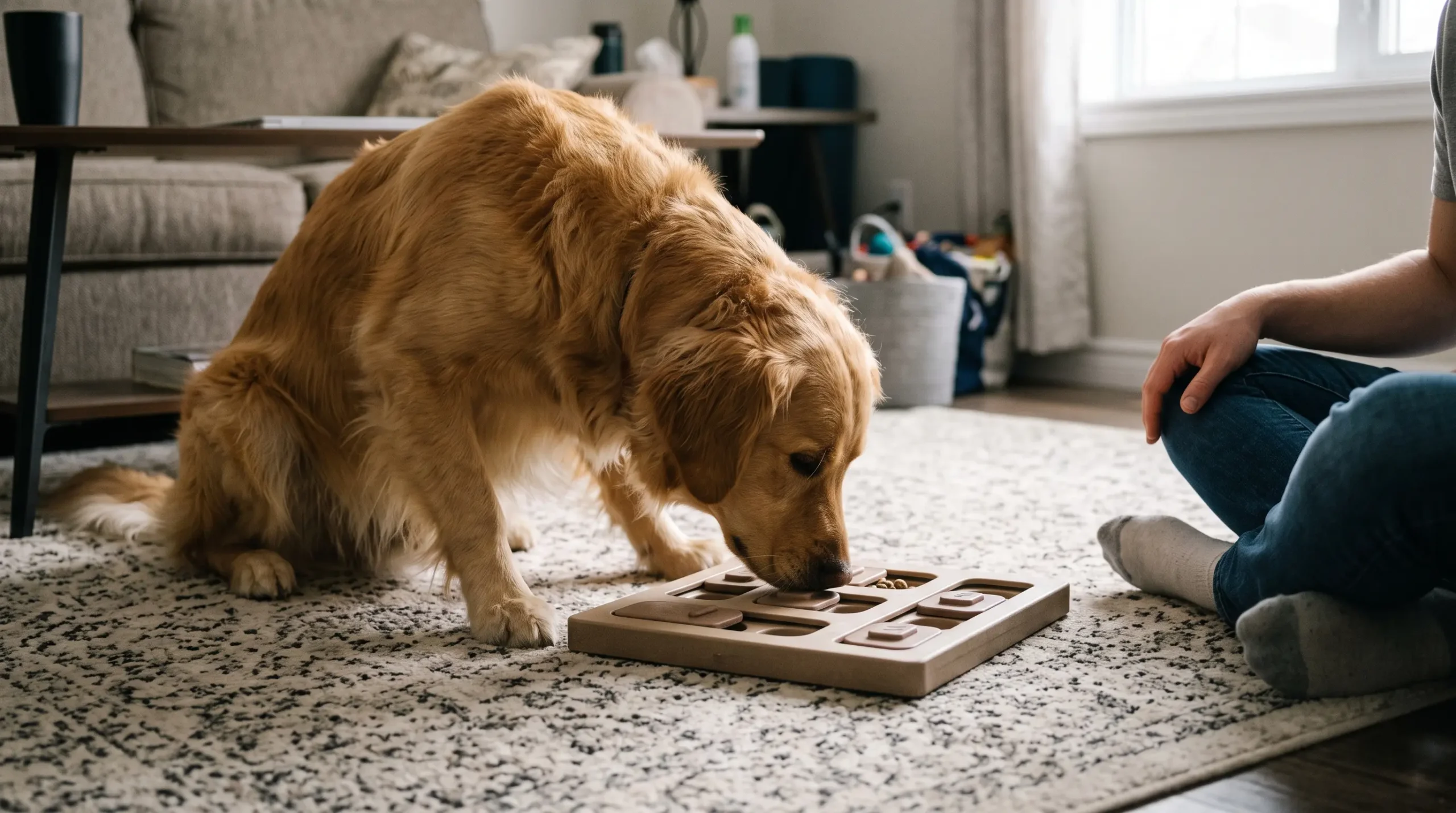
One dog happily sniffs and slides a puzzle’s compartments. Another grabs the same toy and starts chewing a plastic piece. The best dog puzzle toy isn’t necessarily the most complicated one.
Match the toy to how your dog plays: careful nose-and-paw problem solving, pushing and rolling, licking, moderate chewing, or powerful chewing. Puzzle boards suit dogs that move parts without dismantling them. Dogs that rely heavily on their jaws may be better matched to appropriately sized food-stuffable rubber toys.
Our quick picks: Nina Ottosson Dog Smart for gentle beginners; Hide N’ Slide for more involved problem solving; Starmark Bob-A-Lot for push-and-nudge players; West Paw Toppl for lickers and moderate chewers; and KONG Extreme for powerful chewers.
How we selected these products: This is a research-based buying guide, not a hands-on test. We compared manufacturer-documented interaction styles, chewing risks, loose parts, food compatibility, cleaning, sizing, and value. No toy is chew-proof, and prices and availability may change.
Best Dog Puzzle Toys: Quick Comparison
| Product | Best Match | How It Works | Main Limitation |
|---|---|---|---|
| Nina Ottosson Dog Smart | Gentle beginners | Lift removable covers to find treats | Loose pieces must not be chewed |
| Nina Ottosson Hide N’ Slide | Nose-and-paw solvers | Move sliding and swiveling parts | Composite board is not a chew toy |
| Starmark Bob-A-Lot | Dogs that push and nudge | Tip a weighted dispenser to release kibble | Hard construction is unsuitable for dedicated chewing |
| West Paw Toppl | Lickers and moderate chewers | Extract food from a flexible rubber cup | Not designed for power chewers |
| KONG Extreme | Power chewers | Work food from thick hollow rubber | Less complex as a mechanical puzzle |
These toys solve different problems. For a strong chewer, fewer moving parts may be a better trade-off than a higher puzzle difficulty rating.
Our 5 Dog Puzzle Toy Picks for 2026
1. Nina Ottosson Dog Smart — Best Beginner Puzzle for Gentle Players
Best for: Dogs learning to find treats with their noses and paws. Skip it if: Your dog grabs, crushes, or tries to swallow plastic components.
This level 1 puzzle has nine treat compartments covered by nine removable, bone-shaped pieces. Dogs nudge or lift the covers to uncover food. Tilting the covers makes them easier to grab, so beginners can learn without a complicated sequence.
Pros
- Simple, adjustable first challenge.
- Nine separate reward locations.
- Easy to wash with warm water and mild soap.
- A practical entry point before buying advanced puzzles.
Cons
- All nine covers are loose parts that need supervision and storage.
- Experienced dogs may solve it quickly.
- Not suitable for dogs that chew or swallow puzzle pieces.
- Less convenient for wet foods than a washable rubber food toy.
Safety and value: Outward Hound says dogs should not chew the board or covers. Put the pieces away after each session. It offers good beginner value for gentle players, but not for dogs likely to destroy the parts.
Alternative: Hide N’ Slide adds challenge without removable puzzle pieces.
View the official Nina Ottosson Dog Smart specifications.
2. Nina Ottosson Hide N’ Slide — Best for Nose-and-Paw Problem Solvers
Best for: Dogs that enjoy moving mechanisms deliberately. Skip it if: Your dog bites or forces puzzle parts open.
This level 2 puzzle has 14 treat compartments accessed through swiveling flippers and sliding blocks. Its moving parts remain attached to the plastic-and-wood-composite board, unlike Dog Smart’s removable covers.
Pros
- More varied and sequential actions than a beginner board.
- Non-removable parts simplify storage.
- Difficulty changes with treat placement.
- Non-slip base helps keep the board in place.
Cons
- Not built for chewing, despite its attached pieces.
- May frustrate dogs new to puzzles.
- Tracks and compartments require careful cleaning.
Safety and value: The upgrade is in problem-solving variety, not chew resistance. For a calm dog that already understands simple puzzles, it may offer more repeat use than another beginner board.
Alternative: Nina Ottosson Dog Brick offers flip lids, sliders, and removable covers, but those separate pieces are a drawback for dogs inclined to chew.
View the official Hide N’ Slide product details.
3. Starmark Bob-A-Lot — Best for Dogs That Prefer Pushing and Rolling
Best for: Food-motivated dogs that nudge toys with their noses or paws. Skip it if: Your dog chews hard plastic or you need a quiet toy on hard floors.
Bob-A-Lot has a weighted base that wobbles upright as your dog pushes it. Dry food moves through adjustable openings, allowing you to change how readily it dispenses. It comes in small and large sizes.
Pros
- Encourages movement rather than stationary puzzle solving.
- Two adjustable openings vary dispensing difficulty.
- Works with compatible dry kibble or treats.
- No loose puzzle pegs to collect afterward.
Cons
- Hard construction is not appropriate for dedicated chewing.
- Can be noisy and bump into furniture.
- Internal chambers need more thorough cleaning than an open cup.
- Not intended for wet-food stuffing.
Safety and value: Choose the appropriate size and use it in a clear, supervised play area. It makes sense for dogs that enjoy working for kibble by moving a toy—not dogs determined to bite through the dispenser.
Alternative: West Paw Toppl is better suited to dogs that prefer licking food from a mostly stationary toy.
Explore the Starmark product range and review Bob-A-Lot features and sizes.
4. West Paw Toppl — Best for Lickers and Moderate Chewers
Best for: Dogs that enjoy licking or extracting food from flexible rubber. Skip it if: Your dog rapidly tears rubber or is a determined power chewer.
Toppl is an open-top enrichment toy made from West Paw’s Zogoflex material. It can hold suitable soft food or compatible dry food, and fillings can be frozen when appropriate. West Paw rates it for moderate chewers, not power chewers.
It comes in Small, Large, and XL, with listed capacities of approximately 1/4 cup, 3/4 cup, and 1 1/4 cups. You can also twist together compatible Small + Large or Large + XL toys for a different dispensing challenge, but that requires a second purchase.
Pros
- Versatile for licking, stuffing, and suitable frozen fillings.
- Wide opening is convenient to fill and clean.
- Top-rack dishwasher safe.
- Three sizes with different feeding capacities.
Cons
- Not rated for power chewers.
- Frozen fillings may be unsuitable for dogs with dental sensitivity.
- Interlocking play requires two compatible toys.
- May cost more than a simple beginner puzzle board.
Safety and value: Toppl offers useful variety if you frequently serve food enrichment, particularly moist foods. Its easy cleaning is a practical advantage. Stop using it if your dog damages the rubber.
Alternative: KONG Classic has a narrower hollow shape for average chewers. Consider KONG Extreme for more powerful chewing.
Check the official West Paw Toppl sizes, features, and availability.
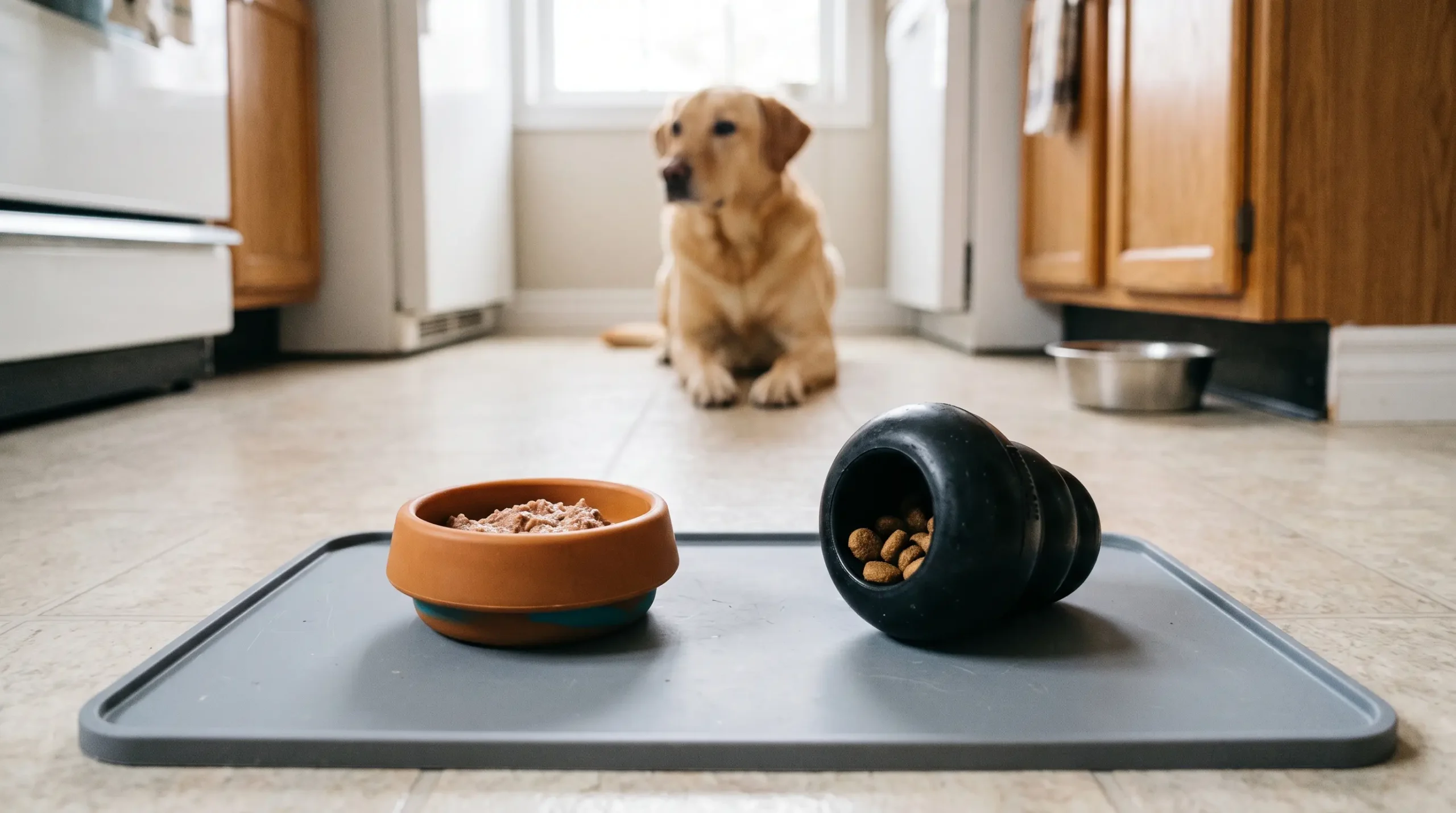
5. KONG Extreme — Best Food-Enrichment Toy for Power Chewers
Best for: Strong-jawed dogs that enjoy extracting food from rubber toys. Skip it if: Your dog needs a softer toy for dental reasons or you want a multi-step sliding puzzle.
KONG Extreme uses the company’s black natural-rubber formula designed for power chewers. Instead of moving mechanical parts, dogs lick and manipulate food from its hollow center. You can adjust the challenge with suitable kibble, dog-safe fillings, or appropriately prepared frozen food.
Choose from multiple sizes using KONG’s guidance for weight and chewing behavior. The manufacturer advises that power chewers may need to size up for safety and durability.
Pros
- Rubber formulated specifically for strong chewers.
- Versatile food-stuffing options.
- Multiple sizes and no removable puzzle-board pieces.
- Also suitable for appropriate interactive fetch play.
Cons
- Less mechanical complexity than a puzzle board.
- Easy fillings may be removed quickly.
- Narrow interior needs thorough washing.
- Even durable rubber can be damaged; very hard or frozen fillings may not suit sensitive teeth.
Safety and value: Its advantage is a design matched to powerful chewing, not indestructibility. Supervise play, inspect the rubber, and replace a damaged toy. For dogs that destroy hard-plastic puzzles, it may be a better purchase than another board.
Alternative: KONG Extreme Goodie Bone offers another treat-holding shape for strong chewers; red KONG Classic is intended for average chewers.
View the official KONG Extreme product and sizing information.
How to Match a Puzzle Toy to Your Dog’s Chewing Style
Size and breed alone won’t tell you how a dog uses a puzzle. Watch whether your dog works toward the food or tries to dismantle the toy.
Gentle sniffers and careful problem solvers
For dogs that move pieces without chewing them, start with Dog Smart and progress to Hide N’ Slide when ready. Supervise removable components.
Dogs that love pushing and nudging
For dogs that prefer movement across the floor, Bob-A-Lot is the better match—provided they nudge rather than bite its hard shell.
Lickers and moderate chewers
Toppl is convenient for soft-food licking; KONG Classic offers a narrower food-extraction challenge for average chewers.
Power chewers and toy destroyers
Dogs that attack board pieces may be better suited to a correctly sized KONG Extreme. If a dog tears off and swallows even sturdy rubber fragments, none of these toys should be assumed safe for unsupervised use; ask your veterinarian about safer enrichment options.
Five Buying Checks That Matter More Than Difficulty Level
1. Chewing behavior versus puzzle-solving behavior
A level 3 puzzle isn’t necessarily tougher than a level 1 puzzle. Difficulty describes the problem-solving task, not chew resistance. Choose construction based on your dog’s actual behavior.
2. Size and choking risks
Choose a toy too large to swallow or lodge in the back of the mouth, following manufacturer guidance. Inspect removable pegs and lids; stop play if anything breaks or goes missing.
3. The food you’re planning to use
Bob-A-Lot dispenses suitable dry food, while rubber toys such as Toppl can hold moist fillings. Decide whether you need a kibble dispenser, hidden treats, or a licking activity before buying.
Include puzzle food in your dog’s daily allowance. Our Pet Food Portion Calculator can help with general estimates, while a veterinarian-prescribed diet takes priority. Never use peanut butter containing xylitol, also called birch sugar.
4. Cleaning and maintenance
Wash food-contact surfaces according to the manufacturer’s instructions. Dishwasher-safe rubber toys can be convenient for wet food; puzzle tracks and internal dispenser chambers may need more detailed cleaning.
5. Cost per useful session
A cheap puzzle is poor value if your dog breaks it immediately. An expensive dispenser isn’t worth the premium if your dog prefers a basic rubber toy. Pay for safer fit, easier cleaning, or adjustability your dog will actually use—not complexity alone.
Safety Rules for Dog Puzzle Toys
VCA guidance on enrichment and activity toys emphasizes appropriate sizing, durable construction, suitable difficulty, and supervision when introducing food puzzles.
Before and during play:
- Check for cracks, tears, sharp edges, and missing pieces.
- Begin with an achievable challenge to avoid frustration.
- Supervise new toys and any product with removable components.
- Stop if your dog bites off, chews, or swallows toy material.
- Separate pets if food-filled toys create guarding or competition.
- Clean and dry toys as directed after use.
Puzzles provide enrichment, but they do not automatically resolve anxiety or destructive chewing. Persistent behavior concerns may require training or veterinary advice.
If your dog struggles to calm down after exciting activities, our mat-settling training guide covers a complementary skill. For puppies that nip hands or clothes, see our separate puppy biting guide.
Frequently Asked Questions
Are dog puzzle toys safe for aggressive chewers?
Some rubber food toys are designed for strong chewers, but many plastic boards aren’t. Choose the right size and chewing rating, supervise use, and replace damaged toys. No toy is indestructible.
Should I start with an easy or difficult puzzle?
Start easy enough for your dog to succeed, then increase the challenge if the toy still suits their play style. Greater difficulty doesn’t mean greater durability.
Can I use regular dog food in a puzzle toy?
Yes, if the toy supports it. Some take dry kibble; suitable rubber toys can also hold wet food. Measure the amount and count it toward daily feeding.
Can a dog puzzle toy replace exercise or training?
No. Food puzzles provide mental enrichment alongside appropriate exercise, rest, social interaction, and training.
Final Recommendation: Buy for the Way Your Dog Plays
Choose Dog Smart for careful beginners and Hide N’ Slide for dogs ready for more involved nose-and-paw work. Pick Bob-A-Lot for enthusiastic nudgers, Toppl for lickers and moderate chewers, and a properly sized KONG Extreme for powerful chewers.
The best puzzle isn’t the one that takes longest to solve. It’s the one your dog can enjoy without unsafe chewing.
Sources & Editorial References
This independent comparison is based on manufacturer specifications and veterinary enrichment guidance. Pet Nurture Zone did not conduct hands-on durability testing. Designs, prices, and availability may change.
- Outward Hound — Nina Ottosson Dog Smart
- Outward Hound — Nina Ottosson Hide N’ Slide
- Starmark — Interactive Dog Toy Product Range
- Starmark Bob-A-Lot — Features and Sizes
- West Paw — Toppl Treat Toy
- KONG — Extreme Natural Rubber Toy
- KONG — Product Selection and Sizing FAQ
- VCA Animal Hospitals — Enriching Your Pet’s Environment With Food
- VCA Animal Hospitals — Enrichment and Activity Toys