How to Protect a Hamster During Indoor Pest Control: Relocation, Air Quality & Bedding Safety
The pest-control appointment is booked, and your hamster’s enclosure is in the room being treated. Moving the animal is only part of the plan: bedding, stored food, wooden hides, and other supplies can also be exposed.
Protect the hamster and its habitat before treatment begins. The right precautions depend on the exact pesticide and how it’s applied—not a general promise that a room will be “pet-safe” afterward.
Quick answer: Remove your hamster from the treatment area before pesticide application, and relocate the enclosure and supplies when practical. Follow the product label for drying, ventilation, and re-entry. Never rely on smell or a universal waiting time. Don’t reuse bedding, food, water, or porous items that may have been contaminated without product-specific guidance.
First, Find Out What Pest Treatment Is Being Used
Ask the applicator for the product name, label, and application method before arranging your hamster’s move. Different treatments create different exposure routes.
| Treatment | Hamster Plan | Main Concern |
|---|---|---|
| Enclosed bait or gel | Keep your hamster away during application and make every bait placement inaccessible, including if the hamster escapes. | Contact or ingestion. |
| Targeted or crack-and-crevice spray | Remove the hamster and relevant supplies from the treated room; follow all label re-entry directions. | Spray drift, wet residue, contaminated objects. |
| Dust or powder | Keep the hamster, bedding, food, and enclosure items outside the treatment area. | Airborne dust and deposits on porous surfaces. |
| Space spray or total-release fogger | Follow the label’s evacuation requirements; total-release foggers require pets to leave the treated residence or unit. | Airborne pesticide and settled residue. |
The exact label determines where the product can be applied, how long the area remains restricted, and what ventilation or cleaning is needed. Our guide to reading pesticide labels around pets explains where to find these instructions.
Relocate the Hamster—and Protect Its Environment
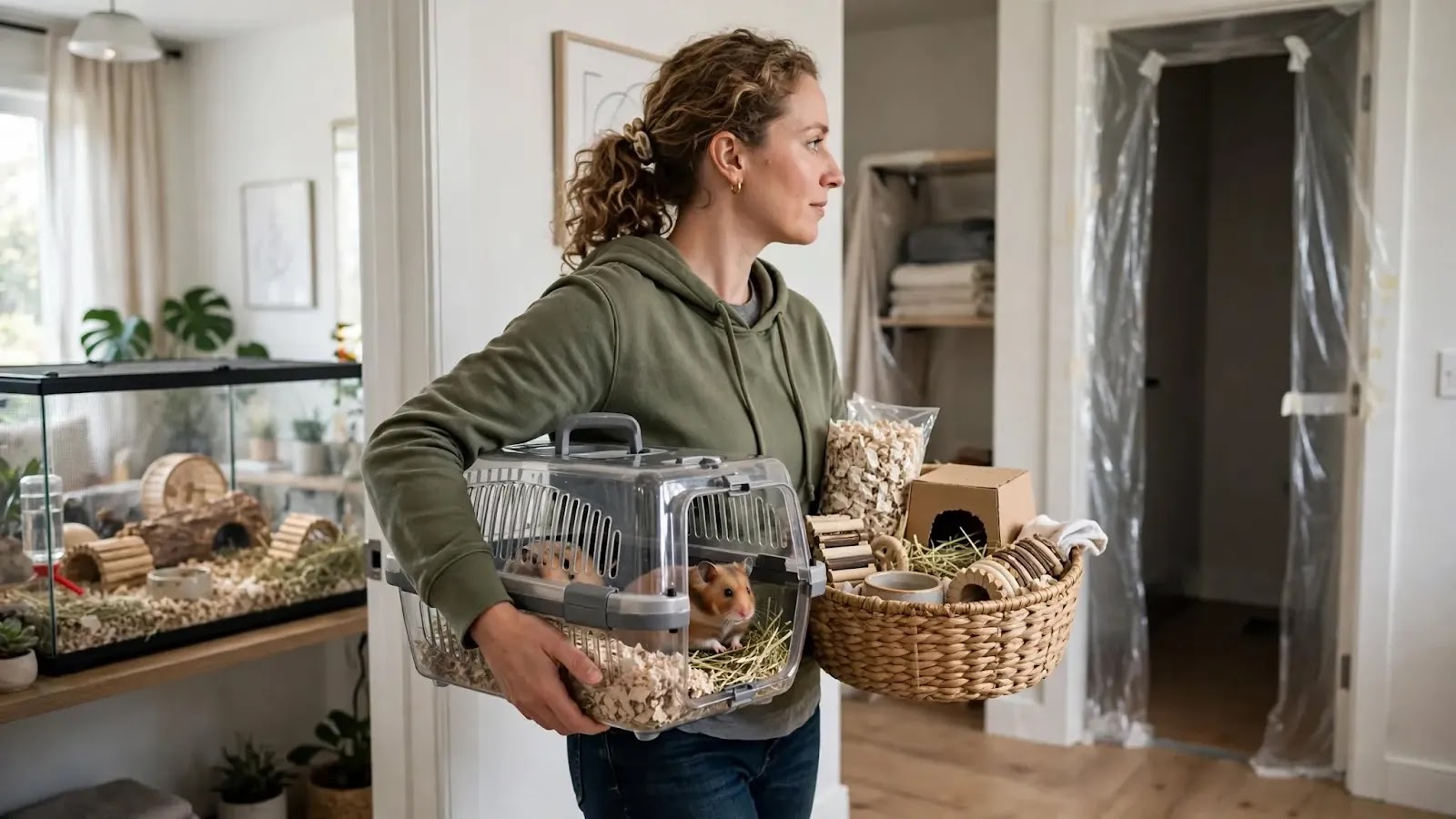
Arrange relocation before anyone begins preparing or applying pesticide. The National Pesticide Information Center recommends removing pets, bedding, toys, food bowls, and other pet belongings from treatment areas.
If You Can Safely Move the Entire Enclosure
Moving the complete habitat to a genuinely untreated location preserves familiar bedding and hiding places. But don’t carry a heavy glass tank or large enclosure in a way that could injure your hamster or break the habitat. If you cannot move it safely, use a separate temporary setup.
If the Main Enclosure Has to Stay Behind
Move your hamster into a secure, well-ventilated temporary enclosure appropriate for the time away. Provide clean, uncontaminated familiar bedding, a hide, suitable food, and reliable fresh water. Include safe familiar items and exercise opportunities if the stay will be longer.
A transport carrier is for a short transfer, not extended housing. Keep the temporary habitat quiet, secure, and away from extreme temperatures; never leave your hamster in a parked car.
Move Hamster Supplies Too
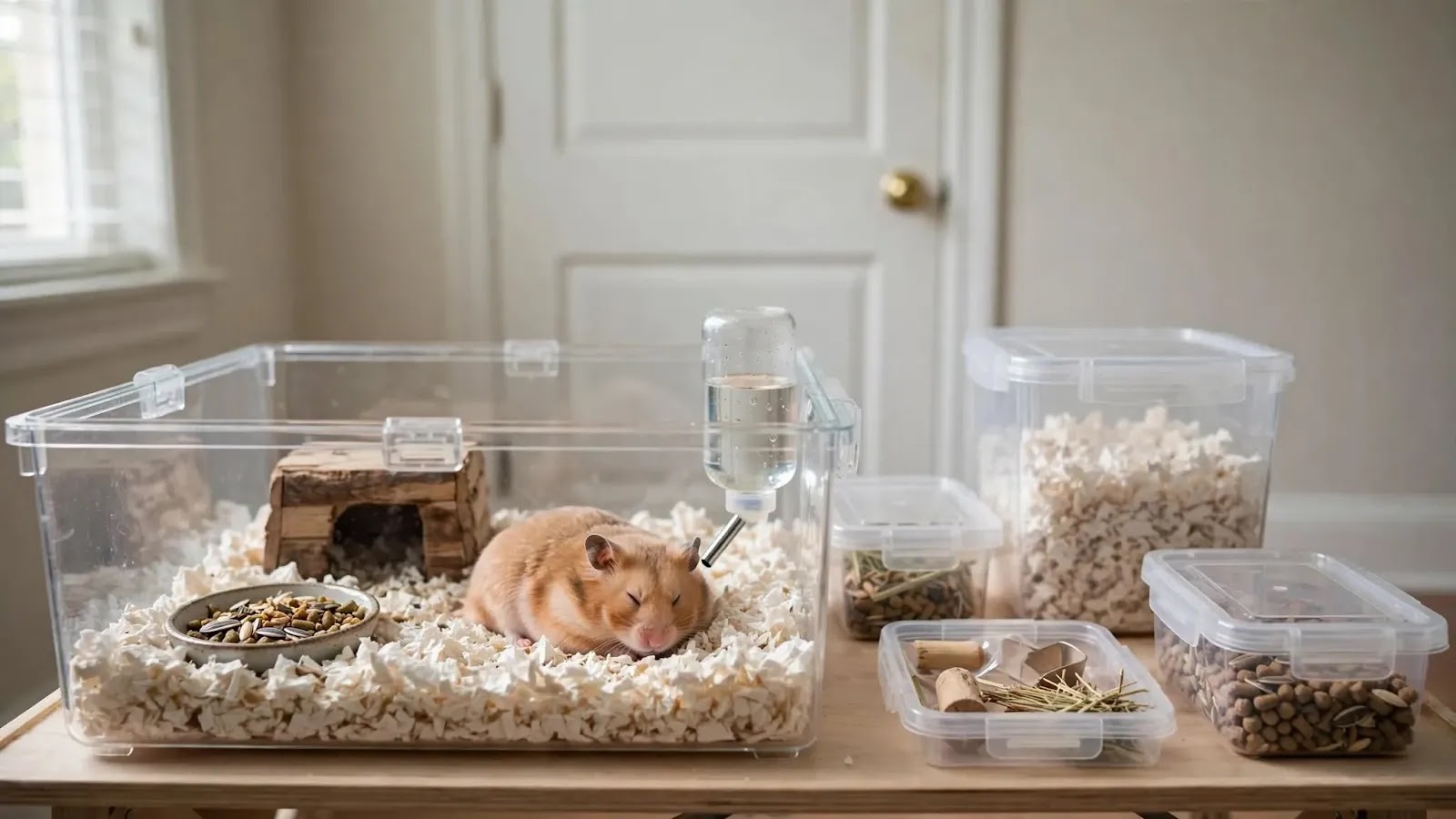
Take exposed supplies out of the treatment zone when practical, especially:
- Open bedding, nesting material, food, treats, and water.
- Food scoops, water bottles, and dishes.
- Chews, cardboard tunnels, and movable wooden hides.
- Carriers and dedicated enclosure-cleaning tools.
Porous materials are much easier to protect beforehand than to assess for residue afterward.
What If the Enclosure Is Too Large to Move?
Tell the pest-control company before the appointment. Ask whether the hamster’s room can be excluded or a more targeted method used. If not, arrange safe temporary housing for the hamster and protect or remove supplies as the product instructions require.
A blanket over the enclosure is not a substitute for relocation. Fabric cannot be assumed to block pesticide exposure and may restrict airflow. Never leave your hamster in a treated room contrary to the label’s pet-removal instructions.
Air Quality and Re-Entry: Follow the Label, Not the Smell
Some localized treatments may permit pets to stay in a truly untreated part of a home if the label and application plan allow it. Total-release foggers are different: everyone, including pets, must leave the treated residence or unit for the label-required period, then ventilate as directed. The U.S. EPA’s fogger safety guidance explains these evacuation and ventilation requirements.
Don’t use a closet, an adjacent corner, or a cage cover as protection from a space treatment. Don’t use pesticide odor to judge when it’s safe to return.
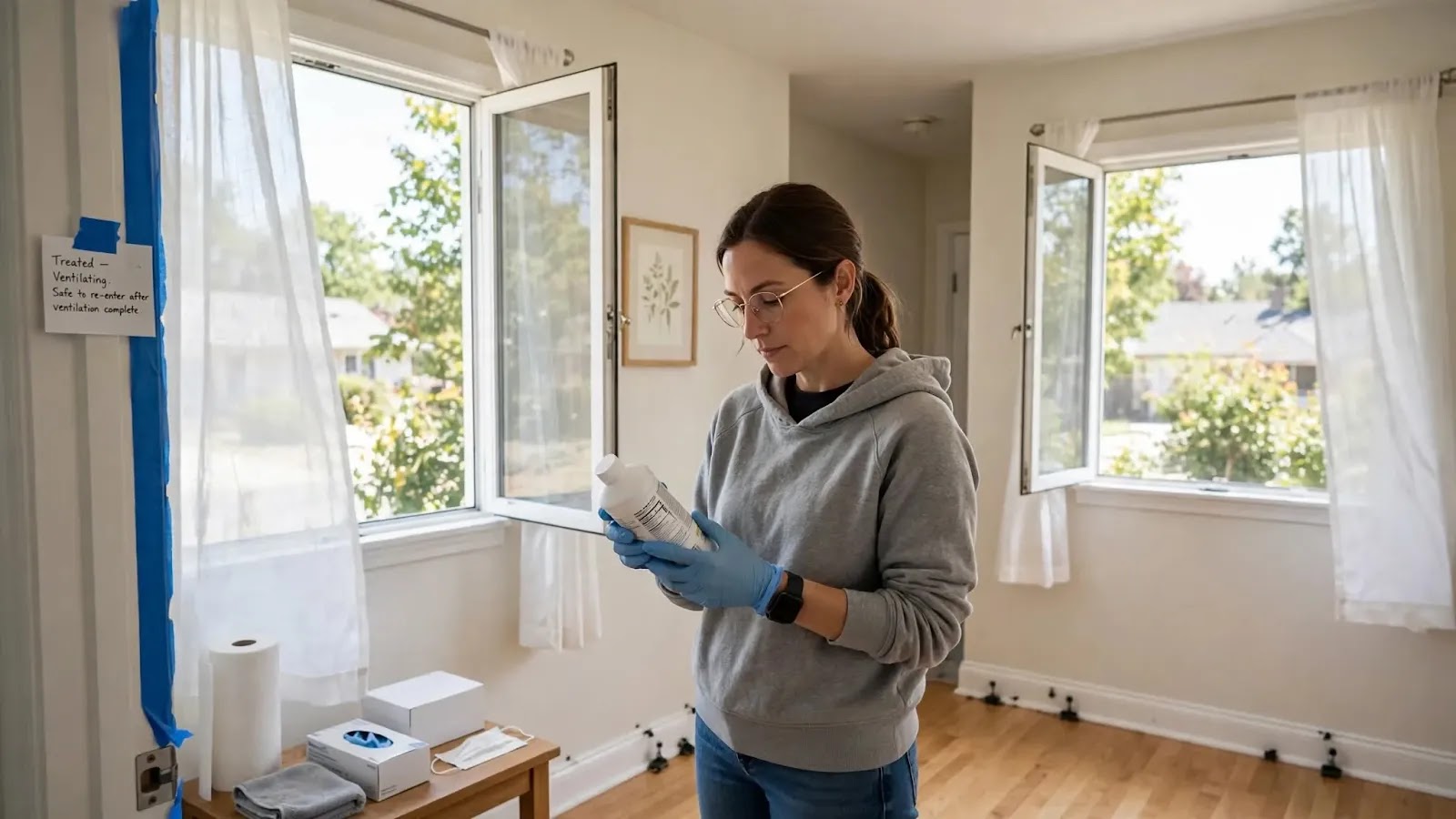
Before bringing your hamster back, confirm that:
- Application is finished and all label-required waiting or drying time has passed.
- Required ventilation and cleanup are complete.
- No accessible spill, wet residue, loose dust, or displaced bait remains around the enclosure.
- The enclosure, bedding, food, water, and equipment to be used are uncontaminated.
There is no universal “four-hour rule” for all indoor pesticides. Follow the instructions for the specific product and treatment.
What Should You Do With Bedding, Food, and Cage Items?
Uncontaminated supplies that were removed before treatment generally don’t need replacing simply because pest control occurred elsewhere.
If bedding, nesting tissue, cardboard, exposed food, or porous wood was sprayed, dusted, or otherwise contaminated, don’t return it to the hamster while guessing that it is safe. These materials may be difficult to clean reliably. Follow product-specific disposal guidance; replace contaminated food and drinking water.
For hard, washable enclosure parts, check the pesticide label and ask the manufacturer or applicator about the appropriate cleaning method. Avoid homemade solvent mixtures or unverified decontamination steps. Wash your hands after handling treated surfaces and before touching the hamster or its supplies.
For ordinary bedding and habitat choices, see our complete hamster care guide.
Keep Baits and Traps Inaccessible Even After Treatment
Baits and traps may remain in place long after the hamster returns. Consider the possibility of an accidental escape: could your hamster reach a station, chew a rodenticide bait, or become caught in a mechanical or adhesive trap?
A hamster is itself a rodent, so accessible rodenticide is particularly concerning. Ask for placements that remain genuinely inaccessible, even if a cage door is accidentally left open.
For cockroach-specific prevention and bait placement, see our roach-control guide for hamster homes.
Do Not Assume “Natural” Means Hamster-Safe
Botanical sprays, essential oils, powders, and homemade mixtures can still create inhalation, ingestion, or contact hazards. A “natural” or “pet-friendly” claim does not replace the actual product label.
Never apply household pesticides directly to hamster bedding or enclosure contents unless the exact product is specifically labeled for that use.
What to Ask the Pest-Control Company
Tell the company that a hamster lives in the home, and ask:
- Which exact products and application methods will be used?
- Which rooms and surfaces will be treated?
- Must the hamster leave the room or the entire residence?
- Should the enclosure and supplies be removed?
- What drying, ventilation, re-entry, and cleanup instructions apply?
- What if pesticide reaches bedding or cage equipment?
Request the product name and label information instead of relying on a general assurance that the treatment is safe for pets.
If You Think Your Hamster Was Exposed
If your hamster may have inhaled pesticide, contacted residue, eaten contaminated food, or reached bait, prevent further exposure if you can do so safely. Contact a veterinarian experienced with small mammals or an animal poison-control service promptly, even if symptoms are not yet obvious. Keep the product label and treatment details available.
Don’t give milk, oil, human medication, or a homemade antidote. Don’t bathe or attempt to decontaminate your hamster without product-specific veterinary instructions.
Seek emergency veterinary care for difficult breathing, tremors, seizures, collapse, severe weakness, major loss of coordination, or markedly reduced responsiveness.
The safest plan begins before treatment: relocate your hamster, protect the bedding and supplies, follow the exact pesticide label, complete ventilation and cleanup, and return the hamster only when both the room and habitat are ready.