Is My Fish Tank Cycled? How to Confirm Before Adding Fish
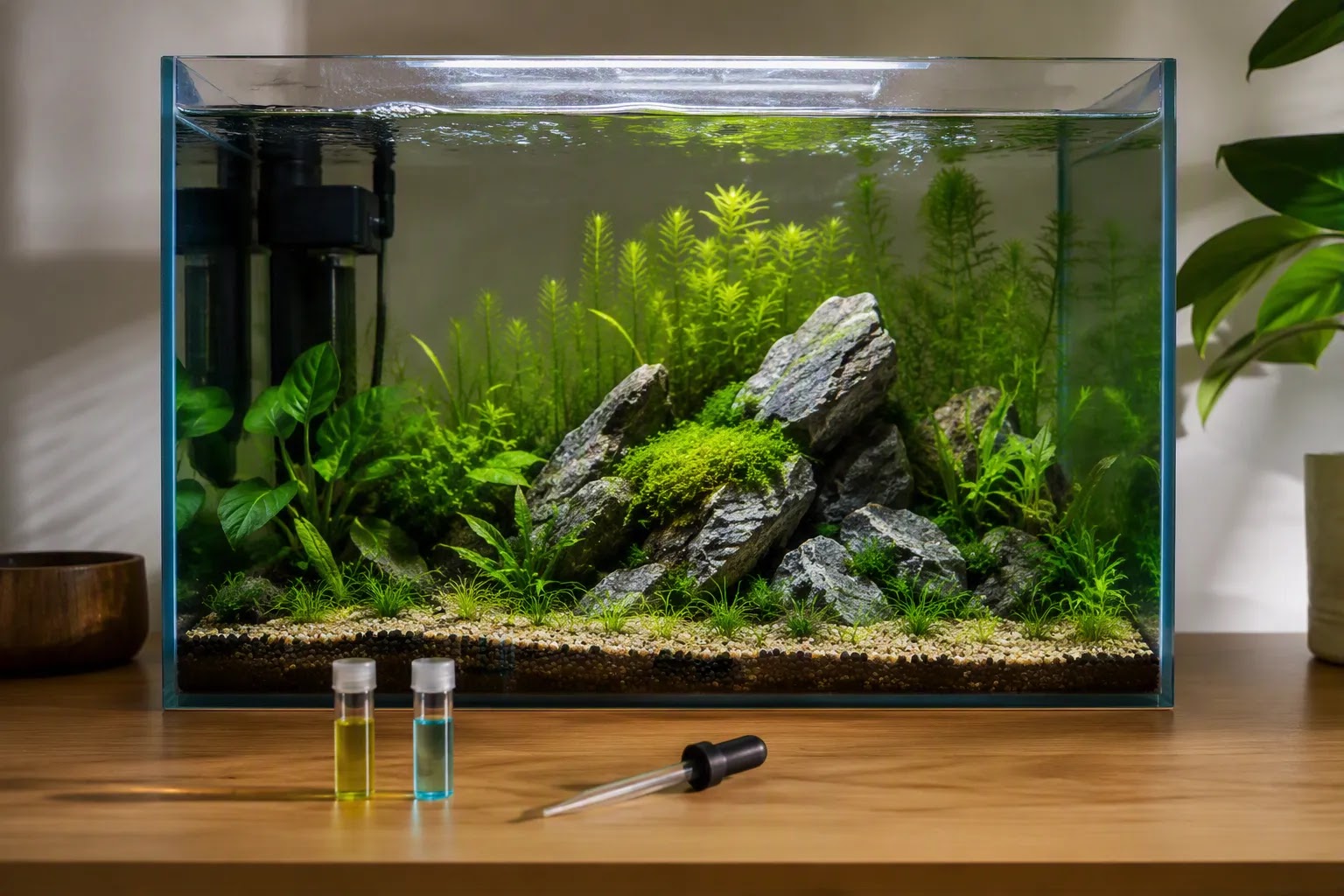
After weeks of testing, you finally get the readings you have been waiting for: ammonia looks like zero, nitrite looks like zero, and the tank seems ready.
Then comes the uncomfortable thought: What if I add fish tomorrow and discover I was wrong?
That hesitation is useful. A tank is not proven cycled because it has been running for four weeks, because nitrate appeared once, or because today’s ammonia happens to read zero.
After a fishless cycle, the more useful confirmation is whether the biofilter can process the controlled ammonia challenge used by your cycling method without leaving meaningful ammonia or nitrite behind.
Quick answer: Once ammonia and nitrite have already fallen to the completion range for your fishless-cycling method, add the controlled ammonia challenge specified by that same method. Test again about 24 hours later. If ammonia and nitrite have returned to the method’s completed or undetectable range, the biofilter has passed a practical cycle-completion test. If either remains clearly elevated, keep cycling before adding fish.
What Does “Cycled” Mean at This Stage?
You do not need to relearn the entire nitrogen cycle to answer this question.
For the final confirmation, your biofilter needs enough nitrifying activity to handle the ammonia load used by your cycling method without allowing ammonia or nitrite to accumulate.
The University of Florida’s fish-health guidance for recirculating systems explains that biofilter performance depends on established nitrifying bacteria and can be affected by conditions such as temperature, oxygen, pH, alkalinity, and biological-filter capacity.
That is why the calendar alone cannot give you a pass or fail result.
If you need the full cycling process rather than only this finishing test, use our fishless cycling guide. For the biology behind ammonia, nitrite, and nitrate, see our aquarium nitrogen cycle guide.
How to Confirm a Fishless Aquarium Cycle
Step 1: Check the Starting Readings
Before adding a final ammonia challenge, test the aquarium.
Ammonia and nitrite should already be at the completed, zero, or undetectable range used by your test method and cycling protocol.
If nitrite is still clearly present, the tank has not finished processing the previous ammonia dose. Do not add fish simply because ammonia has reached zero.
Step 2: Add the Controlled Ammonia Challenge
Use the same ammonia source and dosing method you used during the fishless cycle.
Bring the aquarium to the normal challenge dose specified by that method rather than improvising a larger dose at the end.
Fishless-cycling protocols can use different ammonia concentrations, units, and products. If you are using a commercial ammonium chloride solution, follow the directions for that exact product rather than copying a dose from another brand.
Never perform an ammonia challenge with fish, shrimp, snails, or other aquarium animals in the tank. This confirmation method is for fishless cycling. Deliberately adding ammonia to a stocked aquarium can expose livestock to toxic nitrogen compounds.
Step 3: Leave the Biofilter Running Normally
Keep the filter, aeration, heater, and other equipment used during the cycle operating normally.
Wait about 24 hours unless the particular cycling method you are following specifies otherwise.
Do not perform a water change during the challenge simply to lower the readings. The point is to see what the biofilter can process.
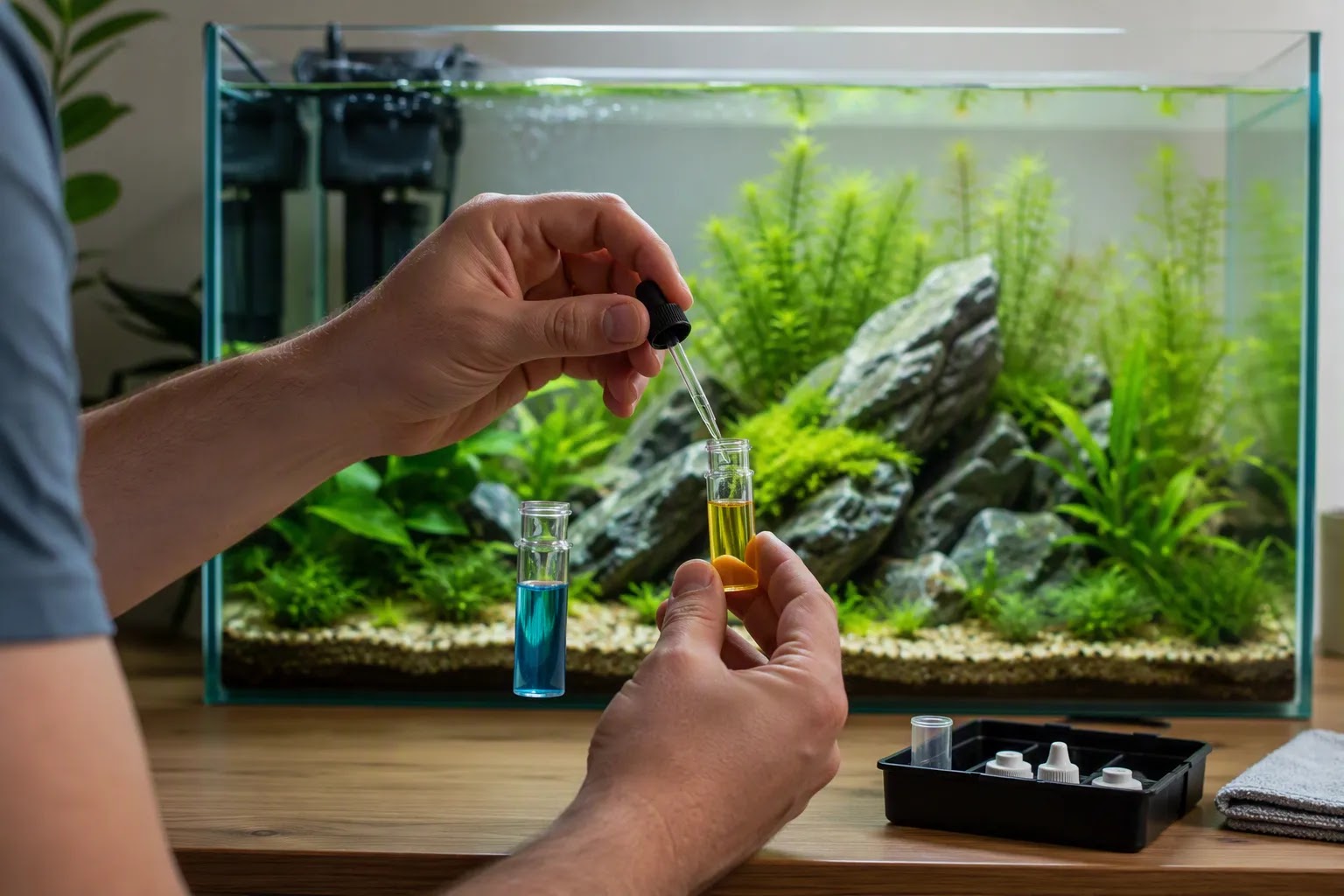
Step 4: Test Ammonia and Nitrite Again
A practical pass means both ammonia and nitrite have returned to the completion range specified by your cycling method and test kit.
For many hobby test methods, that means they appear at zero or undetectable levels.
DrTim’s Aquatics’ fishless-cycling guidance, for example, uses the ability to process its specified ammonia challenge by the following day without meaningful ammonia or nitrite remaining as its functional completion check.
How to Read the 24-Hour Result
| Result | What It Suggests | What to Do |
|---|---|---|
| Ammonia and nitrite both back at the completion range | The biofilter passed the practical challenge | Move on to final water checks before adding fish |
| Ammonia still clearly detectable, nitrite low or absent | Ammonia processing is not yet keeping up | Continue cycling |
| Ammonia processed but nitrite remains clearly detectable | Ammonia oxidation is working, but nitrite processing is still lagging | Do not add fish yet |
| Both remain clearly elevated | The biofilter did not process the challenge fast enough | Continue cycling and troubleshoot if progress has stalled |
The nitrite result is easy to overlook. Seeing ammonia disappear is encouraging, but if nitrite remains clearly elevated, the biofilter has not yet completed the full job you are testing.
Does Nitrate Prove the Tank Is Cycled?
Nitrate can support the picture that nitrification has occurred, but it is not enough by itself to confirm cycle completion.
A nitrate reading can be influenced by several things:
- Source water may already contain nitrate
- Earlier ammonia processing may have produced nitrate even while nitrite processing is still lagging
- Water changes can reduce the reading
- Fast-growing plants can use nitrogen and leave less nitrate than expected
So a planted aquarium with surprisingly little nitrate has not automatically failed its cycle.
The more useful completion check is whether the biofilter can process the controlled ammonia challenge without leaving meaningful ammonia or nitrite behind.
What If the Test Color Never Looks Exactly Like Zero?
Anyone who has carried an aquarium test vial between three different lights trying to decide whether it is yellow or slightly green knows this problem.
Before interpreting a borderline result:
- Follow the test’s mixing and timing instructions exactly
- Check expiration and storage instructions
- Read the sample in bright, neutral lighting
- Make sure you are testing both ammonia and nitrite
- Test your source water separately if a persistent background reading is confusing the result
- Look for a consistent pattern rather than forcing certainty from an ambiguous color
If a reading is clearly above the completion range after the challenge, treat that as a failed confirmation rather than talking yourself into a pass because you are ready to buy fish.
A few more days of cycling are much easier to manage than an ammonia or nitrite problem after livestock arrives.
If the Final Challenge Keeps Failing
If the aquarium had been processing ammonia and nitrite but repeatedly fails the final challenge, check a few basic conditions before assuming the entire cycle has disappeared:
- Is the filter moving water normally?
- Is aeration adequate?
- Has temperature changed substantially?
- Has pH fallen?
- Was biological media allowed to dry?
- Was established media heavily cleaned or exposed to untreated chlorinated water?
Nitrification consumes alkalinity, and falling alkalinity and pH can impair biofilter performance.
This article is not intended to repeat the entire troubleshooting process. If the challenge continues to fail, return to the troubleshooting section of our complete fishless cycling guide rather than increasing the ammonia dose repeatedly.
Five Things That Still Do Not Confirm Cycle Completion
- “The aquarium has been running for a month.” Cycling speed varies with the system and conditions.
- “The water is crystal clear.” Water clarity does not tell you whether ammonia and nitrite are being processed.
- “I found nitrate.” Useful evidence of nitrification, but not proof of current processing capacity.
- “Ammonia reached zero after a large water change.” Dilution is not the same as biological processing.
- “The filter has been running the whole time.” Simply operating a filter does not prove that enough nitrifying bacteria became established to handle an ammonia load.
Your Tank Passed—What Should You Check Before Adding Fish?
Passing the ammonia-and-nitrite challenge confirms the part of the aquarium you were testing. It does not certify every other water parameter for every fish species.
Make the Water Suitable for Livestock
A fishless cycle can leave nitrate higher than you want before stocking.
If needed, perform an appropriately sized partial water change with properly prepared replacement water to bring nitrate and other parameters into the range appropriate for the species you plan to keep.
A routine water change does not normally remove the established biological filter because much of the nitrifying community lives on filter media and other wet surfaces rather than freely in the water.
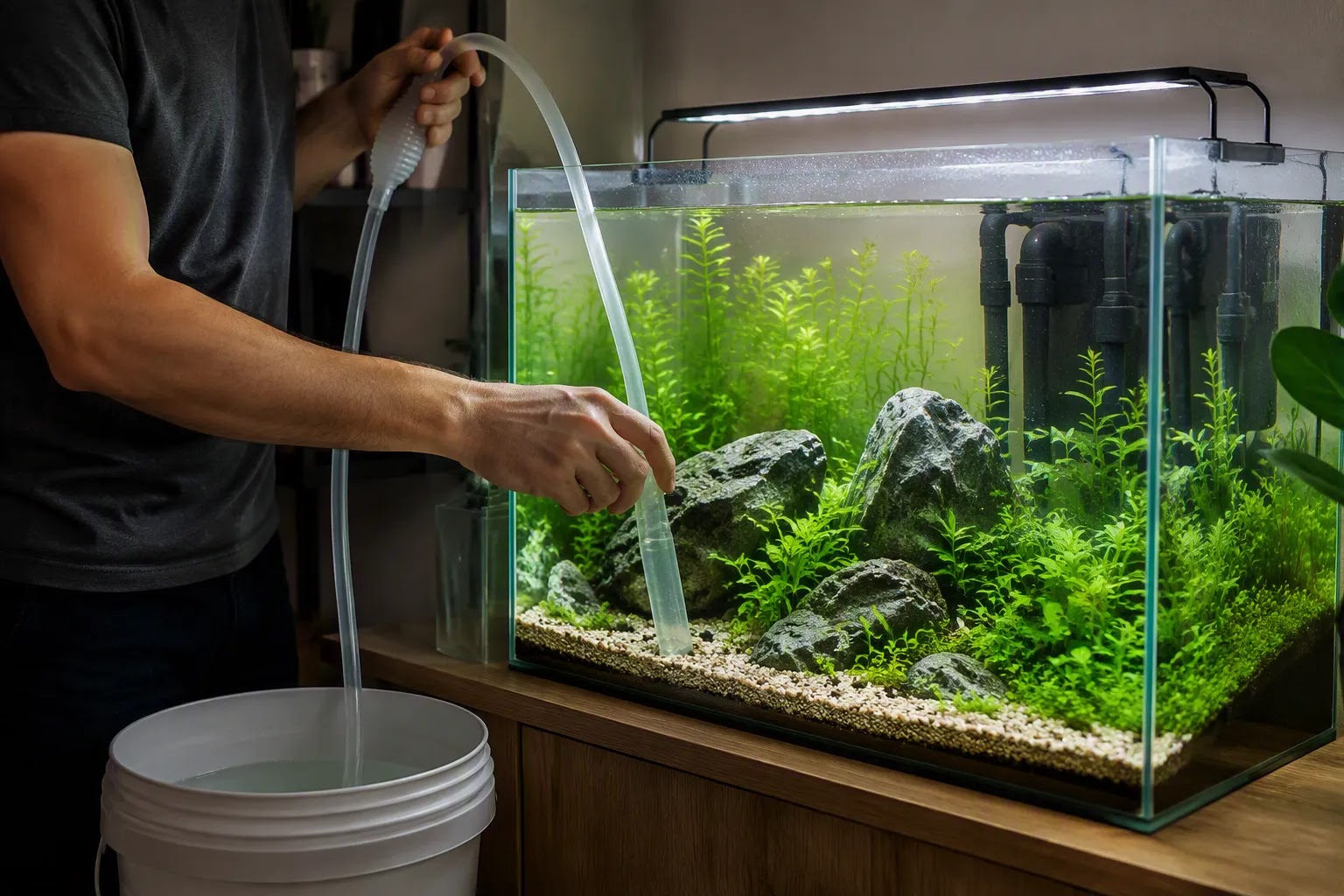
Before stocking, also confirm the species-appropriate basics that the cycling test does not certify, such as temperature, pH, hardness or salinity when relevant, filtration, circulation, and properly treated replacement water.
If this is your first aquarium, our freshwater aquarium setup guide covers those broader setup checks separately.
After fish arrive, continue checking ammonia and nitrite during the early stocking period. A completed cycle provides biological capacity, but feeding, stocking, filter performance, and future changes can still exceed that capacity.
If ammonia rises after livestock is present, do not add another ammonia challenge. Use livestock-safe corrective steps such as those in our aquarium ammonia spike emergency guide.
Trust the Biofilter Test More Than the Calendar
There is a satisfying point in fishless cycling when the test kit finally stops feeling like bad news.
You give the empty aquarium its controlled ammonia challenge. The filter keeps running. The next day, both ammonia and nitrite are back where your cycling method says they should be.
That result tells you far more than saying, “My tank is six weeks old.”
If the aquarium passes, finish the water change and species-specific checks before stocking. If it does not pass yet, you found the weakness while the tank was still empty—which is exactly when you want to find it.
A few extra days of patience before the fish arrive are much easier than troubleshooting toxic ammonia or nitrite afterward.