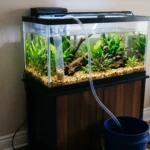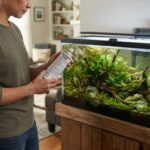
How to Cycle a Fish Tank: Easy Fishless Cycling Guide

A brand-new aquarium can look ready long before it is biologically ready for fish.
The water may be crystal clear. The filter is running. The heater is holding temperature.
But if the biofilter cannot process the waste animals will produce, ammonia and nitrite can still rise to dangerous levels.
Cycling is the process of establishing that biological filtration before depending on it to keep fish safe.
Quick Answer: For a new aquarium without livestock, fishless cycling is usually the safer beginner approach. Set up and run the filter continuously, use dechlorinated water, provide a controlled ammonia source, and monitor ammonia and nitrite as nitrifying microorganisms become established. Don’t declare the tank cycled because a certain number of weeks has passed—verify that the biofilter is actually processing the nitrogenous waste.
What Does Cycling a Fish Tank Do?
Fish continuously produce ammonia through normal metabolism, while uneaten food and decaying organic matter can add more.
In a functioning biofilter, nitrifying microorganisms convert that waste through this basic sequence:
Ammonia → Nitrite → Nitrate
Ammonia and nitrite can harm fish when they accumulate.
Nitrate is generally less acutely toxic but still needs to be controlled through appropriate stocking, feeding, plant uptake where relevant, and regular partial water changes.
If you want a simple explanation of the biology itself, see our Aquarium Nitrogen Cycle Explained.
Where Does the Biofilter Live?
The microorganisms responsible for nitrification do not primarily float around in the aquarium water.
They colonize wet, oxygenated surfaces—especially biological filter media, but also substrate, décor, and other surfaces.
That is why simply replacing aquarium water does not normally erase the entire cycle.
It is also why repeatedly replacing or damaging established filter media can be much more disruptive.
For the complete aquarium setup process, see Freshwater Aquarium Setup Guide for Beginners.
How Long Does It Take to Cycle an Aquarium?
Think in weeks, not days.
Current veterinary references note that a tropical aquarium biofilter can take up to about eight weeks to become established, while other systems may mature sooner or take longer.
Timing depends on factors such as:
- Temperature
- pH
- Alkalinity
- Oxygen availability
- Filter design and media
- The amount of ammonia supplied
- Use of mature seeded media
- Whether a viable nitrifying-bacteria product is used
The Calendar Is Not the Test: Reaching Week 4, Week 6, or Week 8 tells you how long you’ve waited. Your water tests tell you what the biofilter is actually doing.
Step-by-Step Fishless Cycling
Step 1: Set Up the Aquarium
Install the substrate, décor, plants if you’re using them, heater when required, and filtration.
Fill the aquarium with water appropriate for the intended species and run the filter continuously.
If your tap water contains chlorine or chloramine, use an appropriate water conditioner.
Untreated disinfectants can damage the microorganisms you’re trying to establish.
Step 2: Add a Controlled Ammonia Source
The developing biofilter needs a nitrogen source.
A measured ammonium chloride product intended for aquarium fishless cycling is generally easier to control than allowing excess fish food to decompose unpredictably.
Different established cycling methods use different target ammonia concentrations.
Follow the directions for the aquarium cycling product or protocol you’re using rather than assuming one ppm target applies to every tank.
Don’t use scented or detergent-containing household ammonia cleaners. Household products may contain surfactants, fragrances, soaps, or other additives that don’t belong in an aquarium.
Step 3: Test Ammonia, Nitrite, and Nitrate
Testing is how you see the cycle develop.
Record the results rather than trying to remember yesterday’s test color.

Early on, ammonia may remain detectable because the ammonia-oxidizing population is still developing.
Later, ammonia typically begins to fall while nitrite becomes detectable.
Eventually, nitrite also declines as the second part of the biofilter establishes.
Nitrate often increases during the process, although planted aquariums can use some nitrate.
So don’t require one huge nitrate reading as proof that every aquarium has cycled.
Step 4: Follow the Trend, Not a Week-by-Week Graphic
Real aquariums do not reliably produce an ammonia spike in Week 1, nitrite in Week 2, and a completed cycle in Week 4.
Temperature, oxygen, alkalinity, pH, ammonia input, established media, filter design, bacterial cultures, and testing methods can all change the timeline.
Let the measurements tell you where the tank is.
Step 5: Confirm the Biofilter Before Adding Fish
Ammonia and nitrite should no longer accumulate after the controlled ammonia load used by your cycling method.
Some hobbyist protocols use a final measured ammonia-processing challenge as an additional check. The exact dose and timing depend on the protocol rather than one universal rule.
For a more detailed readiness check, see Is My Fish Tank Cycled? How to Confirm Before Adding Fish.
Step 6: Change Water Before Stocking
Once the cycle is complete, perform an appropriate partial water change to reduce accumulated nitrate and refresh the aquarium before fish arrive.
Condition replacement tap water and keep temperature, pH, hardness, and other relevant parameters appropriate for the species you’re planning to keep.
There is no universal nitrate number that represents the ideal level for every freshwater species.
Step 7: Stock Responsibly
A cycled filter has biological capacity.
It does not have unlimited capacity.
Adding substantially more livestock than the biofilter can support may still produce ammonia or nitrite even after cycling.
Continue testing after adding fish, particularly during the first days and after meaningful stocking increases.
For species selection and stocking compatibility, see our Peaceful Community Fish Tank Guide.
Can You Speed Up a Fishless Cycle?
Sometimes.
The most useful shortcut is mature biological filter media from a healthy, established aquarium because it introduces an existing nitrifying community directly into the new system.
Commercial nitrifying-bacteria products can also help when viable organisms are stored and used correctly.
But adding bacteria is not the same as proving the aquarium is ready.
Verification still comes from water testing.
Why Does an Aquarium Cycle Stall?
If ammonia or nitrite stops changing for an unusually long period, don’t automatically respond by adding more ammonia.
Check:
- Is the filter running continuously?
- Could chlorine or chloramine have reached the biofilter?
- Is there adequate aeration and water movement?
- Has pH fallen substantially?
- Is alkalinity becoming depleted?
- Was ammonia accidentally overdosed?
Nitrification consumes alkalinity, and nitrifying microorganisms also require oxygen.
In poorly buffered water, alkalinity and pH can fall enough to slow biofilter activity.
Should You Change Water During Fishless Cycling?
A partial water change does not automatically restart the cycle.
Most nitrifying organisms are attached to surfaces rather than floating freely in the water.
A water change may be useful if ammonia was accidentally overdosed, water chemistry has become unsuitable, or another problem needs correction.
Just remember to condition replacement water.
The bigger concern is discarding or damaging large amounts of biological filter media—not removing some aquarium water.
What If Fish Are Already in an Uncycled Tank?
If fish are already present, do not add an ammonia source.
The fish and their food are already creating ammonia.
Test ammonia and nitrite frequently, avoid adding more livestock, feed conservatively, and use properly conditioned partial water changes when necessary to keep water quality safe while the biofilter develops.
Merck identifies ammonia and nitrite accumulation during the first weeks of a new aquarium as a common cause of new tank syndrome.
If fish in a new aquarium become lethargic, stop eating, breathe unusually fast, gather near the surface, or show other abnormal behavior, test the water immediately. Water-quality problems can become serious quickly.
Behavior gives you a warning; testing tells you what is actually happening. For broader help interpreting behavior in context, see Dog & Cat Body Language: How to Read What Your Pet Is Telling You.
Common Fish Tank Cycling Mistakes
- Adding fish because the water looks clear: clear water does not prove the biofilter works.
- Using a fixed number of weeks as the finish line: test results matter more.
- Continuously adding ammonia regardless of readings: follow your chosen protocol.
- Exposing filter media to untreated chlorinated water: disinfectants can damage nitrifying organisms.
- Replacing all biological media at once: this can remove much of the established biofilter.
- Ignoring falling pH or alkalinity: poor buffering can stall nitrification.
- Stocking heavily immediately after cycling: biological capacity still has limits.
Cycling isn’t waiting for aquarium water to “age.” It’s establishing a living biological filter and proving that it can process nitrogenous waste before you depend on it to protect fish.
Sources & Editorial Standards
- Merck Veterinary Manual — Management of Aquarium Fish
- Merck Veterinary Manual — Environmental Diseases and Biofilter Establishment
- University of Florida IFAS — Ammonia in Aquatic Systems
- University of Florida IFAS — Fish Health Management in Recirculating Aquatic Systems
Editorial note: Exact cycling time, ammonia dosing protocols, processing capacity, nitrate tolerance, and stocking limits vary by aquarium. This guide therefore treats common hobbyist numbers as practical methods rather than universal biological thresholds and prioritizes measured water-quality trends over calendar-based rules.
The Bottom Line
Fishless cycling is mostly a patience-and-testing job.
Set up the aquarium. Dechlorinate the water. Keep the filter running. Provide a controlled ammonia source. Then follow ammonia and nitrite until the biofilter can process the intended load reliably.
Don’t rush fish into the aquarium because the water looks perfect or because somebody’s four-week chart says you’re finished.
The calendar can tell you how long you’ve waited. Only your water tests can tell you what the biofilter is doing.