Fly Control in a Hamster Room: Food, Bedding, Screens & Safer Traps
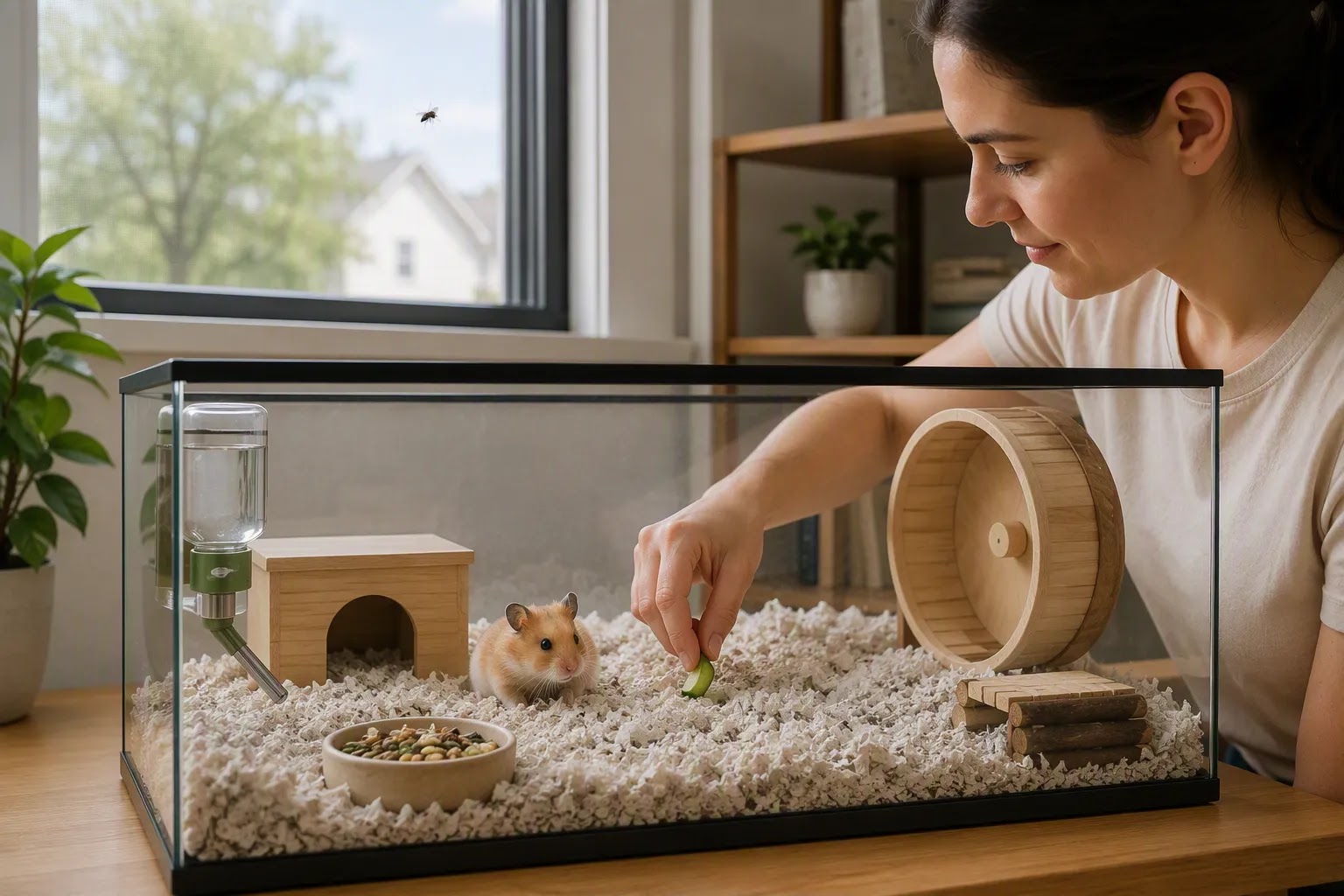
You clean the food dish and wipe the shelf, yet a fly keeps circling your hamster’s enclosure. During a spot-clean, you find a piece of cucumber hidden behind a house two nights ago.
Hamsters naturally store food and build burrows in deep bedding. That makes fly prevention a little different from ordinary room cleaning: perishable food or a damp patch can be easy to miss.
Quick Answer: Find and remove what attracts or breeds flies: spoiled fresh food, damp or dirty bedding, water leaks, nearby rubbish, or gaps in window screens. Use traps only where your hamster cannot reach them, even during an escape. Avoid routine insecticide spraying near the enclosure.
Find What Is Attracting the Flies First
Swatting adults won’t solve a problem if flies can keep entering the room or reproducing nearby. Check for:
- Fresh fruit or vegetables hidden in bedding.
- Wet or heavily soiled areas, including beneath a leaking water bottle.
- Spilled food under the enclosure or its stand.
- Open food bags, food-containing rubbish, or recycling.
- Forgotten produce or drink residue elsewhere in the room.
- Torn screens and gaps around doors or windows.
One fly entering through an open door isn’t the same as flies returning every day. Repeated activity calls for a search for food, moisture, breeding material, and entry points.
Check the Food Stash, Not Just the Bowl
Hamsters commonly carry food in their cheek pouches and store it. A clean, dry hoard doesn’t need to be dismantled simply because it exists. Repeatedly disturbing food stores and burrows can cause unnecessary stress.
Moist produce is different: hidden cucumber, leafy greens, or fruit can spoil and attract flies. Offer modest portions, check familiar storage spots after giving perishable food, and remove leftovers before they deteriorate. Keep dry food sealed and clean up spills around the enclosure.
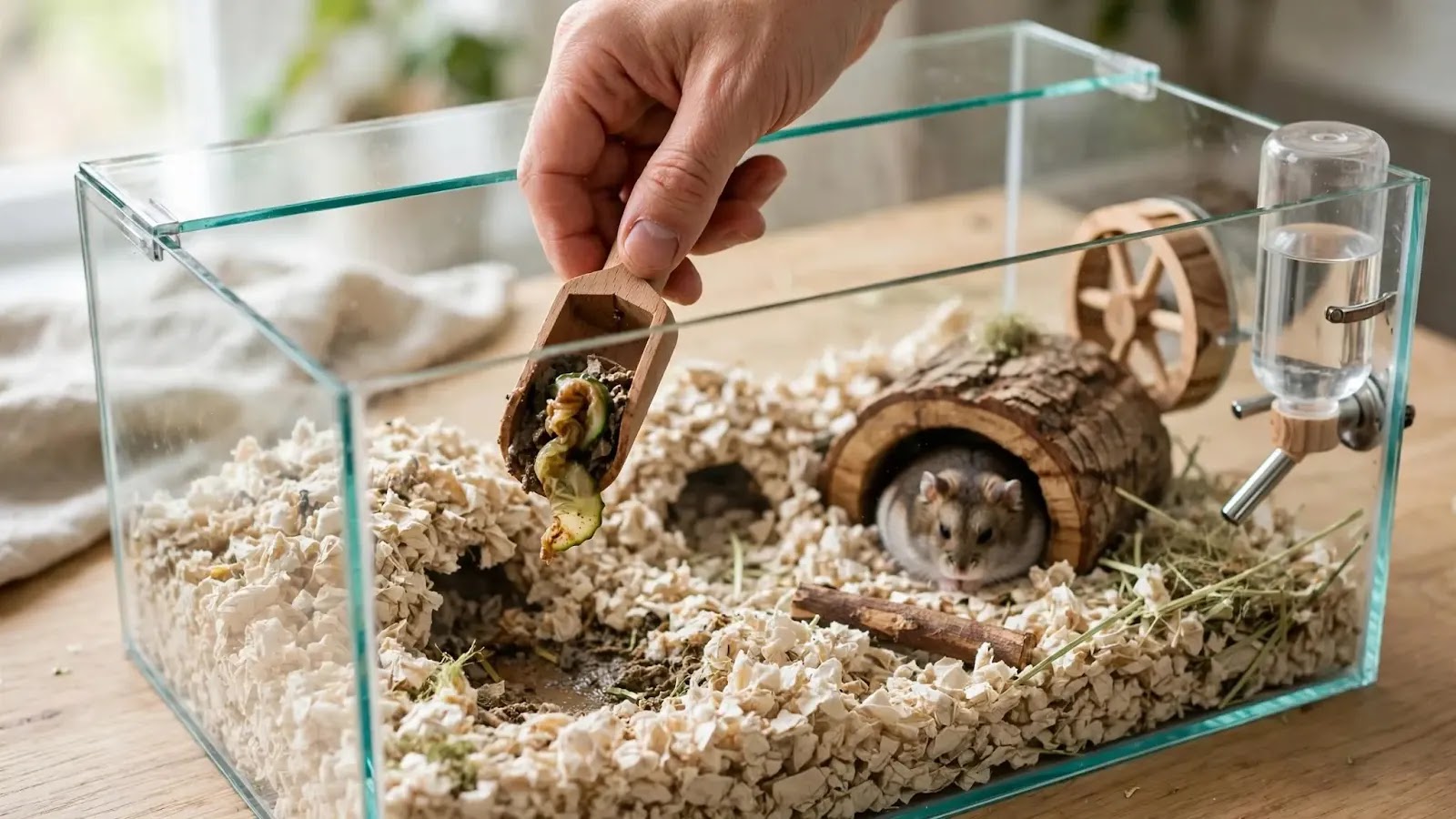
Clean selectively: Remove spoiled or wet material while preserving clean, dry food stores, familiar bedding, and intact burrows where practical.
For general diet and care, see our complete hamster care guide.
Keep Bedding Dry Without Removing the Burrow
Deep bedding supports essential burrowing and nesting behavior. The aim is to prevent damp, dirty areas from becoming attractive to flies—not to strip out the entire enclosure whenever you spot one.
Wet or Heavily Soiled Areas
Remove noticeably wet or heavily soiled bedding. If your hamster uses a regular toilet area, focus cleaning there.
Water-Bottle Leaks
Feel for dampness beneath the drinking area and check that the bottle or water source isn’t dripping. A slow leak can soak bedding out of sight.
Buried Fresh Food
After offering fresh produce, check your hamster’s known storage places and remove leftovers before they spoil, disturbing the surrounding burrow as little as possible.
Dirty Accessories
Clean heavily soiled bowls, wheels, hides, and other washable items when needed, and dry them before returning them.
Our deep bedding guide for hamsters explains how to preserve a suitable burrowing environment.
Stop Flies at the Room Boundary
If flies keep coming in from outside, enclosure cleaning alone won’t solve the problem. Inspect window screens, their frames, frequently open doors, and gaps around window or portable air-conditioning units. Repair tears and close openings where possible.
Never restrict enclosure ventilation to keep flies out. Don’t wrap the habitat in plastic or dense fabric; repair the room’s screens and gaps instead.
Which Fly Traps Are Reasonable Around a Hamster?
After addressing food, moisture, and entry points, appropriately placed traps can help with remaining adults. Choose non-insecticidal options when suitable, check each product’s directions, and make sure the hamster cannot contact the trap—even if it escapes its enclosure.
| Option | Useful For | Hamster Precaution |
|---|---|---|
| Fly swatter | One or two visible flies | Avoid hitting the enclosure or startling your hamster. |
| Window adhesive trap | Flies gathering at a window | Install beyond any possible hamster access. |
| Sticky fly ribbon | A few house flies | Never hang over the habitat; keep away from play and escape routes. |
| Covered vinegar-style trap | Small fruit or vinegar flies | Keep inaccessible and remove the fermenting source. |
Flypaper can catch a few flies but won’t resolve a significant infestation. For small fruit flies, removing fermenting food or waste matters more than repeatedly trapping adults.
The Escape Test: If your hamster got out tonight, could it climb or squeeze its way to the trap? If access is even possible, relocate the trap.

Make Sure You Are Looking for the Right Source
Flies near the enclosure may actually be breeding elsewhere:
- House flies: Often associated with rubbish, decaying food, animal waste, or outdoor entry.
- Fruit or vinegar flies: Often associated with fermenting produce, drink residue, or food waste.
- Drain-associated flies: May develop in organic buildup inside plumbing rather than in hamster bedding.
If the enclosure is dry and free of spoiled food, check bins, recycling, drains, forgotten produce, and nearby rooms before blaming the habitat.
Do Not Reach for Insecticide Spray First
A few flies near a hamster do not automatically call for aerosol pesticide. For many ordinary household fly problems, sanitation, screens, and inaccessible traps are sufficient.
If a pesticide treatment becomes necessary, follow its exact label, including directions for protecting or relocating pets and supplies, ventilation, and safe return. Never spray household insecticide onto the hamster, bedding, food, water, wheel, hides, or other enclosure contents.
For planning, see how to protect a hamster during indoor pesticide treatment. If exposure to fumes may already have occurred, use our hamster insecticide-fume exposure guide and seek appropriate veterinary advice.
Fly Eggs or Maggots on Your Hamster Are Different
One fly in the room does not mean your hamster has flystrike (myiasis). However, certain flies may lay eggs on contaminated fur or wounds, and developing larvae can cause serious tissue damage.
Be especially alert if your hamster has persistent diarrhea or a soiled rear, an open or draining wound, damaged skin, or sudden changes in appetite and activity.
Fly eggs or maggots on your hamster, in its fur, or in a wound need urgent veterinary attention. Don’t spray insecticide onto the animal or attempt to manage suspected myiasis as ordinary room pest control.
A Simple Fly-Control Routine
- Daily: Check fresh-food leftovers, wet patches, and the water source for leaks.
- When spot-cleaning: Remove spoiled food and soiled bedding while preserving clean, familiar material.
- Regularly: Seal food supplies, clean nearby spills, and empty food-containing rubbish.
- If flies persist: Inspect window screens, other rooms, rubbish, recycling, and drains.
- If trapping: Choose a suitable non-insecticidal option and keep it inaccessible, including during an escape.
- If pesticides are required: Follow product-specific pet precautions and re-entry directions.
The goal isn’t a sterile room. It’s to remove damp, spoiled material that attracts flies while keeping your hamster’s home dry, well ventilated, and comfortable for normal food-storing and burrowing behavior.
The Bottom Line
A fly near your hamster enclosure is a reason to investigate, not automatically to spray. Check food stashes, damp bedding, leaks, rubbish, and room-entry points; then address remaining flies with traps your hamster cannot reach.
Good fly control removes the source without turning the hamster’s home into a pesticide treatment area.
Veterinary Disclaimer: This article provides general educational information, not a diagnosis or substitute for veterinary care. If your hamster is unwell, has persistent diarrhea, an open or draining wound, or visible fly eggs or maggots on its body, contact a veterinarian promptly.
Sources & Editorial Standards
Integrated Pest Management principles and the emphasis on identifying and removing pest-supporting conditions before broader pesticide use were checked against current U.S. EPA Integrated Pest Management guidance.
House-fly exclusion, sanitation, source removal, sticky flypaper, traps, and the limited role of insecticides in routine household fly control were cross-checked against the UC Statewide Integrated Pest Management Program.
Hamster food storing, deep bedding, housing, ventilation, and fresh-water needs were checked against the current Merck Veterinary Manual hamster housing guidance.
Spot-cleaning, removal of wet or dirty bedding and uneaten fresh food, and preserving a familiar environment were cross-checked against current RSPCA hamster-environment guidance and Woodgreen hamster-care guidance.
Pesticide precautions around pets were checked against the National Pesticide Information Center’s pet-safety guidance.
The veterinary warning concerning myiasis was checked against the Merck Veterinary Manual overview of myiasis-producing flies and its guidance on facultative myiasis and flystrike.