Pet-Safe Pest Control for Dogs: A Practical IPM Guide
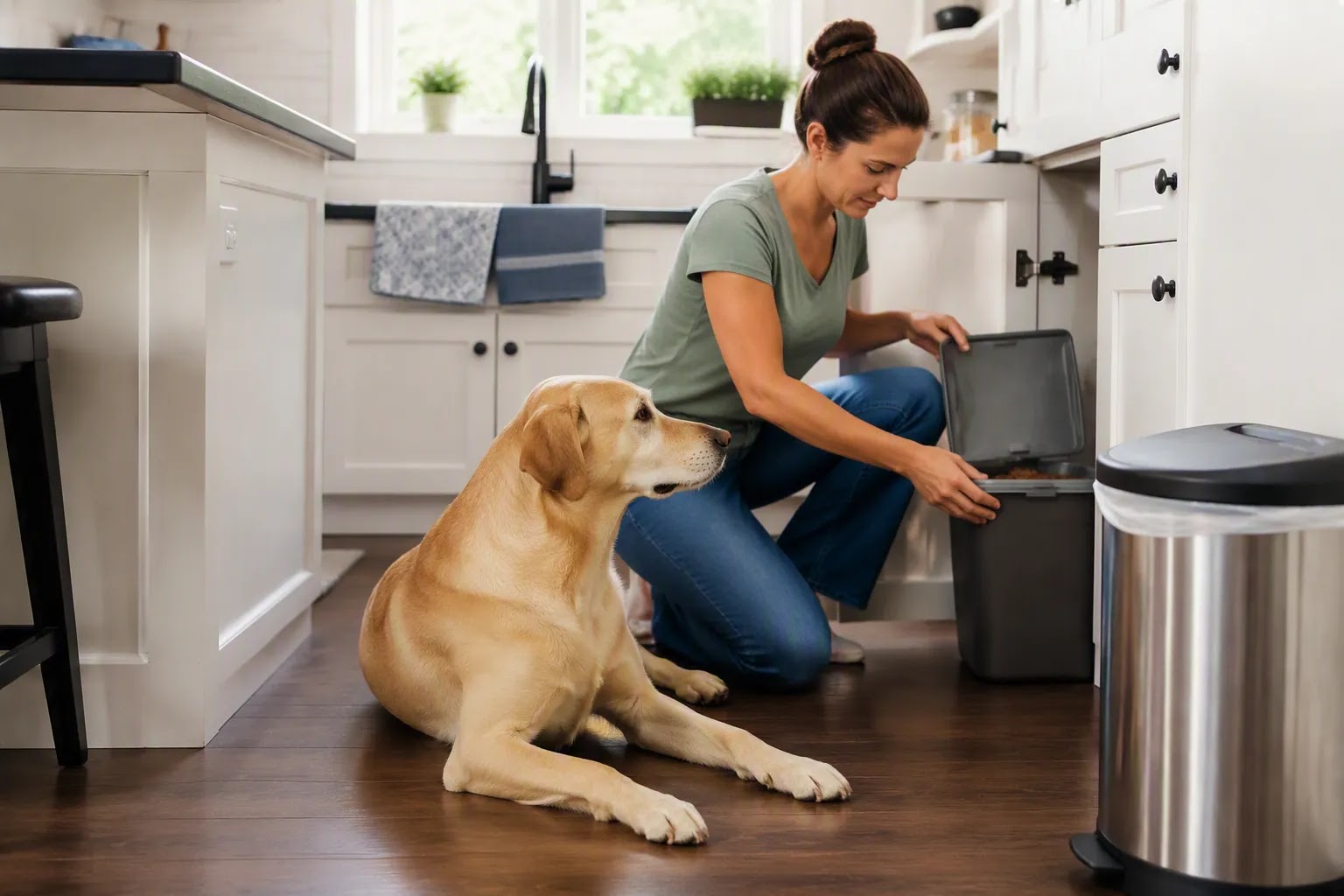
You spot ants near the pantry, hear scratching behind a wall, or see a cockroach disappear beneath the refrigerator. Your first instinct may be to reach for the strongest pest-control product you can find.
Then your dog walks into the room and sniffs the exact baseboard you were about to treat.
That’s the problem with the phrase “pet-safe pest control.” There is no magic pesticide category that becomes harmless simply because a dog lives nearby. A safer strategy is to solve the pest problem while deliberately reducing opportunities for your dog to touch, lick, inhale, chew, or swallow the control method.
Quick Answer: Start with Integrated Pest Management (IPM): identify the pest, remove food and unwanted water, block entry points, monitor activity, and use physical or targeted controls where practical. If a pesticide is needed, choose a product legally registered for that use, follow the exact label, remove your dog and pet belongings during treatment when required, follow re-entry instructions, and keep baits, residues, concentrates, and containers inaccessible.
Why Dogs Change the Pest-Control Plan
Dogs experience a treated home much closer to the floor than people do. They sniff along walls, step across treated surfaces, investigate cabinets, chew unfamiliar objects, eat dropped material, and later lick their paws or coat.
Depending on the pesticide and application, exposure may occur through ingestion, skin contact, grooming contaminated fur or paws, inhalation, or access to concentrates and containers.
With some pest-control methods—particularly rodent control—eating poisoned prey can create a secondary poisoning risk. The actual risk depends on the active ingredient, amount in the prey, amount eaten, and the dog involved.
The practical goal is therefore simple: design unnecessary exposure out of the pest-control plan whenever possible.
What Integrated Pest Management Actually Means
Integrated Pest Management is not another name for spraying a “natural” product.
IPM starts by identifying the pest and understanding why it is present. It then uses sanitation, exclusion, monitoring, physical controls, and other appropriate methods before escalating to pesticides when they are genuinely needed.
For a dog owner, every pest problem solved by sealing food, fixing moisture, blocking an entry route, or removing a breeding site is one less reason to place a chemical control where the dog lives.
A 5-Step IPM Plan for a Home With Dogs
1. Identify the Pest First
Ants, cockroaches, fleas, pantry pests, rodents, and flies do not have the same biology or control strategy.
Treating before you know what you’re dealing with can expose your household to pesticide without fixing the source. If identification is uncertain, take a clear photograph, safely collect a specimen when practical, or ask a local extension service or licensed pest professional.
2. Remove Food and Unwanted Water
Pet homes contain a few easy-to-miss pest resources:
- kibble under or behind bowls
- open bags of pet food and treats
- food residue beneath feeding stations
- uncontrolled household trash
- leaking pipes or appliances
- unnecessary standing water
Store food securely and clean spills promptly. Your dog should still have normal access to fresh drinking water; IPM targets unwanted moisture sources, not the pet’s water bowl.
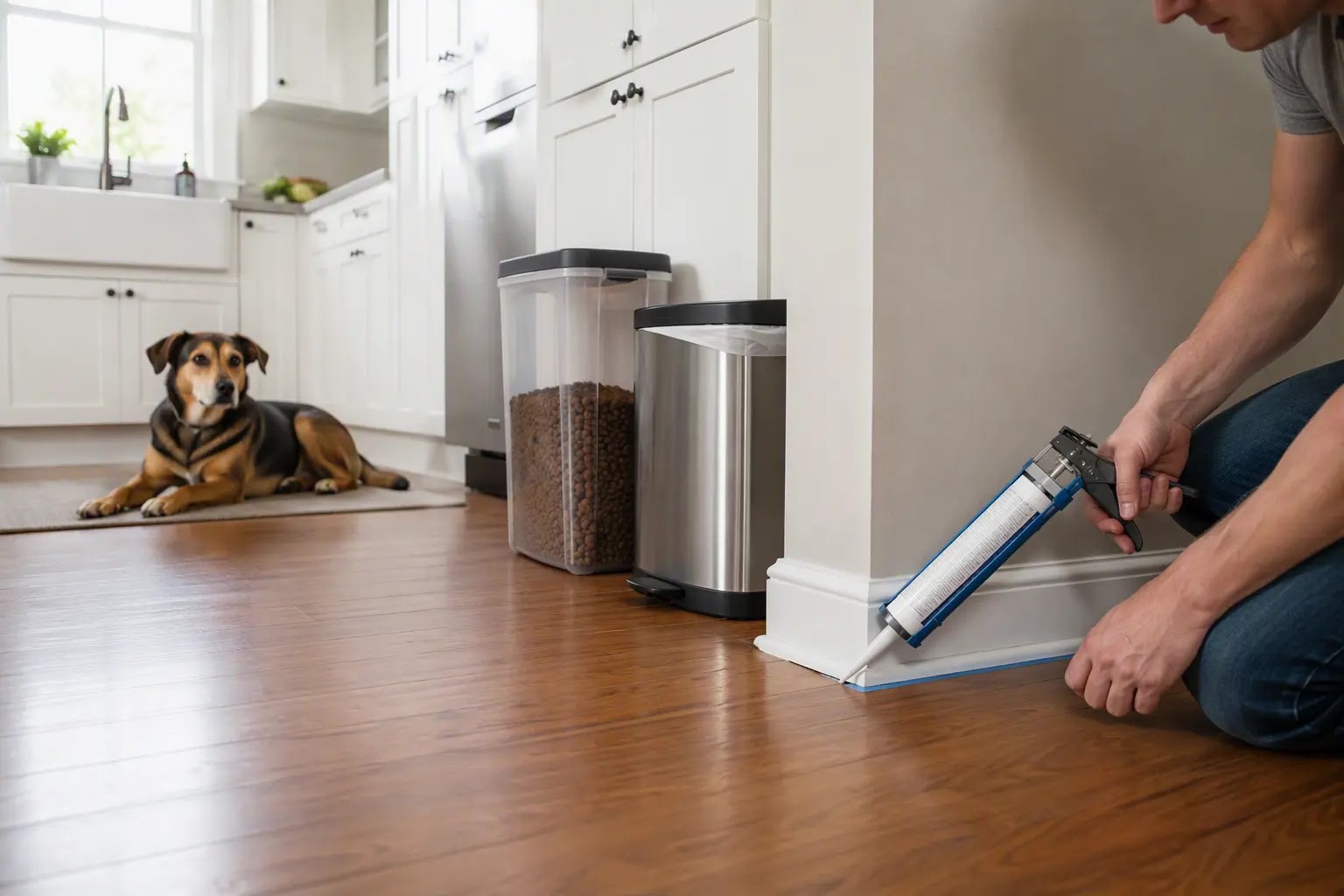
3. Block Entry and Reduce Hiding Places
Inspect gaps around plumbing and utility lines, damaged screens, worn door seals, cracks, cluttered wall edges, and other routes pests use to enter or hide.
Caulk appropriate gaps, repair screens, install door sweeps, fix leaks, and reduce unnecessary clutter.
4. Monitor Instead of Treating the Whole Room Blindly
Knowing where pests travel and where activity is concentrated lets you target the actual problem instead of treating unnecessary surfaces.
Visual inspection and pest-specific monitoring devices can help, but place them with the dog in mind. Sticky traps, food-based lures, sharp components, and small objects may themselves attract a curious animal.
5. Escalate Only as Much as Necessary
IPM does not mean “never use pesticides.” It means choosing the most targeted effective option that fits the actual pest problem after considering lower-exposure approaches.
A better question than “What can I spray?” is:
What effective control method gives my dog the fewest realistic opportunities to encounter it?
The Dog-Route Audit
Before applying treatment, stop looking at the room from standing human height.
The Dog-Route Audit: Follow your dog’s normal route through the area—from bowl to doorway, kitchen, bed, sofa, or yard. Look for places where the nose, paws, coat, or mouth could intersect the proposed treatment. If the control sits directly on that route, consider a safer permitted placement or another control method.
The word permitted matters. Never move or use a pesticide somewhere the label does not allow.
“Pet-Safe” Never Replaces the Pesticide Label
Words such as “pet-friendly,” “natural,” or “safer” do not replace the registered product instructions.
Before using any pesticide, check:
- the pest the product is labeled to control
- whether the use site is indoor, outdoor, lawn, crack-and-crevice, bait, or another specific location
- the permitted amount and application method
- pet exclusion requirements
- re-entry conditions
- storage and disposal directions
- first-aid and emergency information
More is not automatically more effective. Never increase the concentration or amount, combine products, or move a pesticide to an unlabeled use site unless the label specifically allows it.
If pesticide labels feel difficult to decode, see our guide to how to read a pesticide label when you have pets.
If You Need a Pesticide, Reduce Exposure Before Application
Move your dog to an untreated area before mixing or applying the product when the label requires exclusion.
Also remove or protect pet items that could become contaminated, including food and water bowls, bedding, toys, chews, and crates when relevant to the application.
Don’t allow your dog back simply because the odor has disappeared. Re-entry depends on the specific product and application. Some labels use complete drying as the condition; others include ventilation, watering, time, or other requirements.
For a more detailed decision process, see Dog Re-Entry After Indoor Pest Control.
Baits Can Reduce Surface Treatment—but Access Still Matters
A targeted bait can sometimes create fewer opportunities for environmental contact than spraying broad floor or wall areas. That does not make the bait harmless if a dog reaches it.
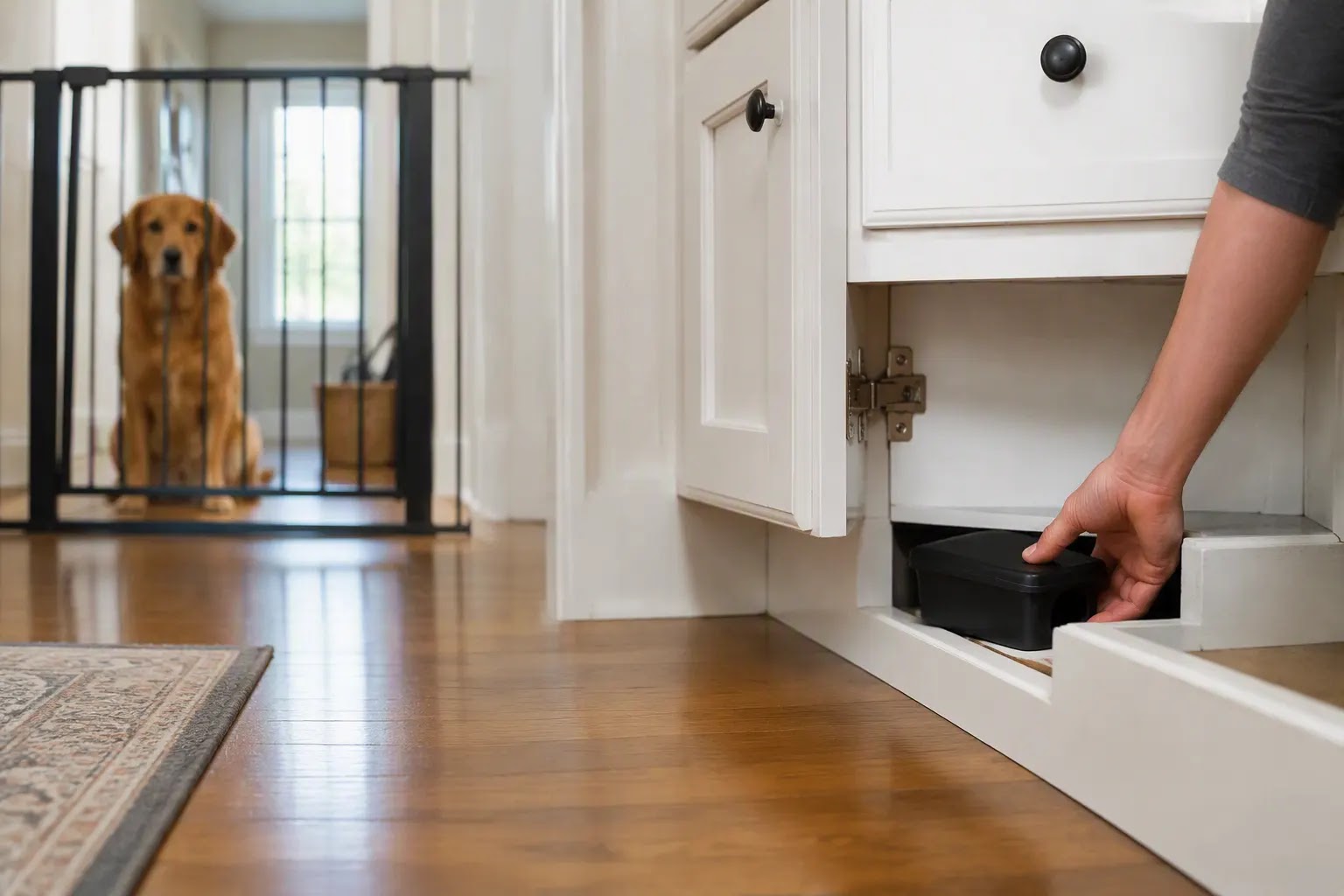
Tamper-resistant does not automatically mean dog-proof. If your dog can reach, carry, crush, chew, or open a bait station, it is not genuinely inaccessible to that dog.
For cockroach bait specifically, see Are Gel Roach Baits Safe Around Dogs?.
What About Poisoned Prey?
Some rodenticides can create secondary poisoning concerns when a pet eats poisoned prey. The likelihood and severity depend on the active ingredient, amount accumulated in the prey, how much the dog consumes, and other factors.
This is another reason to discuss product choice and carcass management with a pest professional when rodenticide is being considered.
If your dog may have reached rodent bait directly—or eaten something after rodenticide use—see Dog Ate Rat Poison: What to Do Before Symptoms Start and contact a veterinarian or veterinary poison service promptly.
What About Pest-Control Sprays?
Sprays can leave fresh droplets or residues on floors, baseboards, vegetation, and other surfaces dogs may walk across and later groom.
If spraying is necessary:
- use only a product labeled for that pest and location
- remove your dog before application as required
- remove or protect pet belongings
- prevent uncontrolled drift
- ventilate if directed
- follow every re-entry condition on the label
Do not use smell as a safety test. Odor intensity does not tell you whether labeled re-entry conditions have been satisfied.
“Natural” and Homemade Don’t Automatically Mean Safer
Essential oils, botanical extracts, powders, and homemade mixtures are often promoted as gentler alternatives to conventional pesticides.
Natural describes origin—not toxicity, dose, concentration, or exposure route.
Health Canada specifically advises against homemade pesticides because their safety, effectiveness, application rates, approved sites, and pet precautions may not have been assessed like registered products.
Before introducing another substance into your dog’s environment, ask whether sanitation, exclusion, trapping, moisture repair, or removal of a breeding source can address the problem instead.
Store Pesticides as Carefully as You Apply Them
A concentrated product sitting within reach in a garage or cabinet can create a more serious exposure opportunity than a correctly used treatment after all label precautions have been satisfied.
Keep pesticides:
- in their original labeled containers
- secured where your dog cannot reach or chew them
- away from pet food, treats, medicines, bowls, toys, and grooming supplies
- away from unsuitable temperature extremes when required by the label
Never transfer a pesticide into a drink bottle, food container, or unlabeled jar. The original label may be critical if an exposure occurs.
For a complete storage setup, see Pesticide Storage in Dog Homes.
If You Hire a Pest-Control Company
Professional application does not remove the need to understand what is being placed in your dog’s environment.
Tell the company beforehand that a dog lives in the home and ask:
- What pest was identified?
- What exact product will be used?
- What is the active ingredient?
- Where will it be applied?
- What should be removed or protected beforehand?
- What are the pet re-entry conditions?
- Will bait stations or traps remain afterward?
A useful answer is specific. Product name, treatment location, and precise re-entry instructions help you manage risk. “Everything we use is pet-friendly” does not provide enough information by itself.
Should You Clean Treated Surfaces Immediately?
Not automatically.
Some pesticide residues are intended to remain in a specific labeled location. Immediately scrubbing those areas may reduce the treatment’s effectiveness and lead to unnecessary reapplication.
Follow the product label and applicator instructions. If a dog bowl, toy, bed, or other pet item was accidentally contaminated, remove it from use until you know whether it should be cleaned or replaced.
What to Do If Your Dog Gets Into Pest Control
If you find a chewed bait station, spilled concentrate, damaged container, or evidence that your dog licked or swallowed a treatment, stop further exposure when you can do so safely and identify the product.
Gather:
- product name
- active ingredient and concentration, if listed
- amount that may be missing
- time of exposure
- your dog’s approximate weight
- any signs your dog is showing
Keep the original package or take clear photographs of the label. Contact your veterinarian, emergency veterinary hospital, or veterinary poison-control service promptly when significant exposure may have occurred.
Seek urgent veterinary care for severe or rapidly developing signs such as difficulty breathing, seizures, collapse, severe weakness, marked incoordination, or significant tremors. Depending on the pesticide, poisoning may also cause drooling, vomiting, diarrhea, agitation, lethargy, or other signs.
Do not induce vomiting or give milk, oil, salt, activated charcoal, or another home treatment unless a veterinarian or veterinary poison professional specifically tells you to use it for that exact exposure.
Make IPM Routine Maintenance
Dog-friendly pest control becomes easier when prevention happens before an infestation.
Periodically check food storage, feeding areas, trash, plumbing leaks, door and window seals, screens, garage storage, outdoor standing water, and other common pest resources.
Then monitor.
If activity stops after you remove the food source and close the entry route, you may have solved the problem without another chemical application. If it continues, monitoring gives you better information for the next targeted step.
The Bottom Line
You do not need a completely pesticide-free home to make more thoughtful pest-control decisions, and you do not need to tolerate a serious infestation simply because you own a dog.
Identify the pest. Remove food, unwanted water, shelter, and entry routes. Monitor activity. Use physical and targeted controls when practical. If a pesticide is necessary, select the correct registered product, follow its label, and build your dog’s exclusion into the plan before treatment begins.
The safest approach isn’t created by the words “pet-safe” on a package. It’s created by giving your dog fewer opportunities to encounter the pesticide at all.
Veterinary & Pesticide Safety Disclaimer: This article is for general educational purposes and cannot determine whether a specific pesticide, pest-control method, or exposure is safe for an individual dog. Risk depends on the active ingredient, concentration, formulation, dose, route of exposure, product use, and the dog’s size and health. Always follow the pesticide label. If your dog may have swallowed pesticide, chewed a bait station or container, contacted concentrate or a spill, or develops abnormal signs after exposure, contact a veterinarian or veterinary poison-control service promptly.
Sources & Editorial Standards
Integrated Pest Management principles were checked against the National Pesticide Information Center’s current IPM guidance, including pest identification, sanitation, exclusion, monitoring, and use of lower-toxicity approaches before escalation when practical.
Label use, pet exclusion, bait access, storage, original-container precautions, and emergency information were reviewed against U.S. Environmental Protection Agency pet pesticide guidance.
Canadian recommendations, including registered-product use, re-entry, removal of pet belongings, homemade pesticide warnings, bait placement, and secondary poisoning concerns, were checked against Health Canada’s guidance for keeping pets safe when using pesticides.
Potential insecticide-poisoning signs, variation among pesticide classes, and the importance of following current product labels were reviewed against the Merck Veterinary Manual.
Because pesticide formulations and exposures vary substantially, this guide intentionally does not provide one universal re-entry time, toxic dose, decontamination method, or home poisoning treatment for every product.