Cat Ate String or Ribbon? Linear Foreign Body Emergency

You’re wrapping a gift when you notice several inches of ribbon are missing. Your cat is nearby, looking perfectly normal. Could they have swallowed it?
If you saw your cat swallow string, ribbon, yarn, thread, dental floss, tinsel, fishing line, or another long, thin object—or ingestion seems likely—contact a veterinarian or emergency clinic promptly. A swallowed linear object can damage the intestines before obvious symptoms appear.
What to do now: Call a veterinarian. Never pull string visible from your cat’s mouth or anus. Don’t induce vomiting or give oil, laxatives, or other home remedies. Ask the veterinary team whether to withhold food before the examination.
Why String Is So Dangerous for Cats
Veterinarians call swallowed long, thin materials linear foreign bodies. Unlike many ordinary swallowed objects, one end may become anchored beneath the tongue, in the stomach, or elsewhere in the digestive tract while the rest moves into the intestines.
As intestinal contractions continue, the bowel can bunch up around the anchored material, like fabric gathering along a drawstring. The string can then cut into the intestinal wall, potentially causing a perforation, leakage into the abdomen, peritonitis, and life-threatening infection.
If You Can See String, Do Not Pull It
Never tug on string hanging from the mouth or anus. The visible end may be connected to material deep inside the digestive tract. Pulling can increase tension and worsen injury.
String can also become wrapped around the base of the tongue. Don’t try to free, cut, or retrieve it yourself. Prevent your cat from chewing the exposed material as safely as possible and transport them in a secure carrier for veterinary assessment.
Leave visible string alone unless a veterinarian specifically instructs you otherwise.
Do Not Try to Make Your Cat Vomit
Vomiting is not a safe home treatment for a cat that may have swallowed string or another foreign object. There is no safe over-the-counter way to induce vomiting in cats at home. Never give hydrogen peroxide: it can injure the mouth, throat, and stomach.
Whether an object can be removed safely depends on its location, whether it is anchored, and the results of a veterinary examination and imaging.
What Counts as a Linear Foreign Body?
Common examples include:
- String, yarn, sewing thread, and dental floss.
- Gift ribbon, curling ribbon, and tinsel.
- Fishing line and long, thin fabric strips or loose threads.
Thread attached to a sewing needle is especially urgent. The needle may puncture the mouth, esophagus, stomach, or intestines, in addition to the danger from the thread.
Signs of a Linear Foreign Body
Some cats initially act normally. Others develop signs that vary with the location of the material and the extent of obstruction or injury:
- Vomiting or repeated retching.
- Reduced appetite or refusal to eat.
- Lethargy, hiding, or difficulty getting comfortable.
- Abdominal pain or tenderness.
- Diarrhea, straining to defecate, or passing little stool.
- Drooling, repeated swallowing, or pawing at the mouth.
- String visible beneath the tongue or protruding from the mouth or anus.
Severe cases may cause dehydration, marked weakness, or collapse. Don’t wait for any of these signs if ingestion is known or strongly suspected.
When to Seek Emergency Veterinary Care
Contact a veterinarian promptly for any known or strongly suspected string ingestion, even if your cat is eating or playing normally.
Seek urgent emergency assessment if string is visible from the mouth or anus, a needle or sharp object may be attached, or your cat develops repeated vomiting, refusal to eat, significant pain, heavy drooling, profound lethargy, weakness, or collapse. Don’t wait for several symptoms to appear together.
What If You Are Not Sure Your Cat Swallowed It?
You may find a chewed spool or discover that a ribbon is suddenly shorter without seeing your cat swallow it. You don’t need proof before calling.
Without delaying the call, note how much appears missing, whether your cat had access to it, whether the remaining end looks chewed or wet, when it was last intact, and whether a needle or hook was attached. Mention any change in eating, vomiting, drooling, or behavior.
Tell the clinic clearly that ingestion is suspected, not confirmed; the veterinary team can advise the next step.
How Veterinarians Look for a Linear Foreign Body
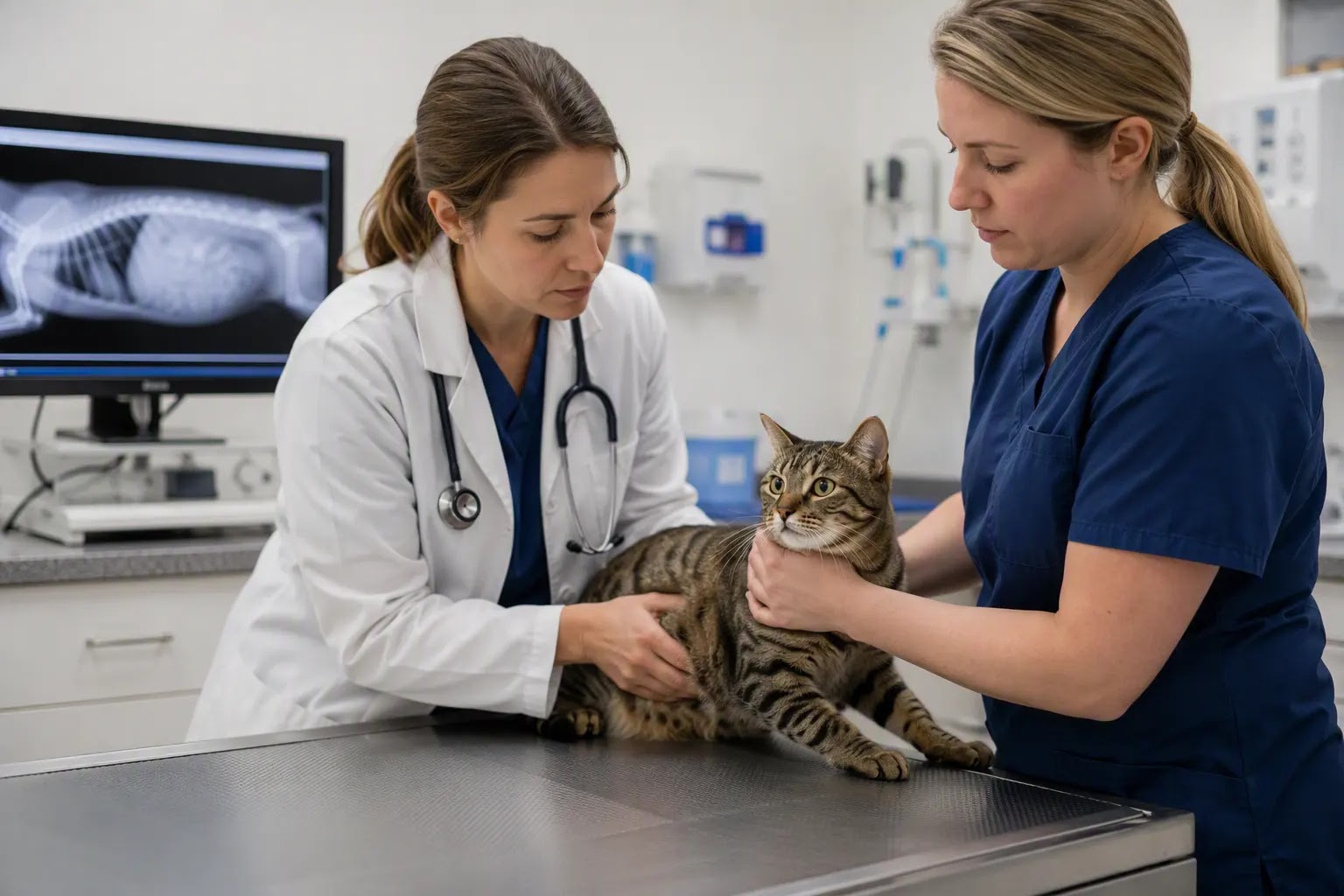
The veterinarian will take a history and examine your cat, including the area beneath the tongue where string may become anchored. Depending on the findings, they may recommend abdominal X-rays, ultrasound, blood tests, or further imaging.
The string itself may not show on X-rays. Instead, images can reveal bunched intestinal loops or unusual gas patterns, sometimes called a “string-of-pearls” appearance. Ultrasound can help when X-rays are inconclusive.
Does Every Cat Who Swallows String Need Surgery?
Not necessarily, but this is a veterinary decision—not a reason to wait at home. Treatment depends on where the object is, whether it is anchored, how far it extends, and whether obstruction or intestinal damage has developed.
Some objects still in the upper digestive tract may be removable with an endoscope. In carefully selected cases, a veterinarian may recommend monitored observation and repeat imaging. A linear foreign body extending into the intestines or causing damage often requires surgery.
The surgeon may need to open the stomach or intestine at one or more sites. Severely damaged or perforated sections of bowel may require removal and reconnection of healthy intestine.
Early assessment helps the veterinary team choose appropriate treatment before further damage develops.
Why “Wait for It to Come Out” Is Risky
Some small objects pass naturally under veterinary guidance, but that should not be assumed for string, floss, or ribbon. A cat may seem comfortable while an anchored section is damaging the bowel.
Seeing part of the string in stool doesn’t prove the entire length has passed. If string hangs from the anus, do not pull it. Observation or repeat imaging should happen only when the veterinarian recommends it for your cat’s specific situation.
What to Tell the Veterinary Clinic
When you call, share:
- The material involved and approximately how much is missing.
- When swallowing may have occurred and whether it was witnessed.
- Whether a needle, hook, or other sharp object was attached.
- Whether string is visible at the mouth or anus.
- Any changes in eating, vomiting, stool, activity, or comfort.
Bring the remaining material or a clear photo if available. Use a secure carrier and follow the clinic’s instructions about food and transport rather than attempting home treatment.
Preventing Another String Emergency
Keep long, swallowable materials inaccessible when they’re not being used:
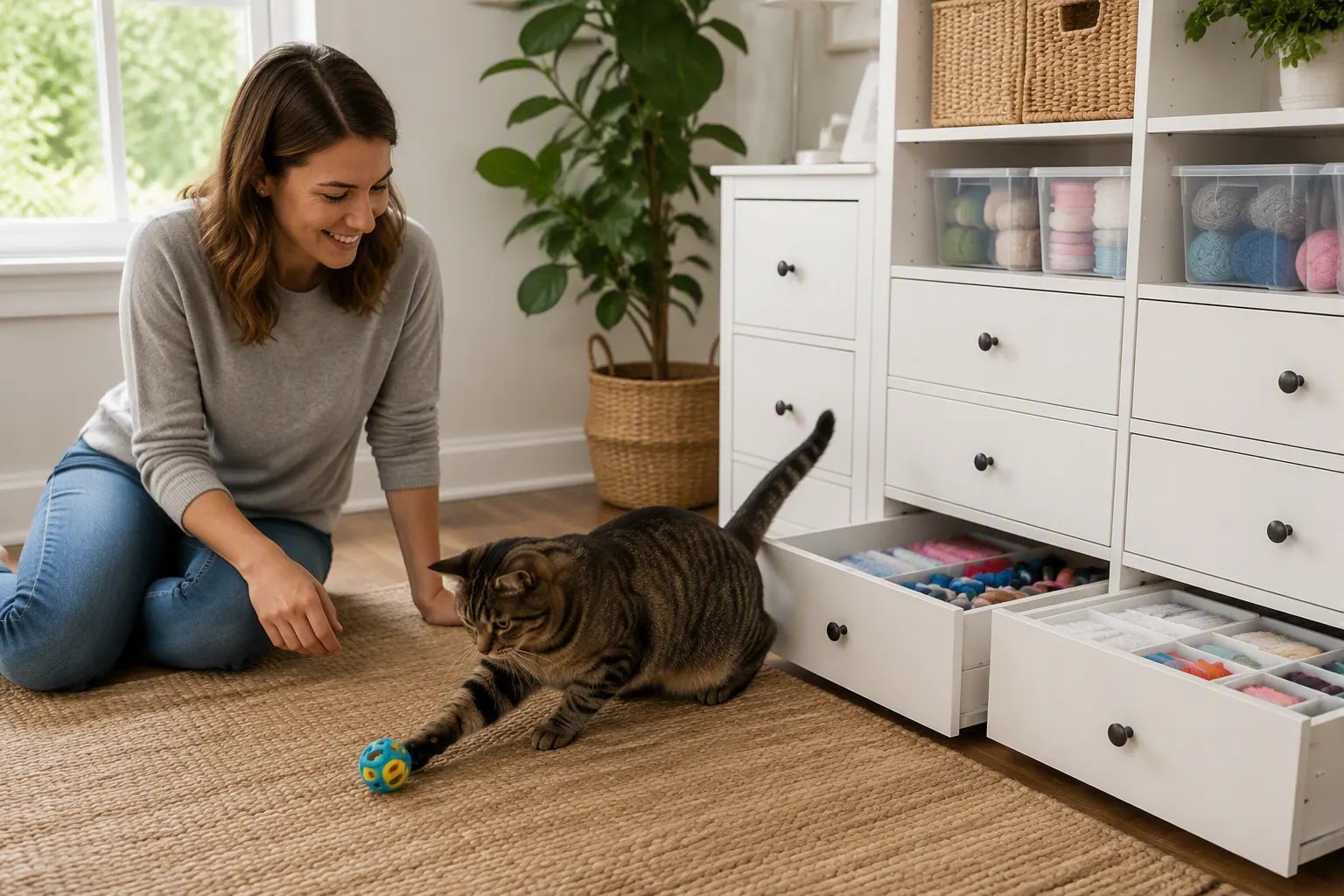
- Store yarn, thread, needles, and craft supplies in closed containers.
- Discard dental floss in a lidded trash can.
- Put away gift ribbon, tinsel, and fishing line after use.
- Supervise play with string or wand toys and store them afterward.
- Replace toys that have fraying seams or loose threads.
Our pet first-aid kit checklist can help you prepare for emergencies, but suspected string ingestion needs veterinary care rather than home first aid.
The Bottom Line
Your cat may look completely normal after a piece of ribbon goes missing. That doesn’t rule out a serious linear foreign body.
If your cat swallowed—or may reasonably have swallowed—a long, thin object, contact a veterinarian promptly. Don’t pull visible string, induce vomiting, or wait for symptoms.
Sources & Editorial Standards
Mechanisms of linear foreign-body injury, oral anchoring, and intestinal perforation were checked against the Merck Veterinary Manual guidance on gastrointestinal obstruction.
Signs, diagnostic imaging, and treatment were cross-checked against VCA’s linear foreign body guidance and its foreign-body ingestion guidance.
The warning against home-induced vomiting follows VCA emergency guidance for cats. Veterinary removal options were checked against the American College of Veterinary Surgeons guidance.
Veterinary Disclaimer: This is general educational information, not a diagnosis or substitute for veterinary care. Known or strongly suspected ingestion of a linear object warrants prompt veterinary contact.