
Pet First-Aid Kit Checklist: 11 Essentials for Dogs and Cats
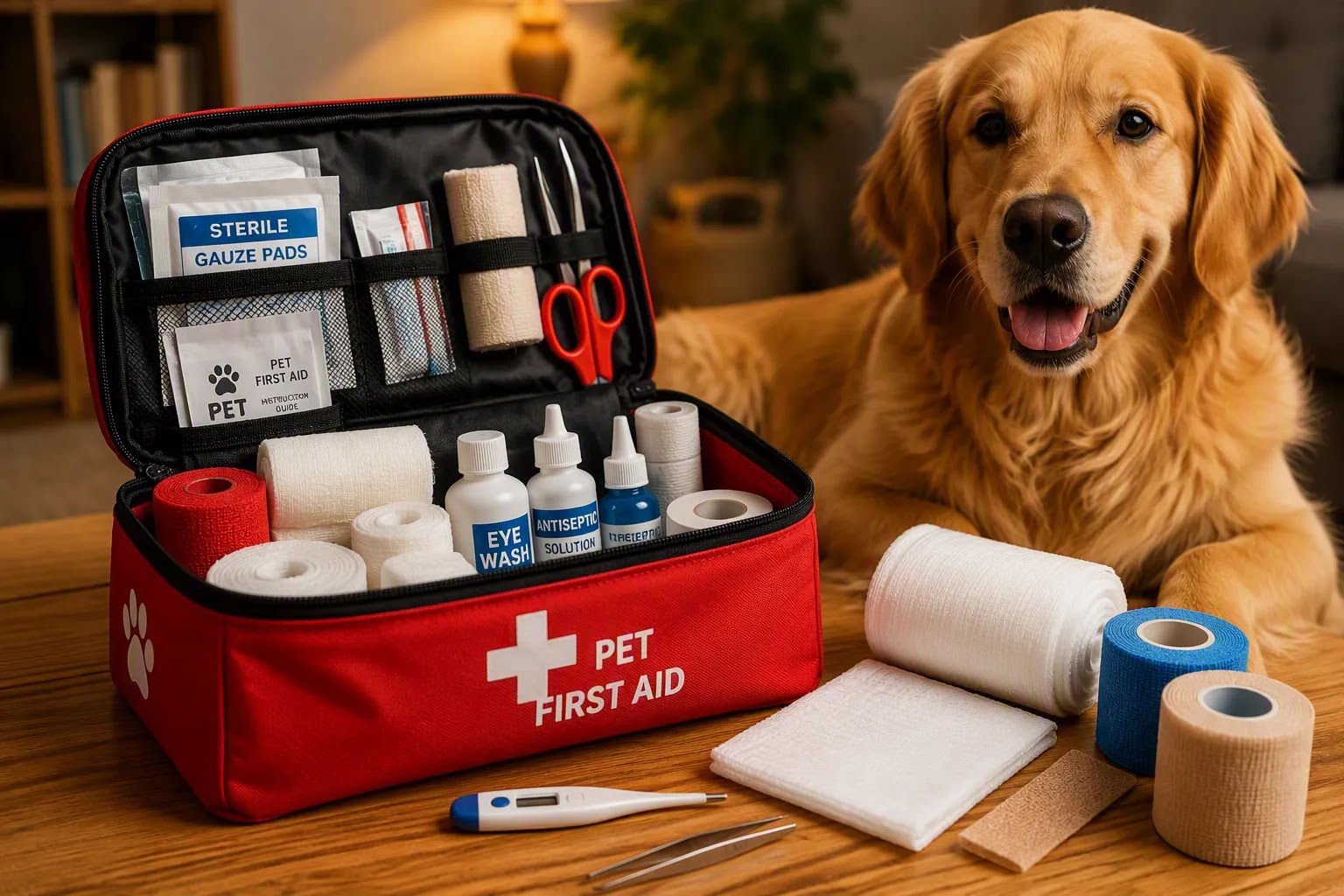
The worst time to discover you’re out of gauze is while your dog is bleeding onto the kitchen floor—or while you’re trying to remember which emergency veterinary hospital is open at midnight.
That’s the real purpose of a pet first-aid kit. It isn’t a miniature veterinary hospital in a box. It’s a small collection of supplies that helps you control a few immediate risks, protect yourself and your pet, and reach professional care more safely.
Quick Answer: A practical pet first-aid kit should include emergency contact and medical information, safe transport supplies, towels, nonstick pads and gauze, bandaging materials, sterile saline, a needleless syringe, blunt-tip scissors, tweezers, a digital thermometer with lubricant, a properly fitted dog muzzle when appropriate, gloves, a flashlight, and a few pet-specific extras. Medications and poisoning treatments should only be used when a veterinarian or veterinary poison professional gives case-specific instructions.
What a Pet First-Aid Kit Should—and Shouldn’t—Do
Pet first aid is mainly about stabilization and safer transport.
That may mean applying pressure to external bleeding, flushing contamination, preventing additional toxin exposure, minimizing unnecessary movement after trauma, or protecting yourself from an animal that is frightened and painful.
It is not meant to diagnose internal injuries, treat poisoning from an internet recipe, replace surgery, or delay a trip to the emergency clinic while you try every item in the bag.
The Kit-to-Clinic Principle: If an item helps control an immediate problem or makes transport safer, it belongs in the kit. If using it requires you to diagnose the condition, calculate a dose, or decide whether a drug is appropriate, get veterinary guidance first.
11 Pet First-Aid Kit Essentials
1. Emergency Contacts and Medical Information
This may be the most valuable part of the kit.
Keep a printed card with:
- your regular veterinarian
- the nearest emergency veterinary hospital
- an animal poison-control service
- your pet’s current medications
- important medical conditions and known allergies
- approximate current weight
- microchip information
Save the same information on your phone.
Two widely used 24/7 veterinary poison resources are:
- ASPCA Poison Control: 888-426-4435
- Pet Poison Helpline: 855-764-7661
Consultation fees may apply.
Do this before you need it: Save the emergency clinic’s phone number and route now. Searching for an open hospital while restraining an injured animal is exactly the kind of delay preparation should prevent.
2. A Carrier, Leash, and Safe Transport Setup
Pain and fear can change behavior quickly, even in a normally gentle pet.
Keep a secure carrier readily available for cats and small dogs and an appropriate spare leash for larger dogs.
If major trauma is suspected, minimize unnecessary movement of the head, neck, and spine. A rigid support or sturdy blanket may help move a larger pet when used carefully and with enough people to avoid twisting the body.
Call the veterinary hospital while preparing transport when possible so the staff can advise you and be ready for your arrival.
3. Clean Towels and a Lightweight Blanket
Towels are simple but unusually useful. They can help apply pressure over bleeding, gently contain a frightened cat, provide padding during transport, or keep an injured animal warm when warming is appropriate.
Don’t tightly wrap a pet that is struggling to breathe, and don’t deliberately warm an animal with suspected heatstroke.
4. Nonstick Pads, Sterile Gauze, and Gauze Roll
For active external bleeding, one of the most useful first-aid actions is steady direct pressure.
Place clean gauze, a nonstick pad, or a clean towel over the wound and press firmly. Maintain continuous pressure rather than repeatedly lifting the material to see whether bleeding has stopped, because disturbing the forming clot can restart it.
If blood soaks through, add additional clean material over the existing layers while arranging veterinary care.
Heavy bleeding is an emergency. Spurting blood, rapidly saturated dressings, very pale gums, marked weakness, collapse, or bleeding that does not slow with sustained pressure requires urgent veterinary care.
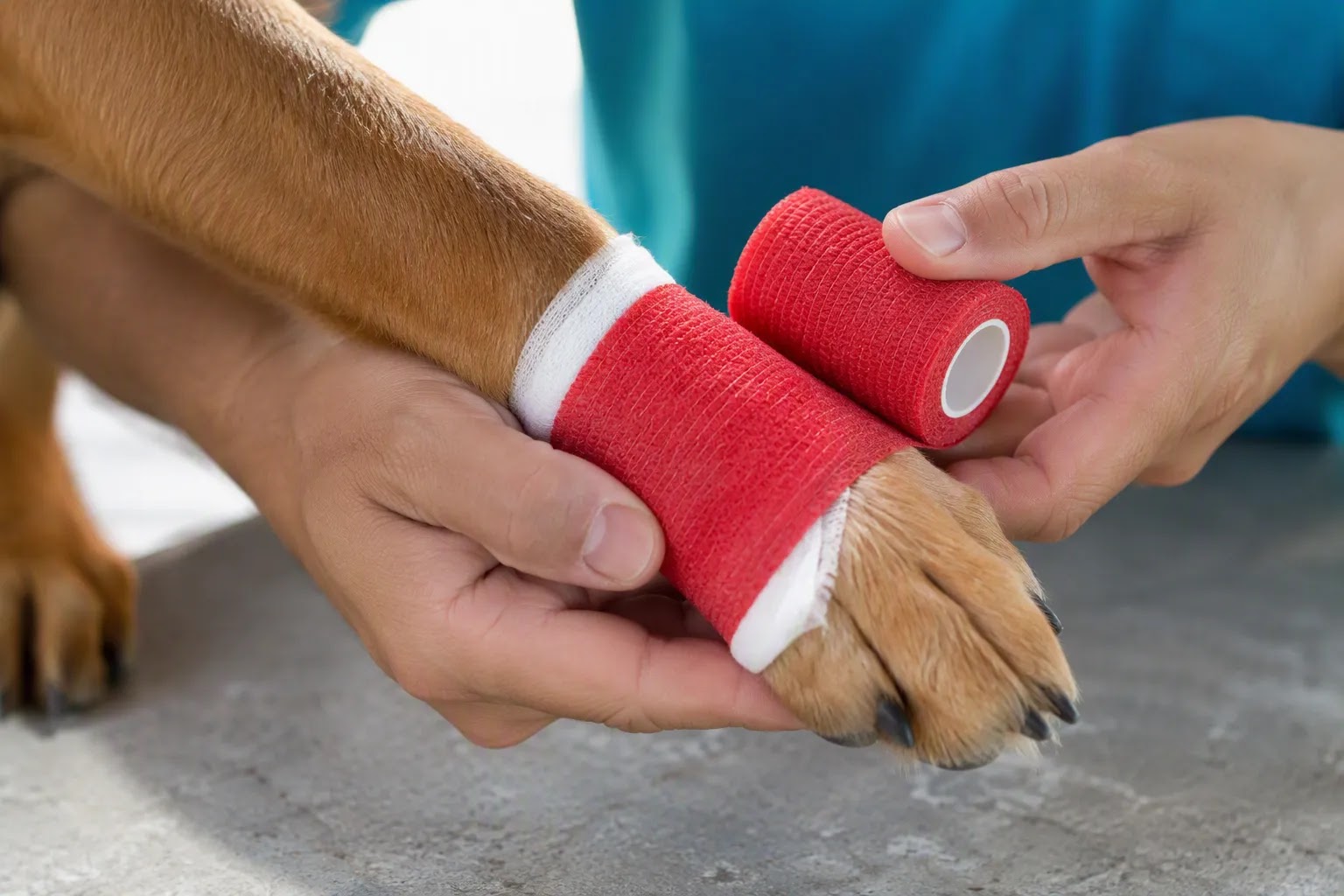
5. Self-Adhering Veterinary Wrap and Medical Tape
Self-adhering wrap can temporarily hold a dressing in place without sticking directly to fur, but it is also easy to misuse.
A wrap applied too tightly can restrict circulation. Veterinary wound-care guidance recommends home bandaging mainly when you have been shown how or when professional help is not readily available.
If you are not confident about applying a safe bandage, steady direct pressure with clean material during prompt transport may be safer than constructing a tight wrap.
6. Sterile Saline and a Large Needleless Syringe
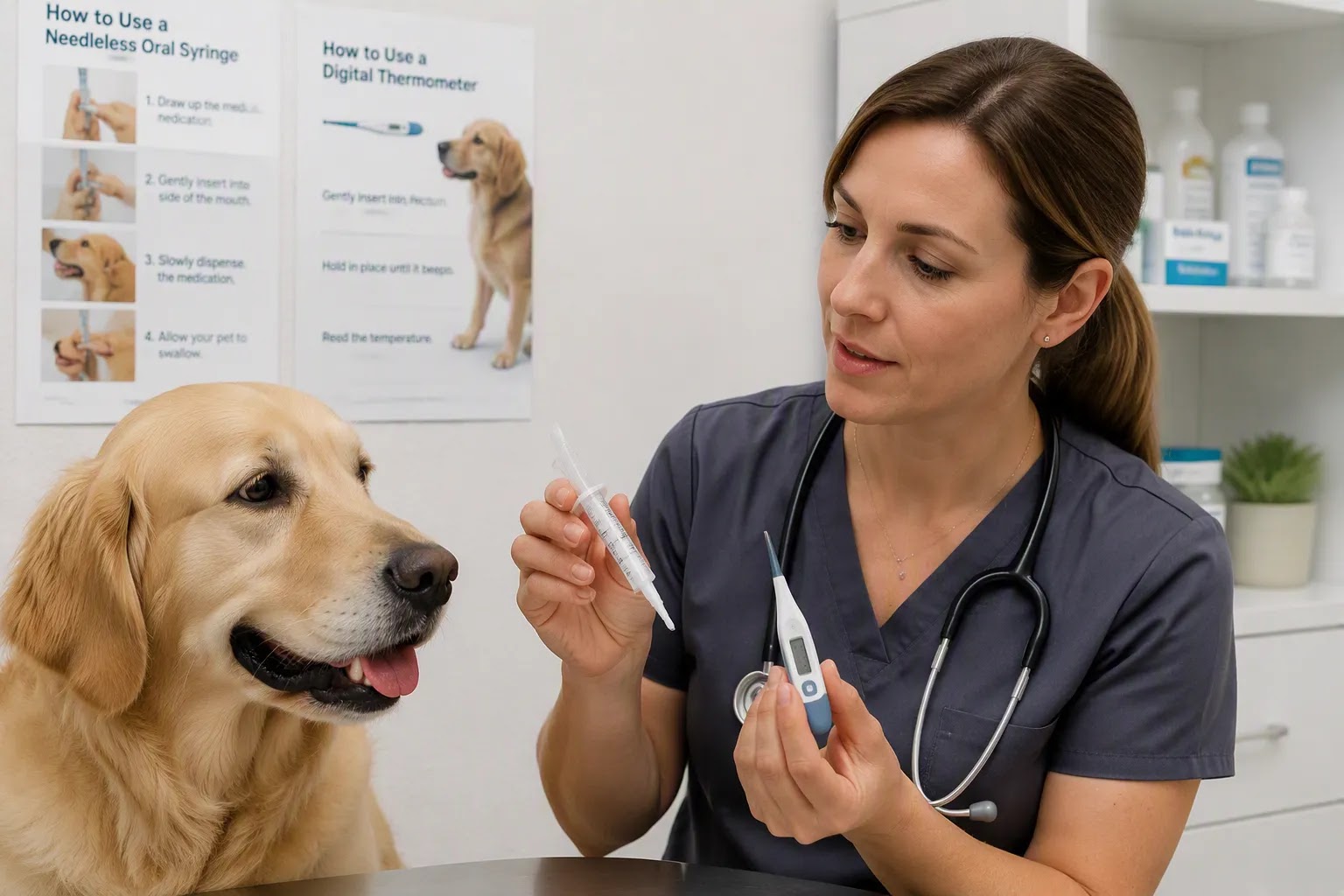
Plain sterile 0.9% saline is one of the most versatile liquids to keep in a first-aid kit. A large needleless syringe can help direct saline when gently flushing debris or contamination.
Clean water is also useful when saline is unavailable.
For ordinary wound first aid, don’t automatically use hydrogen peroxide, rubbing alcohol, essential oils, concentrated antiseptics, or household cleaners. Saline or clean water is a safer general first step unless your veterinarian gives different instructions.
If a chemical gets into the eyes: Begin flushing promptly with clean water or saline while obtaining product-specific veterinary or poison-control advice. Save the original container or photograph the label. Do not put ordinary skin antiseptics into the eyes.
7. Blunt-Tip Scissors and Tweezers
Blunt-ended scissors are useful for cutting gauze, tape, and wrap with less risk around moving skin.
Tweezers or forceps can help with obvious superficial debris, some splinters, or tick removal.
Don’t probe deeply into wounds or remove an object deeply embedded in the chest, abdomen, skull, or another major body area. Pulling out a penetrating object can worsen bleeding or internal injury.
8. A Digital Thermometer and Water-Based Lubricant
A digital rectal thermometer can provide useful information when your pet is stable enough to tolerate the procedure safely.
Typical rectal temperature ranges are approximately:
- Dogs: 99.5–102.5°F (37.5–39.2°C)
- Cats: 100.5–102.5°F (38.1–39.2°C)
But temperature is optional information during a true emergency. Don’t wrestle with a frightened, painful, collapsing, seizing, severely bleeding, or respiratory-distressed animal just to obtain a number.
9. A Properly Fitted Dog Muzzle
A painful or frightened dog can bite even without any previous history of aggression. A properly fitted muzzle that your dog has already been conditioned to wear can improve safety in some emergencies.
Do not muzzle every emergency. Do not use a muzzle when a dog is struggling to breathe or actively vomiting. Significant facial, airway, or chest injuries may also make muzzling unsafe, and Merck advises against emergency muzzling of short-nosed breeds such as pugs and bulldogs. Never leave a muzzled dog unattended.
For cats, a towel and secure carrier are generally more practical than attempting to improvise a muzzle during an emergency.
10. Disposable Gloves and a Flashlight
Gloves help protect you from blood, vomit, chemicals, contaminated wounds, and other bodily material.
A compact flashlight can help you inspect a paw, nail, mouth, wound hidden beneath fur, or carrier during transport at night.
Check the batteries whenever you inspect the rest of the kit.
11. A Few Carefully Chosen Pet-Specific Extras
Useful additions can include:
- a tick-removal tool
- styptic powder for minor nail bleeding
- an instant cold pack
- an Elizabethan collar
- copies of vaccination or medical records for travel
- a small supply of medication already prescribed specifically for that pet
Keep prescription medication clearly labeled with the pet’s name and current instructions. An emergency can change whether a normally prescribed medication should be given, so ask your veterinarian when there is any doubt.
The 60-Second Grab Check
A perfectly stocked first-aid kit is not very useful if nobody remembers where it is.
The 60-Second Grab Check: Every few months, imagine you need to leave for the emergency clinic immediately. Can you find the kit, carrier or leash, emergency-clinic information, and your pet’s medications within about a minute? Fix whatever slows you down before a real emergency tests the system.
Make sure every adult in the household knows where the kit and carrier are stored.
Some First-Aid Items Are Vet-Directed, Not Automatic
Veterinary first-aid lists sometimes include products that can be useful in selected situations. Owning them does not mean every emergency gives you permission to use them.
Hydrogen Peroxide
Do not use hydrogen peroxide as a routine wound cleaner. It can damage healthy tissue and delay healing.
Veterinary poison professionals may occasionally direct an owner to use 3% hydrogen peroxide in a selected dog after a particular ingestion. That decision depends on the toxin, timing, patient, and aspiration risk.
Do not give hydrogen peroxide to a cat to make them vomit. ASPCA Animal Poison Control warns that it is too irritating to feline stomach and esophageal tissue.
Activated Charcoal
Activated charcoal is not a universal poison antidote. It may be appropriate for some toxins and inappropriate or dangerous for others, particularly when aspiration is a concern.
Use it only when a veterinarian or veterinary poison professional specifically recommends it for that exposure.
Human Pain Medication
Do not automatically give ibuprofen, naproxen, acetaminophen, aspirin, or another human pain medication to a dog or cat.
Dogs and cats process medications differently from people, and common human pain relievers can cause gastrointestinal, kidney, liver, or red-blood-cell injury. Acetaminophen is particularly dangerous to cats.
Good first aid is usually simple: control dangerous external bleeding, flush contamination appropriately, prevent additional exposure, protect breathing and movement, and get professional guidance rather than turning an emergency into a medication experiment.
What If Your Pet May Have Been Poisoned?
Don’t start by searching your first-aid kit for an antidote.
- Stop further exposure when it is safe to do so.
- Check breathing and responsiveness.
- Save evidence: packaging, medication bottles, pesticide labels, plant material, ingredient lists, or remaining food.
- Estimate what happened: approximate amount and time of exposure.
- Call promptly: your veterinarian, emergency hospital, ASPCA Poison Control, or Pet Poison Helpline.
Do not wait for symptoms after a potentially significant poisoning simply because your pet currently appears normal.
If chocolate is involved, see our guide to what to do if your dog eats chocolate.
If an old closet or storage box is involved, see our guide to mothball poisoning in dogs and cats.
When the First-Aid Kit Is Not Enough
A first-aid kit should never delay transport for a life-threatening problem.
Seek immediate veterinary care for difficulty breathing, blue or gray gums, loss of consciousness, ongoing seizures, severe or uncontrolled bleeding, collapse, profound weakness, major trauma, suspected fracture or spinal injury, serious eye injury, significant poisoning, severe pain, heatstroke, or rapid deterioration.
Deep bite wounds, penetrating injuries, and major trauma can hide damage far beyond what is visible at the skin.
If your pet is unstable, getting safely to professional care matters more than trying to use every item in the bag.
Know How to Use the Kit Before You Need It
Owning supplies is different from knowing how to use them under stress.
Pet first-aid and CPR training can teach bleeding control, safe restraint, CPR, emergency transport, and other skills much more effectively than trying to learn them for the first time during an actual crisis.
The safest emergency habit may be one you practiced before anything went wrong.
How to Store and Maintain Your Pet First-Aid Kit
Keep supplies in a secure, water-resistant container that adults can reach quickly but pets and young children cannot.
A smaller duplicate kit can be useful for travel. Avoid permanently storing medications or other temperature-sensitive supplies in a hot vehicle.
Check the kit several times a year and replace:
- expired products
- opened or contaminated saline
- damaged packaging
- used or depleted gauze and gloves
- dead flashlight batteries
- outdated emergency-clinic information
- old medication lists
The Bottom Line
A useful pet first-aid kit is not the one with the most medicines. It is the one you can reach immediately and use without creating a second problem.
Keep clean gauze, saline, transport and restraint supplies, basic tools, emergency contacts, and your pet’s medical information ready. Know which items require veterinary direction, and recognize when the correct first-aid decision is simply to control what you safely can and leave for the emergency clinic.
First aid should buy your pet safer time on the way to treatment—not turn an emergency into a home medical experiment.
Veterinary Emergency & First-Aid Disclaimer: This article is for general educational purposes and does not replace veterinary diagnosis, emergency treatment, professional first-aid instruction, or case-specific poison-control advice. The safest response depends on the species, injury or toxin, severity, medical history, and condition of the individual animal. If your pet has difficulty breathing, uncontrolled bleeding, collapse, seizures, major trauma, significant poisoning, severe pain, or another rapidly worsening condition, seek emergency veterinary care immediately.
Sources & Editorial Standards
First-aid kit contents, emergency preparation, restraint, transport, and the limits of home first aid were reviewed against the Merck Veterinary Manual first-aid kit guidance and its dog and cat emergency guidance.
Bleeding control, wound flushing, and home-bandage precautions were checked against VCA Animal Hospitals wound-care guidance.
Normal rectal temperature ranges were checked against the Merck Veterinary Manual reference ranges.
Poison-control contact information and guidance against unsupervised home antidotes or vomiting induction were reviewed against ASPCA Poison Control and Pet Poison Helpline. Human pain-medication warnings were checked against current U.S. Food and Drug Administration guidance.
Some veterinary first-aid lists include products such as hydrogen peroxide or activated charcoal. Because those products can be inappropriate or harmful in the wrong exposure, this guide treats them as veterinary-directed tools rather than universal do-it-yourself first aid.