How Much Exercise Does a Puppy Need? Age, Breed & Overtired Signs
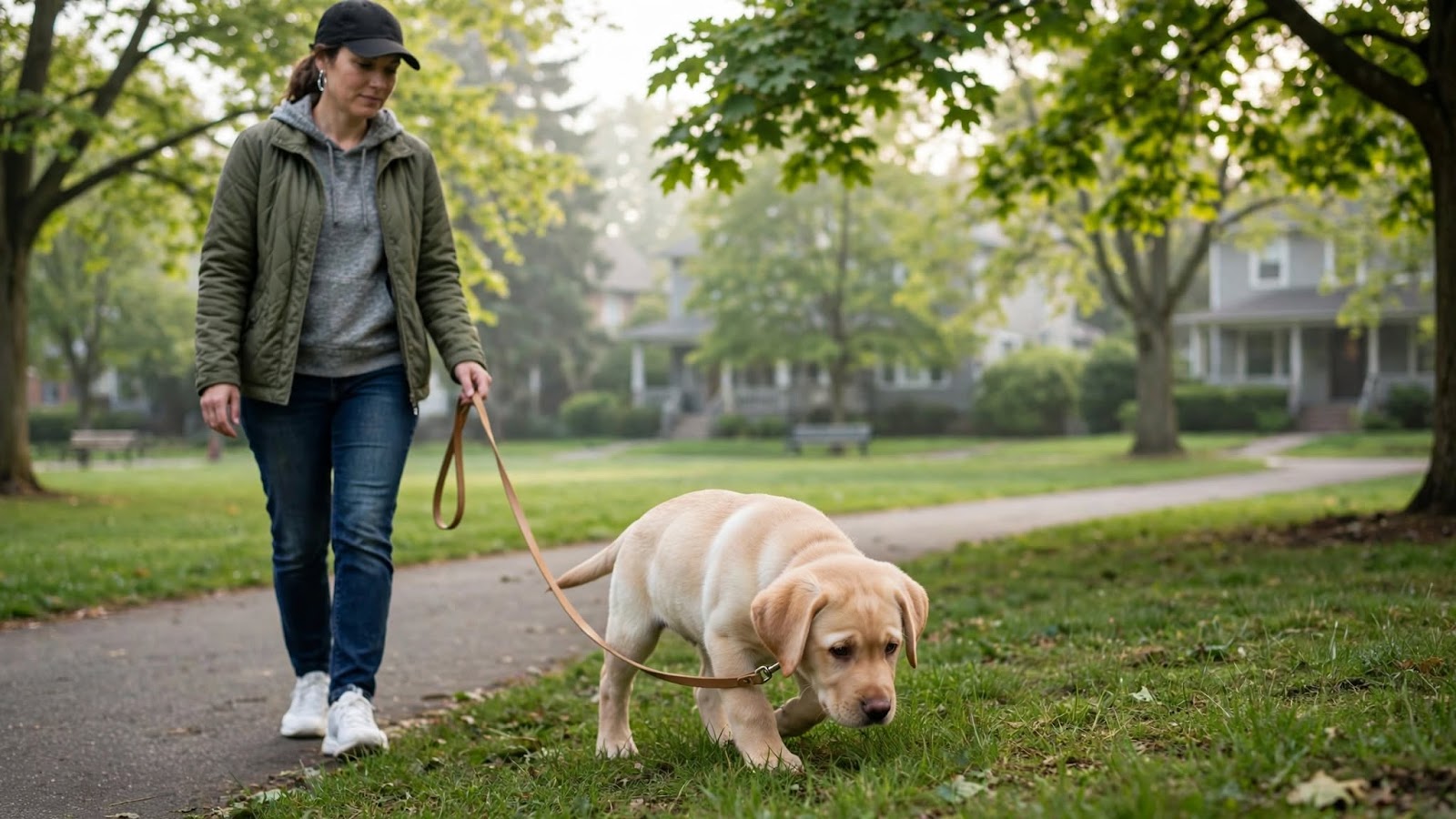
Your puppy comes home from a walk, races through the living room, grabs your shoelace, bites your sleeve, and acts as if the obvious solution is another walk.
It is easy to think, “This puppy still has energy. I must not be exercising them enough.” But a tired puppy can sometimes become more frantic, mouthy, and difficult to settle—not because they need another mile.
There is no single number of exercise minutes that fits every puppy. Age matters, but so do breed, body size, health, weather, exercise type, and how your puppy responds during and after activity.
Quick answer: Favor several short periods of self-paced play, sniffing, gentle walking, training, and exploration rather than one long workout. Increase activity gradually as your puppy develops, and pay attention to comfort and recovery instead of trying to reach a fixed minute target.
The “5-Minute Rule” Is Not a Scientific Exercise Formula
You may have heard that puppies should get about five minutes of exercise for every month of age.
It sounds wonderfully precise: 15 minutes for a three-month-old puppy, 30 minutes for a six-month-old, and so on.
But puppy development is not that tidy.
The PDSA’s puppy exercise guidance notes that there is no scientific evidence supporting the five-minute rule and that it is not appropriate for every puppy.
Two puppies of the same age can differ enormously in size, structure, stamina, heat tolerance, growth rate, and temperament.
A more useful question is:
What kind of activity can this puppy comfortably do, recover from, and repeat without signs that the session was too demanding?
Why Puppies Need a Different Exercise Plan From Adult Dogs
Your puppy may look athletic long before their skeleton has finished developing.
Growing bones contain growth plates that gradually mature and close. During development, strenuous repetitive exercise can place stresses on a body that is still changing.
VCA’s puppy exercise guidance recommends delaying activities such as long jogs, demanding hikes, repeated jumping, and competitive agility until appropriate physical maturity.
That does not mean puppies should avoid normal movement.
Play, walking, sniffing, exploration, training, and self-paced movement all contribute to physical coordination and mental development.
The distinction is between normal puppy activity and adult-style conditioning that continues because the human decides the puppy should keep going.
A Practical Puppy Exercise Guide by Age
Use these stages as a progression guide rather than a minute-by-minute prescription.
| Puppy Stage | Useful Exercise Focus | Be Cautious With |
|---|---|---|
| About 8–12 weeks | Short self-paced play, gentle exploration, sniffing, brief training and leash practice | Long walks, forced running, repetitive jumping or exhausting sessions |
| About 3–4 months | Short walks and sniffing outings, play, training, safe social experiences | Trying to “wear out” the puppy with distance, sustained running or repetitive ball chasing |
| About 4–6 months | Gradually longer exploration, varied walks, play and skill-building | High-impact repetitive exercise and sudden large increases in duration |
| About 6–12 months | Progressively more activity according to size, fitness and maturity | Assuming adolescent energy means the puppy is ready for adult endurance exercise |
| Late adolescence | Gradual progression toward adult activities as physical development allows | Long-distance running, intense jumping or demanding sports before appropriate maturity |
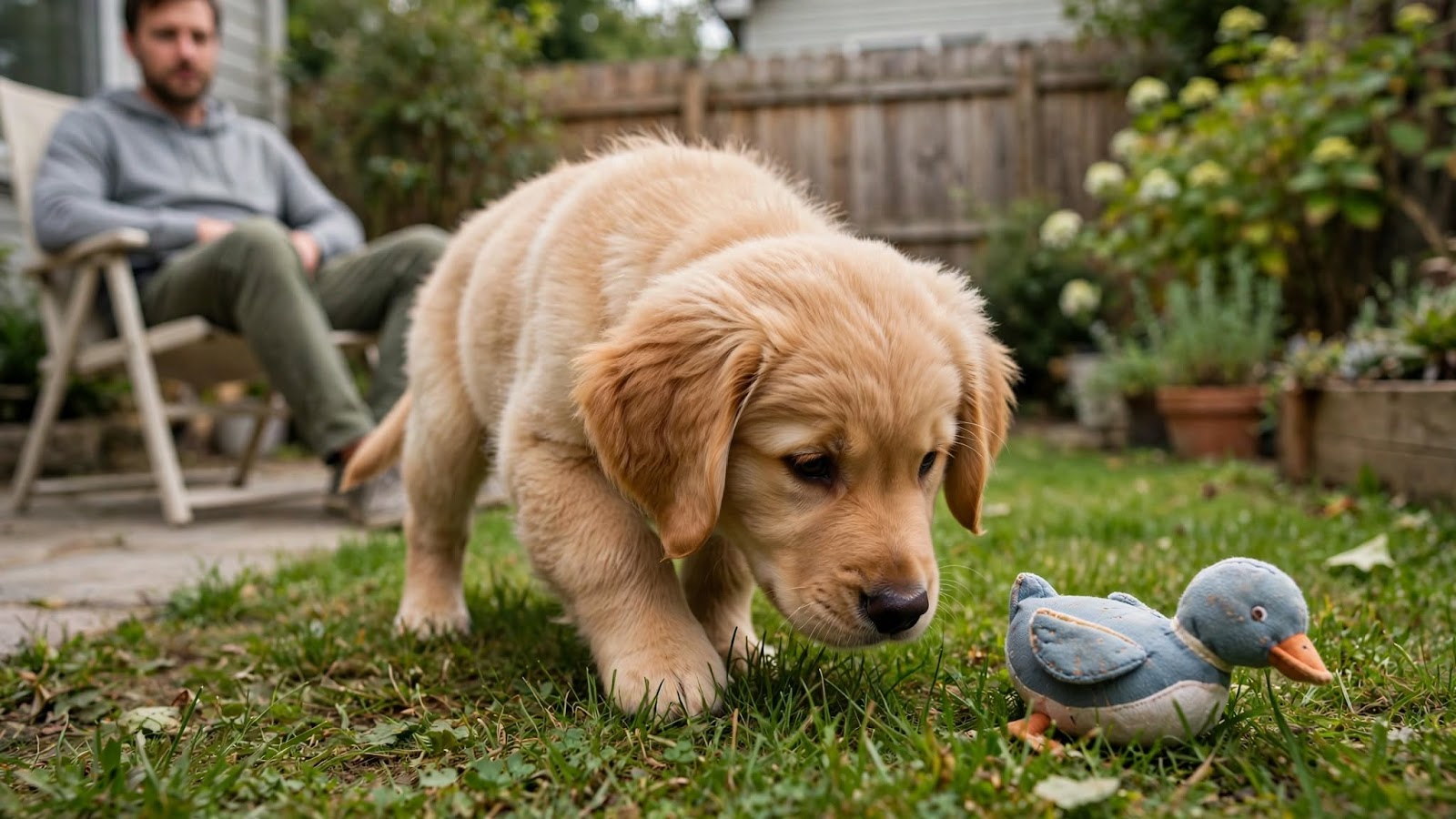
At 8–12 weeks, think experiences rather than workouts. Short play, tiny training sessions, sniffing, and carefully managed exploration usually make more sense than trying to complete a walking target.
If vaccines are not yet complete, outdoor activity also needs to account for local infectious-disease risk. Our guide to safe puppy socialization before vaccines are complete covers that balance separately.
From roughly 3–6 months, increase variety before intensity. Sniffing, varied appropriate surfaces, gentle walking, play, and short training opportunities can make an outing meaningful without turning it into an endurance session.
During adolescence, energy can be misleading. A puppy may run faster and seem capable of much more while their body is still developing. Smaller dogs generally mature earlier than large and giant breeds, so age alone does not tell you when strenuous adult exercise is appropriate.
Breed and Body Type Change the Exercise Plan
Breed influences the plan, but “high energy” should not be translated into “exercise this puppy until they stop moving.”
- Large and giant breeds: tend to mature more slowly. Favor gradual progression and self-paced activity rather than introducing sustained running or repetitive high-impact exercise too early.
- Sporting, working, and herding puppies: may seem endlessly energetic, but adding more running is not the only answer. Sniffing, training, searching, exploration, and household skills can provide useful activity too.
- Flat-faced puppies: need additional caution with strenuous activity in heat and humidity because brachycephalic dogs can have more difficulty cooling themselves effectively.
- Toy and small breeds: still need opportunities to move and explore, but a distance that feels short to you may represent a large number of steps for a very small puppy.
Cornell University’s canine heat-safety guidance identifies brachycephalic dogs as being at increased risk in hot or humid conditions.
Exercise Is More Than the Leash Walk
One reason owners accidentally overdo puppy activity is that they count only the walk.
Then they add fetch, backyard play, training, visitors, wrestling with another dog, puppy class, and an exciting outing—and still wonder whether the puppy needs more exercise.
From the puppy’s perspective, that may already have been a very full day.
Useful activity can include:
- Self-paced play
- Sniffing and exploration
- Short walks
- Reward-based training
- Search-and-find games
- Age-appropriate social experiences
- Gentle play with compatible dogs
- Food enrichment
- Exploring a new environment
A slow sniffing outing may therefore be more mentally demanding than the distance covered suggests.
Minutes and miles alone do not tell you how demanding an activity was.
Overtired or Physically Overexercised?
These can look different, and neither can be judged from one sign alone.
Overtired Puppies May Look More Energetic
A puppy who needs rest does not always curl up and fall asleep.
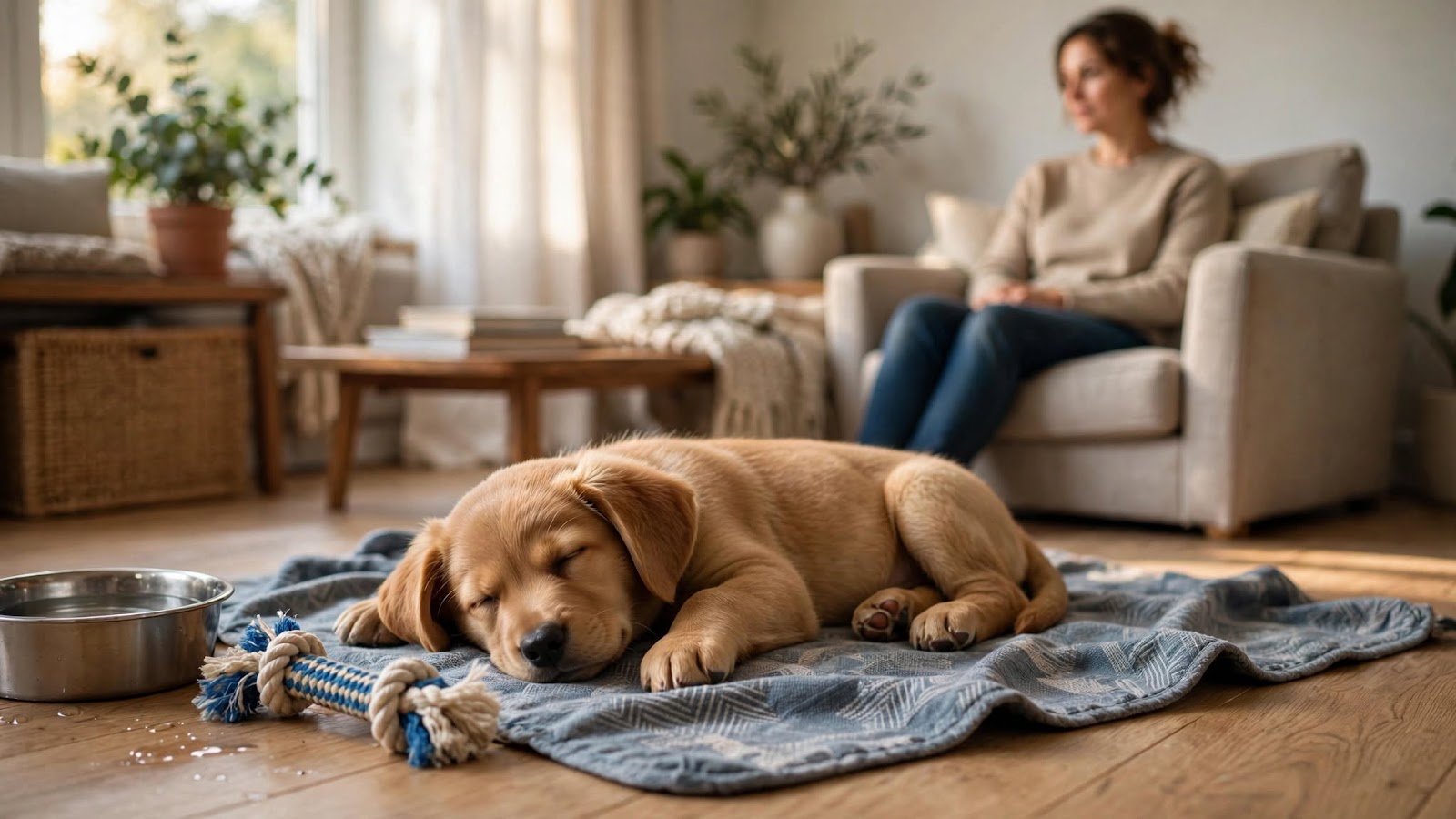
After an already busy period, some puppies become increasingly frantic. You may notice more nipping, grabbing clothes or the leash, barking, zooming, difficulty responding to familiar cues, or an inability to settle.
Those behaviors can also have other causes, so they do not prove tiredness by themselves.
But when the pattern repeatedly appears after lots of activity and improves after a calm transition and sleep, automatically adding another workout may make the cycle worse.
Our puppy calm-down plan after play focuses specifically on that transition.
Physical Overexertion Is a Different Warning
During activity, watch the puppy instead of focusing only on the route you intended to finish.
VCA’s exercise guidance recommends allowing rest when a dog appears fatigued, becomes unusually out of breath, or repeatedly tries to sit or lie down.
Other reasons to stop and reassess include repeatedly falling behind, refusing to continue, unusually heavy or prolonged panting, a change in gait, stiffness later, or obvious discomfort after exercise.
Stop and seek veterinary advice when appropriate if your puppy is limping, painful, weak, struggling to breathe, collapsing, or showing exercise intolerance that seems disproportionate to the activity. Persistent or significant signs should not be treated with a tougher exercise program.
Use Recovery to Decide Whether to Increase Exercise
An excited puppy may happily continue an activity even when the session has already been demanding.
That makes recovery especially useful feedback.
- During activity: Is your puppy moving comfortably and willingly?
- Afterward: Can they drink, settle, and transition toward normal rest?
- Later and the next morning: Are they moving normally, getting up comfortably, and behaving like themselves?
If the same outing repeatedly ends with a puppy dragging behind, becoming intensely dysregulated afterward, or appearing stiff later, make the next session easier rather than repeating it until they “get used to it.”
If your puppy still seems energetic, consider what has already happened that day.
If they have had little physical activity, more movement may be appropriate. If they have moved plenty but had little mental engagement, sniffing or a short training game may fit better. If the day already included play, walks, training, visitors, and exploration, rest may be the missing ingredient.
Young puppies also need substantial sleep. Our puppy sleep schedule and overtired-sign guide covers that part of the daily rhythm separately.
A Simple Daily Puppy Exercise Framework
You do not need a minute-by-minute activity spreadsheet.
Instead, build the day around a simple rhythm:
- Meet basic needs first. Potty, food, water, and a comfortable environment.
- Choose an age-appropriate activity. Walking, sniffing, play, training, or exploration can all count.
- Let the puppy influence the pace. Allow natural pauses and sniffing instead of forcing a distance target.
- Stop before exhaustion. The goal is useful activity, not complete physical depletion.
- Allow recovery. Watch how your puppy settles and how they move later before deciding to increase the next session.
As your puppy grows, increase activity gradually. Changing one variable at a time—a little more distance, duration, or environmental difficulty—makes it easier to see how the puppy handles the progression.
Activities to Save Until Your Puppy Is More Mature
A puppy can be active without training like an adult athlete.
Be cautious about routinely introducing these before appropriate physical maturity:
- Long-distance jogging
- Running alongside a bicycle
- Repeated high jumps
- High-impact agility obstacles
- Long forced hikes where the puppy cannot choose to stop
- Repetitive fetch involving repeated hard acceleration, sharp turns, and jumping
The right time to begin more demanding activities varies with breed, size, health, development, and the activity itself.
If you want your puppy to become a running, hiking, agility, or working partner, your veterinarian can help you decide when their physical development is ready for that progression.
You Do Not Have to Exhaust Your Puppy to Raise a Calm Dog
A good puppy exercise plan leaves room for movement, curiosity, learning, and recovery.
Some days your puppy will naturally do more. On others, a short sniffing outing and several small play or training sessions may be enough. Weather, growth, exciting experiences, health, and the previous day’s activity can all influence what feels comfortable.
Use age and breed as context rather than a stopwatch. Favor self-paced activity over forced endurance, avoid repetitive high-impact exercise during development, and watch how your puppy recovers.
And when that evening tornado of teeth and zoomies appears after an already busy day, consider rest before automatically reaching for the leash again.
The goal is not to own the most exhausted puppy on the block. It is to help a growing dog become active, confident, physically comfortable, and gradually capable of doing more without rushing the process.