
Why Is My Dog Not Eating? 7 Causes & When to Call a Vet

The bowl goes down.
Your dog walks over, sniffs it, and walks away.
If this is the same dog who normally appears before you’ve even opened the food bag, that small change can feel surprisingly worrying.
Sometimes the cause is minor: stress, stale food, a routine change, or a brief stomach upset.
But appetite loss can also be an early sign of pain or illness.
The useful question isn’t only:
“Did my dog eat?”
It’s:
“Did my dog want to eat, and what else changed?”
Quick Answer: A healthy adult dog that skips one meal but remains bright, comfortable, hydrated, and otherwise normal may sometimes be monitored closely. Contact your veterinarian sooner if your dog repeatedly refuses food, seems hungry but cannot eat comfortably, or develops vomiting, diarrhea, pain, weakness, lethargy, abnormal thirst, or another behavior change. Puppies, diabetic dogs, and medically fragile dogs require more caution.
Does Your Dog Not Want Food—or Want It but Can’t Eat?
This is one of the most useful distinctions you can make.
Some dogs truly lose interest in food. Veterinarians call this reduced appetite or anorexia.
Others still appear hungry but have difficulty eating. This is often called pseudo-anorexia.
A dog with pseudo-anorexia may approach the bowl but then:
- Drop food
- Chew unusually
- Back away after the first bite
- Drool
- Struggle to swallow
- Accept soft food but refuse hard food
The First-Bite Test: Watch the first 30 seconds. A dog that ignores food completely gives you different information from one that eagerly approaches, tries to chew, drops the food, and walks away.
7 Reasons Your Dog May Suddenly Stop Eating
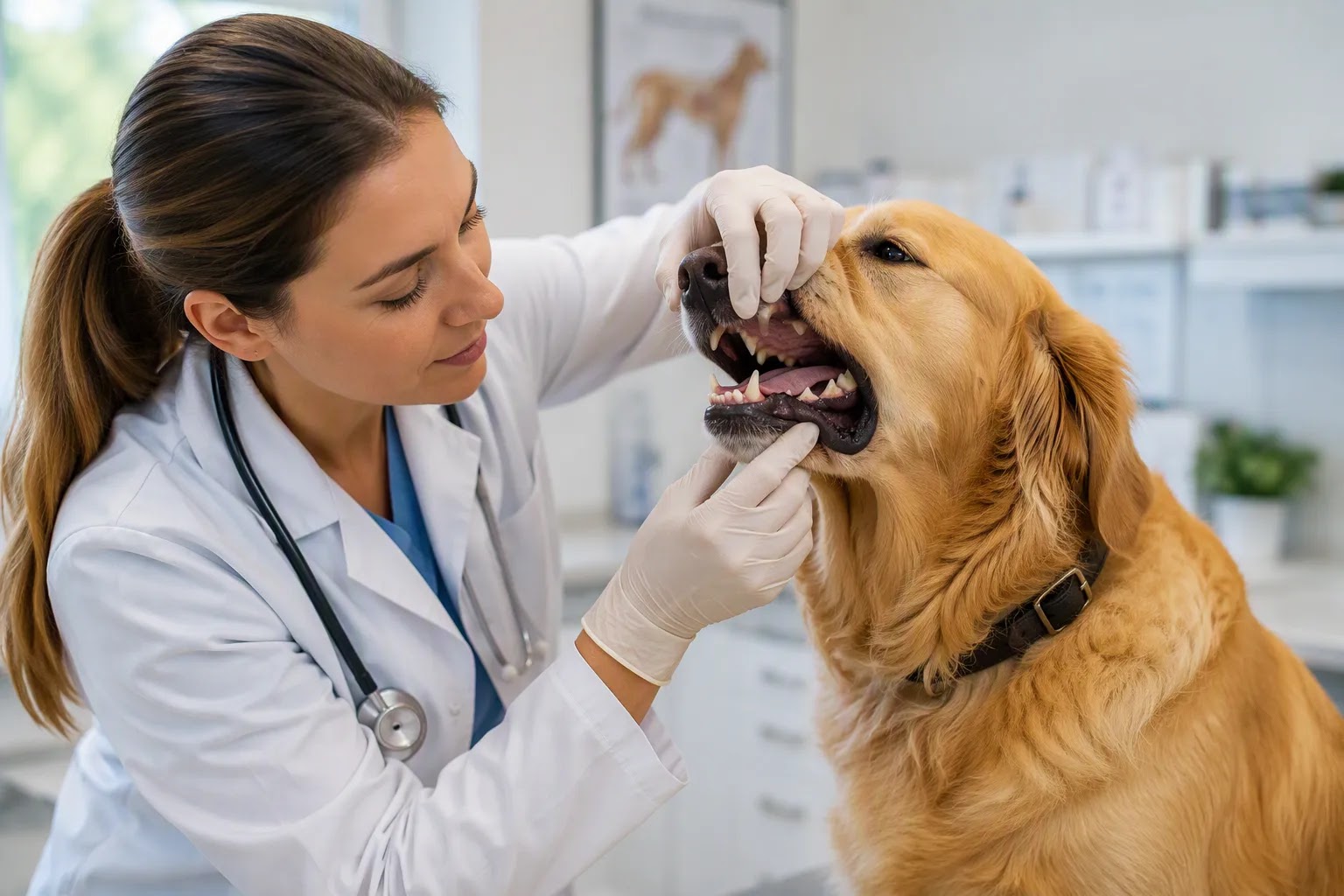
1. Dental or Mouth Pain
A dog can be hungry and still avoid food because eating hurts.
Possible causes include periodontal disease, a fractured tooth, inflamed gums, oral injury, a foreign object, or pain involving the jaw or throat.
Clues include:
- Dropping food
- Chewing on one side
- Drooling
- Pawing at the mouth
- Blood near food or toys
- Suddenly worse breath
- Refusing hard food while accepting softer food
Dogs can hide dental pain surprisingly well.
Do not force open the mouth of a painful or frightened dog. A veterinary oral examination is safer.
2. Nausea or Gastrointestinal Disease
A nauseated dog may stop eating before vomiting begins.
Possible clues include:
- Lip licking
- Repeated swallowing
- Drooling
- Vomiting or retching
- Diarrhea
- Restlessness
- Abdominal discomfort
- Approaching food and repeatedly turning away
Causes range from mild digestive upset to pancreatitis, gastrointestinal inflammation, infection, or obstruction.
Emergency warning: Repeated attempts to vomit without producing anything, a swollen or painful abdomen, marked restlessness, heavy drooling, weakness, or collapse can occur with gastric dilatation-volvulus (GDV or bloat). Seek emergency veterinary care immediately.
Foreign-body obstruction is another concern.
If your dog may have swallowed a toy, sock, bone fragment, fabric, corn cob, or another object and then develops appetite loss, vomiting, lethargy, or abdominal pain, contact a veterinarian promptly.
3. Pain Elsewhere in the Body
Pain does not have to originate in the mouth to reduce appetite.
Arthritis, back pain, injury, abdominal pain, or other uncomfortable conditions can make eating less appealing.
You may notice:
- Difficulty settling
- Slower movement
- Reluctance to jump or use stairs
- Panting at rest
- Withdrawal
- Irritability when touched
- Changes in sleeping posture
Dogs do not always cry when they hurt. Sometimes appetite or behavior changes first.
4. Stress or a Major Routine Change
Travel, boarding, moving, visitors, construction, a new pet, household conflict, or the absence of a familiar person can temporarily reduce appetite.
Stress becomes more plausible when the timing fits and your dog otherwise appears physically well.
But persistent appetite loss should not automatically be blamed on anxiety.
5. Something Is Wrong With the Food
Sometimes the problem really is in the bowl.
Check whether:
- The food is expired
- The package has been open unusually long
- It smells or looks different
- Moisture entered the bag
- Mold or insects are present
- The recipe recently changed
A dog that refuses the normal meal but eagerly accepts treats has not necessarily been proven healthy.
Dental pain, nausea, and learned food preferences can still produce selective eating.
6. Medication or a Recent Vaccination
Some medications can cause nausea, digestive upset, or reduced appetite.
If the change began after starting medication, contact the prescribing veterinarian before stopping or changing it yourself.
A mild decrease in appetite can also occur briefly after vaccination.
More serious reactions require faster action.
After vaccination, seek prompt veterinary care for facial swelling, difficulty breathing, collapse, repeated vomiting, severe diarrhea, or widespread hives.
7. An Underlying Medical Condition
Loss of appetite is a symptom, not a diagnosis.
Many illnesses can reduce food intake, including kidney or liver disease, pancreatitis, infections, gastrointestinal disease, endocrine or metabolic disorders, some cancers, and toxin exposure.
This does not mean a dog that skips breakfast probably has a serious disease.
It means persistent or unexplained appetite loss should not automatically be labeled stubbornness or pickiness.
Puppies Need a More Cautious Approach
Very young puppies—especially tiny toy-breed puppies—have less metabolic reserve and may be more vulnerable to hypoglycemia when food intake drops.
Contact a veterinarian promptly if a puppy refuses food and becomes:
- Weak or shaky
- Unusually sleepy
- Disoriented
- Cold
- Vomiting or having diarrhea
- Unable to stand normally
For normal puppy meal schedules and portions, see our Puppy Feeding Guide: How Much, How Often & What to Feed.
What Can You Safely Check at Home?
If an otherwise healthy adult dog has skipped one meal but remains bright, comfortable, hydrated, and completely free of warning signs, a few simple checks are reasonable.
- Make sure the normal food is fresh.
- Offer a fresh portion in a calm location.
- Slightly warm appropriate wet food or add a little warm water to increase aroma.
- Keep fresh drinking water available.
- Note whether treats are accepted.
- Watch for vomiting, diarrhea, pain, drooling, weakness, or unusual behavior.
- Think about medication, travel, stress, garbage access, toxins, or objects that may have been swallowed.
Avoid responding to one skipped meal by offering cheese, fatty meat, rich table scraps, and several unfamiliar foods at once.
That can create gastrointestinal upset and make the original problem harder to interpret.
Chicken and rice is also not a universal treatment. If your dog appears ill enough to need a therapeutic diet, ask your veterinarian what diet fits the suspected problem.
How Long Can a Dog Go Without Eating Before You Call a Vet?
There is no single safe countdown for every dog.
Age, size, medical history, medications, hydration, and accompanying symptoms matter more than the clock alone.
A healthy adult dog that skips one meal but otherwise behaves normally may not have an emergency.
However, complete refusal that continues into subsequent meals deserves veterinary advice rather than prolonged waiting.
VCA Urgent Care currently recommends veterinary evaluation when a pet has gone more than 12 hours without eating.
Seek advice sooner for:
- Puppies
- Diabetic dogs
- Medically fragile dogs
- Dogs that require medication with food
- Dogs showing any other concerning symptom
Don’t diagnose the bowl. Whether your dog approaches food, tries to chew, accepts treats, drinks normally, vomits, seems painful, or acts differently is often more informative than the amount of kibble left behind.
When Is Not Eating an Emergency?
Seek urgent veterinary care if appetite loss occurs with:
- Repeated unproductive retching
- A swollen or painful abdomen
- Repeated vomiting or inability to keep water down
- Known or suspected foreign-object ingestion
- Known or suspected toxin exposure
- Collapse or marked weakness
- Difficulty breathing
- Pale, blue, or gray gums
- Severe pain
- Seizures or major neurological changes
- Large amounts of blood in vomit or stool
These are not situations where the solution is finding a tastier food.
What Information Helps Your Veterinarian?
Before calling or attending an appointment, note:
- When your dog last ate normally
- Whether they will eat treats or soft food
- Whether they are drinking normally
- Any vomiting or diarrhea
- Changes in urination
- Recent medications or vaccination
- Possible access to garbage, toxins, or foreign objects
- Any recent food change
- Signs of pain or weight loss
If the food itself may be relevant, photograph the package, lot information, and ingredient panel before you leave home.
What Not to Do
- Don’t force-feed a nauseated, painful, or distressed dog.
- Don’t give human medications unless your veterinarian directs you to.
- Don’t intentionally withhold water.
- Don’t cycle through multiple rich foods just to provoke eating.
- Don’t use an appetite stimulant as a substitute for finding the cause.
- Don’t assume accepting treats rules out illness.
For everyday feeding once your dog is eating normally again, see our Dog Nutrition Guide: What to Feed, How Much & How Often.
Sources & Editorial Standards
- VCA Animal Hospitals — Anorexia and Pseudo-Anorexia in Dogs
- VCA Urgent Care — Loss of Appetite
- Merck Veterinary Manual — Gastric Dilatation and Volvulus
- Merck Veterinary Manual — Gastrointestinal Obstruction
- Merck Veterinary Manual — Dental Disorders of Dogs
- AAHA — Postvaccination Adverse Events and Reactions
Editorial note: Reduced appetite is a symptom with many possible causes. Home monitoring in this article applies only to otherwise healthy adult dogs without warning signs. Puppies, diabetic dogs, medically fragile dogs, and dogs with persistent appetite loss or additional symptoms may require earlier veterinary assessment.
The Bottom Line
When a food-loving dog suddenly walks away from dinner, don’t jump immediately to either extreme:
“They’re just being picky.”
or:
“Something terrible must be wrong.”
Start with the first bite.
Does your dog want the food but struggle to eat it?
Do they refuse everything?
Did pain, vomiting, diarrhea, weakness, unusual thirst, or another change appear at the same time?
Appetite is one signal. The pattern around it tells you how seriously to take the change.