
Dog Ate Chocolate? What to Do, Toxic Amounts & Symptoms
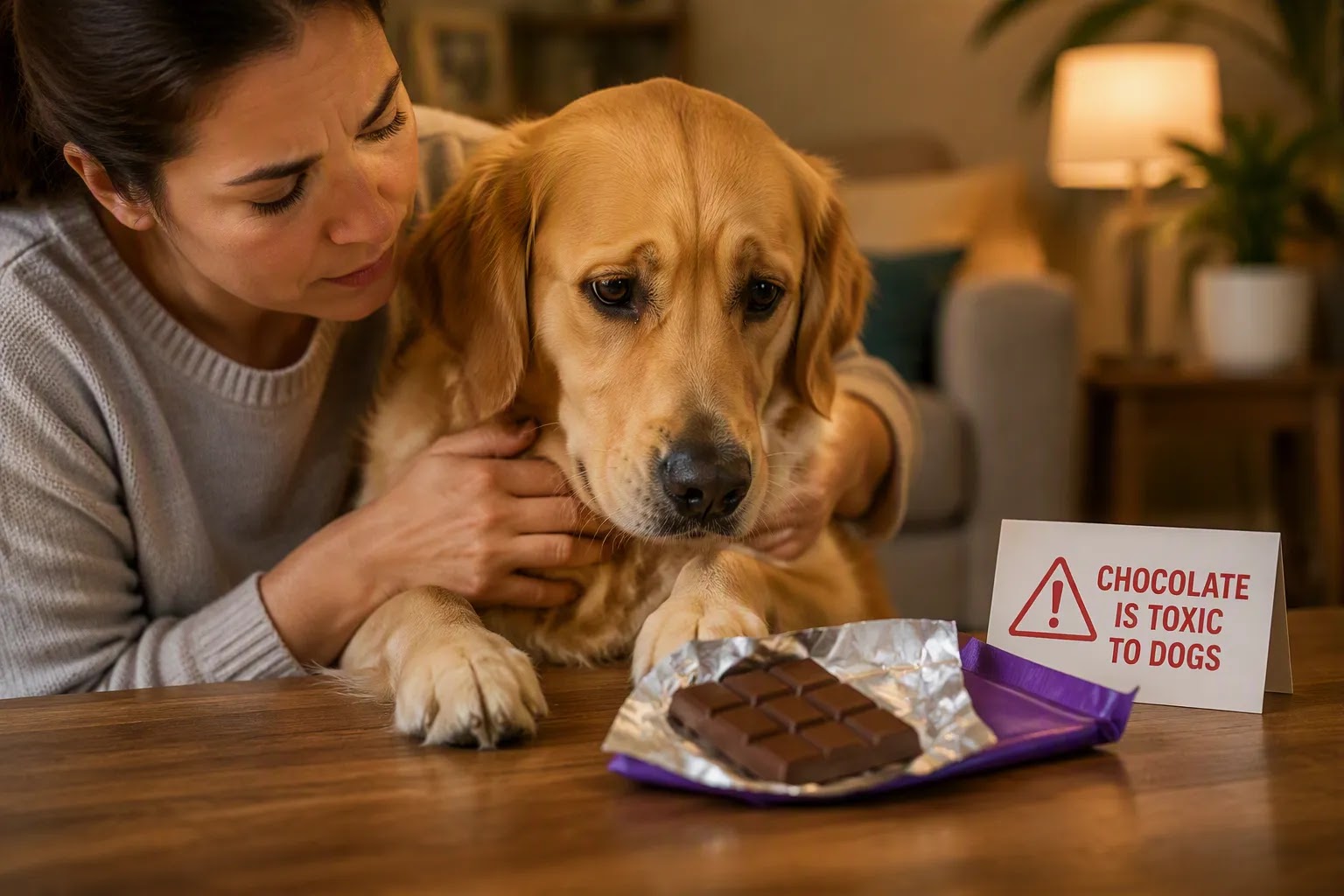
You spot the wrapper first.
It’s torn open on the floor, your dog looks suspiciously satisfied, and suddenly you’re trying to remember how much chocolate was left inside.
Chocolate can poison dogs, but the risk varies dramatically with the type of chocolate, amount eaten, dog’s body weight, and other ingredients in the product.
A large dog eating a tiny piece of milk chocolate is a very different exposure from a small dog eating cocoa powder or unsweetened baking chocolate.
Quick Answer: Remove any remaining chocolate, save the package, identify the exact product and approximate amount eaten, note when it happened, and get your dog’s current weight. Check the complete ingredient list for additional hazards such as xylitol, raisins, macadamia nuts, or coffee. Then contact your veterinarian, an emergency veterinary clinic, or a veterinary poison-control service for case-specific advice rather than waiting for symptoms.
What Should You Do First?
Chocolate poisoning is time-sensitive.
Your dog can look completely normal immediately after eating chocolate and still have a potentially important exposure.
The Wrapper Rule: Don’t throw away the package while cleaning up. Keep it with you. The label may show the chocolate type, cocoa percentage, package weight, serving size, and other ingredients that make the risk assessment much more accurate.
Before you call, gather your dog’s weight, the exact product, the approximate amount missing, and the approximate time it was eaten.
Why Is Chocolate Toxic to Dogs?
Chocolate contains two related compounds called theobromine and caffeine.
Together they are referred to as methylxanthines.
Dogs eliminate these compounds much more slowly than people, allowing sufficiently large doses to affect the gastrointestinal tract, cardiovascular system, muscles, and central nervous system.
Possible effects include vomiting, diarrhea, excessive thirst and urination, restlessness, rapid heart rate, abnormal heart rhythms, elevated body temperature, tremors, and seizures.
Severe poisoning can be life-threatening.
Which Chocolate Is Most Dangerous?
In general, the more concentrated the cocoa product, the greater the methylxanthine exposure per ounce.
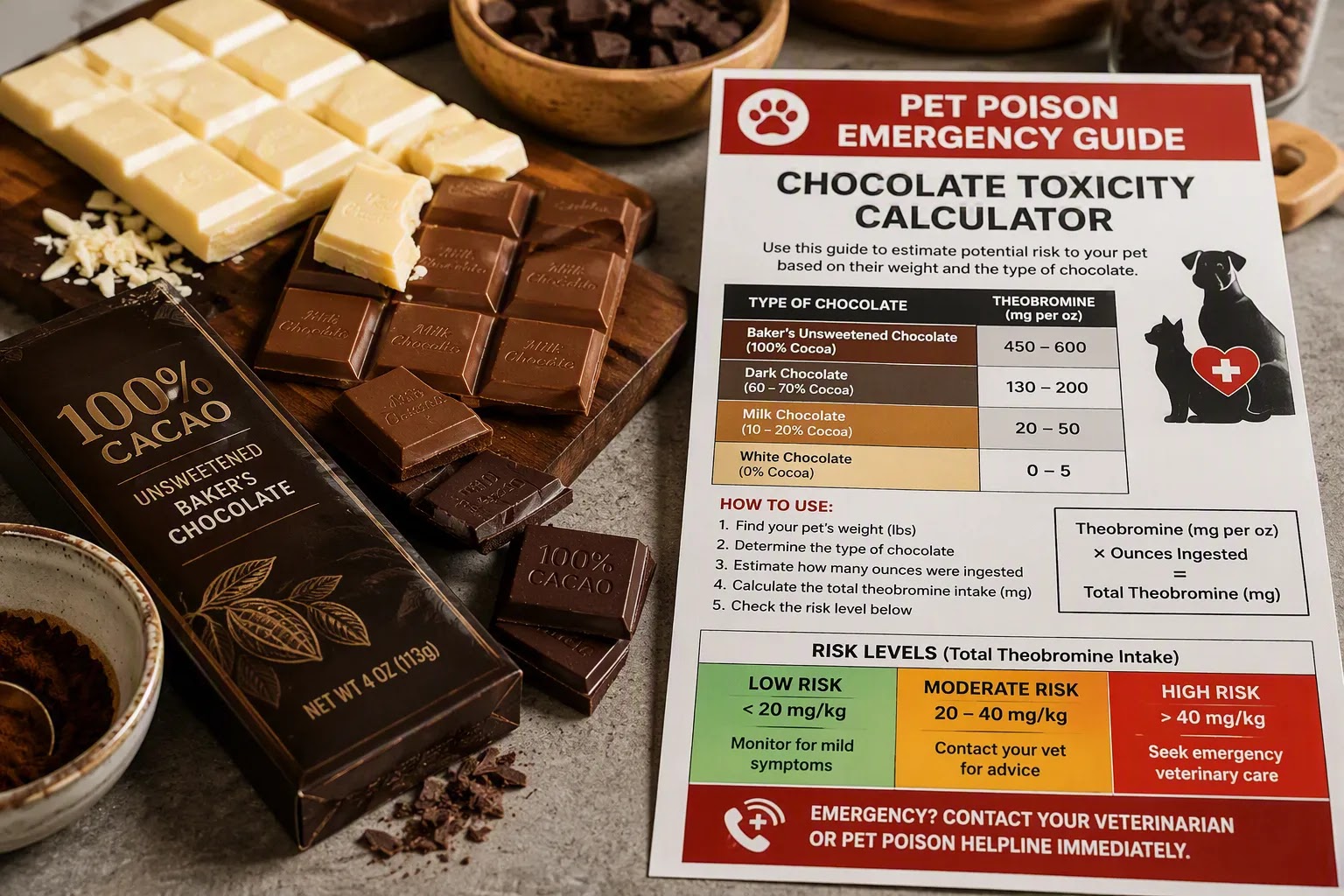
| Chocolate Type | Approx. Methylxanthines | Relative Concern |
|---|---|---|
| Dry cocoa powder | 807 mg/oz | Extremely concentrated |
| Unsweetened baker’s chocolate | 440 mg/oz | Very high concern |
| Semisweet / sweet dark chocolate | 150–160 mg/oz | Potentially dangerous in relatively small amounts |
| Milk chocolate | 64 mg/oz | Less concentrated, but larger amounts can still poison a dog |
| White chocolate | 1.1 mg/oz | Negligible methylxanthine exposure, though other risks remain |
These are veterinary reference values—not guaranteed concentrations for every commercial product.
Different cocoa beans, recipes, brands, and cocoa percentages can produce different methylxanthine concentrations.
How Much Chocolate Is Toxic to a Dog?
There is no universal number of squares or ounces that is toxic to every dog.
Veterinary toxicologists estimate exposure in milligrams of methylxanthines per kilogram of body weight.
Merck reports that mild clinical signs may begin around 20 mg/kg, cardiovascular effects become more concerning around 40–50 mg/kg, and seizures can occur around 60 mg/kg or more.
These are risk-assessment ranges, not “safe versus toxic” cutoff lines. Individual sensitivity varies, chocolate concentrations vary, and mixed foods may contain other dangerous ingredients. Don’t use a calculation to justify waiting when the exposure may be significant.
A veterinary professional or poison-control service can combine the actual product, missing amount, and your dog’s weight to estimate the exposure more reliably.
Dog Ate Chocolate? Follow These Steps
- Remove what’s left. Prevent your dog or another animal from eating more.
- Save the packaging. Find the chocolate type, cocoa percentage, package size, and full ingredient list.
- Estimate the missing amount. Compare what’s left with the original package.
- Note when it happened. An approximate time is still useful.
- Get your dog’s weight. A recent veterinary weight is ideal.
- Check for other hazards. Look for xylitol, raisins, macadamia nuts, coffee, or swallowed packaging.
- Call for professional advice. Contact your veterinarian, an emergency veterinary clinic, ASPCA Animal Poison Control Center, or Pet Poison Helpline.
Don’t Automatically Make Your Dog Vomit
Internet advice often recommends giving hydrogen peroxide immediately.
Don’t do that automatically.
Veterinary professionals may recommend inducing vomiting after some recent exposures in dogs that are still clinically normal, but that decision depends on timing, what was swallowed, the dog’s condition, aspiration risk, and other factors.
Do not use salt, oil, milk, or other improvised remedies to make a dog vomit.
Activated charcoal isn’t a routine home treatment either.
Current Merck guidance is selective about charcoal in chocolate poisoning because methylxanthines can contribute to fluid loss, while activated charcoal can add dehydration or electrolyte risks.
Check the Entire Ingredient List
Brownies, cookies, candy, protein bars, and desserts can create more than one poisoning problem.
Pay particular attention to xylitol, which can cause severe hypoglycemia and liver injury; raisins, which can cause acute kidney injury in susceptible dogs; macadamia nuts, which can cause weakness, vomiting, tremors and incoordination; and coffee or espresso, which adds additional caffeine.
Large quantities of fatty chocolate products can also cause gastrointestinal upset and may contribute to pancreatitis in susceptible dogs.
Tell the veterinarian if foil, wrappers, plastic, or other packaging may also have been swallowed because that creates a separate gastrointestinal obstruction risk.
Not sure about another ingredient? If your dog also ate another food or ingredient, use our Food Safety Checker for a quick first look at whether it may be safe, risky, or potentially toxic.
Important: The checker is a screening tool and does not replace veterinary or poison-control advice for chocolate exposure, suspected poisoning, or a dog showing symptoms.
What Are the Signs of Chocolate Poisoning?
Clinical signs commonly begin within approximately 6–12 hours after a significant exposure, although timing varies.
Early signs may include vomiting, diarrhea, increased thirst and urination, abdominal discomfort, panting, restlessness, and hyperactivity.
More severe poisoning can cause marked agitation, rapid or abnormal heart rhythm, loss of coordination, muscle rigidity or tremors, high body temperature, seizures, weakness, or collapse.
Seek urgent veterinary care for tremors, seizures, collapse, severe weakness, marked agitation, breathing difficulty, very rapid or irregular heartbeat, severe repeated vomiting, or other rapidly worsening signs. A substantial exposure to cocoa powder, baking chocolate, or concentrated dark chocolate also deserves prompt professional assessment before symptoms appear.
What Will the Veterinarian Do?
Treatment depends on the estimated dose, type of chocolate, time since ingestion, additional ingredients, and whether clinical signs have started.
After a recent exposure in an appropriate patient, the veterinarian may consider gastrointestinal decontamination.
A dog with significant toxicity may require intravenous fluids, medication for vomiting, tremors or seizures, ECG monitoring, treatment of abnormal heart rhythms, temperature management, and correction of electrolyte or acid-base disturbances.
Severe signs can persist for several days because theobromine has a relatively long half-life in dogs.

Is White Chocolate Safe for Dogs?
White chocolate contains very little theobromine or caffeine, so classic methylxanthine poisoning is much less likely than with cocoa powder, baking, dark, semisweet, or milk chocolate.
That doesn’t make it a safe dog treat.
Fat and sugar can still cause gastrointestinal problems, and fillings or other ingredients may create separate toxicity risks.
What If It Was Only a Tiny Piece?
“One piece” isn’t a dose.
A tiny amount of milk chocolate in a large healthy dog may ultimately be assessed as low risk.
The same weight of baking chocolate in a very small dog is a completely different exposure.
If you know the product, missing amount, and your dog’s weight, a veterinary professional can often determine whether home monitoring is reasonable.
Calling for advice does not automatically mean hospitalization.
Can You Use a Chocolate Toxicity Calculator?
A reputable calculator can help estimate methylxanthine exposure when you know the exact chocolate type, amount, and dog weight.
But treat it as a screening tool, not the final medical decision.
Actual product concentration, other ingredients, underlying health conditions, swallowed packaging, and your dog’s clinical signs can change what should happen next.
How to Prevent Another Chocolate Emergency
Chocolate exposures often happen outside obvious food-storage areas.
Think about children’s backpacks, handbags, holiday gifts, guest rooms, candy bowls, grocery bags, low cabinets, countertops, trash cans, and baking ingredients.
Store chocolate, cocoa powder, and baking chocolate in closed locations your dog cannot reach, and ask visitors and children not to leave chocolate-containing foods accessible.
For broader everyday food guidance, see our Dog Nutrition Guide: What to Feed, How Much & How Often.
“My dog ate chocolate” is only the beginning of the risk assessment. The wrapper, missing amount, dog’s weight, time of ingestion, and other ingredients tell you much more. Collect those details, then get professional guidance before symptoms force the decision for you.
Veterinary Medical Disclaimer: This article is for general educational purposes and cannot determine whether a specific chocolate exposure is safe for your dog. Chocolate toxicity depends on the product, amount eaten, your dog’s weight, and other factors. If your dog has eaten chocolate, contact your veterinarian, an emergency veterinary clinic, or a veterinary poison-control service for case-specific advice.
Sources & Editorial Standards
Merck Veterinary Manual — Chocolate Toxicosis in Animals, updated February 2026
VCA Animal Hospitals — Chocolate Poisoning in Dogs
ASPCA Animal Poison Control Center — What to Do If Your Pet Gets Into Chocolate
Pet Poison Helpline — Chocolate Toxicity
Editorial note: Chocolate toxicity is dose-dependent and methylxanthine concentrations vary among products. The numerical values in this guide are veterinary reference estimates, not a universal safe-dose chart. Case-specific advice should consider the actual product, amount eaten, body weight, timing, other ingredients, and the dog’s condition.
The Bottom Line
If you find a shredded chocolate wrapper beside your dog, don’t spend the next several hours waiting to see whether symptoms appear.
Keep the wrapper. Estimate what’s missing. Note when it happened. Get your dog’s weight. Read the complete ingredient list.
A tiny piece of milk chocolate and an ounce of cocoa powder are not equivalent exposures.
Keep the wrapper, make the call, and let the actual exposure—not how normal your dog looks right now—guide the next step.